Smoked Chicken Thighs
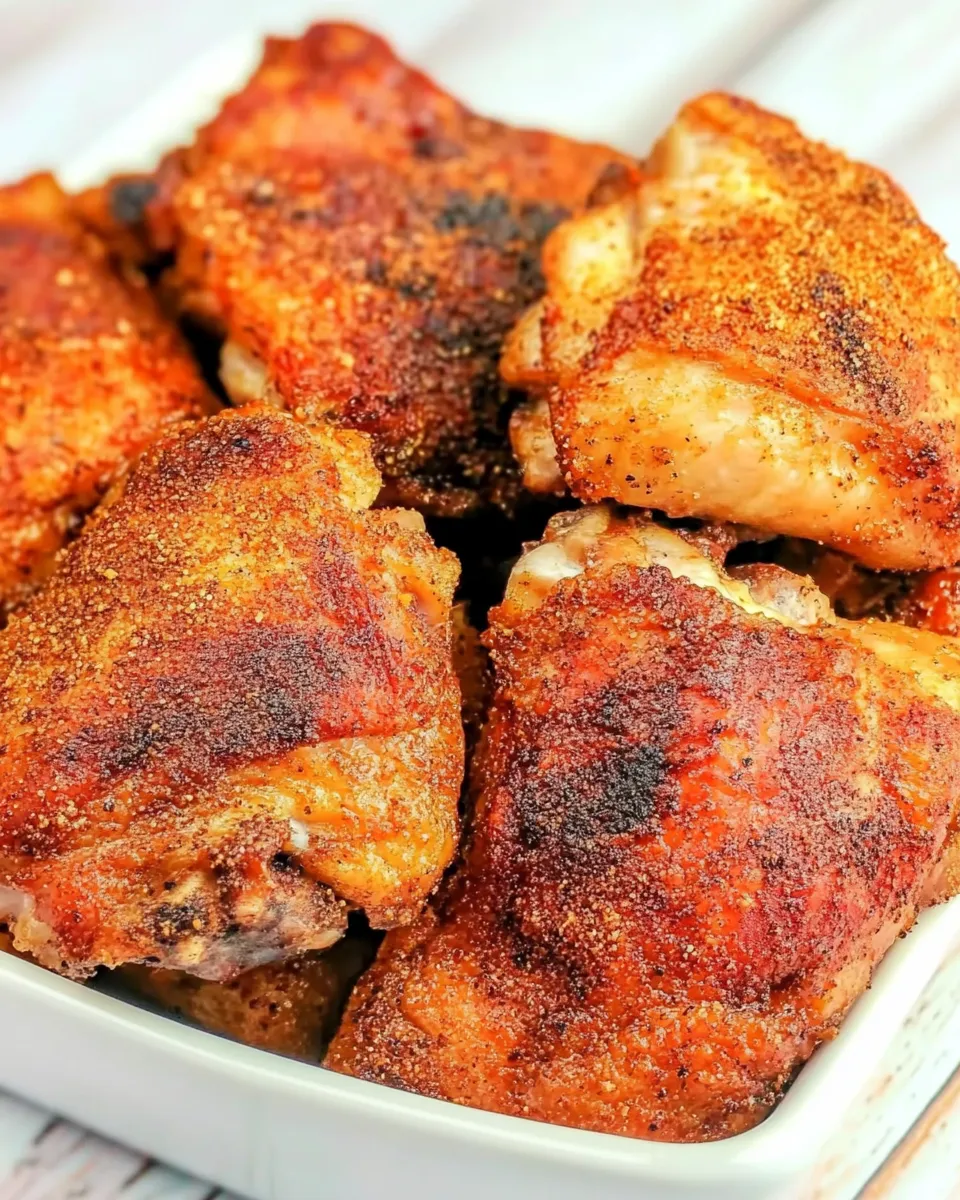
I love the short, honest pleasure of smoked chicken thighs: juicy meat, skin that plays between soft and crisp, and a smoky-sweet tang that hugs every bite. This version pulls together a straightforward rub, a little butter in the glaze for sheen, and a low-and-slow smoke so the thighs stay tender and true to flavor. It’s reliable and forgiving — two things I always look for when I’m feeding friends on a weekend.
There’s nothing fussy here. The rub comes together in a small bowl, you let the smoker do the work, and you finish with a warm barbecue glaze. If you follow temperature rather than the clock, you’ll avoid rubbery skin and end up with thighs that are both flavorful and perfectly cooked. I’ll walk you through the exact steps I use, what tools are helpful, and a few fail-safes from years of trial and error.
What We’re Using
Ingredients
- 2 ½ pounds bone-in skin-on chicken thighs — about 6; the skin and bone add flavor and help the thighs remain moist during smoking.
- Charcoal — pellets, or whatever fuels your smoker, we use hardwood lump charcoal; choose a clean-burning fuel for steady heat.
- Wood chips or chunks — such as pecan, apple, or oak; they give the smoke signature—fruitwoods are milder, oak is more robust.
- ⅓ cup Homemade Barbecue Sauce — or your favorite store-bought BBQ sauce; this is for basting and adds gloss and final flavor.
- 2 tablespoons unsalted butter — melts into the sauce for shine and a touch of richness.
- 2 tablespoons brown sugar — balances smoke with sweetness and helps the exterior caramelize when basted.
- 1 tablespoon kosher salt — seasons the meat and helps with moisture retention.
- 1 tablespoon smoked paprika — adds color and a smoky base note that complements the wood smoke.
- 1 teaspoon garlic powder — savory backbone in the rub.
- 1 teaspoon onion powder — rounds the aromatics.
- 1 teaspoon chili powder — introduces mild heat and depth.
- 1 teaspoon ground cumin — warm, earthy accent that plays well with smoked flavors.
- 1 teaspoon ground black pepper — brightens and lifts the rub.
- ¼ teaspoon ground cloves or cardamom — use one or the other as listed; a little goes a long way to add complexity.
- ¼ teaspoon cayenne pepper — for subtle heat; adjust if you want milder or spicier.
Directions: Smoked Chicken Thighs
- Remove the chicken thighs from the refrigerator, place them on a parchment-lined baking sheet, and pat them dry with paper towels.
- In a small bowl, combine the rub ingredients exactly as listed: 2 tablespoons brown sugar, 1 tablespoon kosher salt, 1 tablespoon smoked paprika, 1 teaspoon garlic powder, 1 teaspoon onion powder, 1 teaspoon chili powder, 1 teaspoon ground cumin, 1 teaspoon ground black pepper, 1/4 teaspoon ground cloves or cardamom, and 1/4 teaspoon cayenne pepper.
- Rub the mixture evenly over all surfaces of the thighs, working some of the rub underneath the skin where possible. Let the rubbed thighs sit at room temperature for 30 minutes while you prepare the smoker.
- Prepare and light your charcoal/pellets according to your smoker’s instructions. Add the wood chips or chunks to the charcoal (mixing them in) before or as you light the fuel. Adjust vents and fuel so the smoker stabilizes at 225°F. It’s acceptable if the smoker runs a bit hotter, but do not cook lower than 225°F to avoid rubbery skin.
- While the smoker comes up to temperature, heat the sauce: combine 1/3 cup Homemade Barbecue Sauce (or your favorite store-bought BBQ sauce) and 2 tablespoons unsalted butter in a small saucepan or heatproof bowl. Warm and stir until the butter is fully melted; keep the sauce warm or at room temperature until needed.
- Place the chicken thighs on the smoker grates skin-side up. Use an instant-read thermometer and insert it into the thickest part of a thigh without touching bone.
- Smoke the thighs until the internal temperature reaches about 150°F, then baste all over with the warmed barbecue sauce and butter mixture. Continue smoking until the internal temperature reaches 165°F. Total smoking time will vary (approximately 45 minutes to 1 hour 15 minutes depending on thigh size and smoker consistency); smoke to temperature, not to clock time.
- Remove the thighs from the smoker when they register 165°F, tent loosely with foil, and let rest for 10 minutes before serving.
- If you prefer crisper skin, briefly place the rested thighs under an oven broiler for a few minutes just before serving.
Why You’ll Love This Recipe
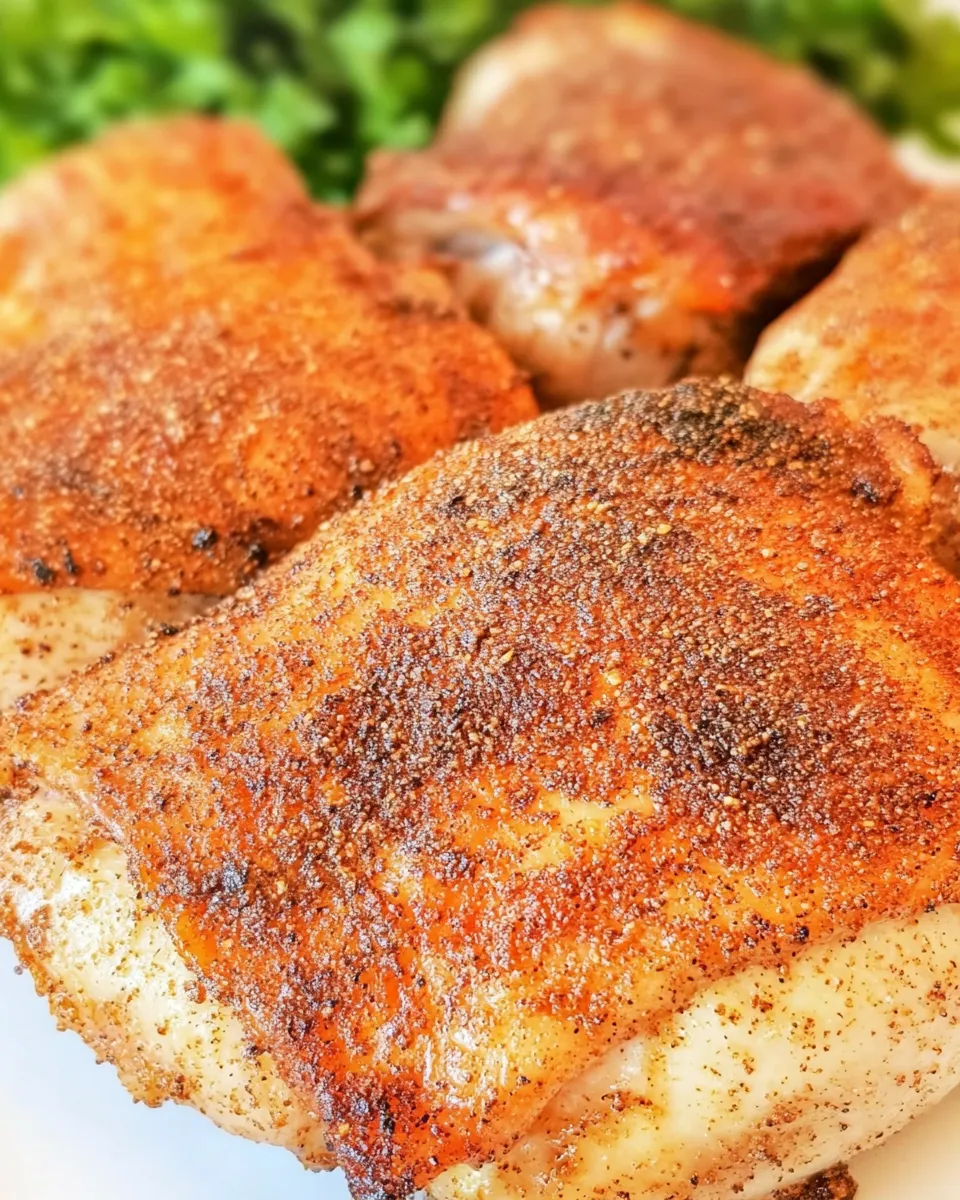
Smoked chicken thighs are a perfect middle ground: more forgiving than breast meat and quicker than a low-and-slow brisket. The bone-in, skin-on format protects the meat from drying out while the rub and smoke layer complementary flavors. The basting step with butter and barbecue sauce locks in moisture and gives the skin a glossy, slightly sticky finish that feels indulgent without being heavy.
Another reason: this technique is flexible. You can change the wood, swap in a favorite store sauce, or alter the heat level by varying the cayenne. Yet the basic method — dry rub, steady low smoke, baste at the stall, and rest — keeps the thighs reliably juicy and deeply flavored.
Texture-Safe Substitutions
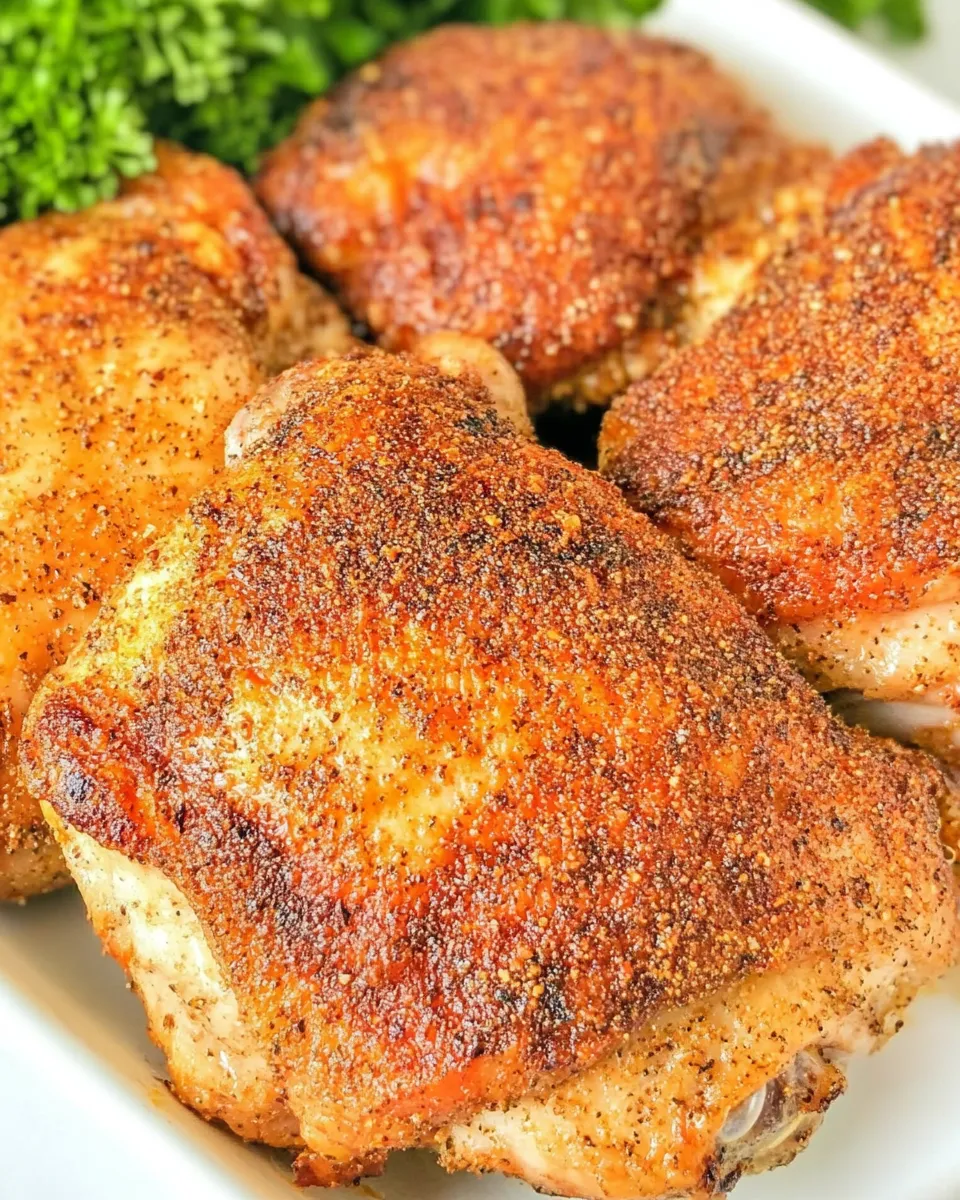
- Boneless skin-on thighs — if you prefer less bone, use boneless skin-on thighs; watch temperature closely as they’ll cook faster.
- Skinless thighs — you can use them, but texture will be different: a bit leaner and lacking the crisp-skin option. Consider finishing under the broiler to add surface color.
- Different woods — swap pecan or apple for hickory or oak for a smokier, more assertive profile; the meat texture stays the same, only the smoke intensity changes.
- Store-bought BBQ sauce — any will work; choose thicker sauces if you want more glaze adhesion at the basting step.
Cook’s Kit
- Smoker — charcoal, pellet, or offset; know how to control vents and maintain 225°F.
- Instant-read thermometer — non-negotiable. Temp is the only reliable doneness guide here.
- Tongs — for gentle handling of hot thighs.
- Basting brush — silicone brushes hold up better at higher temps.
- Parchment-lined baking sheet — for prepping the thighs and catching any mess while they rest.
- Small saucepan or heatproof bowl — to warm the sauce and butter.
- Aluminum foil — for a loose tent during the resting phase.
Troubleshooting Tips
Smoke and Temperature
- Smoker runs hot or cold: Adjust vents and add or reduce fuel in small increments. A chimney starter or a few fresh coals can rescue a burner that’s slipping down.
- Smoky-but-bitter flavor: That happens when wood is too green or smoldering. Use well-seasoned wood chunks and aim for a clean, thin blue smoke rather than thick white smoke.
Skin and Texture
- Rub is soggy after resting: Avoid heavy sauce application too early. The recipe calls for basting at ~150°F; that timing helps prevent the rub from going limp.
- Perceived dryness: Check placement of thermometer — touching bone gives false high readings. Insert into the thickest part of meat without touching bone.
Timing
- Smoking time varies: Thigh size and smoker consistency matter. Trust the 165°F endpoint rather than a clock.
Warm & Cool Weather Spins
Weather affects how a smoker behaves. In cold or windy conditions the smoker will demand more fuel and patience. Here’s how to adapt.
- Cold weather: Preheat the smoker longer, add insulating blankets designed for smokers if you have them, and consider putting a few extra coals in the firebox early. Keep vents stable once you hit 225°F; frequent opening cools things off fast.
- Hot weather: If it’s very hot, your smoker may run a little higher than 225°F even with lower vents; that’s acceptable per the directions — just monitor internal temp and pull at 165°F.
- Indoor alternative: If you don’t want to smoke outdoors, roast at 375°F in a conventional oven and baste as directed, finishing under the broiler briefly to mimic crisp skin. You’ll miss the smoke note, but texture will remain excellent.
Recipe Notes & Chef’s Commentary
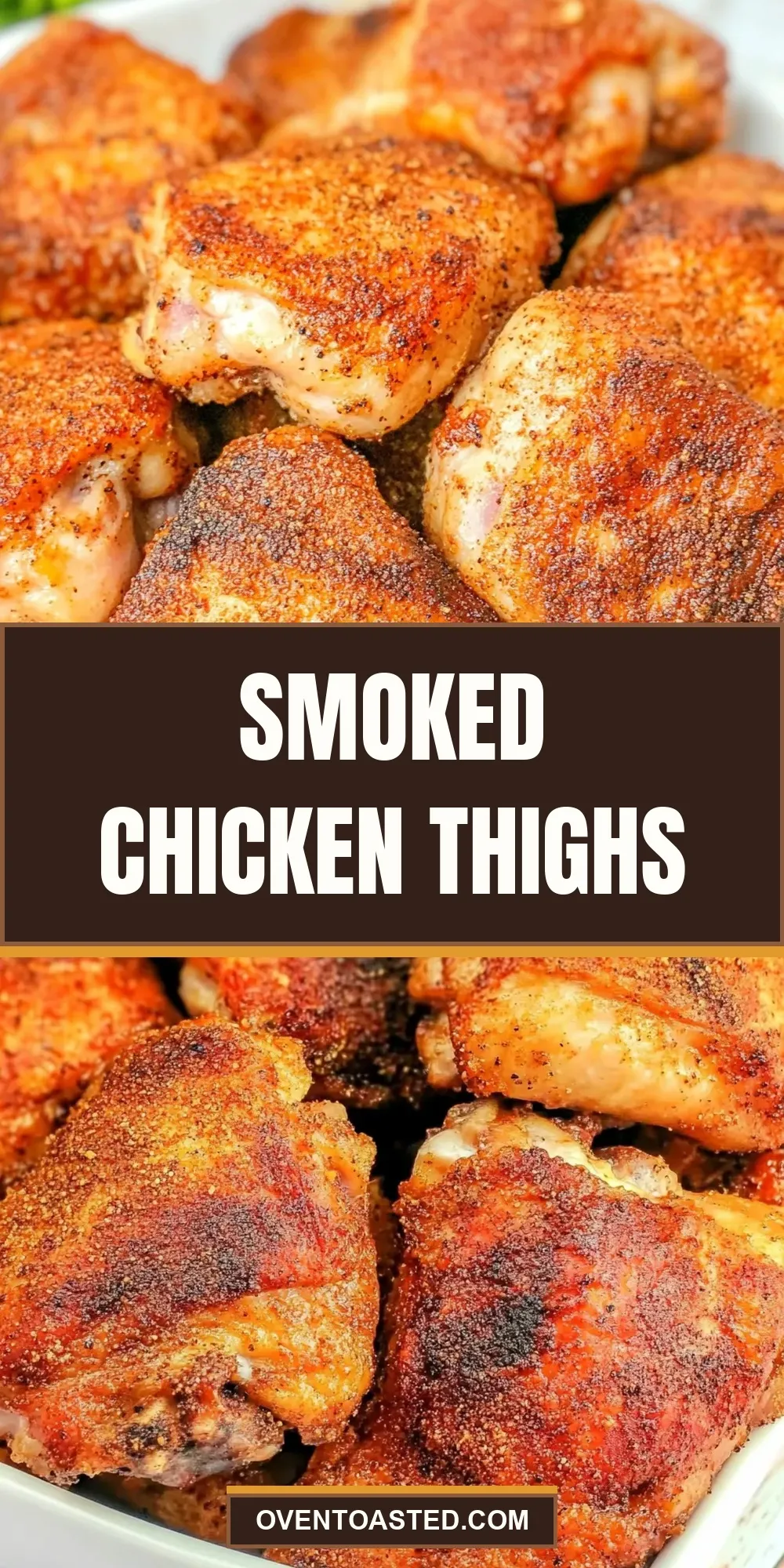
The rub here is deliberately balanced — sweet, savory, smoky, and a touch warm from the cumin and cayenne. The 30-minute rest at room temperature before smoking takes the chill off the thighs and allows the rub to adhere; don’t skip it. Temperatures and timing are tuned to protect skin texture: don’t go lower than 225°F in the smoker or you risk that rubbery skin described in step 4.
I always baste at the 150°F mark. At that point the meat has absorbed a fair amount of smoke and is starting to lose connective tissue; the warm butter-and-barbecue sauce melds into the surface, encouraging caramelization as it heads toward the final 165°F. Resting is small but crucial: those 10 minutes under a loose tent let juices redistribute so they don’t spill out the moment you slice into the thighs.
Make Ahead Like a Pro
- Pre-rub and refrigerate: Apply the rub and keep thighs covered in the fridge up to 24 hours before smoking. Bring to room temperature for 30 minutes before you light the smoker.
- Fully cooked storage: Cool the smoked thighs quickly and refrigerate in an airtight container up to 3–4 days.
- Reheating: Reheat gently at 300°F in the oven, covered, until the internal temp reaches 140–150°F, then finish under the broiler a minute if you want crisp skin; avoid nuking in the microwave, which ruins texture.
- Transporting to a gathering: Keep thighs in an insulated carrier and reheat briefly under a broiler or on a hot grill just before serving for best skin texture.
Common Qs About Smoked Chicken Thighs
- Q: Can I use boneless thighs? A: Yes. Boneless thighs cook faster; monitor temperature closely and pull earlier to avoid overcooking. They won’t have the same flavor depth from the bone, but still very tasty.
- Q: What if my smoker can’t hold 225°F? A: Aim for the closest steady temperature above 225°F. The recipe allows a slightly hotter smoker; lower temps risk skin texture issues. If a steady low temp isn’t possible, cook hotter but watch the internal temperature carefully.
- Q: Is 165°F safe for thighs? A: Yes. The safe finished internal temperature for poultry is 165°F per food safety guidelines. The method uses 150°F as a basting checkpoint and finishes at 165°F for both safety and texture.
- Q: Can I skip the butter in the sauce? A: You can, but butter adds sheen and a small amount of fat that carries flavors and helps glaze adhesion. If you skip it, consider a tablespoon of oil if you need a binder.
- Q: How do I get crispier skin? A: After resting, pop the thighs under a hot broiler for a minute or two, watching closely. Alternatively, finish on a hot grill for a bit of direct heat.
Bring It Home
Smoked chicken thighs are one of those reliable, crowd-pleasing dishes that make weeknights feel like a treat and weekends feel like a party. The process is straightforward: dry rub, steady smoke, a warm butter-and-barbecue baste, and a confident pull at 165°F. Keep the thermometer close, respect the rest, and you’ll be rewarded with thighs that are tender, smoky, and beautifully sauced.
Serve with simple sides — coleslaw, roasted potatoes, or a crisp salad — and you’ve got a meal that looks like effort even when it wasn’t complicated. If you try this, tell me what wood you used and whether you finished under the broiler. I’m always swapping notes and wood combos, and I love hearing how a recipe lands at your table.
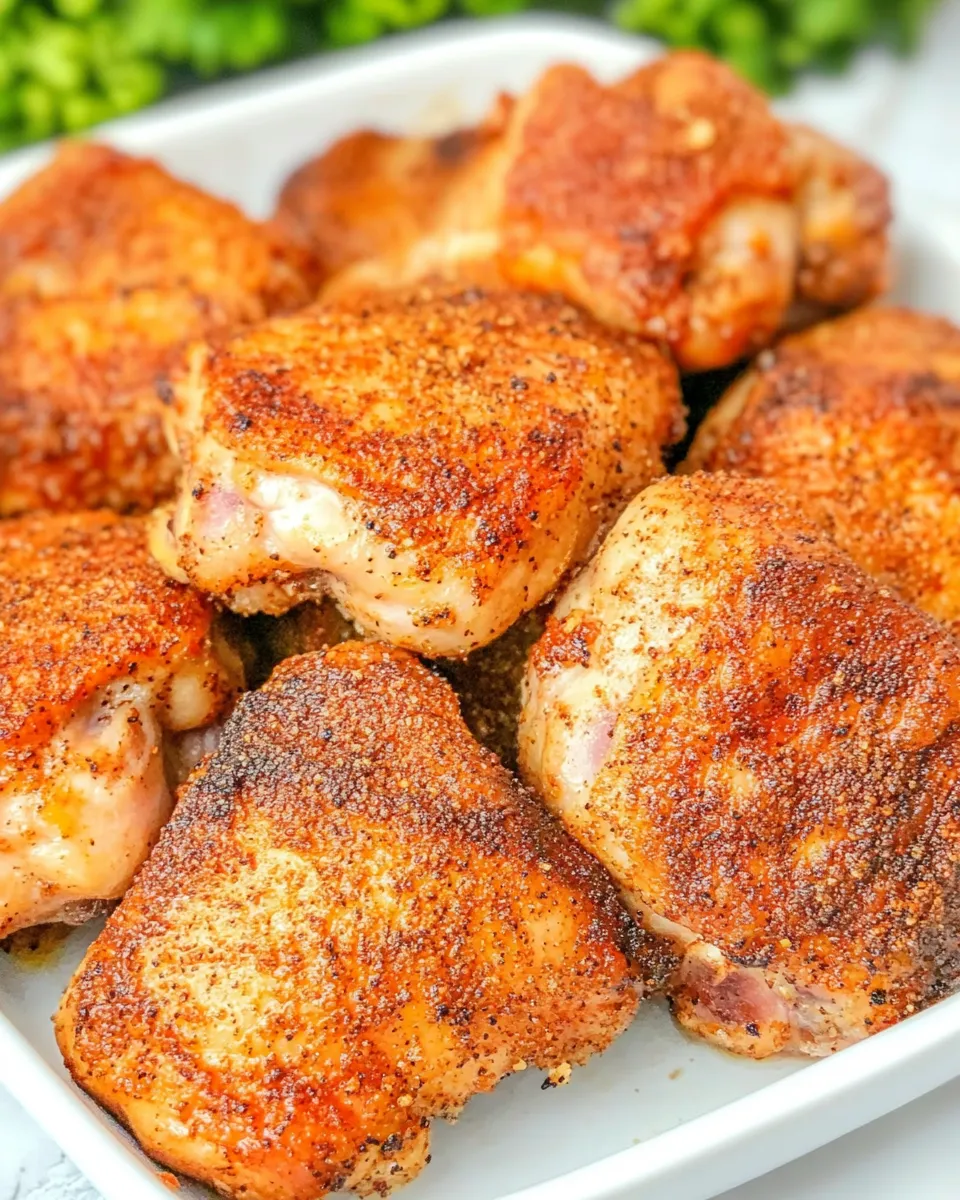
Smoked Chicken Thighs
Ingredients
Equipment
Method
- Remove the chicken thighs from the refrigerator, place them on a parchment-lined baking sheet, and pat them dry with paper towels.
- In a small bowl, combine the rub ingredients exactly as listed: 2 tablespoons brown sugar, 1 tablespoon kosher salt, 1 tablespoon smoked paprika, 1 teaspoon garlic powder, 1 teaspoon onion powder, 1 teaspoon chili powder, 1 teaspoon ground cumin, 1 teaspoon ground black pepper, 1/4 teaspoon ground cloves or cardamom, and 1/4 teaspoon cayenne pepper.
- Rub the mixture evenly over all surfaces of the thighs, working some of the rub underneath the skin where possible. Let the rubbed thighs sit at room temperature for 30 minutes while you prepare the smoker.
- Prepare and light your charcoal/pellets according to your smoker’s instructions. Add the wood chips or chunks to the charcoal (mixing them in) before or as you light the fuel. Adjust vents and fuel so the smoker stabilizes at 225°F. It’s acceptable if the smoker runs a bit hotter, but do not cook lower than 225°F to avoid rubbery skin.
- While the smoker comes up to temperature, heat the sauce: combine 1/3 cup Homemade Barbecue Sauce (or your favorite store-bought BBQ sauce) and 2 tablespoons unsalted butter in a small saucepan or heatproof bowl. Warm and stir until the butter is fully melted; keep the sauce warm or at room temperature until needed.
- Place the chicken thighs on the smoker grates skin-side up. Use an instant-read thermometer and insert it into the thickest part of a thigh without touching bone.
- Smoke the thighs until the internal temperature reaches about 150°F, then baste all over with the warmed barbecue sauce and butter mixture. Continue smoking until the internal temperature reaches 165°F. Total smoking time will vary (approximately 45 minutes to 1 hour 15 minutes depending on thigh size and smoker consistency); smoke to temperature, not to clock time.
- Remove the thighs from the smoker when they register 165°F, tent loosely with foil, and let rest for 10 minutes before serving.
- If you prefer crisper skin, briefly place the rested thighs under an oven broiler for a few minutes just before serving.
Notes
TO REHEAT: Loosely cover the chicken thighs with foil and reheat in a 350°F oven until warmed through, or warm carefully in the microwave.
TO FREEZE: Store smoked chicken thighs for up to 2 months in the freezer. Wrap them well and place them in an airtight container or freezer bag. Thaw the smoked chicken thighs overnight in the refrigerator before reheating according to the instructions above.