Steak and Eggs
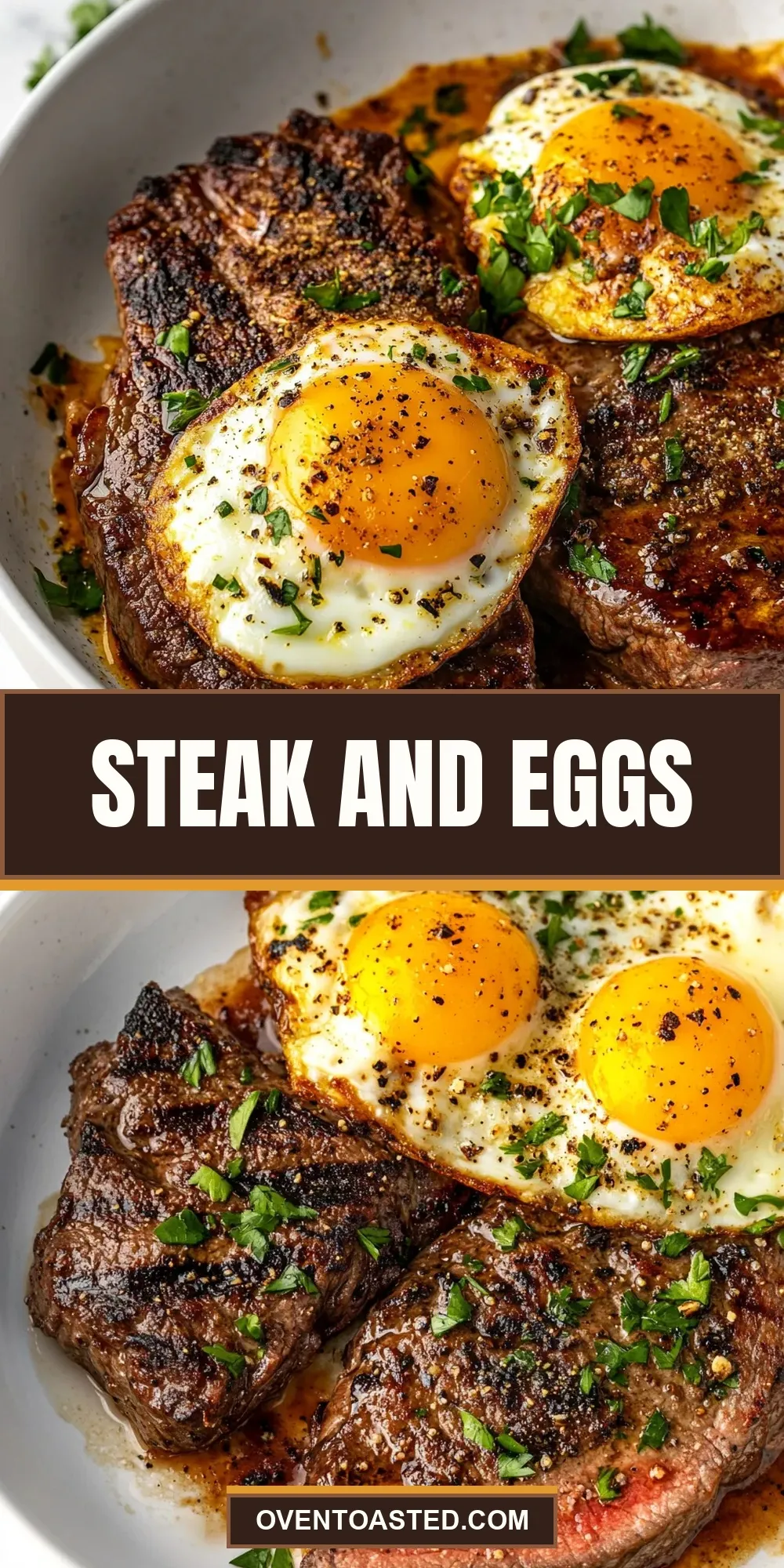
This is the kind of recipe I turn to when I want something honest: fast, filling, and entirely satisfying. Steak and eggs is a classic breakfast that doubles as a perfectly acceptable dinner — simple technique, big payoff. You don’t need an arsenal of ingredients to make it sing; attention to heat, timing, and a few finishing touches are what matter.
Below I’ll walk you through a straightforward approach that respects the steak and eggs tradition while making it easy to reproduce on a weeknight. You’ll get searing tips, how to handle the eggs without overcooking them, and practical notes on gear and substitutions. No fluff. Just what you need to cook confidently.
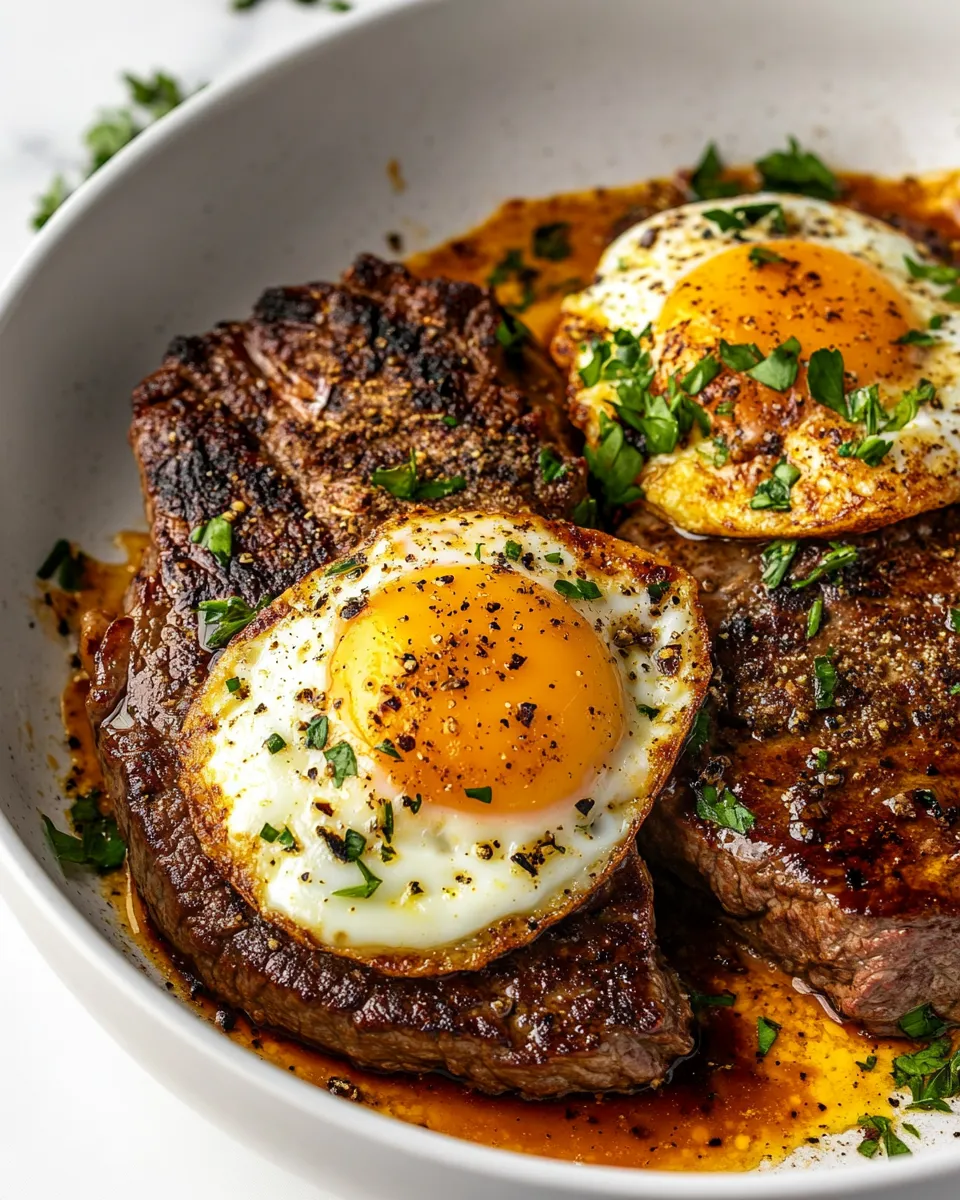
Keep your mise en place simple: steaks at room temperature, fat ready, eggs cracked into a small bowl if that helps you work cleanly. Follow the steps, rest the meat, and slice against the grain. The result: a juicy steak with glossy, perfectly cooked eggs on top.
Ingredient Checklist
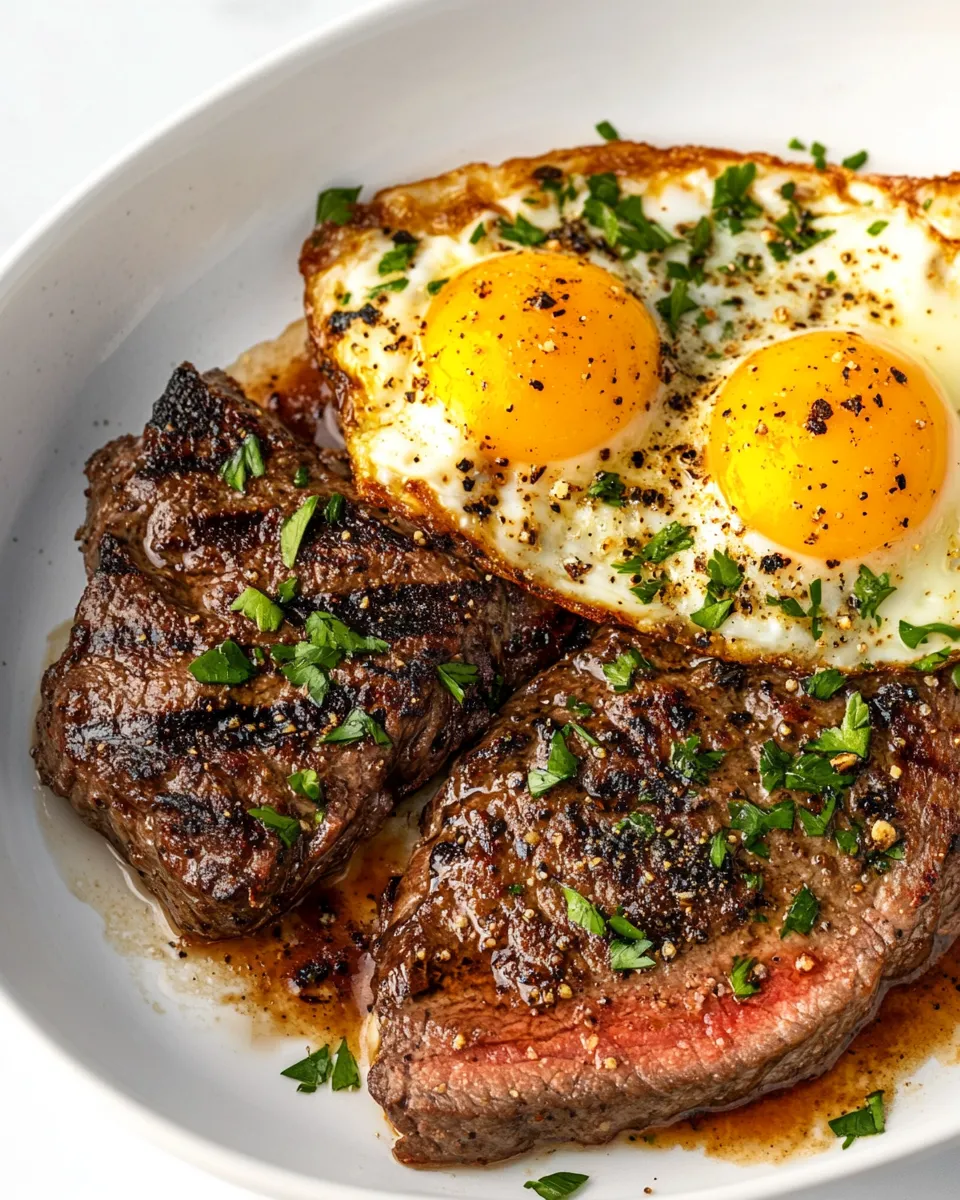
- 2 steaks, 1-inch thick (NY strip, ribeye, or sirloin) — the main event; choose your preferred cut for flavor and fat level.
- 4 teaspoons steak seasoning — provides the salt-pepper-herb backbone; some is reserved to season the eggs.
- 8 large eggs — cook to your preferred style; the recipe shows sunny-side-up timing.
- 2 tablespoons ghee or 1 tbsp butter + 1 tbsp olive oil — cooking fat for searing and for the eggs; ghee gives a higher smoke point and a nutty flavor.
- 1 tablespoon chopped parsley — a fresh finish to brighten the dish.
- Optional Add-Ons: toast, hashbrowns or smashed potatoes, ranchero sauce, or chimichurri sauce — compositional options to turn this into a fuller plate or to add acidity/herb lift.
Build Steak and Eggs Step by Step
- Season both sides of the 2 steaks with 3 teaspoons of the steak seasoning; set aside the remaining 1 teaspoon to season the eggs.
- Place a 12–14 inch cast-iron or nonstick skillet on the stovetop and heat over medium-high.
- Add 1 tablespoon of the fat (use 1 tablespoon ghee, or if using the butter+olive oil option add 1 tablespoon total now) to the hot skillet. When the fat is hot and melted, add the steaks.
- Sear the steaks 3–4 minutes per side for medium-rare (adjust time for preferred doneness). Remove the steaks to a plate and loosely cover with foil to rest and keep warm.
- Reduce the heat to medium. If needed, use a spatula to scrape any browned bits from the skillet so the eggs won’t stick.
- Add the remaining 1 tablespoon of fat to the skillet. Carefully crack the 8 eggs into the skillet, working in batches if your skillet cannot fit them all at once. Sprinkle the reserved 1 teaspoon steak seasoning over the tops of the eggs.
- Cook the eggs 2–3 minutes for sunny-side-up (cook longer if you prefer a firmer yolk or a different egg style).
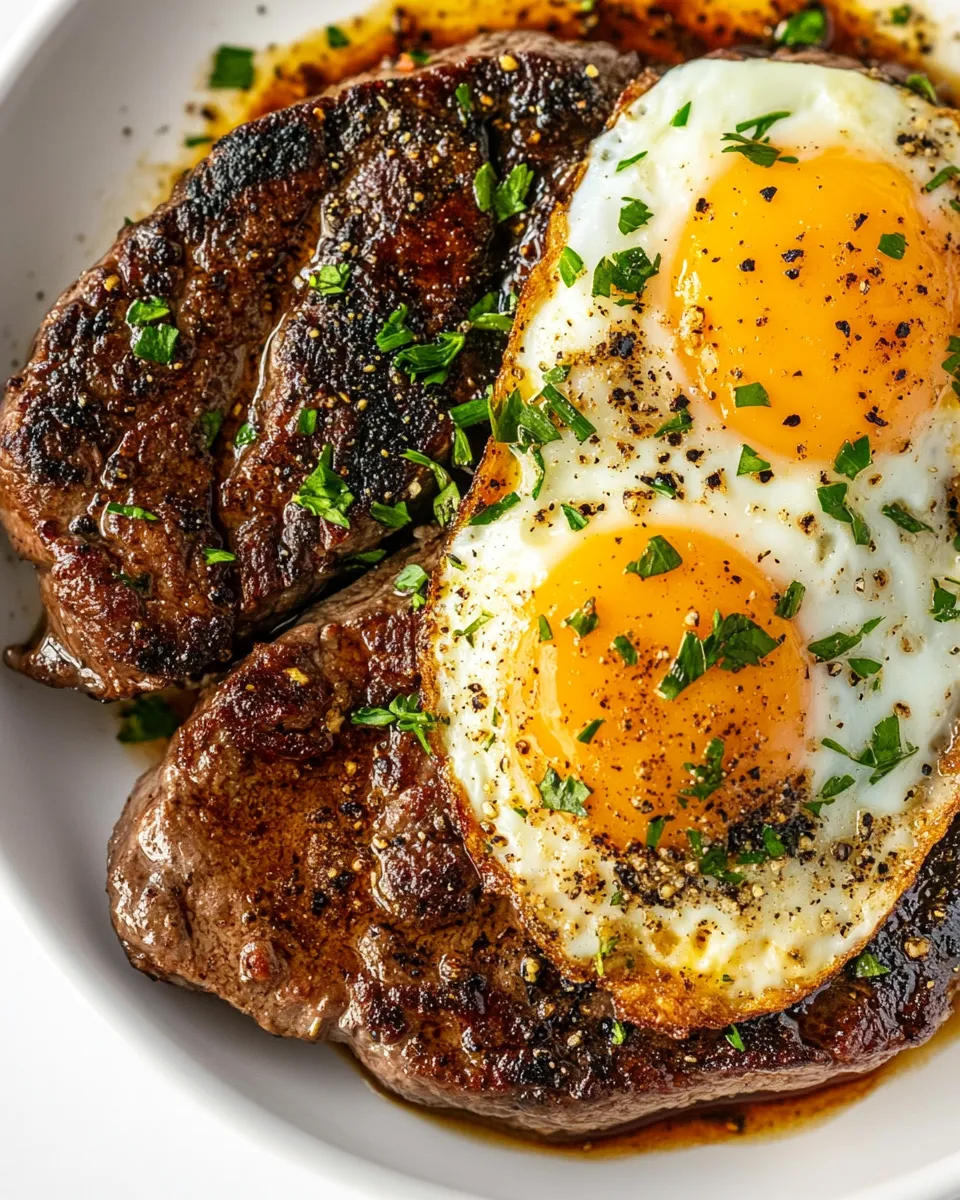
- Once the eggs are cooked to your preference, slice the rested steaks against the grain into 1/4-inch strips. Sprinkle the 1 tablespoon chopped parsley over the steak and eggs and serve.
Why This Recipe Belongs in Your Rotation
Steak and eggs covers the bases: protein, fat, and satisfaction. It’s flexible in timing and portion — a small menu that scales. You can make this for one or stretch it for a casual brunch crowd without changing the method. The sear on the steak and the runny yolk create complementary textures: crisped, savory beef and silky egg yolk that acts as sauce.
It’s also a confidence builder. Mastering this recipe teaches you heat control, how to judge doneness without constantly poking the meat, and how to handle multiple components in one pan. Those skills are transferable to many other skillet-centered meals.
Finally, it’s forgiving. If your steak finishes a little early, it rests. If your eggs need another minute, you can finish them gently. The straightforward steps let you focus on timing and presentation rather than complicated technique.
Ingredient Swaps & Substitutions
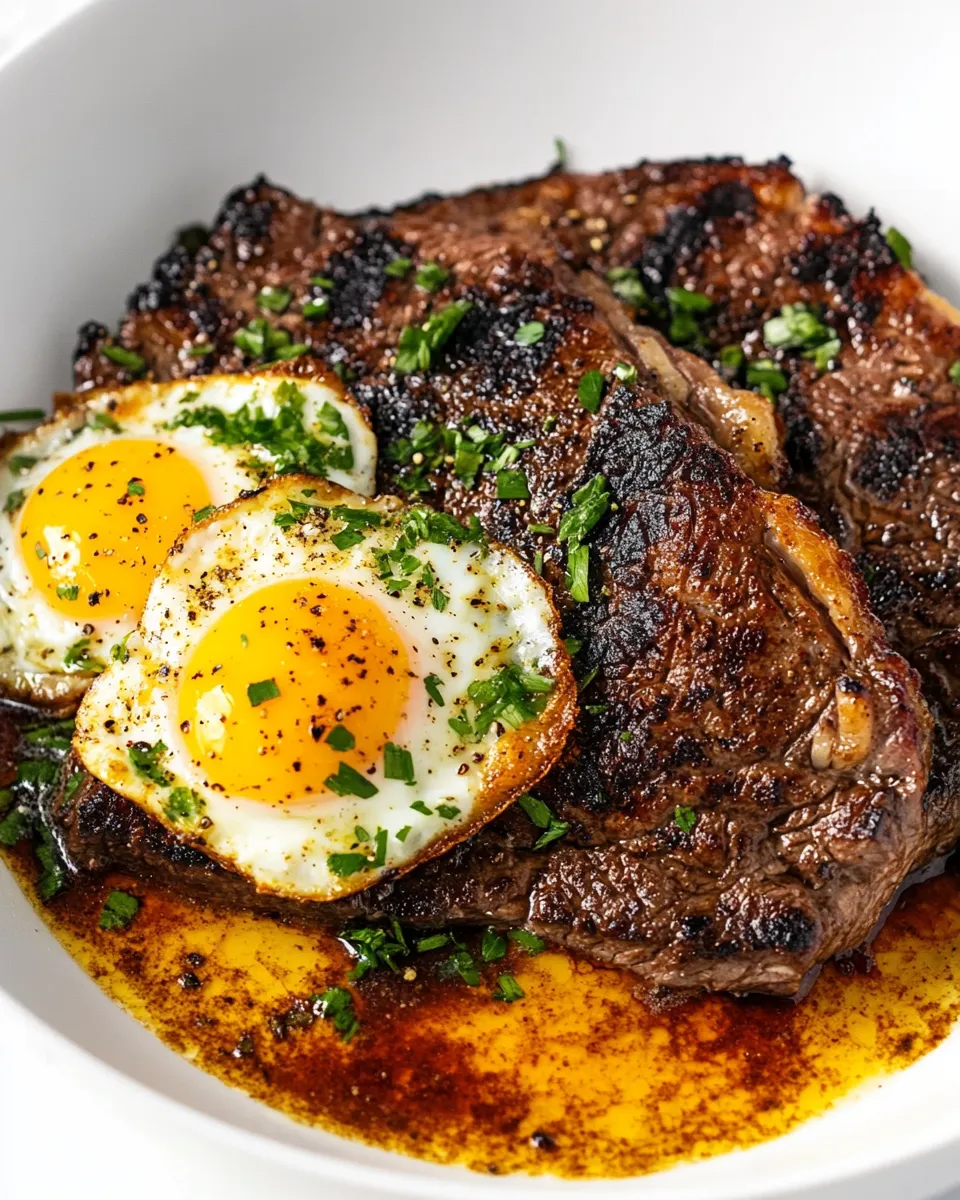
- Steak cut — the recipe lists NY strip, ribeye, or sirloin. Choose ribeye for more marbling and flavor, strip for a balance of tenderness and beefiness, sirloin for a leaner option.
- Cooking fat — the recipe allows 2 tablespoons ghee or 1 tbsp butter + 1 tbsp olive oil. Use ghee if you want a higher smoke point and nutty richness; the butter+olive oil combo gives a familiar buttery flavor with a slightly higher smoke tolerance.
- Steak seasoning — stick with the 4 teaspoons total, but if you’re watching sodium, reduce the amount to taste. The reserved teaspoon is there to season the eggs.
- Optional Add-Ons — toast, potatoes, ranchero, or chimichurri are listed options to change the dish’s profile. Use them to add carbs, acidity, or herb brightness without altering the main method.
Kitchen Gear Checklist
Essentials
- 12–14 inch cast-iron or nonstick skillet — a heavy pan gives the best sear and handles multiple eggs comfortably.
- Spatula — for scraping browned bits and for working the eggs if you need to move them safely.
- Tongs — to flip steaks cleanly and turn them with control.
- Instant-read thermometer (optional but helpful) — to check steak doneness if you prefer precision.
Helpful Extras
- Meat thermometer or probe for hands-off monitoring.
- Small bowl or ramekin to crack eggs into before adding to the skillet — reduces the chance of shells and keeps things tidy.
- Aluminum foil to tent the steaks while they rest.
What Not to Do
- Don’t put cold steaks straight from the fridge into the pan. Bring them to room temperature for a more even sear.
- Don’t overcrowd the skillet when searing. Crowding reduces the pan’s temperature and prevents a proper crust.
- Don’t rush resting. Cutting into the steak immediately after cooking lets juices run out. Resting keeps the meat juicy and easier to slice.
- Don’t add all the fat at once for the eggs if you used the butter+olive oil option; the recipe intentionally staggers the fat so the pan isn’t overloaded at sear time.
- Don’t skip scraping the browned bits before adding the eggs. Leftover char can cause sticking and uneven cooking.
Tailor It to Your Diet
This recipe is naturally high-protein and low-carb, which makes it compatible with low-carb and keto approaches as written. If you want a lighter plate, pick sirloin and trim visible fat. For dairy-free cooking, use ghee — it’s called out as an option and keeps things compliant with many dairy-free diets.
If you’re watching sodium, halve the steak seasoning and finish with a squeeze of lemon or a small spoonful of chimichurri (one of the optional add-ons) for brightness without relying on more salt. For a heart-health-conscious plate, pair the steak and eggs with a large portion of steamed or roasted veggies rather than potatoes.
Little Things that Matter
- Salt timing: salting the steak before cooking draws flavor to the surface and helps form a crust. The recipe directs most seasoning to the steaks and reserves a bit for the eggs — don’t skip that reserved teaspoon; it picks up the eggs nicely.
- Slice against the grain: cutting the steak into 1/4-inch strips against the grain makes every bite tender.
- Heat control: medium-high for the sear, then reduce to medium for the eggs. That transition prevents burnt edges and undercooked yolks.
- Tent the steaks: loosely covering with foil preserves heat without steaming the crust.
- Batching eggs: if your skillet can’t hold all 8 eggs at once, work in batches rather than crowding; you’ll get better edges and more even yolks.
Save It for Later
Leftover steak and eggs can be stored in the refrigerator for up to 3 days. Keep the steak and eggs in separate containers if possible — the eggs will keep better on their own. Reheat steak gently in a skillet over low heat with a splash of water or a quick pass in a 300°F oven until warmed through; avoid high heat or you’ll overcook it. Eggs reheat best in a low oven or in a covered skillet on low to avoid rubbery whites and hard yolks.
If you want to freeze steak, wrap it tightly and use within 2 months for best quality. Note that textures change with freezing; it’s best to freeze only when necessary.
Ask the Chef
Q: My steak is cooking too fast on the outside and staying cold in the middle. What gives?
A: Your pan may be too hot or the steak too thick and cold. Lower the heat slightly and let steaks sit at room temperature for 20–30 minutes before cooking. Finish thicker cuts in a 400°F oven after a quick sear if needed.
Q: How do I know when the steaks are medium-rare without a thermometer?
A: Use the touch test — relaxed firmness with a little give. If you prefer more certainty, an instant-read thermometer is worth the money: 125–130°F for medium-rare pulled from the pan (they’ll rise a few degrees while resting).
Q: My eggs stick even in a nonstick pan. Any tips?
A: Make sure the pan is well-heated and use the proper amount of fat. Reduce heat slightly if the fat smokes. Crack eggs into a bowl first and slide them in to control placement, and avoid moving them until the whites are set.
Time to Try It
Make this when you want a meal that feels composed but doesn’t require a long shopping list. The technique translates: a hot pan, a good sear, patient resting, and gentle egg work. Follow the steps, respect the heat, and you’ll have steak and eggs that are straightforward and genuinely satisfying.
Cook it for a weekend breakfast, a quick weeknight dinner, or scale it up for friends. Try one of the optional add-ons if you want an extra layer of flavor. Then slice against the grain, top with parsley, and dig in.
Steak and Eggs
Ingredients
Equipment
Method
- Season both sides of the 2 steaks with 3 teaspoons of the steak seasoning; set aside the remaining 1 teaspoon to season the eggs.
- Place a 12–14 inch cast-iron or nonstick skillet on the stovetop and heat over medium-high.
- Add 1 tablespoon of the fat (use 1 tablespoon ghee, or if using the butter+olive oil option add 1 tablespoon total now) to the hot skillet. When the fat is hot and melted, add the steaks.
- Sear the steaks 3–4 minutes per side for medium-rare (adjust time for preferred doneness). Remove the steaks to a plate and loosely cover with foil to rest and keep warm.
- Reduce the heat to medium. If needed, use a spatula to scrape any browned bits from the skillet so the eggs won’t stick.
- Add the remaining 1 tablespoon of fat to the skillet. Carefully crack the 8 eggs into the skillet, working in batches if your skillet cannot fit them all at once. Sprinkle the reserved 1 teaspoon steak seasoning over the tops of the eggs.
- Cook the eggs 2–3 minutes for sunny-side-up (cook longer if you prefer a firmer yolk or a different egg style).
- Once the eggs are cooked to your preference, slice the rested steaks against the grain into 1/4-inch strips. Sprinkle the 1 tablespoon chopped parsley over the steak and eggs and serve.
Notes
Storing Leftovers– Steak and eggs taste best when enjoyed freshly made. However, the steak will keep well for up to 3 days when stored in an airtight container in the refrigerator.
Reheating– Reheat the steak in short bursts on 50% power to heat the meat without overcooking and drying it out. I recommend making fresh eggs.