
Stuffed Salmon
This stuffed salmon is one of those weeknight wins that looks deliberate but comes together fast. Spinach, garlic, and a trio of cheeses tuck into a lengthwise pocket in a salmon fillet, then the whole thing roasts at a high temperature until the fish is just cooked through. The result is moist, flavorful salmon with a creamy, savory interior that holds up on a plate and makes great leftovers.
I like this recipe because it relies on small, confident moves rather than long lists of steps. Wilt the spinach, melt the cheeses into it, cut a neat pocket in each fillet, fill, brush with oil, season, and bake. That’s it. If you follow the order and don’t rush the pocket or the wilting, you’ll get a consistent result every time.
Below I walk through exactly what you need, the precise steps, and practical troubleshooting so you don’t overcook or under-season. Short on time? The prep is mostly hands-on minutes; the oven does the rest. Ready? Let’s get into it.
What’s in the Bowl
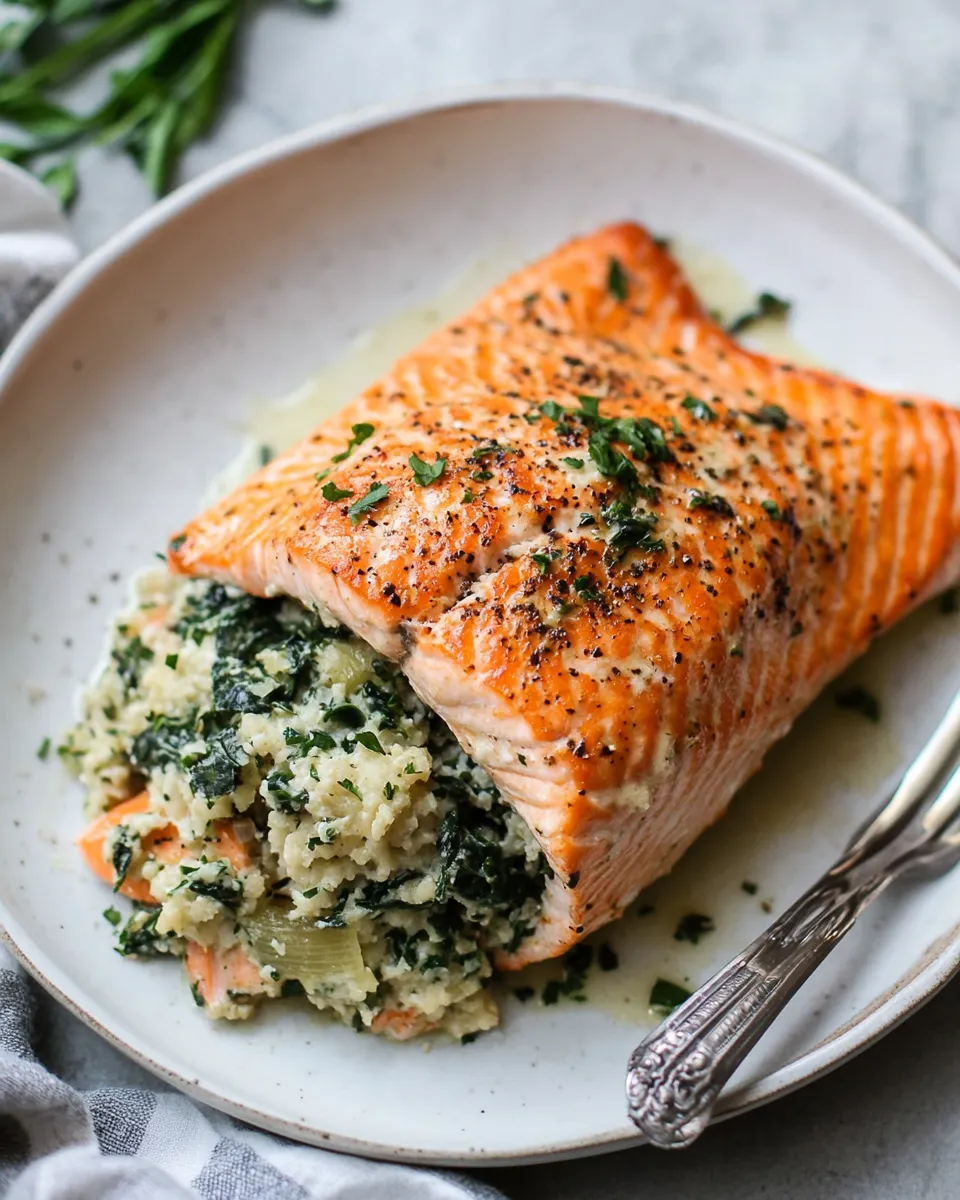
Here’s what makes the filling sing: baby spinach cooks down quickly and pairs with the brightness of garlic and the three-cheese combo—reduced-fat cream cheese, part-skim mozzarella, and grated Parmesan—to create a creamy, slightly tangy stuffing that complements the salmon without overpowering it. A pinch of red pepper flakes adds a tiny lift that keeps each bite interesting.
Ingredients
- 4 teaspoons extra virgin olive oil, divided — used for wilted spinach flavor and to coat the fillets before baking.
- 5 ounces fresh baby spinach (about 5 cups) — the bulk of the filling; wilts down to a soft, flavorful base.
- 1 clove garlic, minced (about 1 teaspoon) — provides fragrant depth; add to cooked spinach briefly so it doesn’t burn.
- ¾ teaspoon kosher salt, divided — seasons both the filling and the fillets; divided so you can season in stages.
- ½ teaspoon ground black pepper, divided — fresh black pepper brightens the spinach and the fish.
- Pinch red pepper flakes — adds a subtle heat; adjust to taste or omit if you prefer no heat.
- ¼ cup reduced-fat cream cheese — melts into the spinach and binds the filling.
- ¼ cup shredded part-skim mozzarella cheese — contributes melt and stretch without heavy oiliness.
- ¼ cup finely grated Parmesan — gives salty, nutty umami to the mixture.
- 4 6-ounce salmon fillets, skin off or on — the star; choose fillets of similar thickness for even cooking.
Mastering Stuffed Salmon: How-To
- Place a rack in the center of the oven and preheat to 425°F. Line a large rimmed baking sheet with parchment paper.
- Heat 2 teaspoons extra virgin olive oil in a medium nonstick skillet over medium-high heat.
- Add a large handful of the baby spinach and cook, stirring often, until it begins to wilt. Stir in the minced garlic, 1/4 teaspoon kosher salt, 1/4 teaspoon ground black pepper, and a pinch of red pepper flakes; cook about 30 seconds. Continue adding the remaining spinach in large handfuls, stirring and letting each batch wilt before adding the next, until all the spinach is wilted.
- Remove the skillet from the heat. Stir in the 1/4 cup reduced-fat cream cheese until it melts and combines with the spinach. Stir in the 1/4 cup shredded mozzarella and 1/4 cup grated Parmesan until the cheeses melt and the mixture is well combined. Let the filling sit briefly to cool so it’s easier to handle.
- Place the four 6-ounce salmon fillets on a clean work surface and pat them dry. Using a small sharp knife, cut a lengthwise pocket in each fillet without cutting all the way through.
- Transfer the fillets to the prepared baking sheet. Spoon the spinach-and-cheese mixture into each fillet pocket, dividing it into four equal portions (use the whole mixture).
- Drizzle the remaining 2 teaspoons extra virgin olive oil over the fillets and brush or rub to coat. Sprinkle the fillets with the remaining 1/2 teaspoon kosher salt and the remaining 1/4 teaspoon ground black pepper.
- Bake on the center rack until the salmon is opaque in the center and flakes easily with a fork, 8 to 10 minutes. Remove from the oven and serve.
Top Reasons to Make Stuffed Salmon
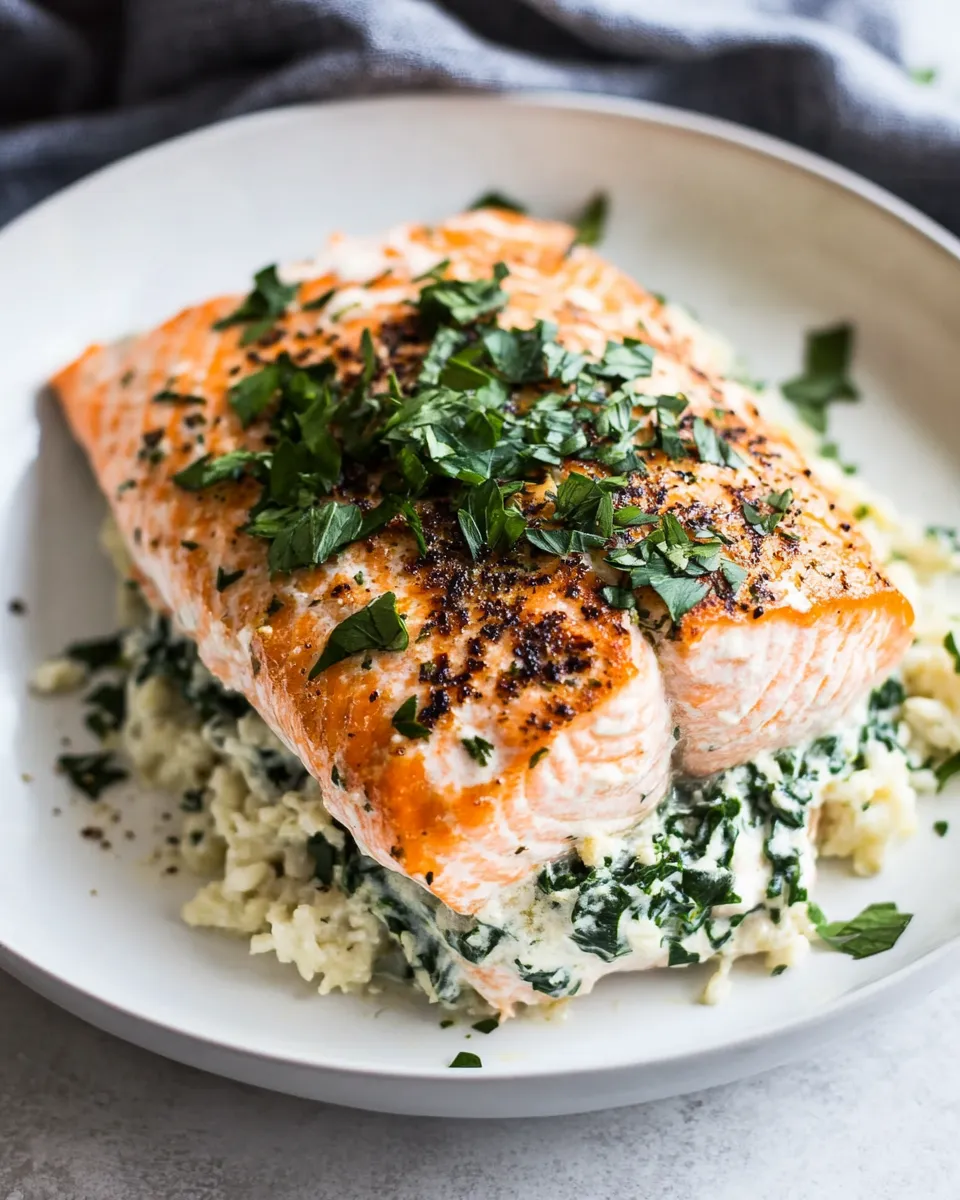
1) It’s fast. Prep is quick—mostly wilting and mixing—and the high-heat roast finishes everything in under 15 minutes. 2) It’s reliable. The pocket keeps the filling contained and the fish moist. 3) It’s elegant enough for company but unfussy enough for a simple dinner. 4) It uses a short list of pantry-friendly ingredients that stack well with sides you already have.
Healthier Substitutions
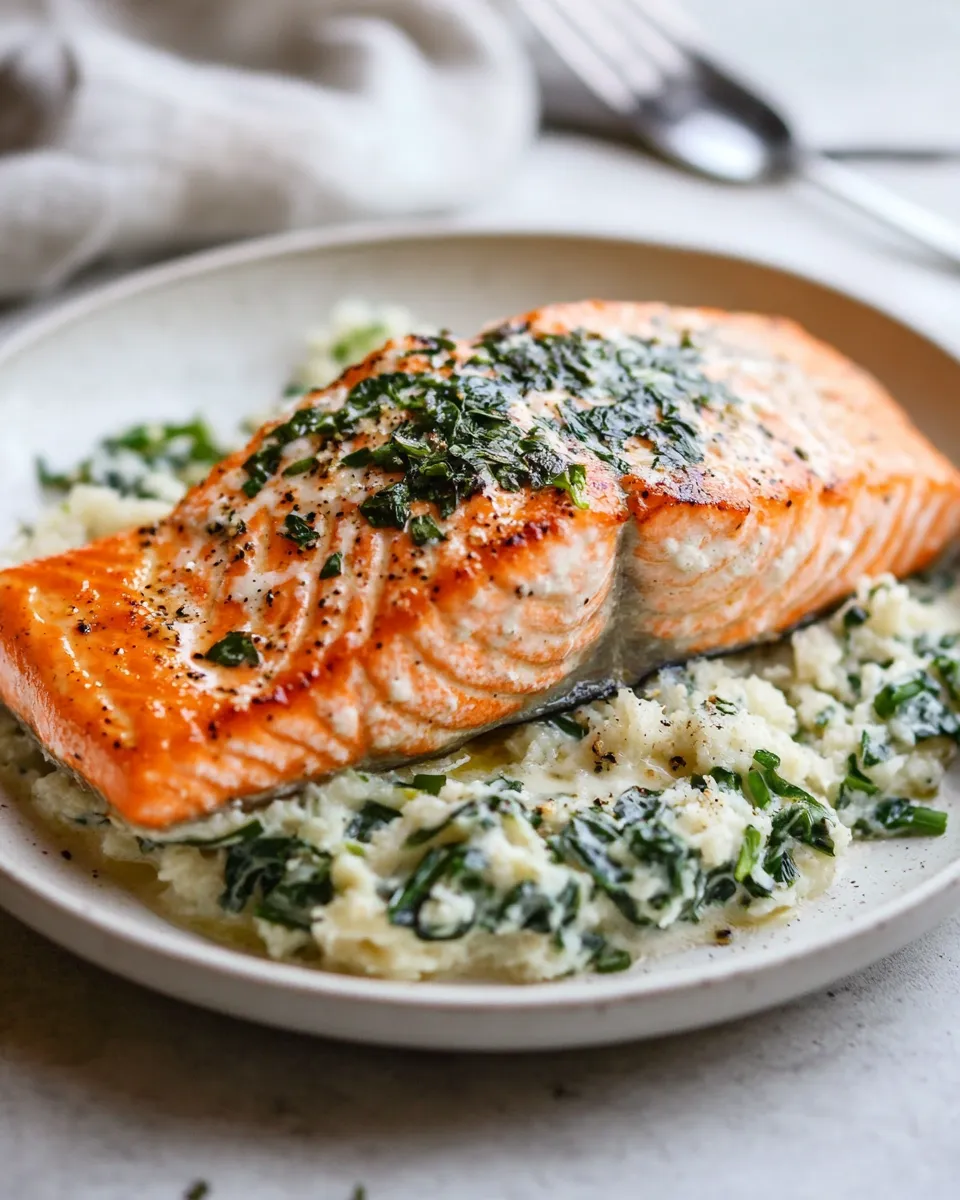
If you want to trim calories or adjust the richness without adding new pantry items, make simple choices with the ingredients already on the list. Use a bit less of the cheeses in the filling and increase the spinach slightly to maintain volume and texture. Reduce the oil used to coat the fillets by patting them lightly rather than fully brushing, which lowers surface fat but maintains flavor. Keep the cream cheese measured as given or slightly reduced — the reduced-fat cream cheese called for already helps keep the filling lighter.
Equipment at a Glance
- Oven with rack: Roasting at 425°F gives a clean roast and short cook time.
- Large rimmed baking sheet: Keeps any juices contained and provides even air circulation.
- Parchment paper: Makes cleanup easy and prevents sticking.
- Medium nonstick skillet: Best for wilting the spinach and melting the cheeses without sticking.
- Small sharp knife: For cutting neat lengthwise pockets in the fillets.
- Spoon or small spatula: For dividing and stuffing the filling into the pockets.
- Basting brush or your fingers: To coat the fillets with oil.
Frequent Missteps to Avoid
Cutting the pocket too deep: If you slice all the way through the fillet you’ll lose the filling and the structural benefit of the pocket. Stop before you reach the opposite side. Overstuffing: Use the whole mixture but divide it evenly—crowding the pocket can force filling out and lead to uneven cooking. Wet fillets: Patting salmon dry helps the oil and seasonings adhere and promotes a cleaner sear and roast. Rushing the spinach: Add it in handfuls as directed; overcrowding the pan turns spinach into watery mush instead of a nicely concentrated filling. Overcooking: Watch the oven toward the end of the 8–10 minute window; salmon goes from perfect to dry quickly.
Better-for-You Options
Lean choices can be achieved without swapping the core profile. Use the reduced-fat cream cheese already in the recipe and favor part-skim mozzarella as listed. Reduce the amount of mozzarella or Parmesan slightly if you want to cut sodium and fat further—leave the cream cheese in place to preserve creaminess. When brushing the fillets, use the minimum oil necessary to coat the surface rather than drizzling heavily. Finally, serve smaller portions with a large vegetable side to make the meal feel generous while keeping calories in check.
Pro Perspective
Two quick professional tips: first, let the filling cool slightly before stuffing. Warm filling will start to melt and can make the pocket soggy or difficult to manage. Second, choose fillets of even thickness; if one is much thicker, it will need more time and can dry out others. If your fillets are uneven, place the thicker piece on the hotter part of the oven (closer to the back) or give thicker pieces an extra minute or two—but watch carefully. Finally, use a sharp small knife when cutting the pocket: it gives you control and a clean edge that helps the fillet keep its shape while baking.
Storing Tips & Timelines
Refrigerate cooked stuffed salmon in an airtight container for up to 3–4 days. Reheat gently in a low oven (about 300°F) until warmed through to avoid drying the fish—cover loosely with foil to retain moisture. For freezing, wrap individual fillets tightly in plastic wrap and place in a freezer-safe container; consume within 2–3 months for best quality. Thaw in the refrigerator overnight before reheating. Note that texture may change slightly after freezing, so plan to use frozen leftovers in salads, pasta, or light casseroles where texture is less critical.
Quick Q&A
Q: Can I use frozen spinach? A: The recipe is written for fresh baby spinach. Frozen spinach can be used if fully thawed and squeezed dry, but the measured volume and the quick wilting approach will change—start with less and adjust.
Q: Do I need to remove the skin? A: No. The recipe works with skin on or off; skin-on fillets help keep the fish intact while baking and can add flavor if you crisp them first, but skin-off cooks very consistently too.
Q: Can I prepare the filling ahead? A: Yes. Make the filling up to one day ahead and refrigerate. Bring it to room temperature or warm briefly so it’s pliable before stuffing, which makes filling the pockets easier.
Q: How do I know when the salmon is done? A: The flesh should be opaque in the center and flake easily with a fork. Because fillet thickness varies, check at 8 minutes and add time in one-minute increments until it reaches that point.
Hungry for More?
If you liked this stuffed salmon, try swapping the filling for other combinations using the same technique: sautéed greens and lemon zest, or a mushroom-and-herb ragout (if you keep those ingredients on hand). The lengthwise pocket approach is versatile—once you’re comfortable with it, you’ll find it’s a fast way to elevate fish or chicken with a composed, flavorful interior. For more weeknight seafood ideas and straightforward technique tips, browse the rest of the site for quick roasts, sheet-pan dinners, and easy crowd-pleasing mains.
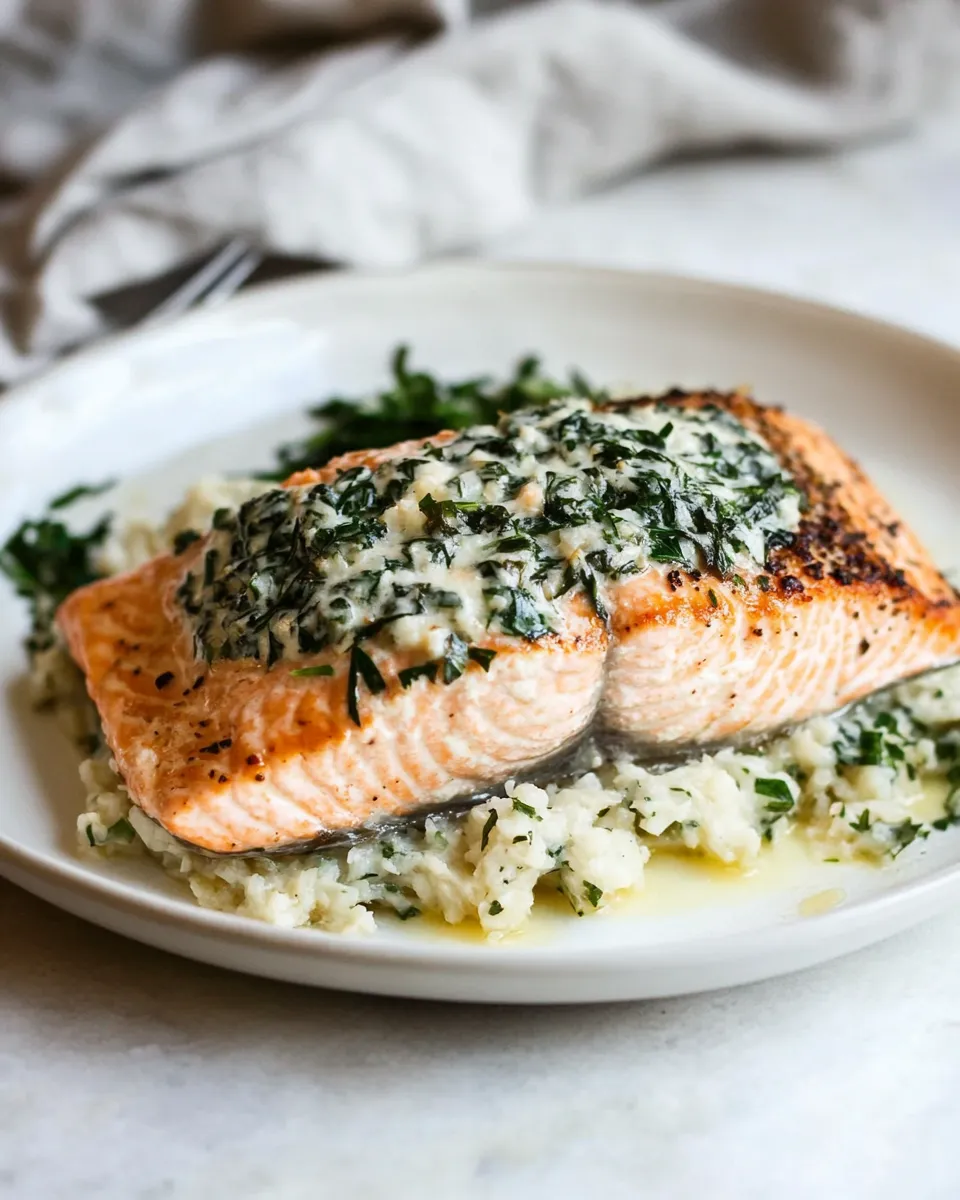
Stuffed Salmon
Ingredients
Equipment
Method
- Place a rack in the center of the oven and preheat to 425°F. Line a large rimmed baking sheet with parchment paper.
- Heat 2 teaspoons extra virgin olive oil in a medium nonstick skillet over medium-high heat.
- Add a large handful of the baby spinach and cook, stirring often, until it begins to wilt. Stir in the minced garlic, 1/4 teaspoon kosher salt, 1/4 teaspoon ground black pepper, and a pinch of red pepper flakes; cook about 30 seconds. Continue adding the remaining spinach in large handfuls, stirring and letting each batch wilt before adding the next, until all the spinach is wilted.
- Remove the skillet from the heat. Stir in the 1/4 cup reduced-fat cream cheese until it melts and combines with the spinach. Stir in the 1/4 cup shredded mozzarella and 1/4 cup grated Parmesan until the cheeses melt and the mixture is well combined. Let the filling sit briefly to cool so it’s easier to handle.
- Place the four 6-ounce salmon fillets on a clean work surface and pat them dry. Using a small sharp knife, cut a lengthwise pocket in each fillet without cutting all the way through.
- Transfer the fillets to the prepared baking sheet. Spoon the spinach-and-cheese mixture into each fillet pocket, dividing it into four equal portions (use the whole mixture).
- Drizzle the remaining 2 teaspoons extra virgin olive oil over the fillets and brush or rub to coat. Sprinkle the fillets with the remaining 1/2 teaspoon kosher salt and the remaining 1/4 teaspoon ground black pepper.
- Bake on the center rack until the salmon is opaque in the center and flakes easily with a fork, 8 to 10 minutes. Remove from the oven and serve.
Notes
TO REHEAT: To keep the salmon from drying out, gently reheat the salmon on a baking sheet, loosely tented with foil, in a 350 degrees F oven until warmed through.