Surf and Turf (Steak and Lobster)
I love the way a single plate can feel like a celebration. Surf and turf pairs two luxurious proteins — a well-seared steak and tender lobster — and this version keeps things focused and practical. There’s a small ritual to the compound butter and the oven timing, but nothing finicky. You get a restaurant-level plate without an all-day commitment.
This recipe is about balance: bright lemon on sweet lobster, rich butter to finish the steak, salt and pepper to let the beef sing. I’ll walk you through the steps exactly as they work, give you troubleshooting tips, and suggest easy swaps if you need them. Bring a meat thermometer and a calm stove — that’s the real secret.
If you’re serving guests or just treating yourself, this method reliably delivers juicy steaks and perfectly opaque lobster meat. Read on for the ingredient breakdown, step-by-step guide, and the small decisions that make this dish feel special every time.
Ingredient Breakdown
Ingredients
- 4 tablespoons unsalted butter — room temperature; the base for the compound butter that finishes both steak and lobster.
- 2 teaspoons minced shallot — adds gentle onion sweetness and texture to the butter.
- 1 garlic clove — minced; brings savory depth to the compound butter.
- 2 teaspoons minced fresh parsley — bright herb lift in the butter; contrasts the richness.
- 2 lobster tails — 5–6 ounces each; main surf component, split and topped with compound butter.
- 2 tablespoons fresh lemon juice — divided; dresses the lobster and brightens the plate.
- 24-ounce filet mignon steaks — room temperature; the turf component. (Use as written in the source.)
- 2 tablespoons olive oil — divided; used for searing steaks, prevents sticking and helps form a crust.
- 2 teaspoons kosher salt — seasons the steaks evenly for taste and crust formation.
- 1 ½ teaspoons black pepper — for seasoning the steaks; fresh-ground gives the best aroma.
- Lemon wedges — for serving; a final bright squeeze on lobster and steak if desired.
Surf and Turf (Steak and Lobster) Cooking Guide
- Make the compound butter: in a small bowl use a fork to combine 4 tablespoons unsalted butter (softened), 2 teaspoons minced shallot, 1 minced garlic clove, and 2 teaspoons minced fresh parsley.
- Transfer the butter mixture to a sheet of wax paper or plastic wrap. Form it into a 1½-inch-thick log, roll tightly, freeze 10 minutes to firm, then refrigerate until ready to use.
- Preheat the oven to 375°F and position a rack in the center. Line a baking sheet with aluminum foil and spray with nonstick spray; set the sheet aside.
- Prepare the lobster tails: using kitchen shears, carefully split the top shells of the 2 lobster tails lengthwise. Insert an upside-down teaspoon between the underside of each shell and the meat to loosen it, lift the meat up, and rest the meat on top of the shell. Place the lobster tails on the prepared baking sheet.
- Drizzle the lobster tails with the 2 tablespoons fresh lemon juice, dividing it evenly between the two tails.
- Remove the compound butter log from the refrigerator and slice it into four equal pats. For each lobster tail, take one pat, cut that pat in half, and arrange the two halves on top of the lobster meat. Reserve the remaining two pats for the steaks. (If the butter is too soft to slice, chill briefly until firm enough to cut.)
- Prepare the steaks: pat the steaks dry, drizzle them with 1 tablespoon of the olive oil, and season both sides evenly with 2 teaspoons kosher salt and 1½ teaspoons black pepper.
- Heat the remaining 1 tablespoon olive oil in a cast-iron skillet over medium-high heat until shimmering. Add the steaks and sear 1–2 minutes per side.
- Immediately transfer the skillet with the seared steaks to the preheated oven and at the same time put the baking sheet with the lobster tails into the oven. Cook the steaks 4–8 minutes in the oven, until they reach your desired doneness (use a thermometer: medium-rare 125–130°F; medium 135°F; medium-well 145°F). Cook the lobster tails 6–8 minutes, until the meat is firm and opaque.
- Remove the steaks from the oven when they reach the desired temperature and transfer them to a plate. Top each filet with one reserved pat of compound butter and let the steaks rest for 5 minutes while the lobster finishes cooking.
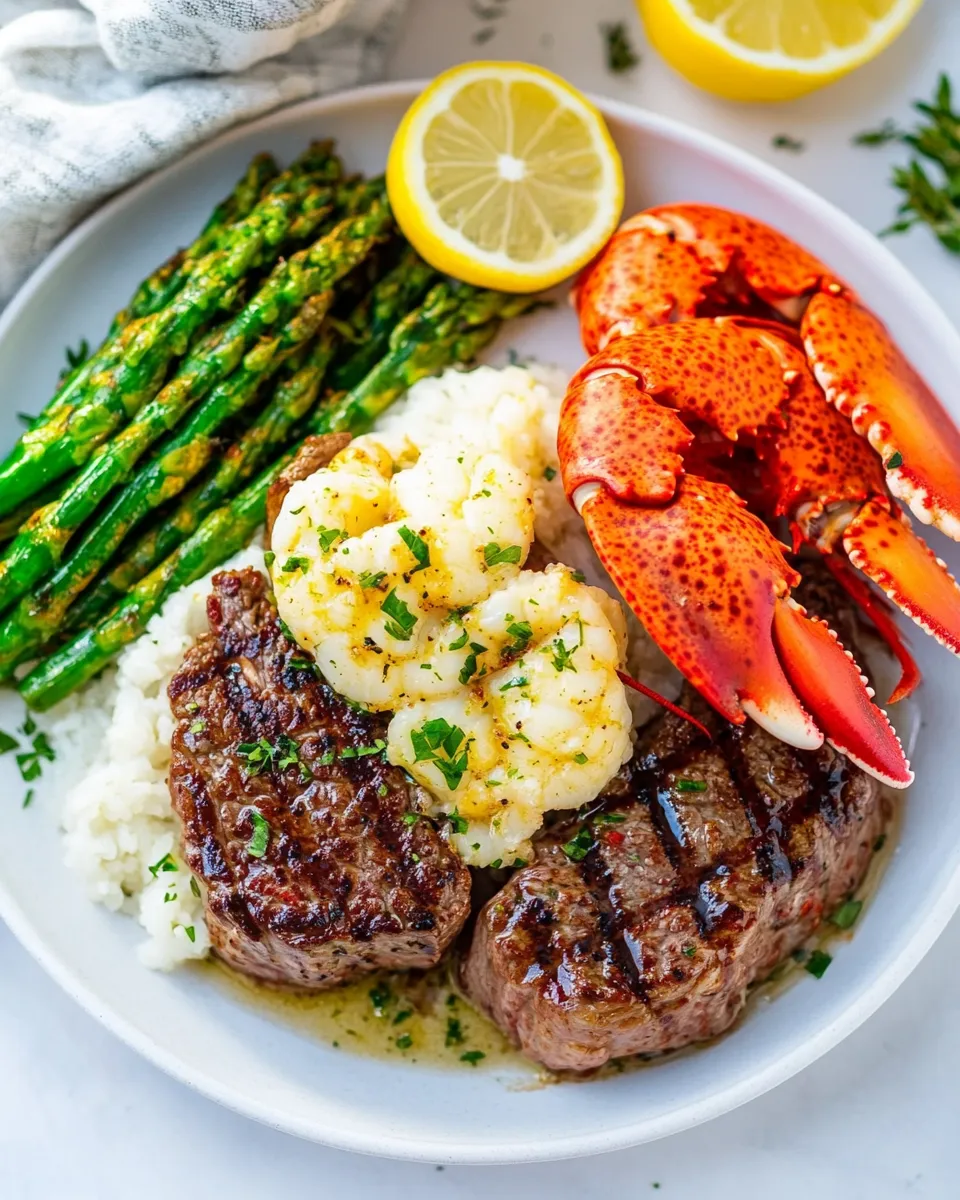
- When the lobster meat is firm and opaque and the butter on top has melted slightly, remove the baking sheet from the oven. Arrange each filet and lobster tail on serving plates, garnish with lemon wedges, and serve.
Why You’ll Keep Making It
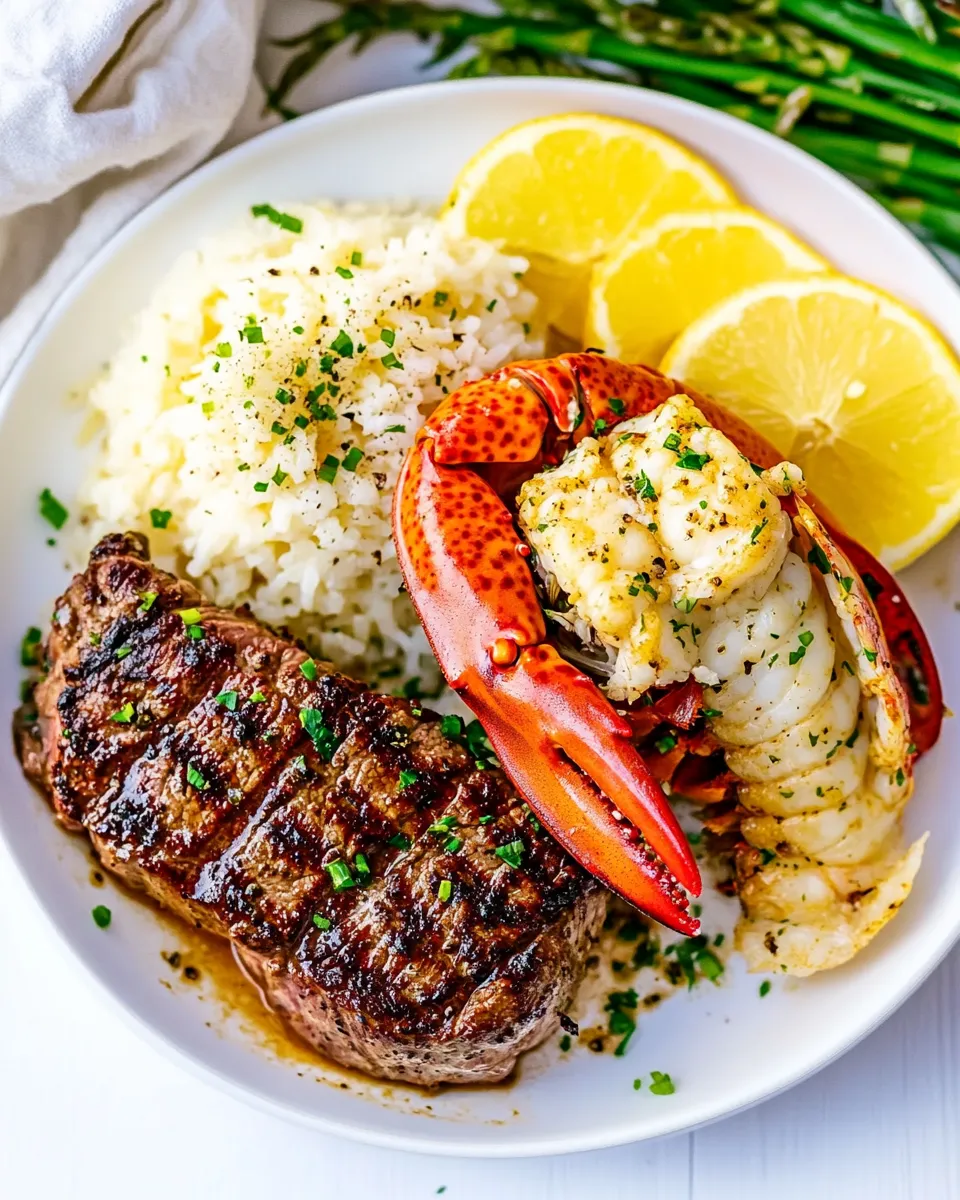
This recipe delivers high-impact results with a small set of moves. The compound butter is the quiet hero — it ties both proteins together with the same flavor thread. Searing then finishing in the oven is forgiving; you get the crust from the pan and gentle carryover heat in the oven to hit the exact doneness you want.
Timing is efficient. The lobster and steaks cook at the same oven temperature and finish around the same time when you follow the schedule, so you don’t have to babysit two separate heats. It’s elegant enough for guests, yet straightforward enough for a weeknight treat. The textures complement each other: the crisp, seasoned crust on the steak, velvety butter, and the tender snap of lobster meat.
Texture-Safe Substitutions
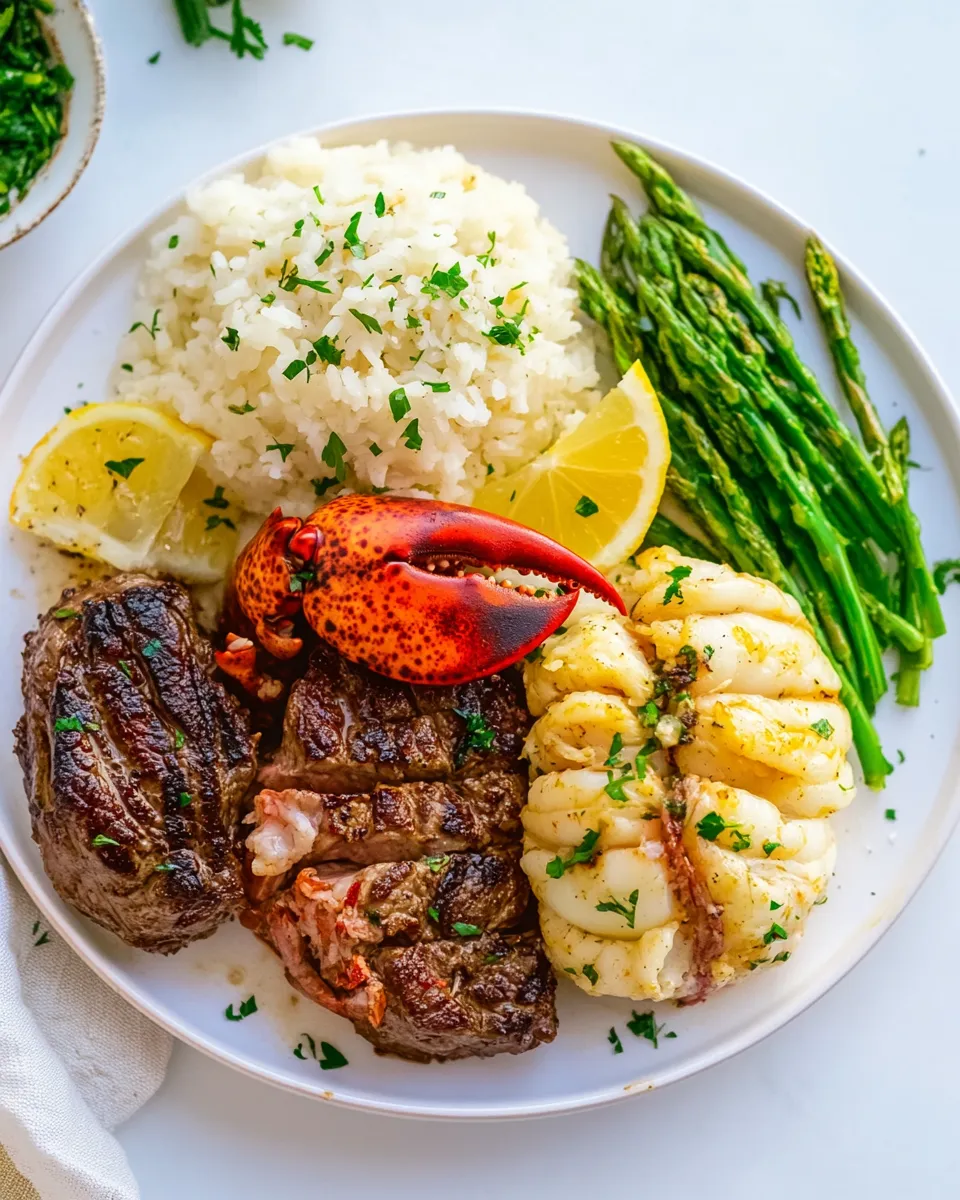
- If lobster is hard to source: Use a firm-fleshed shellfish like large shrimp (adjust times; shrimp cook very quickly) or a store-bought cooked lobster tail that you warm gently instead of raw lobster.
- If you want a different steak: A boneless ribeye or strip steak will work; expect slightly longer oven time for thicker cuts and a richer fat profile.
- If the compound butter texture is a concern: Chill the butter log longer before slicing or grate chilled butter over the meat to avoid squashing soft pats.
- If you prefer less richness: Skip the butter on the steaks and finish with a light squeeze of lemon on the lobster; olive oil and lemon deliver lift without as much fat.
Must-Have Equipment
A few straightforward tools make this dish smooth to execute:
- Cast-iron skillet — necessary for the high-heat sear and oven finish.
- Oven-safe thermometer — to check steak doneness accurately (probe thermometers are best).
- Kitchen shears — to split lobster shells safely and cleanly.
- Baking sheet lined with foil and nonstick spray — for easy cleanup when roasting lobster.
- Small bowl and wax paper/plastic wrap — for forming and chilling the compound butter.
Missteps & Fixes
- Steak overcooked: If the steak goes past your target, slice it thinly across the grain and serve with a sauce or extra pat of butter to restore juiciness. For next time, remove steaks from the oven a few degrees below target and let carryover heat finish them.
- Lobster rubbery: Overcooking causes rubbery texture. Shorten the oven time and start checking at the low end of the 6–8 minute range; lobster is done when opaque and firm but not stiff.
- Butter too soft to slice: Return the compound butter log to the freezer or fridge briefly until firm enough to cut clean pats.
- Steak not achieving a crust: Ensure the pan is hot and the steaks are patted dry before oil and seasoning. Too much moisture prevents browning.
Make It Diet-Friendly
You can trim calories and fat without losing core flavors:
- Use less compound butter or reserve the butter just for the lobster and use a smaller pat on the steak.
- Swap the full compound butter for a lighter herb drizzle: mix chopped parsley, minced shallot, lemon juice, and a teaspoon of olive oil and spoon over cooked lobster.
- Choose leaner steak cuts and monitor oven time closely to avoid having to add extra finishers like butter.
- Serve with plenty of steamed vegetables or a leafy salad to create a balanced plate and keep portion sizes sensible.
Flavor Logic
Everything on this plate has a role. The compound butter is concentrated fat that melts and spreads flavor over both proteins. Shallot and garlic add aromatic depth; parsley brightens and keeps the butter from feeling one-note. Lemon juice on the lobster cuts through richness and highlights the shellfish’s natural sweetness.
Salt and pepper on the steaks are essential — salt draws flavor to the surface and helps form the crust, while pepper gives a bit of bite. Searing at high heat creates the Maillard reaction, giving savory complexity, and the oven finish lets the centers reach desired doneness without burning the exterior. Cooking the lobster alongside the steaks at 375°F is efficient and keeps the textures aligned.
Best Ways to Store
- Refrigerate promptly: Place cooled steak and lobster in shallow airtight containers or wrap tightly. Store in the fridge for up to 3 days for best quality.
- Reheating steak: Warm gently in a 250–275°F oven until just heated through to avoid overcooking; finish with a small pat of compound butter if desired.
- Reheating lobster: Warm covered in a low oven or steam briefly to keep it from drying out. Avoid high heat that will toughen the meat.
- Freezing: Cooked lobster and steak can be frozen, but textures may change. Wrap tightly and freeze up to 1 month; thaw overnight in the fridge before gentle reheating.
Reader Q&A
Q: Can I make the compound butter ahead?
A: Yes. Make it up to 48 hours ahead and keep it refrigerated, or freeze the log for longer storage. Slice straight from chilled or briefly thawed butter when needed.
Q: My steak is thick; how do I adjust cooking time?
A: Increase the oven time and rely on a thermometer. Sear as directed, then roast in the oven longer — check internal temp frequently. Remove a few degrees below your target and rest.
Q: What if I don’t have a cast-iron skillet?
A: Use any heavy, oven-safe pan that can get very hot. A stainless-steel skillet will work. Avoid thin pans that won’t hold heat for a good sear.
Q: Can I broil the lobster instead of baking?
A: Yes, broiling is an option. Watch closely; broilers are intense and can brown quickly. Adjust distance and time so the lobster meat turns opaque without burning the butter.
Hungry for More?
If you enjoyed this plate, try swapping the herb mix in the compound butter for tarragon or chives the next time for a different finish. Pair the meal with a simple side — roasted asparagus, a lemony arugula salad, or buttery mashed potatoes all work beautifully. Keep a thermometer handy; it’s the best tool for repeatable results.
This Surf and Turf method is a dependable blueprint. Little steps — chilled compound butter, a hot pan, oven finishing — add up to a meal that feels indulgent yet controlled. Make it once, and you’ll see how easy it is to recreate a special-occasion plate on a regular night.
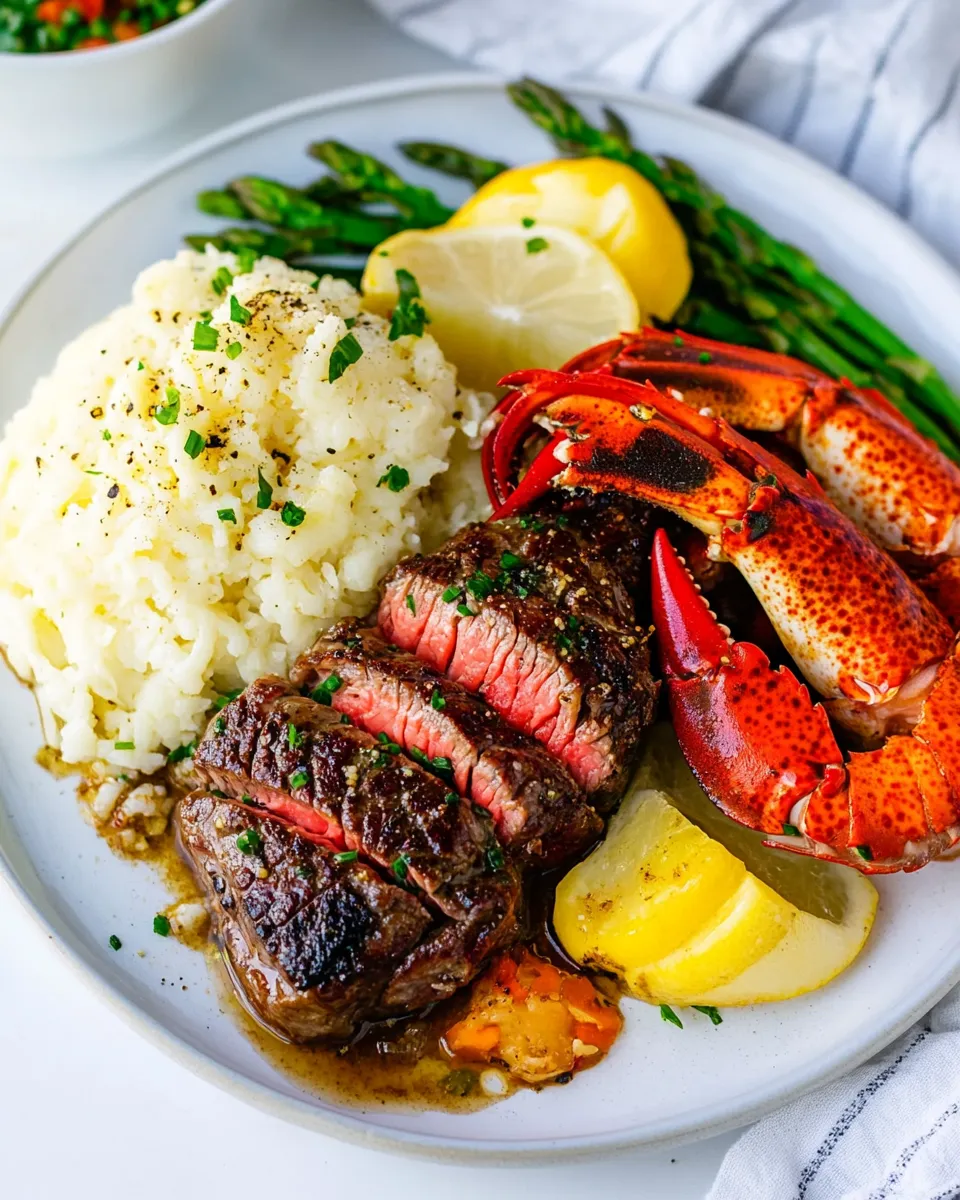
Surf and Turf (Steak and Lobster)
Ingredients
Equipment
Method
- Make the compound butter: in a small bowl use a fork to combine 4 tablespoons unsalted butter (softened), 2 teaspoons minced shallot, 1 minced garlic clove, and 2 teaspoons minced fresh parsley.
- Transfer the butter mixture to a sheet of wax paper or plastic wrap. Form it into a 1½-inch-thick log, roll tightly, freeze 10 minutes to firm, then refrigerate until ready to use.
- Preheat the oven to 375°F and position a rack in the center. Line a baking sheet with aluminum foil and spray with nonstick spray; set the sheet aside.
- Prepare the lobster tails: using kitchen shears, carefully split the top shells of the 2 lobster tails lengthwise. Insert an upside-down teaspoon between the underside of each shell and the meat to loosen it, lift the meat up, and rest the meat on top of the shell. Place the lobster tails on the prepared baking sheet.
- Drizzle the lobster tails with the 2 tablespoons fresh lemon juice, dividing it evenly between the two tails.
- Remove the compound butter log from the refrigerator and slice it into four equal pats. For each lobster tail, take one pat, cut that pat in half, and arrange the two halves on top of the lobster meat. Reserve the remaining two pats for the steaks. (If the butter is too soft to slice, chill briefly until firm enough to cut.)
- Prepare the steaks: pat the steaks dry, drizzle them with 1 tablespoon of the olive oil, and season both sides evenly with 2 teaspoons kosher salt and 1½ teaspoons black pepper.
- Heat the remaining 1 tablespoon olive oil in a cast-iron skillet over medium-high heat until shimmering. Add the steaks and sear 1–2 minutes per side.
- Immediately transfer the skillet with the seared steaks to the preheated oven and at the same time put the baking sheet with the lobster tails into the oven. Cook the steaks 4–8 minutes in the oven, until they reach your desired doneness (use a thermometer: medium-rare 125–130°F; medium 135°F; medium-well 145°F). Cook the lobster tails 6–8 minutes, until the meat is firm and opaque.
- Remove the steaks from the oven when they reach the desired temperature and transfer them to a plate. Top each filet with one reserved pat of compound butter and let the steaks rest for 5 minutes while the lobster finishes cooking.
- When the lobster meat is firm and opaque and the butter on top has melted slightly, remove the baking sheet from the oven. Arrange each filet and lobster tail on serving plates, garnish with lemon wedges, and serve.