Sweet Crepes
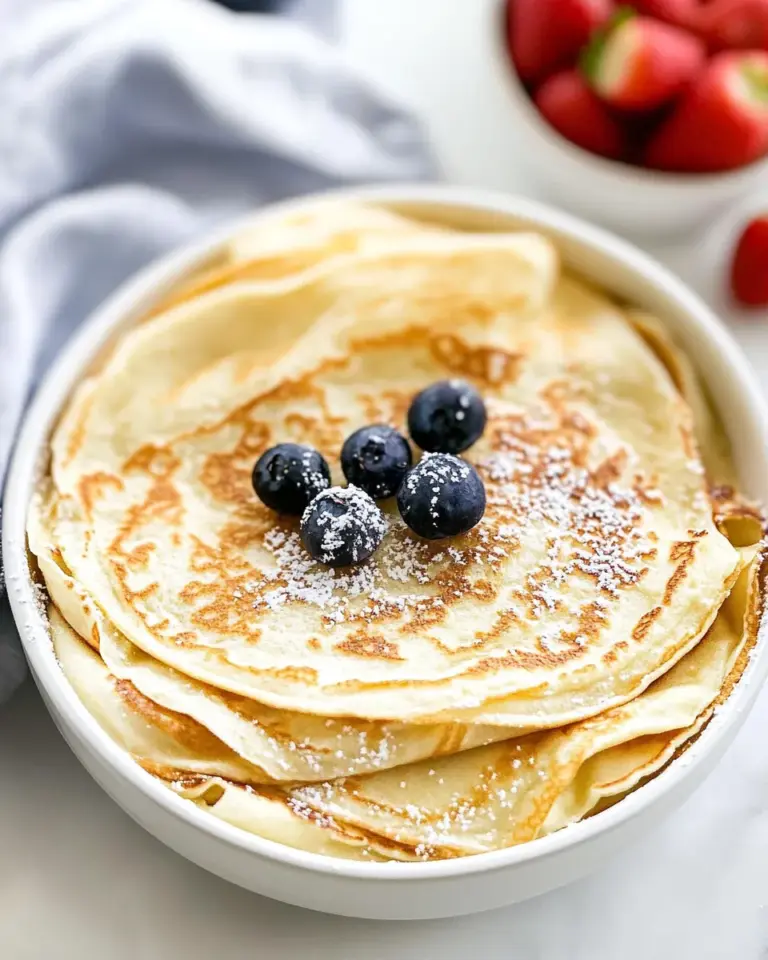
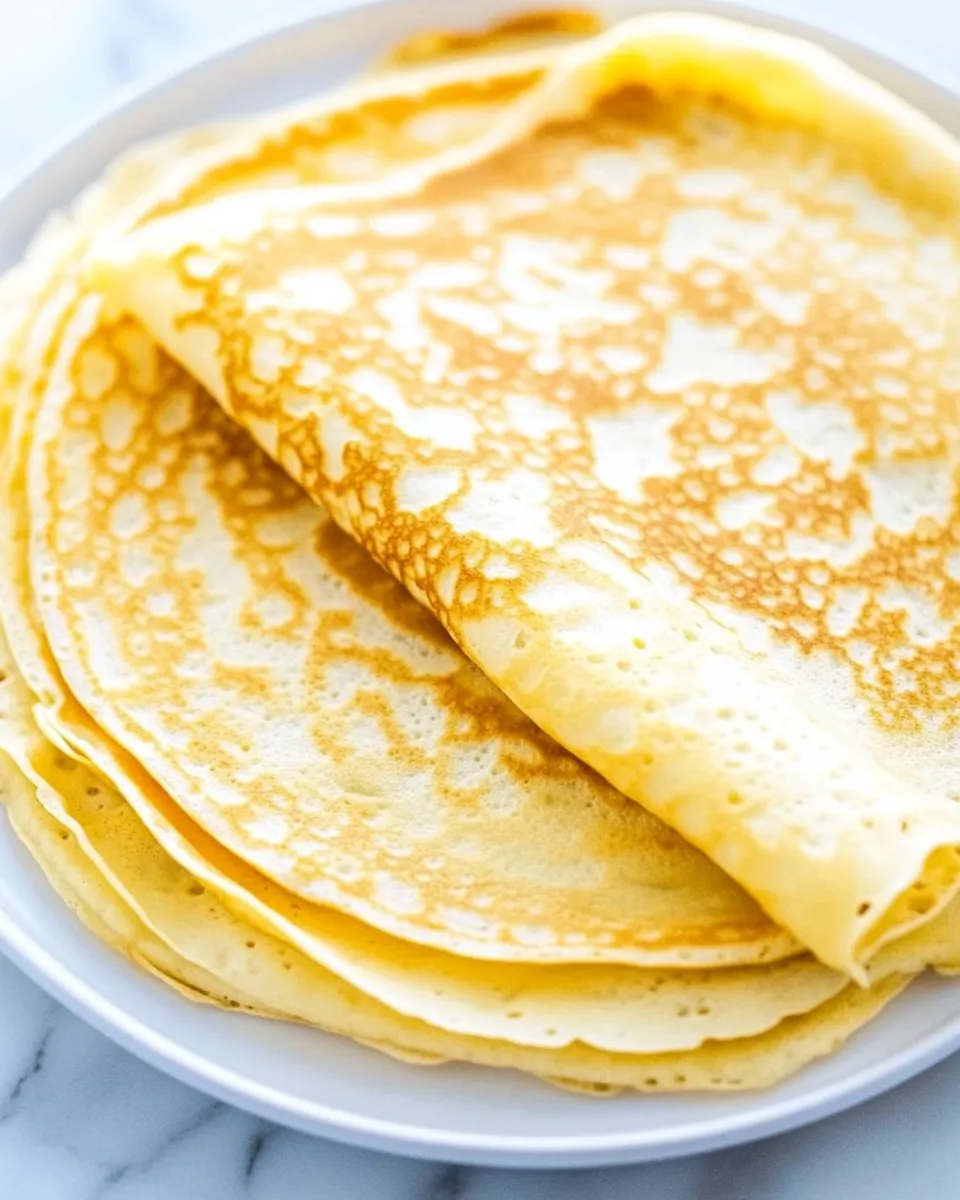
These crepes are the kind I make when I want something quick, elegant, and forgiving. They’re thin, slightly sweet, and flexible enough to be dressed up with fruit, jam, or a dusting of powdered sugar. I love how a single bowl and a nonstick pan can transform a handful of pantry staples into a bright breakfast or a simple dessert.
What I’ll share below is a practical, dependable approach — the exact steps I use every weekend. No fussy techniques, just a batter that comes together fast and a quick pan routine that produces even, tender crepes. Read through the tips and troubleshooting if you want to smooth out the batter, control browning, or adapt fillings.
Make a batch, stack them on a plate, and keep them warm while you set out toppings. They reheat beautifully, which means you can make them in advance and still serve warm crepes that taste like you cooked them in the moment.
Gather These Ingredients
Ingredients
- 2 cups milk, divided (non-fat, reduced fat or whole milk) 480 ml — provides the liquid for the batter; dividing the milk helps create a lump-free texture.
- 1 ⅓ cups all purpose flour 160 g — the structure of the crepe; measure by spooning into the cup and leveling for accuracy.
- 4 medium eggs — bind the batter and add richness; they also help the crepes hold together while flipping.
- ¼ cup avocado oil 60 ml — keeps the batter tender and helps crepes release from the pan without a greasy taste.
- 1 tbsp sugar 15 g — adds a light sweetness to the batter; adjust slightly if you plan intensely sweet fillings.
- ⅓ tsp salt 2.5 g — balances the sweetness and enhances flavor.
- butter for greasing the pan — a small amount for flavor and browning; you only need it for the first crepe unless sticking starts.
Cook Sweet Crepes Like This
- In a medium bowl, whisk together 4 medium eggs, 1 tbsp (15 g) sugar and 1/3 tsp (2.5 g) salt until combined.
- Add 1 cup (240 ml) of the milk and 1/4 cup (60 ml) avocado oil to the eggs and whisk until blended.
- Gradually whisk in 1 1/3 cups (160 g) all-purpose flour until the mixture is smooth and there are no large lumps.
- Add the remaining 1 cup (240 ml) milk and whisk until the batter is completely smooth and lump-free.
- (Optional) Let the batter rest 10–30 minutes at room temperature for a slightly smoother texture.
- Heat a nonstick or well-seasoned frying pan over medium heat. Lightly grease the pan with a small amount of butter for the first crepe.
- Pour about 60 ml (1/4 cup) of batter into the center of the hot pan, then immediately tilt and swirl the pan to spread the batter into a thin, even circle.
- Cook until the edges set and the underside is lightly golden, about 1 minute. Flip and cook the other side until lightly golden, about 1 minute.
- For the remaining crepes, continue pouring 60 ml (1/4 cup) portions of batter and cook as before; you do not need to add more butter for each crepe unless the pan begins to stick.
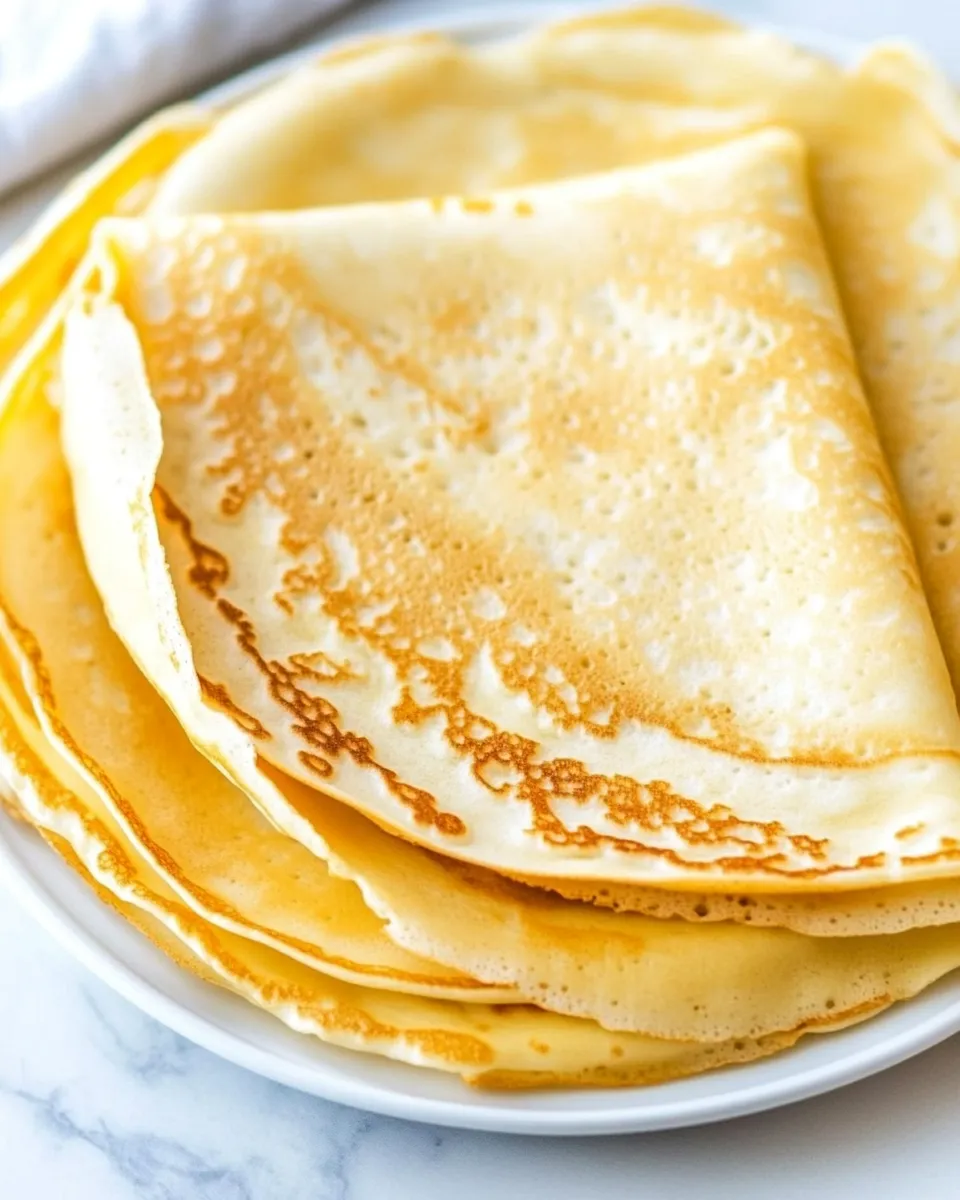
- Stack cooked crepes on a plate and serve warm.
Why It Works Every Time
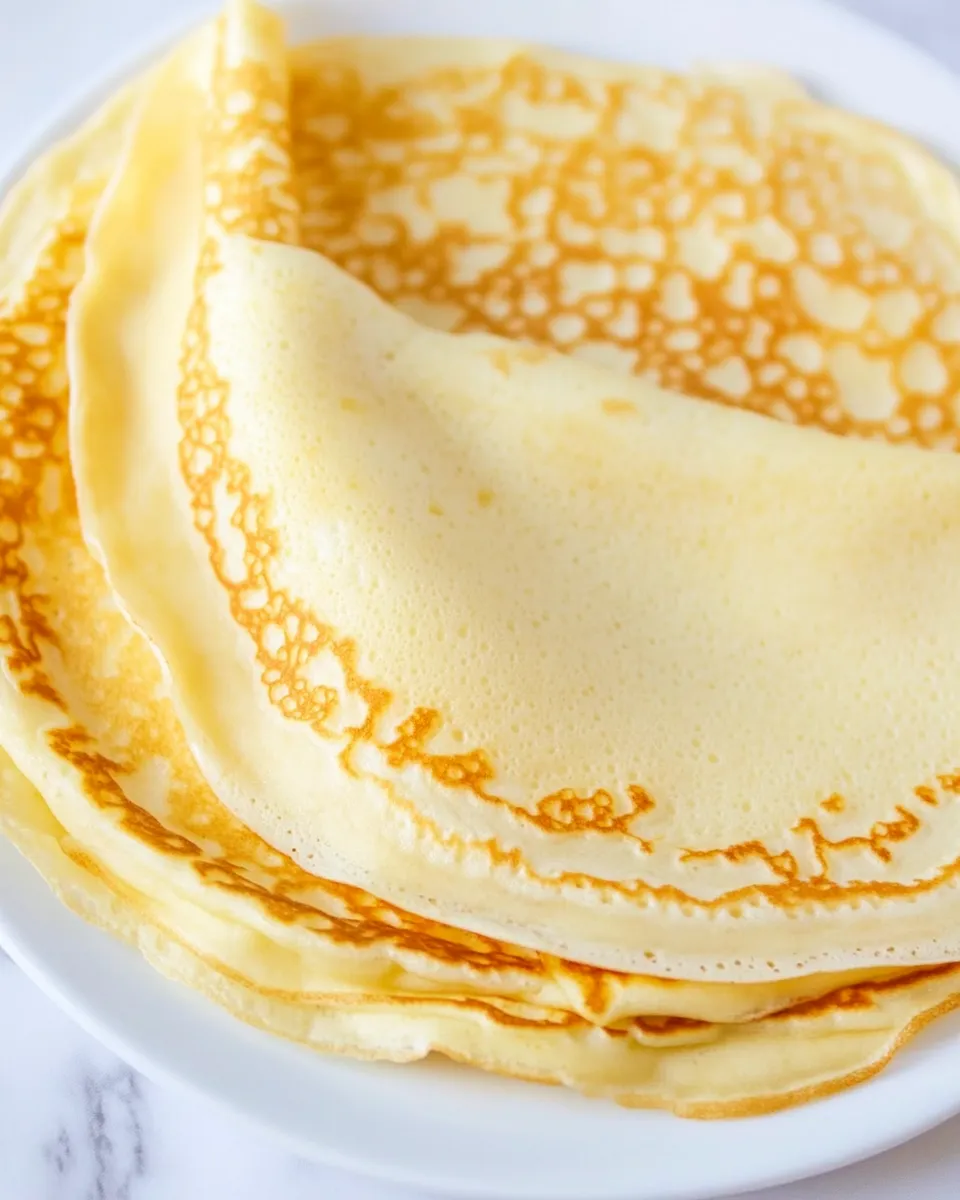
The method balances liquid and flour to give you a thin batter that spreads easily but still holds together when flipped. Whisking the eggs, sugar, and salt first ensures even distribution of the salt and sugar, which affects flavor and browning.
Adding half the milk initially with the oil creates an emulsion that helps the flour incorporate without forming lumps when you add it gradually. The second addition of milk thins the batter to the right consistency and guarantees smoothness. The brief cooking time at medium heat prevents overbrowning while producing a delicate, tender crepe.
If You’re Out Of…
Short on an ingredient? Here are simple, practical swaps you can try without changing the technique.
- Milk — If you don’t have whole milk, reduced-fat or non-fat milk listed in the ingredients works fine. The recipe already notes these options. Use the same volume.
- Avocado oil — If you reach for a different neutral oil, keep the amount identical. Olive oil will work but has a stronger flavor; use only if that matches your filling choices.
- Butter for greasing — A neutral oil or a small swipe of vegetable shortening will prevent sticking. Use very sparingly to avoid greasy crepes.
Cook’s Kit
- nonstick or well-seasoned frying pan — 8-10 inch pans work best for evenly sized crepes.
- medium mixing bowl and whisk — a whisk gives you control and helps eliminate lumps quickly.
- measuring cups and spoons — accurate liquid and dry measurements make batter consistency consistent.
- small ladle or 60 ml measuring cup — use it to portion batter for uniformly sized crepes.
- spatula — thin, flexible spatulas make flipping easier without tearing the crepe.
Troubles You Can Avoid
Sticking, tearing, and uneven browning are the most common problems. Most are simple to fix:
- Sticking — Make sure the pan is hot before adding batter and grease lightly for the first crepe. If later crepes stick, wipe the pan with a paper towel and a little butter or oil between batches.
- Tearing — Batter that’s too thick or a pan that’s too hot will cause tears. Thin the batter slightly with a splash of milk if it refuses to spread smoothly. Lower the heat if the crepe browns immediately and tears when you try to lift it.
- Uneven edges — Tilt and swirl the pan immediately after pouring to spread the batter evenly. If you pour and then wait, the batter won’t reach the edges and you’ll get ragged shapes.
- Rubbery texture — Overcooking makes crepes tough. One minute per side at medium heat is enough; watch the first crepe to find the correct timing for your pan.
In-Season Swaps
Using seasonal produce makes these crepes shine. Here are topping ideas by season that pair well with the tender, slightly sweet crepes:
- Spring — Thinly sliced strawberries or raspberries with a spoonful of mascarpone.
- Summer — Peaches or nectarines sautéed briefly in a little butter and sugar, or a mixed berry compote.
- Fall — Sliced pears warmed with a pinch of cinnamon and a drizzle of honey.
- Winter — Citrus segments and a dusting of powdered sugar, or stewed apples with nutmeg.
Pro Tips & Notes

Texture & Consistency
The ideal batter is pourable and thin enough to coat the pan in a single, even layer when you tilt it. If your batter is too thick, thin it with milk a tablespoon at a time. If it’s too thin, add a tablespoon of flour and whisk until incorporated.
Resting the Batter
Resting 10–30 minutes is optional but helpful. It lets the flour fully hydrate and the gluten relax, so the crepes become more tender and any tiny air bubbles dissipate. If you’re short on time, you can skip this step and still get good results.
Making Ahead
Cook the crepes, stack them between sheets of parchment, wrap tightly, and refrigerate for up to 48 hours. Reheat gently in a warm skillet or in the microwave covered with a damp paper towel for 10–20 seconds per crepe.
Cooling, Storing & Rewarming
Cool crepes on a plate and separate with parchment if you plan to stack more than a few. For short-term storage, wrap the stack tightly with plastic wrap and keep in the fridge for up to 48 hours. For longer storage, freeze in a single layer separated by parchment, then transfer to a freezer bag for up to 1 month.
To rewarm: heat a nonstick pan over low to medium-low heat, warm each crepe 15–30 seconds per side until heated through. If using a microwave, cover with a damp paper towel and heat 10–20 seconds depending on your microwave power. Avoid high heat or long microwave times; they dry the crepes out.
Reader Questions
Q: Can I make the batter in a blender?
A: Yes. A blender speeds up the process and yields a very smooth batter. Blend eggs, sugar, salt, half the milk, and the oil, then add flour and the remaining milk and blend to combine. Scrape down the sides and pulse until lump-free.
Q: How thin should the crepe be?
A: Aim for a paper-thin layer that still holds together when lifted. The 60 ml (1/4 cup) portion in a standard 8-10 inch pan should achieve that. If you want even thinner, use slightly less batter and spread more aggressively by tilting the pan.
Q: Can I add flavorings to the batter?
A: Yes — a teaspoon of vanilla extract or a tablespoon of melted liqueur can add a nice note. Because the ingredient list above is the source of truth for the core recipe, add flavorings sparingly and optionally.
Bring It to the Table
Serve crepes warm, stacked or folded, with a selection of fillings and toppings for people to choose from. Classic options I set out are lemon wedges and sugar, fresh berries, sliced bananas with Nutella, whipped cream, and a small bowl of maple syrup or honey. A simple dusting of powdered sugar and a few berries looks finished and elegant.
For a crowd, keep the stack covered in a warm oven set to its lowest setting (or the warming drawer). Arrange plates, spatulas, and small bowls of toppings so guests can assemble their own. It’s relaxed, pretty, and always appreciated.
If you try this recipe, tell me what you filled them with — fruit and a squeeze of lemon is my weekday comfort; Nutella and banana is my weekend indulgence.
Sweet Crepes
Ingredients
Equipment
Method
- In a medium bowl, whisk together 4 medium eggs, 1 tbsp (15 g) sugar and 1/3 tsp (2.5 g) salt until combined.
- Add 1 cup (240 ml) of the milk and 1/4 cup (60 ml) avocado oil to the eggs and whisk until blended.
- Gradually whisk in 1 1/3 cups (160 g) all-purpose flour until the mixture is smooth and there are no large lumps.
- Add the remaining 1 cup (240 ml) milk and whisk until the batter is completely smooth and lump-free.
- (Optional) Let the batter rest 10–30 minutes at room temperature for a slightly smoother texture.
- Heat a nonstick or well-seasoned frying pan over medium heat. Lightly grease the pan with a small amount of butter for the first crepe.
- Pour about 60 ml (1/4 cup) of batter into the center of the hot pan, then immediately tilt and swirl the pan to spread the batter into a thin, even circle.
- Cook until the edges set and the underside is lightly golden, about 1 minute. Flip and cook the other side until lightly golden, about 1 minute.
- For the remaining crepes, continue pouring 60 ml (1/4 cup) portions of batter and cook as before; you do not need to add more butter for each crepe unless the pan begins to stick.
- Stack cooked crepes on a plate and serve warm.
Notes
While cooking crepes, you don't have to grease the pan with butter for every single one. Grease it once just before cooking the first crepe and this should be enough. Use just a little bit of butter to prevent sticking. You may also choose to substitute butter with coconut oil.