Vanilla Bundt Cake
I bake because a good cake is the kind of generosity that keeps returning favors: it feeds a table, fixes a mood, and shows up at the right time. This Vanilla Bundt Cake is my go-to when I want something classic, comforting, and reliably successful. It’s the kind of cake that looks like effort but comes together without drama.
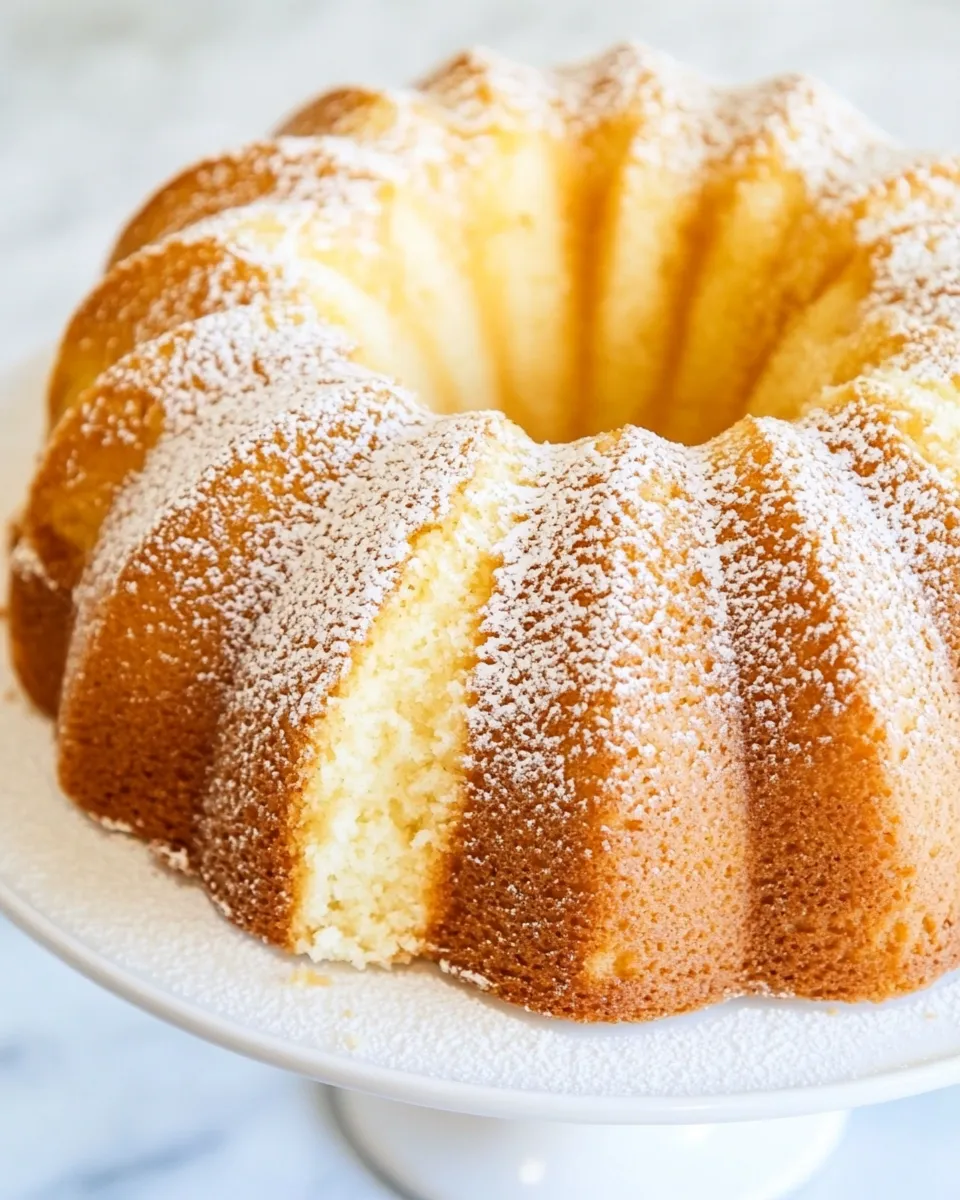
The crumb is tender from the sour cream and the batter stays forgiving because of the mixing order. You’ll get a golden crust and a soft, moist center that holds up for slicing. I’ll walk you through the exact ingredients, the precise steps, and the practical tips I use to prevent the usual mistakes—so you can bake it with confidence.
Expect straight advice, no fluff: clear instructions, tool recommendations, and short explanations about why each choice matters. If you want a cake for a party or a quiet weekend slice, this Vanilla Bundt Cake delivers every time.
The Ingredient Lineup
Ingredients
- 1 cup salted butter at room temperature — Fat for richness and structure; room temperature means it creams properly with sugar.
- 3 cups granulated sugar — Sweetens and, when creamed with butter, helps incorporate air for a lighter crumb.
- 6 whole eggs at room temperature — Provide structure, lift, and moisture; adding them one at a time stabilizes the emulsion.
- 2 teaspoons vanilla extract — Primary flavor; adds depth to the straightforward vanilla profile.
- 3 cups all purpose flour — The cake’s framework; measure accurately for proper texture.
- 1/4 teaspoon baking soda — Small leavening boost to keep the crumb tender without over-rising.
- 1/4 teaspoon salt — Balances sweetness and enhances the vanilla notes.
- 1 cup sour cream — Adds moisture and acidity for a tender, fine crumb.
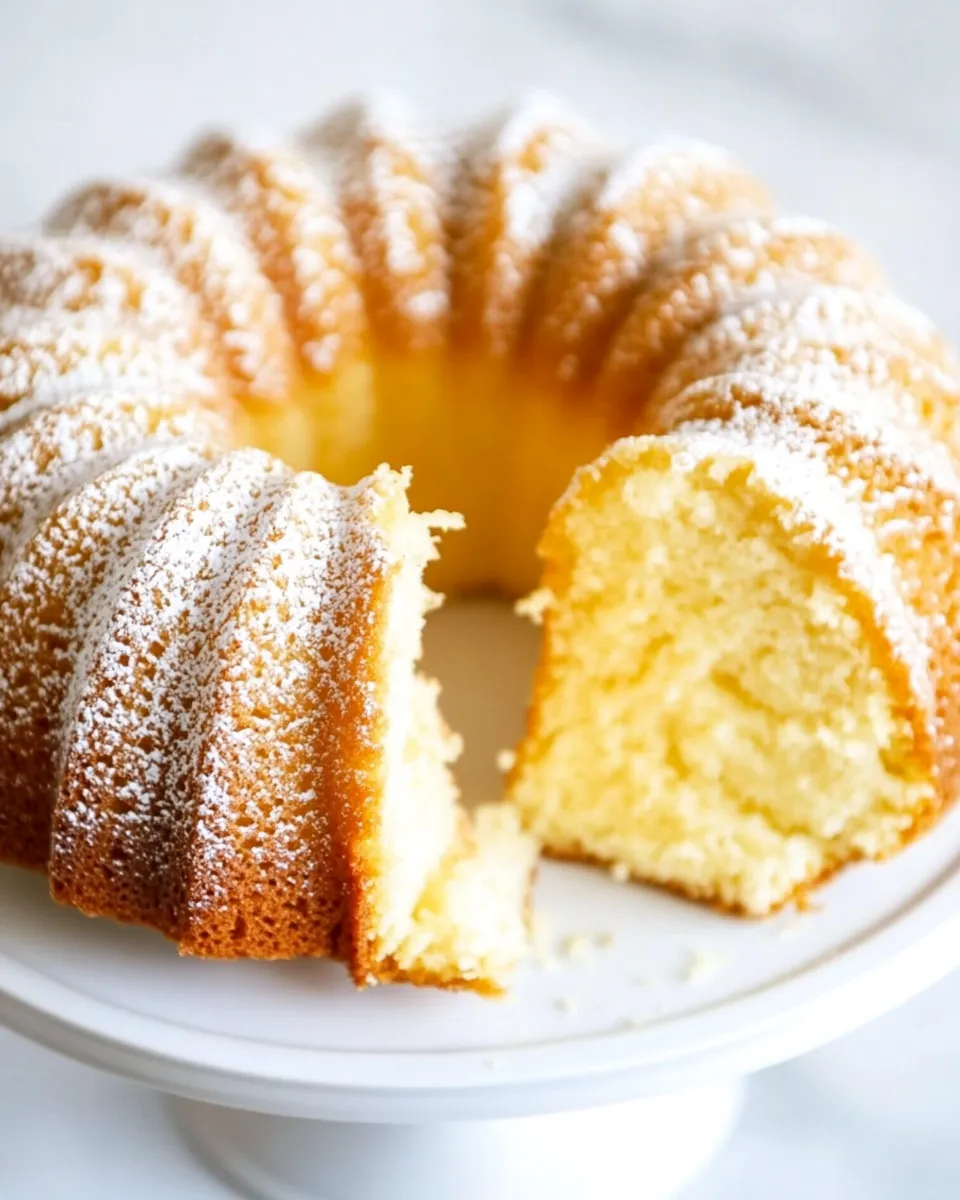
- Powdered sugar for garnish — Simple finish; dust just before serving for the prettiest presentation.
Vanilla Bundt Cake Made Stepwise
- Preheat the oven to 325°F (163°C) and grease a 10-cup bundt pan well with nonstick cooking spray; set the pan aside.
- In the bowl of a stand mixer (or a large bowl with a hand mixer), cream 1 cup salted butter (room temperature) and 3 cups granulated sugar together for 5–7 minutes, until light and fluffy.
- Add 6 whole eggs (room temperature) one at a time, mixing well after each addition. Scrape down the sides and bottom of the bowl as needed.
- Stir in 2 teaspoons vanilla extract, then beat the batter an additional 2 minutes until light and airy.
- In a separate bowl, combine 3 cups all-purpose flour, 1/4 teaspoon baking soda, and 1/4 teaspoon salt.
- Add half of the flour mixture to the batter and mix just until combined.
- Add 1 cup sour cream and mix until incorporated.
- Add the remaining flour mixture and mix just until the flour is incorporated. Scrape the sides and bottom of the bowl and finish folding/stirring the batter by hand with a spatula until completely smooth—avoid overmixing.
- Pour the batter into the prepared bundt pan and smooth the top with a spatula.
- Bake for 75–90 minutes, or until the cake is golden brown and a toothpick inserted near the center comes out clean or with just a few moist crumbs.
- Let the cake cool in the pan on the counter for 15–20 minutes, until you can handle the pan while it is still warm. Invert the pan onto a cooling rack and remove the pan.
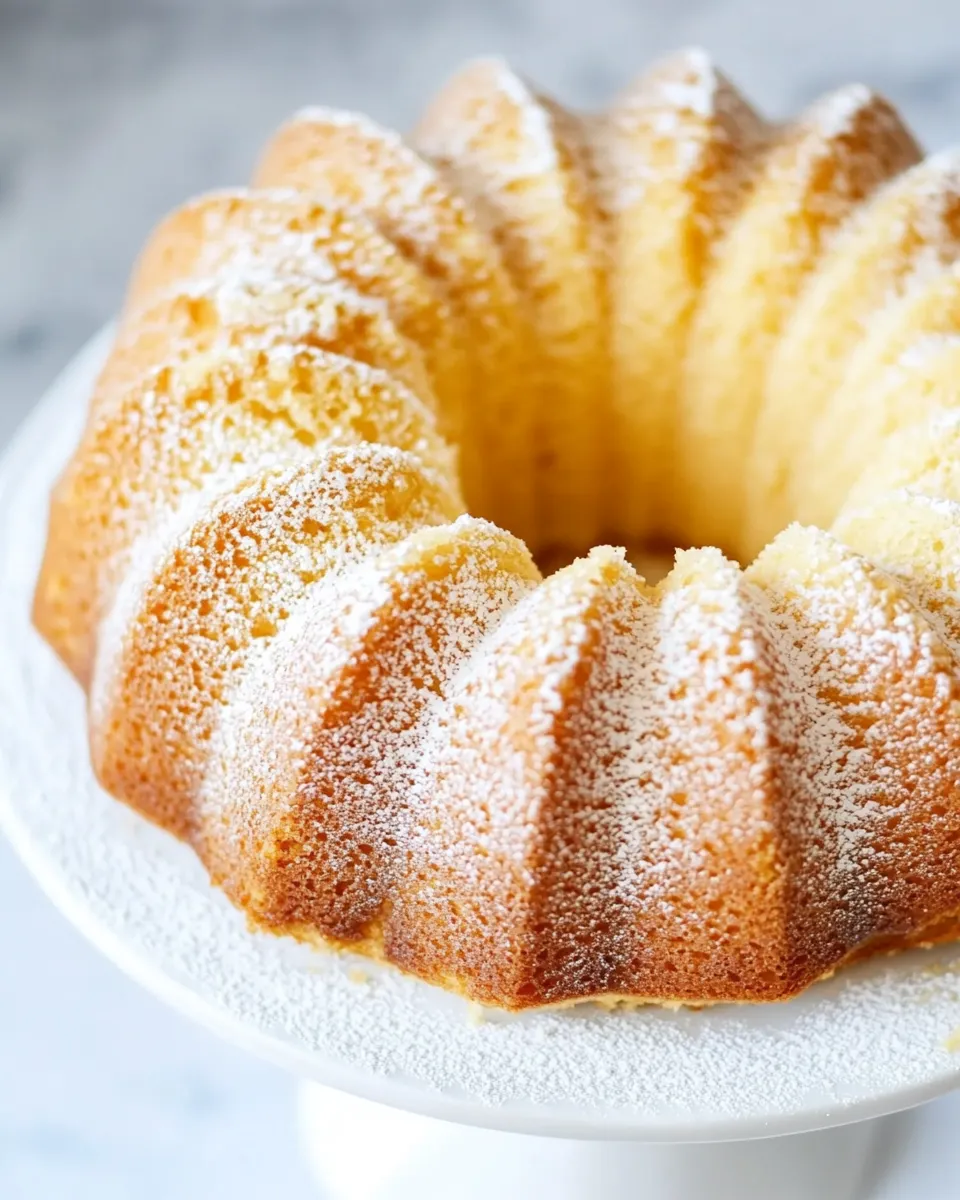
- Once the cake is completely cooled, transfer it to a serving platter, dust with powdered sugar, and serve.
Why This Recipe Belongs in Your Rotation
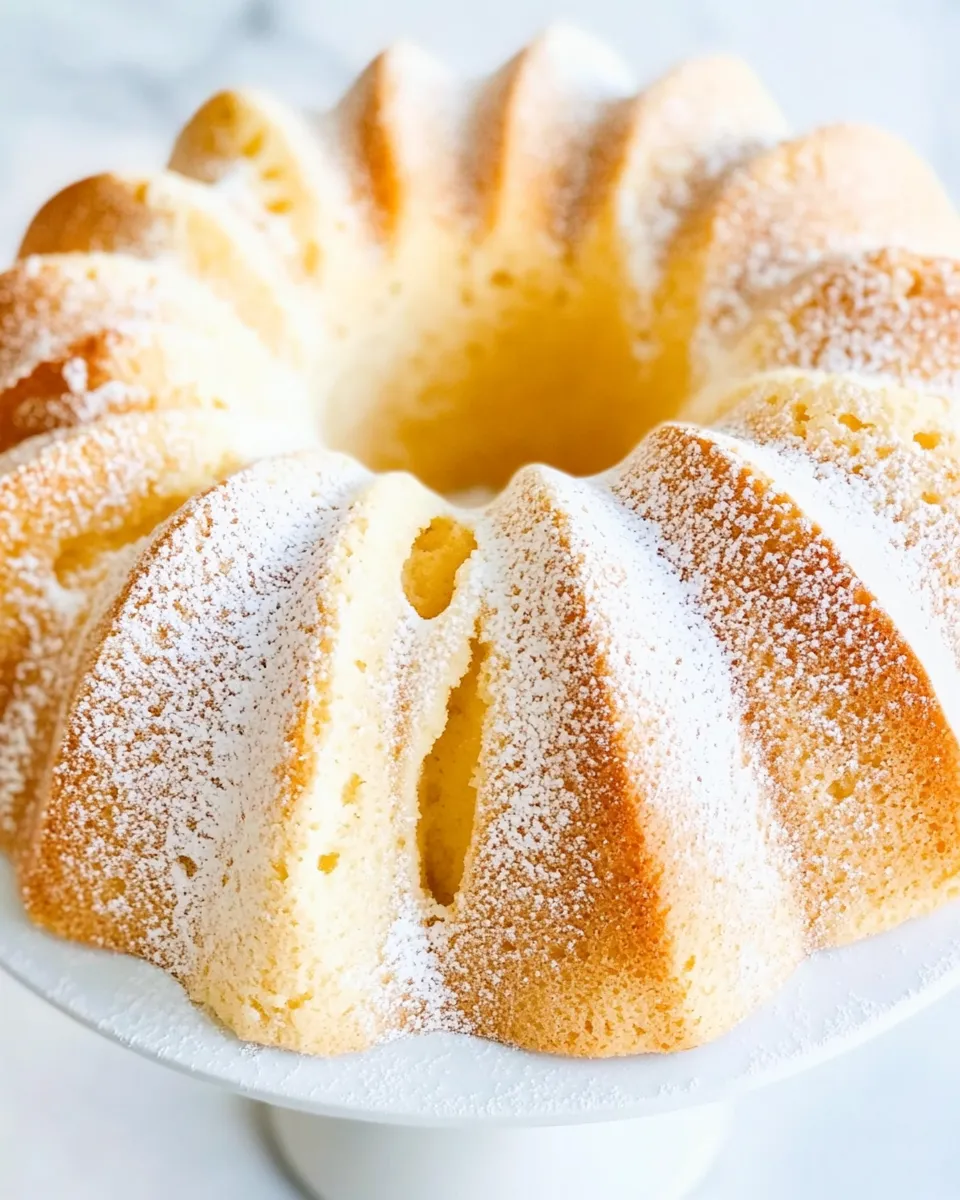
This cake hits the sweet spot between impressive and approachable. It has a reliably tender crumb thanks to the sour cream and the controlled mixing method. The ingredients are pantry staples, the technique is straightforward, and the final result is unfussy yet elegant—perfect for a weekend coffee, a family celebration, or a last-minute guest.
It’s also forgiving. The creaming step builds structure; adding eggs one at a time maintains an emulsion; alternating dry ingredients with sour cream keeps the batter stable. If you follow the order and keep an eye on doneness, this cake almost always comes out well. That reliability is why I make it repeatedly.
Budget & Availability Swaps
If you need to swap, prioritize like this: keep the flour, butter, eggs, and sour cream—those shape the cake’s texture. You can use unsalted butter and add a pinch more salt if that’s what’s available. If vanilla extract is sparse, use what you have but don’t skip it—vanilla defines the flavor here.
For powdered sugar garnish, feel free to skip it entirely; the cake is still excellent without. I don’t recommend inventing complicated glazes unless you already have the ingredients on hand. Keeping it simple saves time and keeps costs down.
Tools of the Trade
Good tools make this cake easier to execute.
- 10-cup bundt pan — Essential for shape and even baking.
- Stand mixer or hand mixer — For proper creaming and even mixing.
- Large mixing bowls — One for creaming, one for dry ingredients.
- Spatula — For folding and scraping the bowl cleanly.
- Cooling rack — Allows the cake to cool without getting soggy on the bottom.
- Toothpick or thin skewer — For testing doneness near the center.
What Not to Do
Do not skip the creaming time. Creaming butter and sugar for the full 5–7 minutes incorporates air and yields a lighter cake. Shortchanging this step makes the cake dense.
Do not add all the flour at once. That risks overmixing and developing gluten, which results in a tough crumb. Follow the sequence: half the flour, sour cream, then the rest.
Do not remove the cake from the pan too soon. If it’s still hot, it may break apart when inverted. Wait 15–20 minutes, then invert while the pan is still warm but handleable.
Dietary Customizations
Because this recipe relies on eggs, butter, and sour cream for texture, substantial dietary swaps change the cake’s character. If you need to adapt:
- Lower-sodium option: Use unsalted butter and keep the 1/4 teaspoon salt to control salt level.
- Dairy substitutions: A full dairy swap (e.g., plant-based sour cream and butter substitutes) will affect texture; if you try this, expect a different crumb and possibly longer bake time. I recommend testing in small batches first.
- Egg-free: This recipe depends heavily on eggs for lift. For true egg-free baking, use a specifically developed egg-free bundt recipe instead of ad-hoc swaps.
Chef’s Rationale
I chose these exact proportions for a few reasons. Three cups of flour and a cup of sour cream keep the crumb dense enough to slice cleanly yet tender. The ratio of butter and sugar—1 cup butter to 3 cups sugar—creates structure and sweetness while the long creaming step introduces air so the cake doesn’t become heavy. Six eggs add emulsification and lift without needing a high oven temperature, which helps the bundt’s exterior brown evenly over a longer bake time.
The low oven temperature (325°F / 163°C) and the long 75–90 minute bake let the cake cook through without an overly dark crust. The small amount of baking soda acts as a gentle assist to the eggs and creaming, preventing collapse while keeping the interior fine-grained.
Save It for Later
To store: wrap the cooled cake tightly in plastic wrap or place it in an airtight container. It will keep at room temperature for 2–3 days. For longer storage, freeze wrapped slices or the whole cake for up to 2 months; thaw overnight in the refrigerator, then bring to room temperature before serving. Dust with powdered sugar only right before serving to keep the finish tidy.
Helpful Q&A
Q: How can I tell when the cake is done?
A: Use a toothpick inserted near the center. It should come out clean or with a few moist crumbs—not wet batter. The cake should be golden brown and start to pull slightly away from the pan edges.
Q: My cake sank in the middle—what happened?
A: Most likely underbaked or the oven door was opened too early. Also check that the baking soda and eggs were measured and mixed as directed. Overmixing after the flour is added can cause collapse as well.
Q: Can I halve the recipe?
A: Technically yes, but bundt pans are sized for larger batters. Halving would require using a different pan (loaf or round) and adjusting bake time. For consistent results, use the full recipe and the recommended 10-cup bundt pan.
Q: My cake stuck to the pan—how do I prevent that?
A: Grease the pan thoroughly with nonstick spray (pay attention to crevices) and allow the cake to cool 15–20 minutes before inverting. If your pan is older or has intricate details, use a light brush of butter and a dusting of flour in addition to spray.
Q: Can I add mix-ins like chocolate chips or fruit?
A: Mix-ins change the batter balance. Small additions (a handful of chocolate chips) may work, but they can affect bake time and distribution. If you add anything substantial, fold it in after the final stir and expect to increase baking time slightly; test with a toothpick.
Ready, Set, Cook
Gather your ingredients and preheat to 325°F. Take the time to cream the butter and sugar fully; it’s the small step that makes the biggest difference. Follow the mixing order, mind the bake time, and let the cake cool properly before unmolding. Dust with powdered sugar and serve.
Make this cake when you want something dependable and delicious. It’s one of those recipes that becomes a quiet favorite—simple, elegant, and always welcomed at the table. Happy baking.
Vanilla Bundt Cake
Ingredients
Equipment
Method
- Preheat the oven to 325°F (163°C) and grease a 10-cup bundt pan well with nonstick cooking spray; set the pan aside.
- In the bowl of a stand mixer (or a large bowl with a hand mixer), cream 1 cup salted butter (room temperature) and 3 cups granulated sugar together for 5–7 minutes, until light and fluffy.
- Add 6 whole eggs (room temperature) one at a time, mixing well after each addition. Scrape down the sides and bottom of the bowl as needed.
- Stir in 2 teaspoons vanilla extract, then beat the batter an additional 2 minutes until light and airy.
- In a separate bowl, combine 3 cups all-purpose flour, 1/4 teaspoon baking soda, and 1/4 teaspoon salt.
- Add half of the flour mixture to the batter and mix just until combined.
- Add 1 cup sour cream and mix until incorporated.
- Add the remaining flour mixture and mix just until the flour is incorporated. Scrape the sides and bottom of the bowl and finish folding/stirring the batter by hand with a spatula until completely smooth—avoid overmixing.
- Pour the batter into the prepared bundt pan and smooth the top with a spatula.
- Bake for 75–90 minutes, or until the cake is golden brown and a toothpick inserted near the center comes out clean or with just a few moist crumbs.
- Let the cake cool in the pan on the counter for 15–20 minutes, until you can handle the pan while it is still warm. Invert the pan onto a cooling rack and remove the pan.
- Once the cake is completely cooled, transfer it to a serving platter, dust with powdered sugar, and serve.