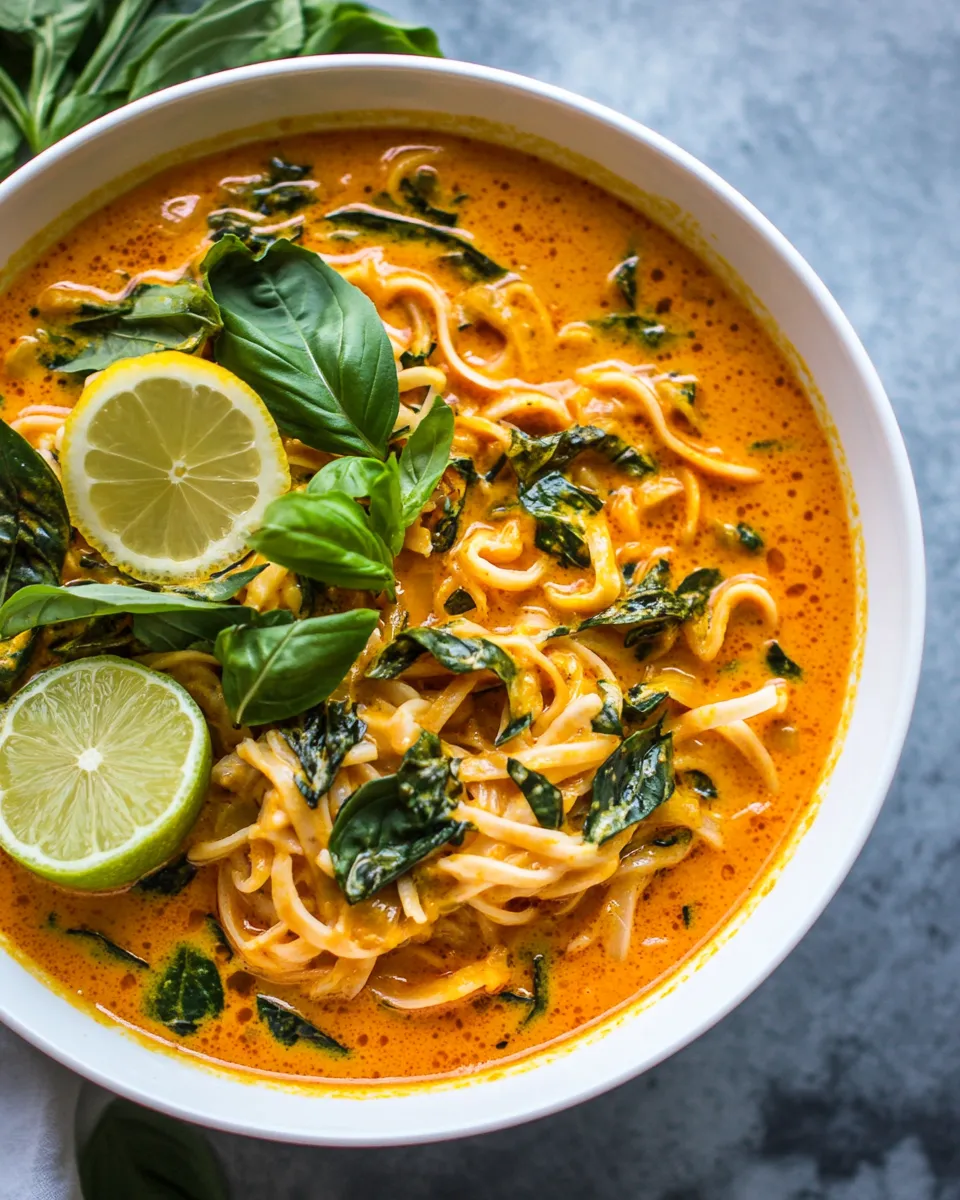
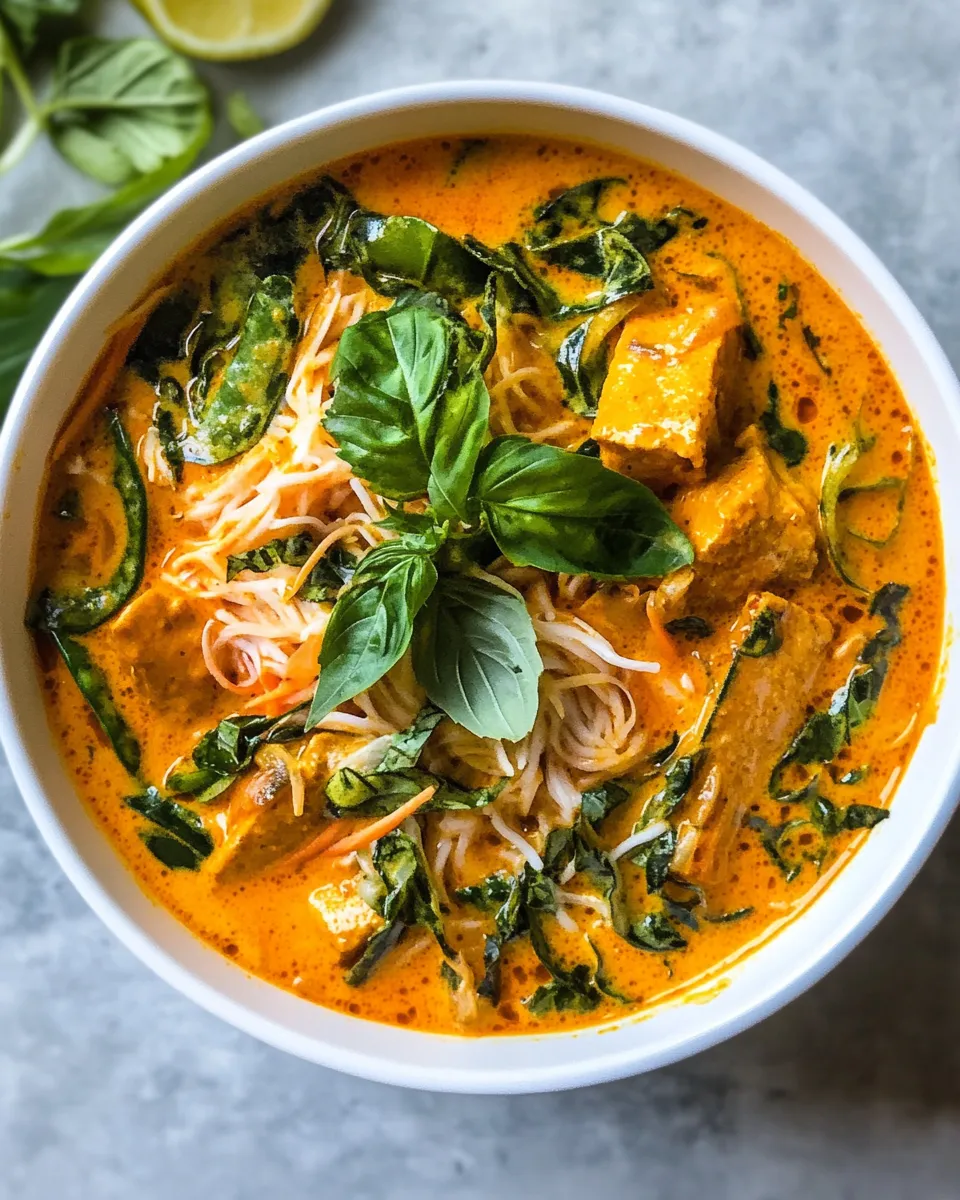
Vegan Thai Lemongrass Coconut Curry Soup
I fell for this soup the first time I made it: bright, herbaceous lemongrass, the gentle heat and sweetness of Thai red curry paste, and the silky hug of full‑fat coconut milk. It’s one of those dishes that feels indulgent but comes together quickly, and it travels well through the week—perfect for busy nights or for when you want something cozy without a long list of ingredients.
This version focuses on texture as much as flavor. Spiralized vegetables—sweet potato, zucchini, and celery root—give the soup body and a satisfying bite without weighing it down. The aromatics are simple: fresh lemongrass, ginger, garlic, and onion. The coconut milk and vegetable broth create the creamy, soupy base, and lime at the end cuts through it all with bright acidity.
Below you’ll find the exact ingredient list and step‑by‑step directions I use every time I make it. I’ll also share why the recipe works, small substitutions, storage tips, and a few troubleshooting notes so your pot comes out balanced and fragrant, every time.
Ingredients at a Glance
- 1tablespoonolive oil — for sautéing the aromatics; adds a subtle fruity base and helps soften the lemongrass and onion.
- 2tablespoonsfresh lemongrassfinely chopped — the dish’s signature citrusy note; finely chopping releases the essential oils.
- 1/2medium onionchopped — builds savory depth and sweetness as it softens.
- 1teaspoonfresh gingergrated — adds warmth and a slight bite; grating ensures it distributes evenly.
- 3-4clovesgarlicminced — aromatic backbone; adjust to taste for more garlicky depth.
- 3.5cupsvegetable broth or water (see note) — the liquid base; use broth for more savory depth, water is fine if you want a lighter pot.
- 3heaping tablespoons Thai red curry paste — the primary flavor and heat source; choose a brand you like and taste for spice level.
- Juice of 1/2 lime + lime wedges for serving — brightens and balances the richness of the coconut milk.
- 1medium sweet potatopeeled & spiralized on medium setting — provides sweetness and body; medium spiral keeps texture tender but present.
- 1medium zucchinispiralized on medium setting — a light, hydrating counterpoint to the sweet potato.
- 1small celery root (celeriac)peeled & spiralized on medium setting — earthy, slightly nutty texture that holds up in the broth.
- 1(13.5 ounce) can full fat coconut milk — gives the soup its creamy, rich mouthfeel; full fat is key for body.
- Salt & pepperto taste — essential for bringing out flavors; add gradually and taste as you go.
- Handful fresh basiltorn — bright, sweet herb that complements the curry and lemongrass.
- Fresh cilantrochopped, to taste (optional) — adds herbal lift; optional if you’re not a cilantro fan.
Cook Vegan Thai Lemongrass Coconut Curry Soup Like This
- Prep all ingredients: finely chop 2 tablespoons fresh lemongrass, chop 1/2 medium onion, grate 1 teaspoon fresh ginger, mince 3–4 cloves garlic, peel and spiralize 1 medium sweet potato (medium setting), 1 medium zucchini (medium setting), and 1 small celery root/ celeriac (medium setting). Open the 13.5-ounce can of full-fat coconut milk and measure 3.5 cups vegetable broth or water. Squeeze the juice from 1/2 lime; keep lime wedges for serving.
- Heat 1 tablespoon olive oil in a large pot over medium-high heat.
- Add the chopped lemongrass, chopped onion, and grated ginger to the pot. Sauté for 5 minutes, stirring occasionally, until the onion is softened.
- Add the minced garlic and cook 30 seconds, until fragrant.
- Stir in 3.5 cups vegetable broth (or water), 3 heaping tablespoons Thai red curry paste, and the juice of 1/2 lime. Stir until the curry paste is dissolved into the liquid and bring the mixture to a gentle simmer over medium heat.
- Add the spiralized sweet potato, zucchini, and celery root to the pot. Cover with the lid slightly ajar and cook for 5 minutes, until the spiralized vegetables are tender but not mushy.
- Stir in the entire 13.5-ounce can of full-fat coconut milk. Cook for an additional 5 minutes over medium heat to heat through and meld flavors.
- Taste and season with salt and pepper to your preference. Stir in a handful of fresh basil (torn) and chopped fresh cilantro, if using.
- Serve hot with lime wedges on the side.
Why This Recipe Works
The balance here is simple: aromatics build savory depth, red curry paste and lemongrass provide the Thai backbone, and coconut milk brings richness and mouthfeel. The spiralized vegetables act as the “noodle” texture without adding heavy starch, and they absorb the curry-flavored broth so every bite is flavorful.
Three cooking moments matter: softening the onion and lemongrass to release their flavors, dissolving the curry paste evenly into the broth (this avoids clumps and concentrated pockets of heat), and adding the coconut milk at the end so it warms through but doesn’t break or separate. Short, controlled cooking of the spiralized vegetables preserves their texture—tender, not limp.
This is a forgiving, high-impact recipe. Small adjustments—more lime for brightness, extra curry paste for heat, or additional broth to thin it—let you tune it to your mood.
Low-Carb/Keto Alternatives
- Replace the spiralized sweet potato with extra zucchini spirals or shredded cauliflower to cut carbs while keeping texture.
- Skip the celery root and use more zucchini or thinly sliced mushrooms for bulk without many carbs.
- Use lower‑carb vegetable broth and stick with lime and fresh herbs for brightness instead of adding sweet elements.
What’s in the Gear List
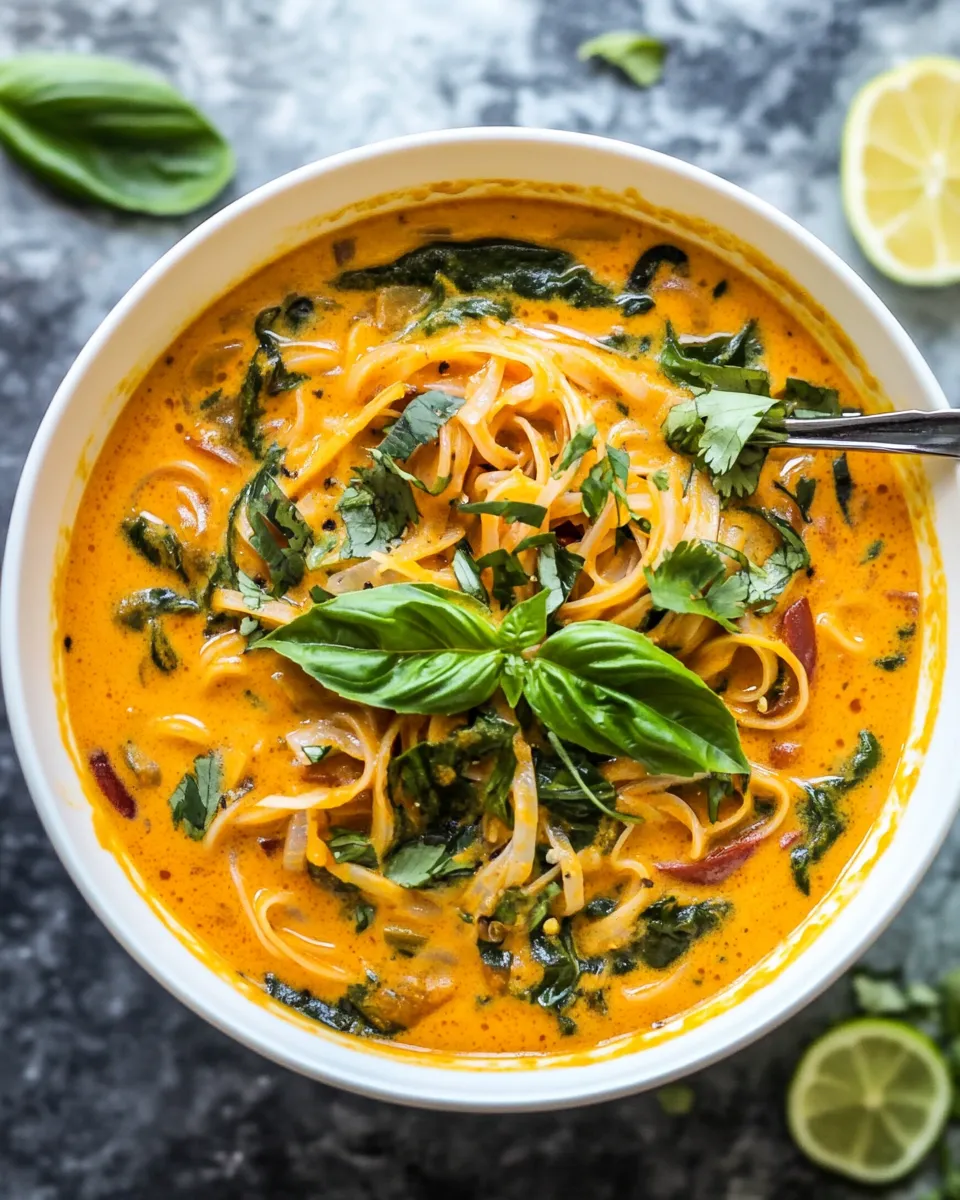
- Large, heavy‑bottomed pot — for even heat and enough room for the spiralized veggies.
- Spiralizer (or vegetable peeler/mandoline alternative) — to get those medium‑setting spirals for the sweet potato, zucchini, and celeriac.
- Wooden spoon or heatproof spatula — for stirring curry paste into the broth cleanly.
- Box grater or microplane — for grating ginger quickly.
- Can opener and measuring cups/spoons — for accuracy with curry paste and coconut milk.
Easy-to-Miss Gotchas
Watch out for these little things that can shift the final bowl:
- Overcooked spiralized sweet potato: it softens quickly. Five minutes covered is usually enough; check texture before proceeding.
- Curry paste salt/heat levels vary by brand. Start with the stated amount but taste the broth after it dissolves and adjust. You can always add more, but you can’t subtract.
- Adding coconut milk too early or boiling it hard can make it break. Stir it in at moderate heat and keep the simmer gentle.
- Lemongrass fibers: chop finely to avoid chewy bits. If a piece is too fibrous, discard the outer layers and use the tender inner stalk.
- Using water vs. broth: water makes a cleaner, lighter soup; broth adds savory depth. If using water, be quicker to season with salt and taste often.
Seasonal Ingredient Swaps
Vegetables change with the seasons, and this soup adapts well:
- Spring: Add thin asparagus tips or sugar snap peas near the end for freshness and crunch.
- Summer: Swap some zucchini for thinly sliced summer squash or toss in cherry tomatoes just before serving.
- Autumn: Keep the sweet potato, but add chopped kale or Swiss chard for heft; stir them in with the coconut milk to wilt gently.
- Winter: Use rutabaga or parsnip cut into thin matchsticks if celeriac is scarce.
Chef’s Notes
Always taste as you go. The balance between salty, spicy, acidic, and sweet is where this soup shines. If the curry paste makes the broth too intense, a small splash of additional coconut milk or a teaspoon of maple syrup can round it out. If it’s too rich, add a little extra broth and more lime.
Fresh herbs at the end—basil and cilantro—are essential. Basil adds sweetness and a slight anise note that pairs beautifully with coconut and curry; cilantro contributes a bright, citrusy lift. If you’re serving a crowd, offer extra lime wedges and chopped herbs at the table so everyone can personalize their bowl.
If you prefer a chunkier soup, reserve some spiralized veggies and briefly sauté them separately for a few minutes before adding back in. That gives distinct textural layers rather than an even “noodle” mouthfeel.
Best Ways to Store
- Refrigerate: Cool the soup to room temperature within 90 minutes, then transfer to airtight containers. It keeps well in the fridge for 3–4 days.
- Reheat: Gently warm on the stove over low-medium heat to avoid separating the coconut milk. A splash of broth can refresh the texture if it thickens in the fridge.
- Freeze: The coconut milk can change texture when frozen; if you want to freeze, consider portioning the soup without herbs and with slightly less coconut milk, then add fresh coconut milk and herbs when reheating. Use within 1–2 months.
Reader Questions
Q: Can I make this oil‑free?
A: Yes. Skip the tablespoon of olive oil and sweat the onion, lemongrass, and ginger in a couple of tablespoons of vegetable broth over medium heat, adding small amounts as needed to prevent sticking.
Q: I don’t have a spiralizer—what do I use?
A: Thinly slice the sweet potato and celery root into matchsticks or ribbons with a mandoline or sharp knife. The cooking time might increase by a minute or two depending on thickness.
Q: My curry paste is very spicy. How can I reduce heat?
A: Use less paste to start, taste after it dissolves, and add more if needed. Full‑fat coconut milk helps mellow heat; a small pinch of sugar or a splash of coconut milk can also tame spiciness.
Q: Can I add tofu or another protein?
A: Yes—firm tofu cubes, tempeh, or cooked chickpeas work well. If adding tofu, either pan-fry cubes until golden for texture or stir in warm, pre-cooked cubes in step 8 so they absorb the broth.
Make It Tonight
This pot comes together in about 30 minutes once you’ve prepped the vegetables—perfect for a weeknight. Prep the aromatics and spiralize while the oil heats; by the time the onions soften, you’ll be ready to build the broth and have a fragrant, comforting bowl in hand. Serve with lime wedges and extra fresh basil for a bright finish.
Grab your spiralizer, a can of coconut milk, and a fragrant block of lemongrass and let this Vegan Thai Lemongrass Coconut Curry Soup become a weeknight favorite. It’s fast, adaptable, and reliably delicious.
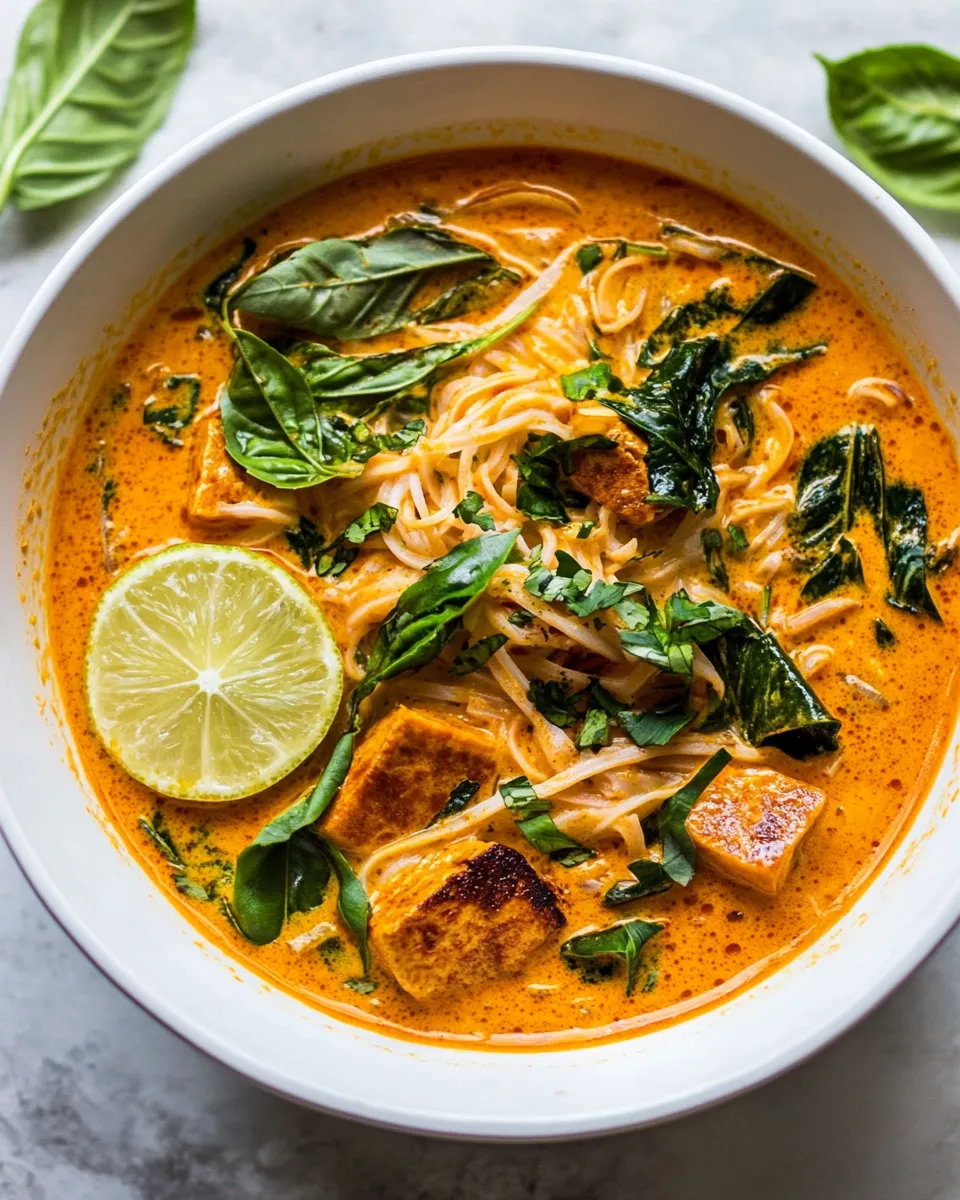
Vegan Thai Lemongrass Coconut Curry Soup
Ingredients
Equipment
Method
- Prep all ingredients: finely chop 2 tablespoons fresh lemongrass, chop 1/2 medium onion, grate 1 teaspoon fresh ginger, mince 3–4 cloves garlic, peel and spiralize 1 medium sweet potato (medium setting), 1 medium zucchini (medium setting), and 1 small celery root/ celeriac (medium setting). Open the 13.5-ounce can of full-fat coconut milk and measure 3.5 cups vegetable broth or water. Squeeze the juice from 1/2 lime; keep lime wedges for serving.
- Heat 1 tablespoon olive oil in a large pot over medium-high heat.
- Add the chopped lemongrass, chopped onion, and grated ginger to the pot. Sauté for 5 minutes, stirring occasionally, until the onion is softened.
- Add the minced garlic and cook 30 seconds, until fragrant.
- Stir in 3.5 cups vegetable broth (or water), 3 heaping tablespoons Thai red curry paste, and the juice of 1/2 lime. Stir until the curry paste is dissolved into the liquid and bring the mixture to a gentle simmer over medium heat.
- Add the spiralized sweet potato, zucchini, and celery root to the pot. Cover with the lid slightly ajar and cook for 5 minutes, until the spiralized vegetables are tender but not mushy.
- Stir in the entire 13.5-ounce can of full-fat coconut milk. Cook for an additional 5 minutes over medium heat to heat through and meld flavors.
- Taste and season with salt and pepper to your preference. Stir in a handful of fresh basil (torn) and chopped fresh cilantro, if using.
- Serve hot with lime wedges on the side.
Notes
How to prep the lemongrass: Cut the dry ends off the stalk, then use your hands to peel the tough outer "shell" of the stalk. Discard that outer shell. Use a knife to slice the newly revealed inner stalk. You can then easily chop those slices up finely.
I keep my ginger in the freezer. It's very easy to grate when frozen. I grate it straight into the pan.
I useThai Kitchen red curry pastein this recipe. It's vegan. Some others contain fish ingredients so just make sure to read the label if that's an issue.
I use thePaderno 4-Blade Spiralizer.
Nutritional information is provided as a courtesy only and should be construed as an estimate rather than a guarantee. Ingredients can vary and Salt & Lavender makes no guarantees to the accuracy of this information.