Vegetarian Lasagna with No-Cook White Sauce
I love recipes that feel deliberate but don’t demand a full day in the kitchen. This vegetarian lasagna does that: layered comfort without a fuss, and a ricotta-based white sauce you make in seconds in a blender — no roux, no stirring a béchamel over the stove. The result is creamy, bright, and forgiving, perfect for an easy weeknight dinner or a relaxed weekend meal when you want to feed a crowd.
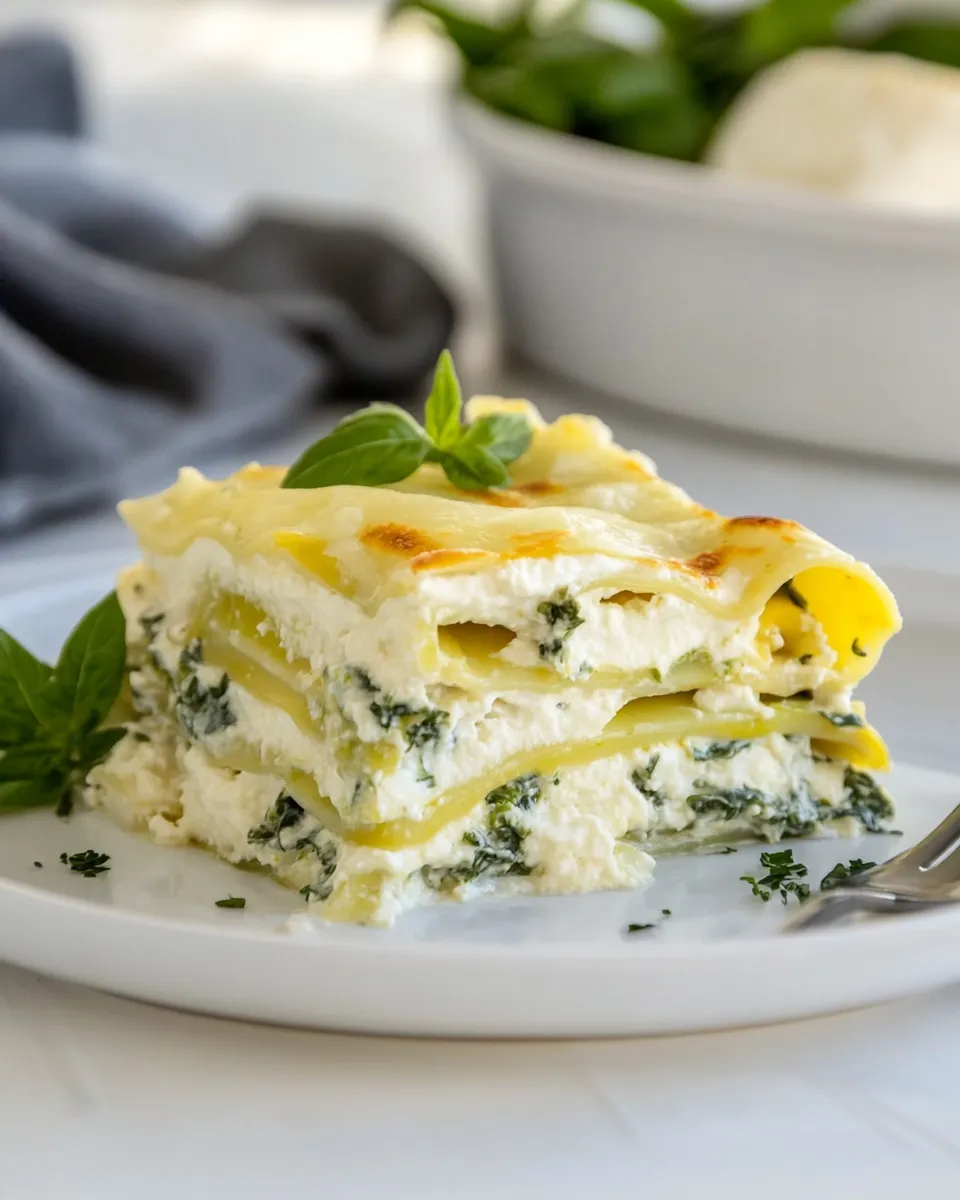
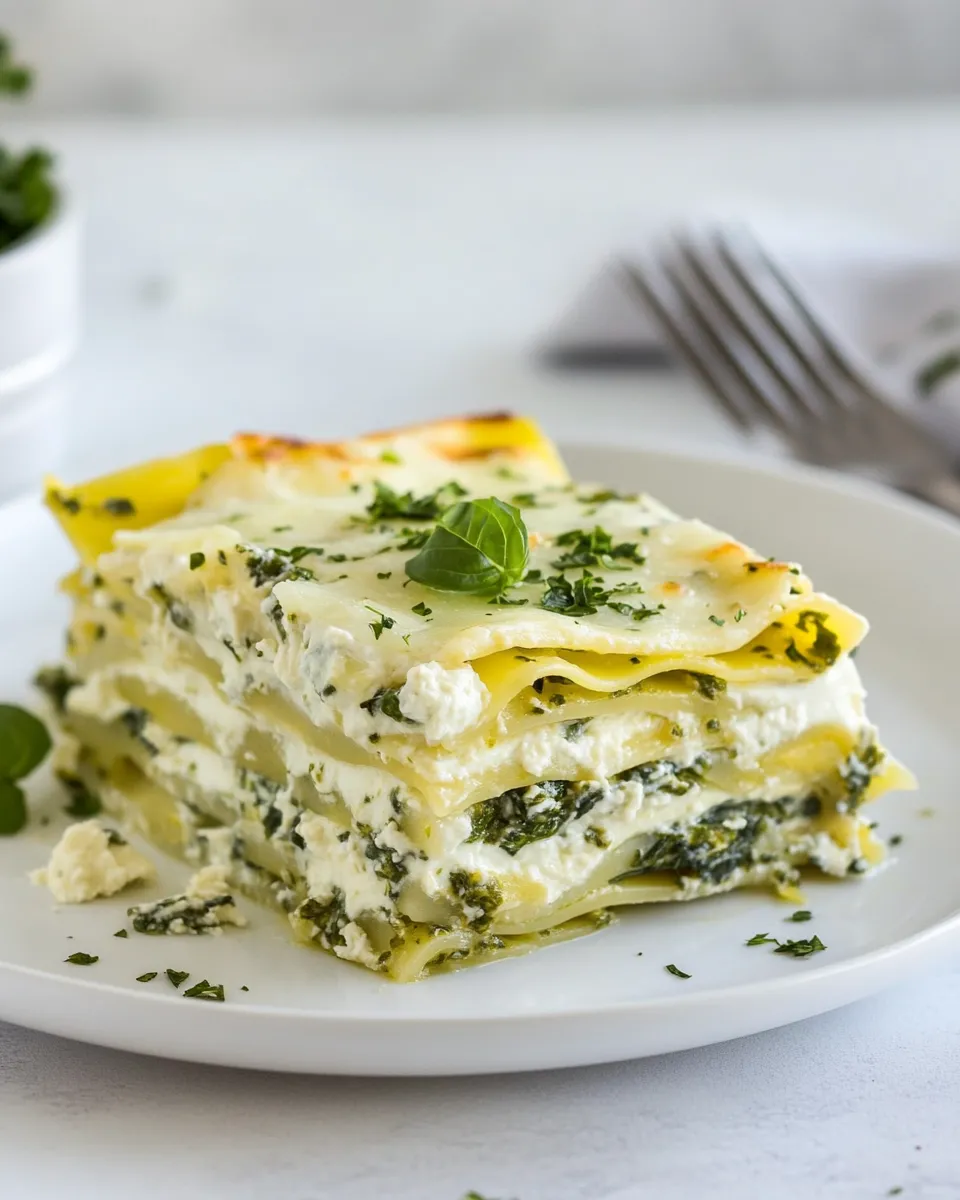
The assembly is straightforward: pesto, thinly sliced steamed potatoes, fresh mozzarella, wilted spinach, and torn basil all come together between sheets of fresh lasagna pasta. The ricotta white sauce acts as the glue — rich and spreadable, but still light enough that the other ingredients sing. Bake it until the filling bubbles, then rest so the layers settle; a quick blast under the broiler gives a pleasing golden top.
This post walks you through the ingredient list, the exact steps to follow, useful swaps, and troubleshooting so your lasagna comes out as intended. No frills, just clear, practical guidance so you can make this again and again.
Gather These Ingredients
Ingredients
- 500 g fresh ricotta cheese — the base of the no-cook white sauce; it provides creaminess and body.
- 220 ml fresh milk — thins the ricotta to a spreadable consistency; add a little extra if the sauce is too thick.
- 2 tablespoon vegetarian Italian-style hard cheese, or Parmesan for non-veggies, grated — adds umami and a salty depth to the sauce.
- 1 tablespoon extra-virgin olive oil — helps emulsify the sauce and gives a silkier mouthfeel.
- ⅛ teaspoon grated nutmeg — a tiny pinch brightens the ricotta and lifts the overall flavor.
- Sea salt and freshly cracked black pepper, to taste — essential seasoning; season the ricotta sauce gently and adjust after assembly if needed.
- 2 tablespoon extra-virgin olive oil — for sautéing the shallot and spinach; keeps greens glossy and flavorful.
- 300 g fresh or defrosted spinach leaves — the green layer that balances the richer components; squeeze out excess moisture before layering.
- 1 medium shallot or red onion, finely minced — softens and sweetens when sautéed; it’s the savory backbone for the spinach layer.
- 8-10 fresh lasagna pasta sheets — fresh sheets cook quickly in the oven and make layering simple; trim to fit your dish.
- 1 cup pea pesto — provides herbaceous sweetness and a bright contrast to the white sauce; spread evenly between layers.
- 2 mozzarella balls, very well drained, thinly sliced — use fresh mozzarella for creamy pockets; drain thoroughly to avoid excess moisture.
- 2 steamed potatoes, peeled and thinly sliced — thin slices add a tender, starchy layer that soaks up flavors without falling apart.
- handful of basil leaves — torn or roughly chopped; scatter between layers for fresh aroma and color.
Mastering Vegetarian Lasagna with No-Cook White Sauce: How-To
- Preheat your oven to 180°C (350°F) and position a rack in the middle of the oven.
- Make the ricotta white sauce: into a blender add 500 g fresh ricotta cheese, 2 tablespoons grated vegetarian Italian-style hard cheese (or Parmesan), 220 ml fresh milk, 1 tablespoon extra-virgin olive oil and ⅛ teaspoon grated nutmeg. Blend until smooth and creamy. If the sauce seems too thick to spread, add a little more milk and blend again. Season to taste with sea salt and freshly cracked black pepper. Set the sauce aside.
- Sauté the spinach: heat 2 tablespoons extra-virgin olive oil in a large skillet over medium-low heat. Add the finely minced shallot (or red onion) and cook until softened, about 1–2 minutes. Add 300 g fresh (or defrosted) spinach leaves, cover, and cook about 2 minutes. Remove the lid, stir, and cook another 2 minutes until wilted. Remove from the heat, transfer the spinach to a bowl, and press or squeeze out any excess liquid. Set aside.
- Prepare the remaining fillings: very well drain the 2 mozzarella balls and thinly slice them; thinly slice the 2 steamed potatoes (peeled); tear or roughly chop the handful of basil leaves. Trim the 8–10 fresh lasagna sheets as needed so they fit your baking dish.
- Choose a baking dish that will hold several layers of lasagna sheets. Brush the bottom of the dish with a layer of the ricotta white sauce to prevent sticking.
- First layer: place lasagna sheets in a single layer over the sauce to cover the bottom. Spread half of the 1 cup pea pesto evenly over these sheets. Arrange half of the sliced potatoes over the pesto, then half of the sliced mozzarella, and scatter half the basil leaves.
- Second layer: cover the first layer with another layer of lasagna sheets. Spread an even layer of the ricotta white sauce over these sheets, then top with the sautéed spinach (spread it evenly).
- Third layer: add another layer of lasagna sheets. Spread the remaining pea pesto evenly over these sheets. Arrange the remaining sliced potatoes, remaining sliced mozzarella, and the remaining basil over the pesto.
- Top layer: place a final layer of lasagna sheets over the third layer. Spread the remaining ricotta white sauce evenly over the top sheet to create a thick, even white layer (the ricotta sauce is thicker than a classic béchamel, so be generous).
- Bake the assembled lasagna uncovered on the middle rack for about 20 minutes, or until the pasta sheets are cooked through and the filling is gently bubbling.
- For a browned top, place the lasagna under the oven grill/broiler for about 3–5 minutes, watching carefully to avoid burning.
- Remove the baking dish from the oven and let the lasagna rest for 5–10 minutes before slicing and serving.
What You’ll Love About This Recipe
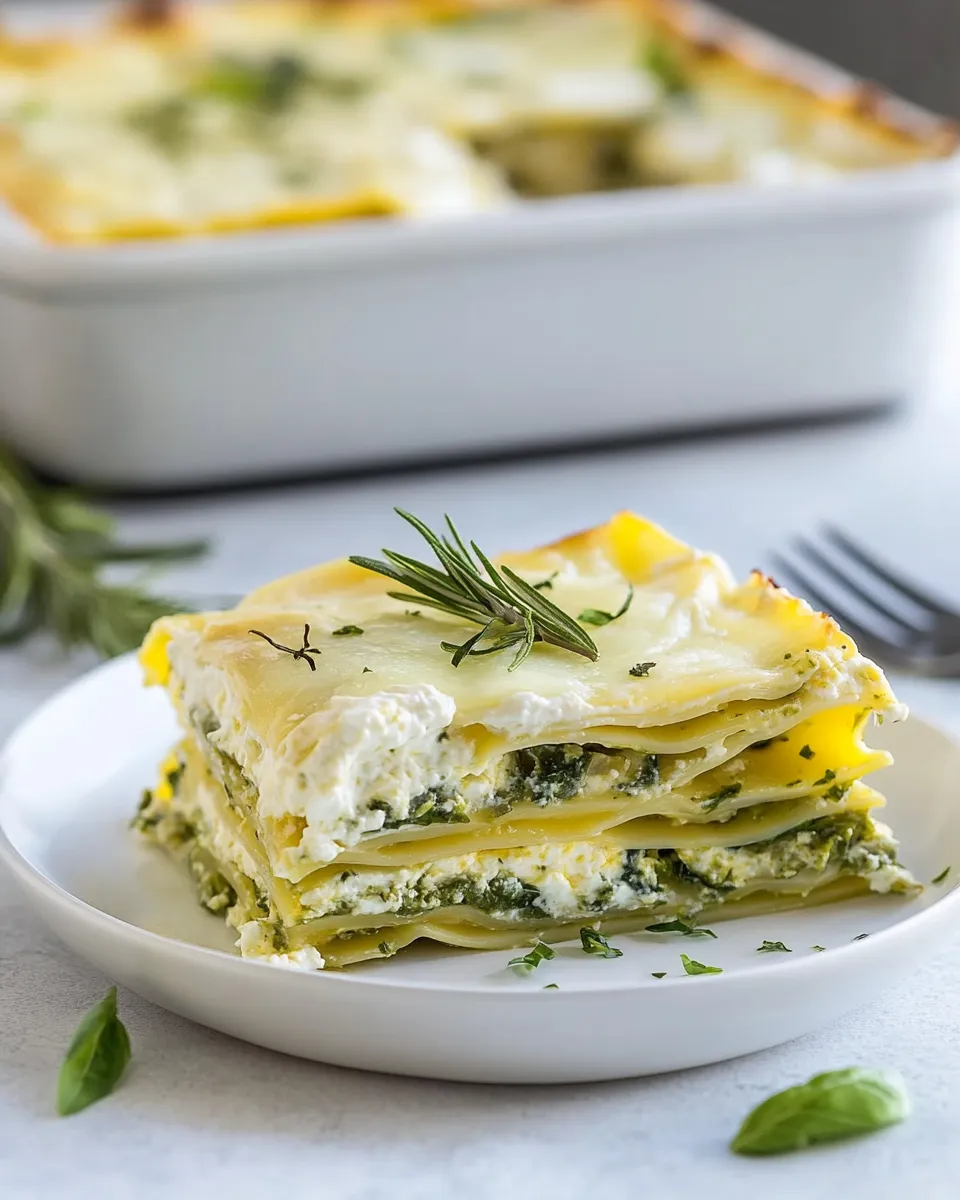
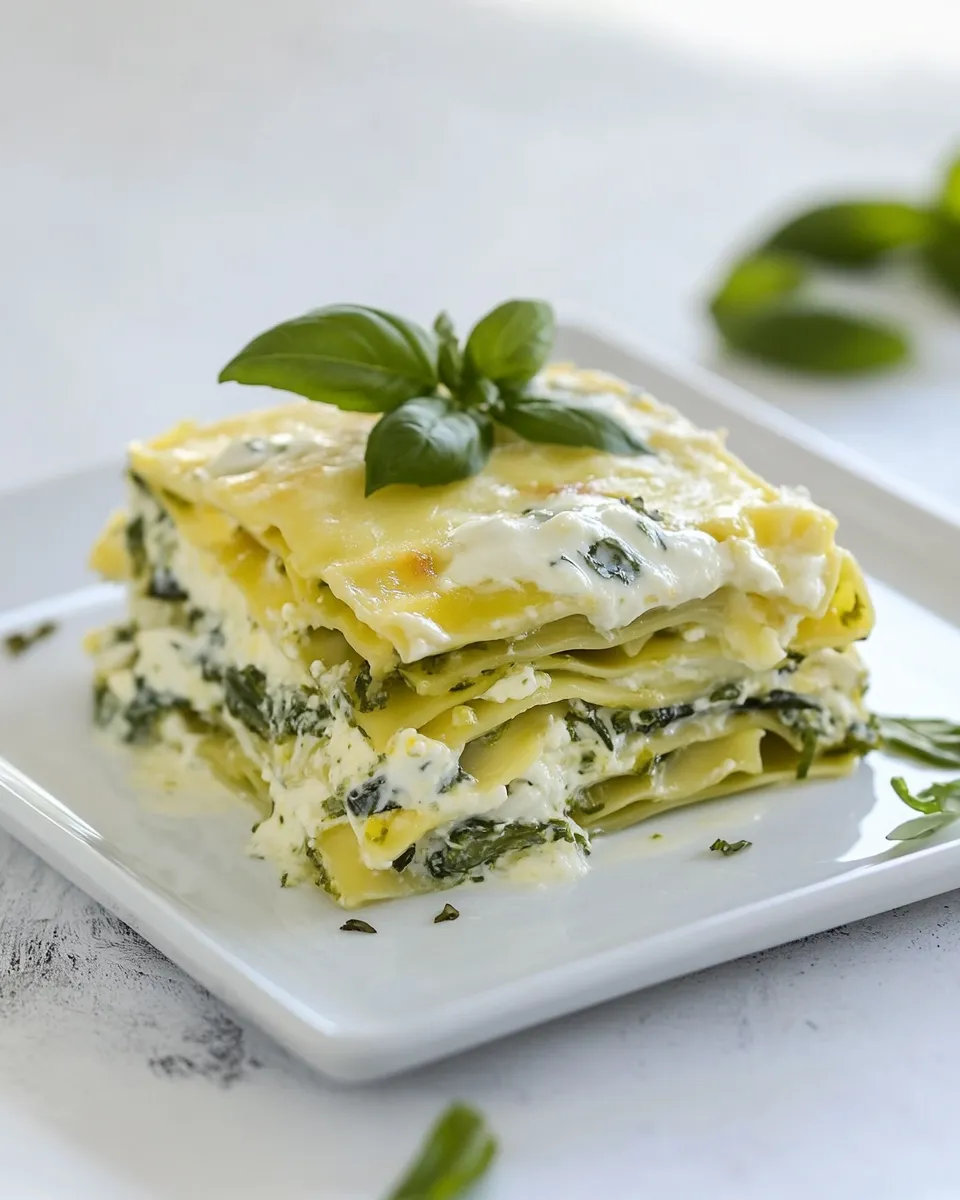
It’s the balance: the ricotta white sauce gives richness without heaviness, and the pea pesto and basil keep the flavor profile bright. Thinly sliced steamed potatoes add an unexpected, comforting layer that soaks up flavors and holds the lasagna together nicely. Fresh mozzarella melts into clouds between layers, while wilted spinach adds color and an earthy counterpoint.
The prep is straightforward and forgiving. The sauce is blended — so texture is consistent even if your ricotta varies slightly. Using fresh lasagna sheets reduces baking time and prevents drying out. And the assembly order helps distribute moisture evenly, so you don’t end up with one soggy corner and one dry edge.
Dairy-Free/Gluten-Free Swaps
If you need dairy-free options: swap the ricotta for a firm tofu-based ricotta or a store-bought dairy-free ricotta alternative, and use a dairy-free grated “Parmesan” alternative in the sauce. Choose a plant-based mozzarella substitute that’s well drained.
For gluten-free: use gluten-free lasagna sheets. Many fresh-style gluten-free sheets perform well in layered bakes; trim them to fit the dish and follow the same layering and bake times, though check for doneness since brands vary.
Cook’s Kit
- Blender — to make the ricotta white sauce smooth and creamy.
- Large skillet — for sautéing the shallot and spinach.
- Sharp knife and cutting board — for slicing potatoes, mozzarella, and trimming pasta sheets.
- Steaming setup or pot with steamer basket — to steam the potatoes before slicing.
- Baking dish (roughly one that fits 8–10 lasagna sheets in layers) — ceramic or metal both work; choose something about 9×13 inches or similar depth.
- Spatula or offset spatula — for spreading sauces and leveling layers.
- Kitchen towel or paper towels — for pressing excess moisture from spinach and mozzarella.
Common Errors (and Fixes)
Too-watery spinach: that’s the most common problem. Fix it by squeezing the cooked spinach in a clean towel or press it in a sieve to remove as much liquid as possible before layering. Excess moisture will make the lasagna weep and prevent the layers from setting.
Soggy top layer: if your top layer looks pale and wet after baking, it probably needs either more bake time or a brief broil to finish. Use the broiler for short intervals — 3–5 minutes — and watch closely.
Undercooked pasta sheets: if sheets are still firm after 20 minutes, cover the dish loosely with foil and give it another 5–10 minutes. Fresh sheets vary in thickness; a little extra time covered will steam them without drying the top.
Rubbery mozzarella: drain the mozzarella very well. Excess water turns to steam in the oven and prevents proper melting and browning. Slice and pat-dry the rounds before layering.
Health-Conscious Tweaks
To lighten the dish without losing texture, use part-skim ricotta or reduce the overall amount of mozzarella. Increase the spinach to add fiber and volume — you can double the spinach layer if you want more greens. Replace some of the potato slices with thin slices of zucchini or eggplant to lower the starch content while keeping structure.
Salt wisely: start by seasoning the ricotta sauce lightly since the pesto and grated hard cheese contribute salt. Taste a small spoonful of sauce before assembly and adjust.
Chef’s Notes
Make the ricotta sauce first and taste it. The nutmeg is subtle but important — just a whisper brings warmth and rounds the dairy flavors. If your ricotta has more moisture than usual, increase the grated hard cheese slightly or add a touch more milk and blend until velvety.
Trim fresh lasagna sheets carefully to avoid awkward overlaps. Small gaps are fine; the layers settle during baking. If you prefer a firmer lasagna, reduce the milk slightly in the ricotta sauce so it spreads thicker.
If you want to assemble ahead, you can put the unbaked lasagna together, cover tightly, and refrigerate for up to 24 hours before baking. Add 5–10 minutes to the bake time if baking straight from the fridge.
Freezer-Friendly Notes
To freeze before baking: assemble the lasagna in an oven-safe, freezer-friendly dish. Wrap tightly with plastic wrap and foil, then freeze for up to 2 months. Thaw overnight in the refrigerator before baking, and add 10–15 minutes to the bake time, covered, to allow it to heat through.
To freeze after baking: cool completely, portion into airtight containers, and freeze for up to 2 months. Reheat in a low oven (160–170°C / 325–340°F) until warmed through, about 20–30 minutes from frozen when covered, or longer if fully frozen solid.
Vegetarian Lasagna with No-Cook White Sauce FAQs
Can I use store-bought ricotta?
Yes. Store-bought ricotta works well; choose a good-quality one for better texture and flavor. If it’s watery, drain it briefly in a fine mesh sieve or press it lightly in a towel before blending.
Do I need to pre-cook the lasagna sheets?
No. These are fresh lasagna sheets meant to cook in the oven. They’ll finish cooking during the 20-minute bake and while resting. If you use dried sheets, follow the package instructions and consider slightly longer bake time or pre-soaking.
What’s the best way to get a golden top?
Use the broiler/grill setting and watch closely for 3–5 minutes. Too long and the top will burn; short bursts give the most control. Alternatively, a light brushing of olive oil on top before broiling helps with browning.
Can I add other vegetables?
Yes. Roasted red peppers, thinly sliced zucchini, or a layer of sautéed mushrooms can work nicely. Keep slices thin so they soften quickly in the oven and don’t release excessive moisture.
Bring It Home
This lasagna is one of those dinner wins that look impressive but don’t require heroic effort. The no-cook ricotta white sauce keeps things simple and lets the other ingredients shine. Plan for about 15–25 minutes of active prep, then the oven does the rest. Let it rest before slicing so the layers hold together beautifully.
Serve with a crisp green salad and a squeeze of lemon on the side to brighten the plate. Leftovers reheat well and often taste even better the next day as the flavors continue to meld. Make it for a weekend gathering or keep it in rotation for relaxed weeknight comfort.
Vegetarian Lasagna with No-Cook White Sauce
Ingredients
Equipment
Method
- Preheat your oven to 180°C (350°F) and position a rack in the middle of the oven.
- Make the ricotta white sauce: into a blender add 500 g fresh ricotta cheese, 2 tablespoons grated vegetarian Italian-style hard cheese (or Parmesan), 220 ml fresh milk, 1 tablespoon extra-virgin olive oil and ⅛ teaspoon grated nutmeg. Blend until smooth and creamy. If the sauce seems too thick to spread, add a little more milk and blend again. Season to taste with sea salt and freshly cracked black pepper. Set the sauce aside.
- Sauté the spinach: heat 2 tablespoons extra-virgin olive oil in a large skillet over medium-low heat. Add the finely minced shallot (or red onion) and cook until softened, about 1–2 minutes. Add 300 g fresh (or defrosted) spinach leaves, cover, and cook about 2 minutes. Remove the lid, stir, and cook another 2 minutes until wilted. Remove from the heat, transfer the spinach to a bowl, and press or squeeze out any excess liquid. Set aside.
- Prepare the remaining fillings: very well drain the 2 mozzarella balls and thinly slice them; thinly slice the 2 steamed potatoes (peeled); tear or roughly chop the handful of basil leaves. Trim the 8–10 fresh lasagna sheets as needed so they fit your baking dish.
- Choose a baking dish that will hold several layers of lasagna sheets. Brush the bottom of the dish with a layer of the ricotta white sauce to prevent sticking.
- First layer: place lasagna sheets in a single layer over the sauce to cover the bottom. Spread half of the 1 cup pea pesto evenly over these sheets. Arrange half of the sliced potatoes over the pesto, then half of the sliced mozzarella, and scatter half the basil leaves.
- Second layer: cover the first layer with another layer of lasagna sheets. Spread an even layer of the ricotta white sauce over these sheets, then top with the sautéed spinach (spread it evenly).
- Third layer: add another layer of lasagna sheets. Spread the remaining pea pesto evenly over these sheets. Arrange the remaining sliced potatoes, remaining sliced mozzarella, and the remaining basil over the pesto.
- Top layer: place a final layer of lasagna sheets over the third layer. Spread the remaining ricotta white sauce evenly over the top sheet to create a thick, even white layer (the ricotta sauce is thicker than a classic béchamel, so be generous).
- Bake the assembled lasagna uncovered on the middle rack for about 20 minutes, or until the pasta sheets are cooked through and the filling is gently bubbling.
- For a browned top, place the lasagna under the oven grill/broiler for about 3–5 minutes, watching carefully to avoid burning.
- Remove the baking dish from the oven and let the lasagna rest for 5–10 minutes before slicing and serving.
Notes
How to store baked lasagna:
Place leftovers in an air-tight container in the fridge for up to 2 days.
Divide leftovers into individual freezer-friendly containers and store in the freezer up to 1 month.