Vegetarian Tikka Masala
This is the vegetarian take on a classic: bold spices, a rich tomato sauce, tender cauliflower and hearty chickpeas. It’s designed to be straightforward, pantry-friendly, and forgiving — which is exactly what weeknight cooking needs. The recipe builds flavor in stages, so you’ll smell the dish come alive long before it’s ready.
I cook this when I want something comforting but not fussy. The base comes together with simple steps: sauté aromatics, bloom the spices, simmer the vegetables in tomatoes, then finish with coconut milk and lemon for brightness. You can have a pot of this on the table in under an hour if you keep your prep organized.
Below you’ll find the exact ingredient list and the step-by-step method I follow, plus practical tips on tools, timing, storage, and small adjustments that make the finished dish sing. No gimmicks — just clear, useful guidance so your Vegetarian Tikka Masala turns out reliably.
The Ingredient Lineup
Ingredients
- 2 tablespoons olive oil — for sautéing aromatics and carrying the spices.
- 1 yellow onion, diced — builds the savory-sweet base; cook until translucent.
- 1 large carrot, chopped — adds natural sweetness and texture.
- 2 tablespoons tomato paste — concentrates tomato flavor and helps thicken the sauce.
- 1 tablespoon freshly grated ginger — bright, warm note; grate finely so it disperses.
- 4 cloves garlic, minced — aromatic backbone; add with the ginger.
- 2 teaspoons garam masala — the finishing spice blend, gives depth.
- 2 teaspoons ground turmeric — color and gentle earthiness.
- 1 teaspoon chili powder — base heat; balances the tomato and coconut milk.
- 1/2 teaspoon paprika — mild sweetness and a touch of color.
- 1/2 teaspoon cumin — toasty, earthy layer.
- 1/4 teaspoon cayenne pepper — concentrated heat; adjust to taste.
- 3 cups cauliflower florets — the main vegetable; holds texture through simmering.
- 3/4 cup vegetable broth — thins and seasons the sauce while it simmers.
- 128 oz can diced tomatoes — the tomato base (use juices too).
- 115 oz can chickpeas, rinsed and drained — protein and body; rinse to remove canning liquid.
- 1/2 cup coconut milk — adds creaminess and balances spice.
- 1 tablespoon fresh lemon juice — brightens and lifts the sauce at the end.
- 1/4 cup chopped fresh cilantro leaves, optional — fresh finish if you like it.
- Basmati rice and naan bread for serving, optional — classic accompaniments; serve warm.
Vegetarian Tikka Masala, Made Easy
- Prepare ingredients: dice the 1 yellow onion, chop the 1 large carrot, grate 1 tablespoon fresh ginger, mince 4 cloves garlic, rinse and drain the 115 oz can chickpeas, and open the 128 oz can diced tomatoes. Measure spices and liquids (2 tablespoons olive oil, 2 tablespoons tomato paste, 2 teaspoons garam masala, 2 teaspoons ground turmeric, 1 teaspoon chili powder, 1/2 teaspoon paprika, 1/2 teaspoon cumin, 1/4 teaspoon cayenne pepper, 3 cups cauliflower florets, 3/4 cup vegetable broth, 1/2 cup coconut milk, 1 tablespoon fresh lemon juice, 1/4 cup chopped cilantro if using).
- Heat 2 tablespoons olive oil in a large skillet or pot over medium heat until warmed.
- Add the diced onion and chopped carrot. Cook, stirring occasionally, until the onion is translucent and the carrot is tender, about 5 minutes.
- Add 2 tablespoons tomato paste, the grated ginger, minced garlic, 2 teaspoons garam masala, 2 teaspoons ground turmeric, 1 teaspoon chili powder, 1/2 teaspoon paprika, 1/2 teaspoon cumin, and 1/4 teaspoon cayenne pepper. Stir constantly and cook until fragrant and well combined, about 1 to 2 minutes.
- Add the 3 cups cauliflower florets, the entire 128 oz can diced tomatoes (including juices), and 3/4 cup vegetable broth. Stir to combine.
- Increase heat until the mixture comes to a boil, then reduce heat to maintain a gentle simmer. Simmer, uncovered, for 20 minutes, stirring occasionally, until the cauliflower is tender and the sauce has thickened.
- Stir in the rinsed and drained chickpeas, 1/2 cup coconut milk, and 1 tablespoon fresh lemon juice. Cook until heated through and the flavors meld, about 5 minutes.
- Remove from heat. Stir in 1/4 cup chopped fresh cilantro leaves, if using.
- Serve warm with basmati rice and naan bread, if desired.
Why Vegetarian Tikka Masala is Worth Your Time
This version balances texture and flavor: cauliflower softens without falling apart, chickpeas add chew, and the tomato-coconut sauce is robust without being heavy. The step where you bloom spices with tomato paste and aromatics builds a layered base; the payoff is a sauce that tastes far more complex than the modest ingredient list suggests.
It’s also versatile and family-friendly. The spices deliver warmth, not just heat, so it appeals to a wide range of palates. Make a pot for dinner and you’ll have straightforward leftovers that reheat well for work lunches or a quick dinner the next day.
Finally, this recipe is practical. Most steps are one-pot, there’s minimal active stirring, and the method tolerates small timing variations without a big penalty. It’s an efficient, flavorful weeknight meal that rewards routine prep.
What to Use Instead
- If you want more plant-protein texture, increase the ratio of chickpeas to cauliflower within the recipe’s quantities.
- To reduce heat, use less cayenne pepper or omit it entirely and keep the chili powder at the listed amount.
- For a thicker sauce, use the full 2 tablespoons of tomato paste listed and tighten the simmer time slightly; conversely, add a touch more vegetable broth from the listed amount for a thinner sauce.
- If you prefer a brighter, fresher finish, keep the 1 tablespoon fresh lemon juice and add the cilantro listed; if you skip cilantro, the lemon still gives important lift.
Equipment & Tools
- Large skillet or medium pot — roomy enough to hold the tomatoes and cauliflower without crowding.
- Measuring spoons and measuring cups — for accuracy with spices and liquids.
- Sharp knife and cutting board — for dicing onion, chopping carrot, and prepping cauliflower.
- Microplane or fine grater — for the fresh ginger.
- Wooden spoon or spatula — for stirring and scraping up browned bits when you add tomato paste and spices.
- Can opener and colander — to open and rinse the chickpeas and tomatoes.
Easy-to-Miss Gotchas
- Can sizes: the recipe lists a 128 oz can of diced tomatoes and a 115 oz can of chickpeas. Those are very large cans; check your cans and plan storage for leftovers. Make sure to include the tomato juices when you add the tomatoes.
- Blooming spices: when you add the tomato paste, ginger, garlic, and spices, stir constantly for 1–2 minutes. That short step wakes up the spices and prevents raw, grainy flavors.
- Simmer uncovered: keep the pot uncovered during the 20-minute simmer so the sauce reduces and concentrates. Covering will trap steam and thin the sauce.
- Rinse the chickpeas: the instructions call for rinsing and draining — do it. It removes canning liquid and helps the chickpeas absorb the sauce flavors.
Seasonal Adaptations
This recipe leans on pantry staples and can adapt to what’s freshest. When cauliflower is at its best, it keeps its shape and picks up the sauce. In shoulder seasons, use firmer cauliflower florets so they don’t turn mushy during the 20-minute simmer.
Carrot is listed as a minor sweetener and texture booster; when carrots are sweet and crisp, they contribute more brightness to the base. The fresh cilantro at the end is optional — use it when it’s bright and leafy. If it’s wilting in the store, skip it rather than adding a limp garnish.
Little Things that Matter
- Measure the ginger by volume as listed: freshly grated ginger disperses differently than ground ginger and gives a fresher, sharper note.
- Use the listed coconut milk amount to balance spice — 1/2 cup softens the heat without washing out the tomato flavor.
- Stir the sauce occasionally during the 20-minute simmer so cauliflower cooks evenly and the bottom doesn’t catch.
- Add the lemon juice at the end as directed — it brightens the whole pot and makes the flavors pop.
Best Ways to Store
Cool the curry to room temperature, then transfer to airtight containers. Refrigerate for up to 3–4 days. When you reheat, do so gently on the stovetop over low heat, stirring in a splash of water or a little extra coconut milk if it seems too thick.
For longer storage, freeze in portioned containers. Defrost overnight in the refrigerator before reheating. Texture may soften a bit after freezing, but the flavors hold up well.
Troubleshooting Q&A
Q: The sauce is too thin — what can I do?
A: Simmer uncovered a little longer to reduce and concentrate it. You can also stir in the remaining tomato paste amount listed earlier and continue simmering for a few minutes to thicken without changing ingredients.
Q: The curry turned out too spicy.
A: Stir in the listed 1/2 cup coconut milk and let it cook for a few minutes; the coconut milk tames heat and mellows the background spice. Reduce the cayenne next time.
Q: The cauliflower is still firm after simmering.
A: Continue simmering, checking every 3–5 minutes, until the florets reach the desired tenderness. They cook through without falling apart if you give them a little more time in the simmering sauce.
Q: The dish tastes flat.
A: Brighten it with the listed 1 tablespoon fresh lemon juice and stir in the optional 1/4 cup chopped cilantro if you have it. Both will lift flavors without adding ingredients outside the recipe.
Bring It to the Table
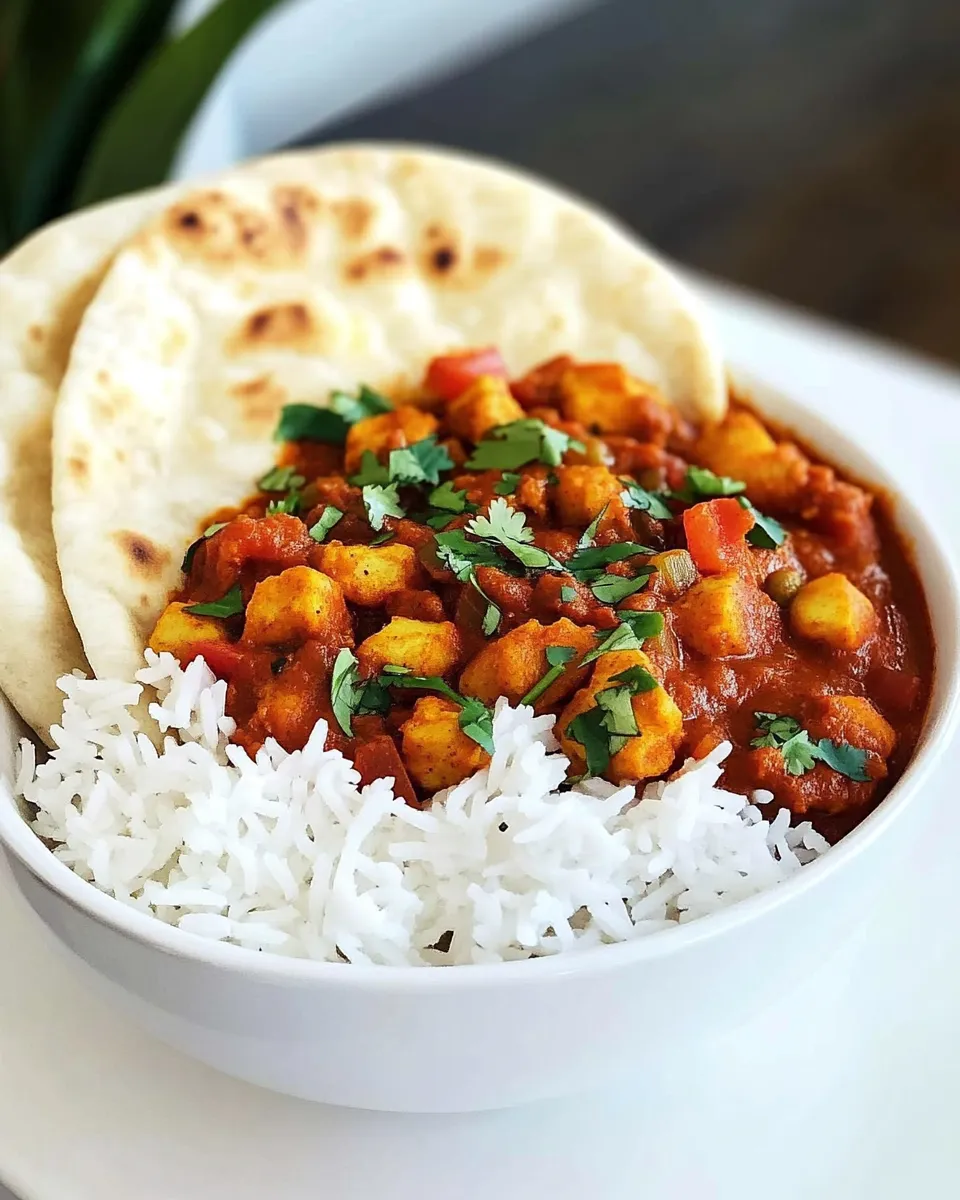
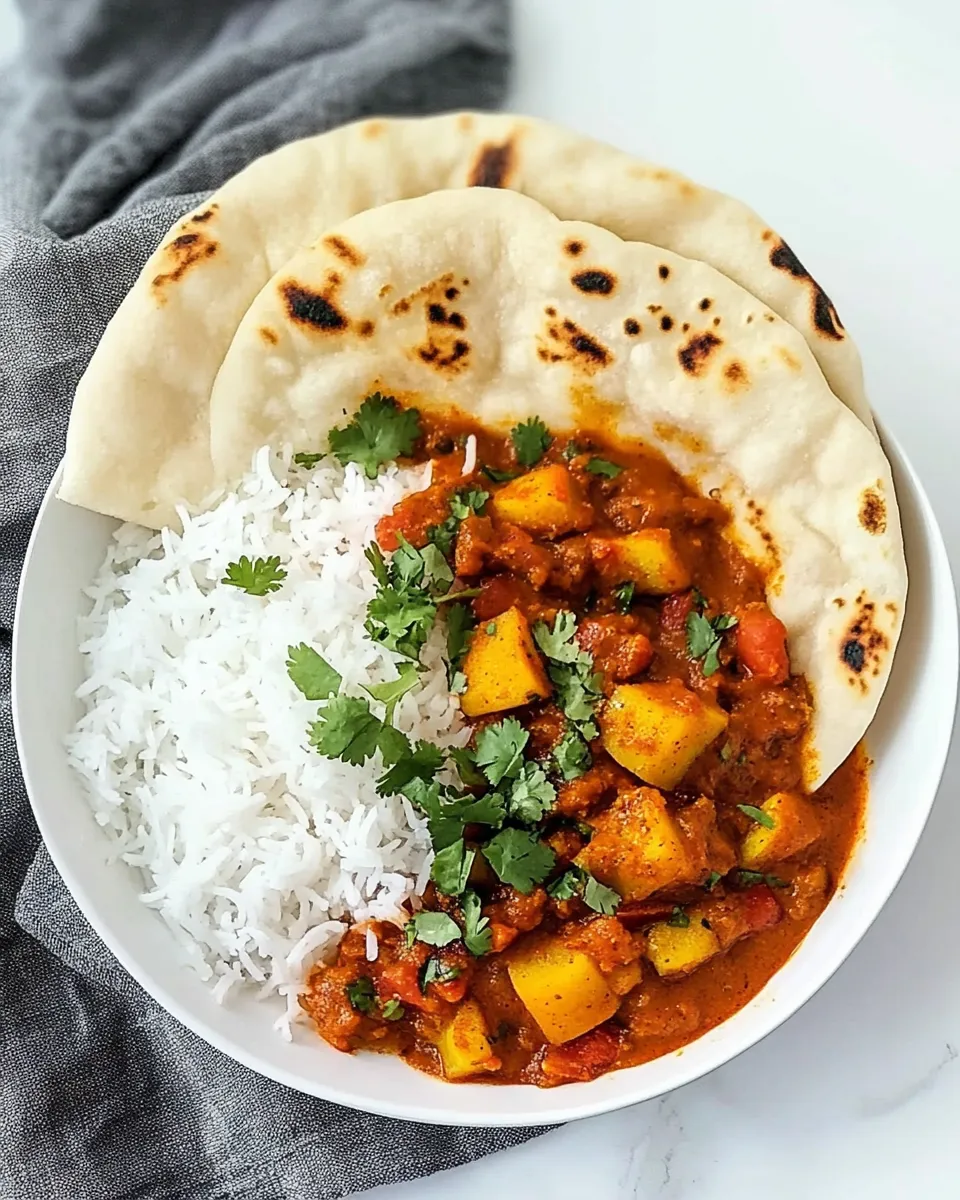
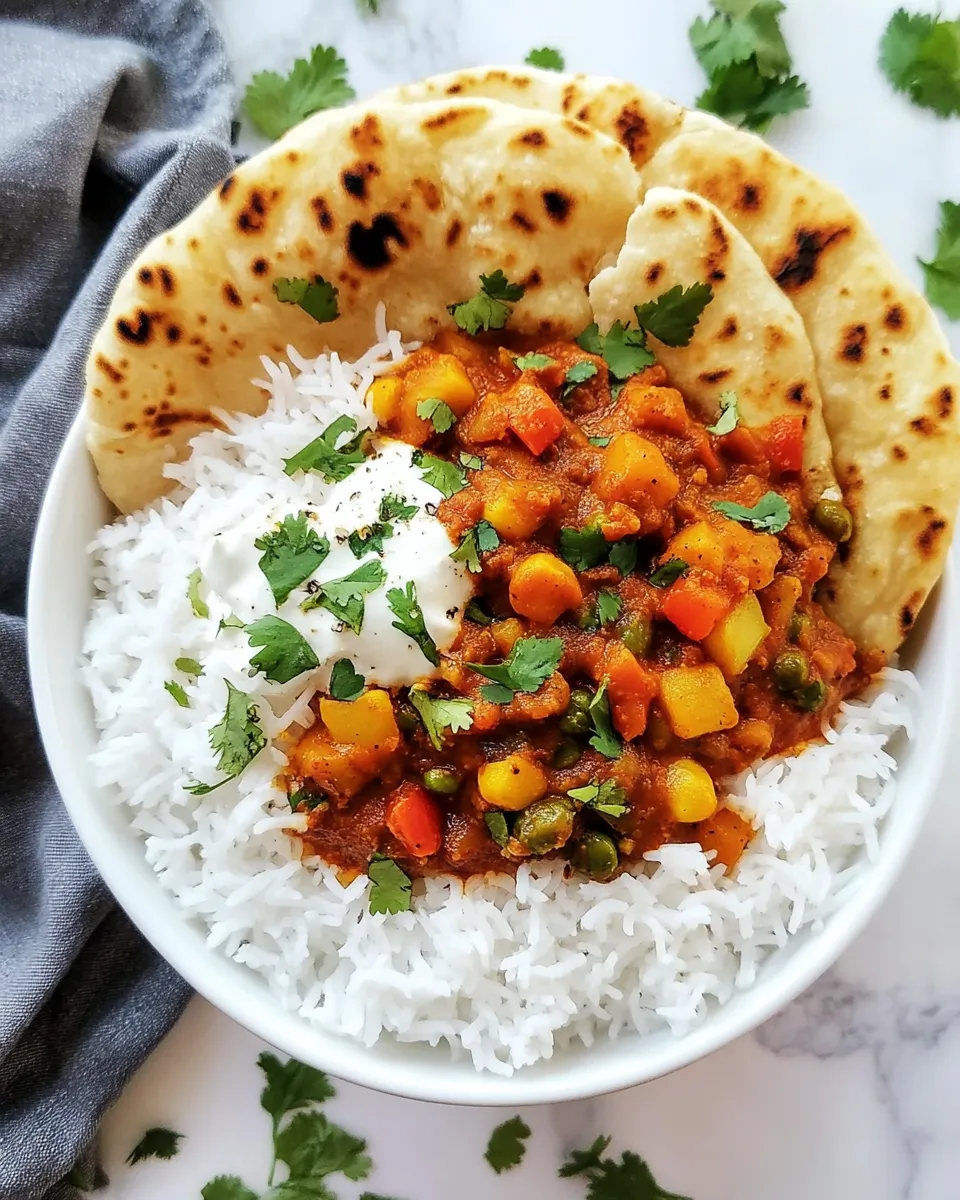
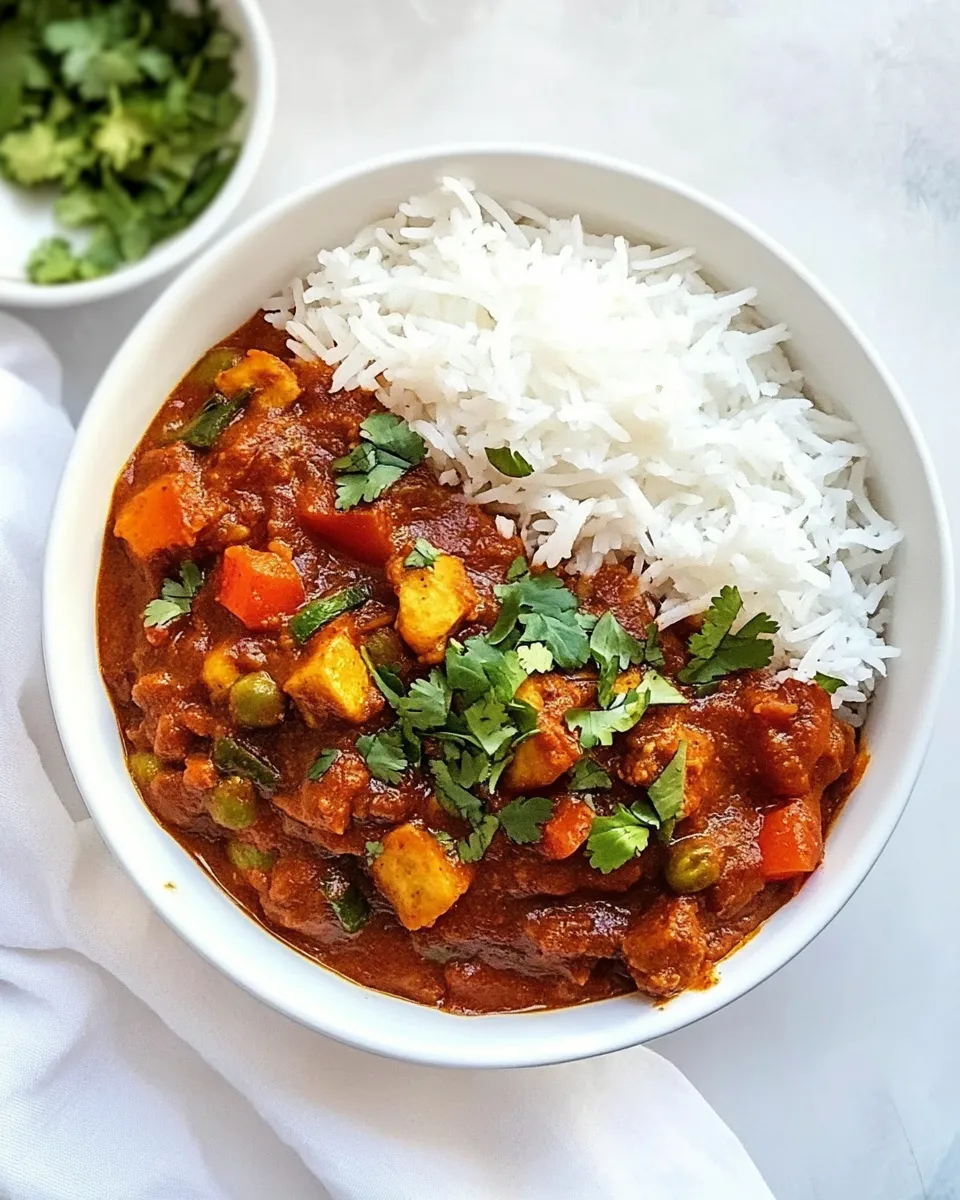
Plate warm Vegetarian Tikka Masala over steaming basmati rice and offer naan on the side, as listed in the ingredients. Spoon a generous ladle of sauce over the rice so every bite gets tomato, coconut, cauliflower and chickpeas. Scatter the optional chopped cilantro on top if you prepared it.
Serve hot. The dish is hearty enough to be a main on its own and pairs classically with the listed basmati rice and naan. Enjoy the layers of spice, the creaminess from coconut milk, and the bright finish from lemon — simple elements that create a generous, satisfying meal.
Vegetarian Tikka Masala
Ingredients
Equipment
Method
- Prepare ingredients: dice the 1 yellow onion, chop the 1 large carrot, grate 1 tablespoon fresh ginger, mince 4 cloves garlic, rinse and drain the 115 oz can chickpeas, and open the 128 oz can diced tomatoes. Measure spices and liquids (2 tablespoons olive oil, 2 tablespoons tomato paste, 2 teaspoons garam masala, 2 teaspoons ground turmeric, 1 teaspoon chili powder, 1/2 teaspoon paprika, 1/2 teaspoon cumin, 1/4 teaspoon cayenne pepper, 3 cups cauliflower florets, 3/4 cup vegetable broth, 1/2 cup coconut milk, 1 tablespoon fresh lemon juice, 1/4 cup chopped cilantro if using).
- Heat 2 tablespoons olive oil in a large skillet or pot over medium heat until warmed.
- Add the diced onion and chopped carrot. Cook, stirring occasionally, until the onion is translucent and the carrot is tender, about 5 minutes.
- Add 2 tablespoons tomato paste, the grated ginger, minced garlic, 2 teaspoons garam masala, 2 teaspoons ground turmeric, 1 teaspoon chili powder, 1/2 teaspoon paprika, 1/2 teaspoon cumin, and 1/4 teaspoon cayenne pepper. Stir constantly and cook until fragrant and well combined, about 1 to 2 minutes.
- Add the 3 cups cauliflower florets, the entire 128 oz can diced tomatoes (including juices), and 3/4 cup vegetable broth. Stir to combine.
- Increase heat until the mixture comes to a boil, then reduce heat to maintain a gentle simmer. Simmer, uncovered, for 20 minutes, stirring occasionally, until the cauliflower is tender and the sauce has thickened.
- Stir in the rinsed and drained chickpeas, 1/2 cup coconut milk, and 1 tablespoon fresh lemon juice. Cook until heated through and the flavors meld, about 5 minutes.
- Remove from heat. Stir in 1/4 cup chopped fresh cilantro leaves, if using.
- Serve warm with basmati rice and naan bread, if desired.
Notes
If you want a richer sauce, you can add up to 1 cup of coconut milk. If you don't need the recipe to be vegan, you can substitute heavy cream.