White Cheddar and Dijon Baked Eggs
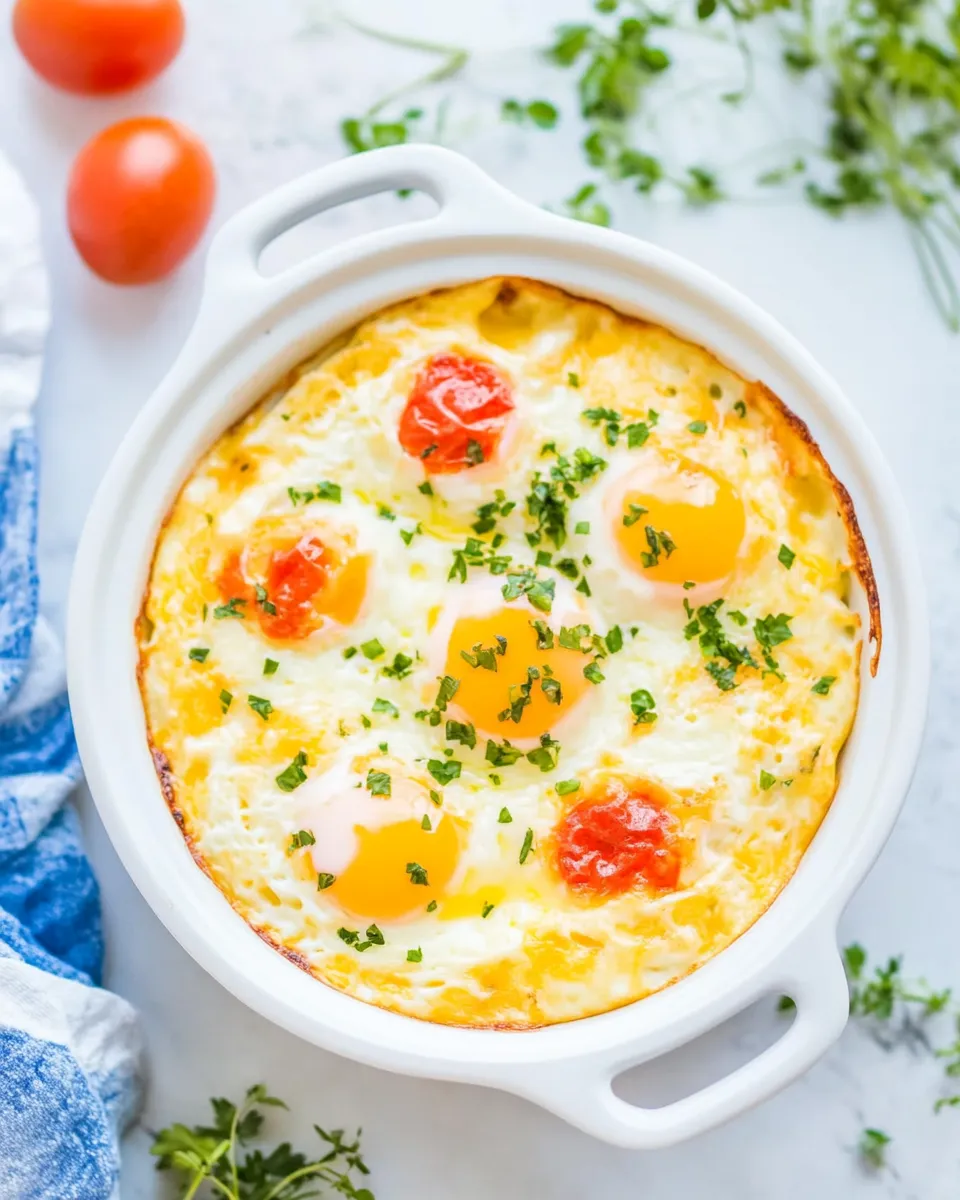
There are mornings when I want something that feels composed but comes together fast. These baked eggs—tangy Dijon folded into melty white cheddar over a little bed of diced tomato—do exactly that. They look like you fussed, but they ask for very little fuss in return.
I like them for brunch when I have a guest or when I want to eat something warm and satisfying without standing at the stove. The technique is forgiving: a moderate oven temperature and a short bake time mean you can dial yolk doneness to your mood. Serve them straight from the ramekin and they feel special, even on a weekday.
Below you’ll find the exact ingredient list and the step‑by‑step directions I follow every time. I also cover the why, sensible swaps if you need them, and a few mistakes to avoid so you get reliably good results.
Ingredient List
- 4 large eggs — the stars: cook until whites are set and yolks reach your preferred doneness.
- salt and pepper, to taste — essential seasoning for both the whites and the finished dish.
- half of one small/medium tomato, diced small (I used half of an unpeeled Roma) — a bright, juicy base that keeps things from feeling heavy.
- about 1/2 heaping cup grated white cheddar cheese, measured piled loosely (or mozzarella, Fontina, Monterey Jack, pepper Jack, etc.) — gives creaminess and a salty, melty top; alternatives listed in parentheses are workable substitutes.
- 2 teaspoons Dijon mustard, or your favorite yellow, hot, spicy, etc. mustard — adds tang and a little bite that cuts through the cheese.
- parsley, optional for garnishing (or basil, thyme, etc.) — a finishing herb brightens the dish; use what you have.
Build White Cheddar and Dijon Baked Eggs Step by Step
- Preheat oven to 350°F (175°C).
- Choose two small ovenproof ramekins or an 8×4‑inch loaf pan. If your ramekins tend to stick, use nonstick or well‑seasoned dishes.
- Dice half of one small/medium tomato (about half an unpeeled Roma) into small pieces.
- Divide the diced tomato evenly between the two ramekins (or spread evenly across the loaf pan).
- Carefully crack 2 large eggs into each ramekin (total 4 eggs). If using a loaf pan, space the eggs so they have room.
- Season each ramekin with salt and pepper to taste.
- In a small bowl, combine about 1/2 heaping cup grated white cheddar (measured piled loosely) and 2 teaspoons Dijon mustard; toss with a fork until mixed.
- Divide the cheese‑mustard mixture evenly between the two ramekins and lightly smooth or spread the tops with a fork.
- Place the ramekins on a baking sheet (or put the loaf pan directly in the oven) and bake at 350°F. Bake about 10 minutes for very runny yolks, about 15 minutes for firmer but still slightly soft yolks, or about 18 minutes for fully set yolks; bake until the whites are set and the yolks are cooked to your preference.
- Remove from the oven, garnish with parsley (or basil/thyme) if using, and serve immediately. Eggs are best served warm and fresh.
Why It Works Every Time
The recipe leans on simple physics and a few flavor balances. At 350°F the eggs set gently: the whites firm without the yolks seizing into chalky texture. A moderate oven temperature gives you a forgiving window—10 to 18 minutes covers every yolk preference without constant watching.
Tomato under the eggs contributes two things: a little moisture to keep the base from overcooking and a fresh, acidic note that contrasts the richness of cheese. The mustard plays the same role in concentrated form; a teaspoon or two folds into the shredded cheese and keeps the dish from tasting flat.
White cheddar melts and browns differently than milder cheeses. When mixed with Dijon it becomes more than a melted top: it creates a slightly tangy, cohesive layer that mingles with the egg as it bakes. That short toss with a fork is enough to distribute mustard pockets so every bite gets balance.
Budget & Availability Swaps
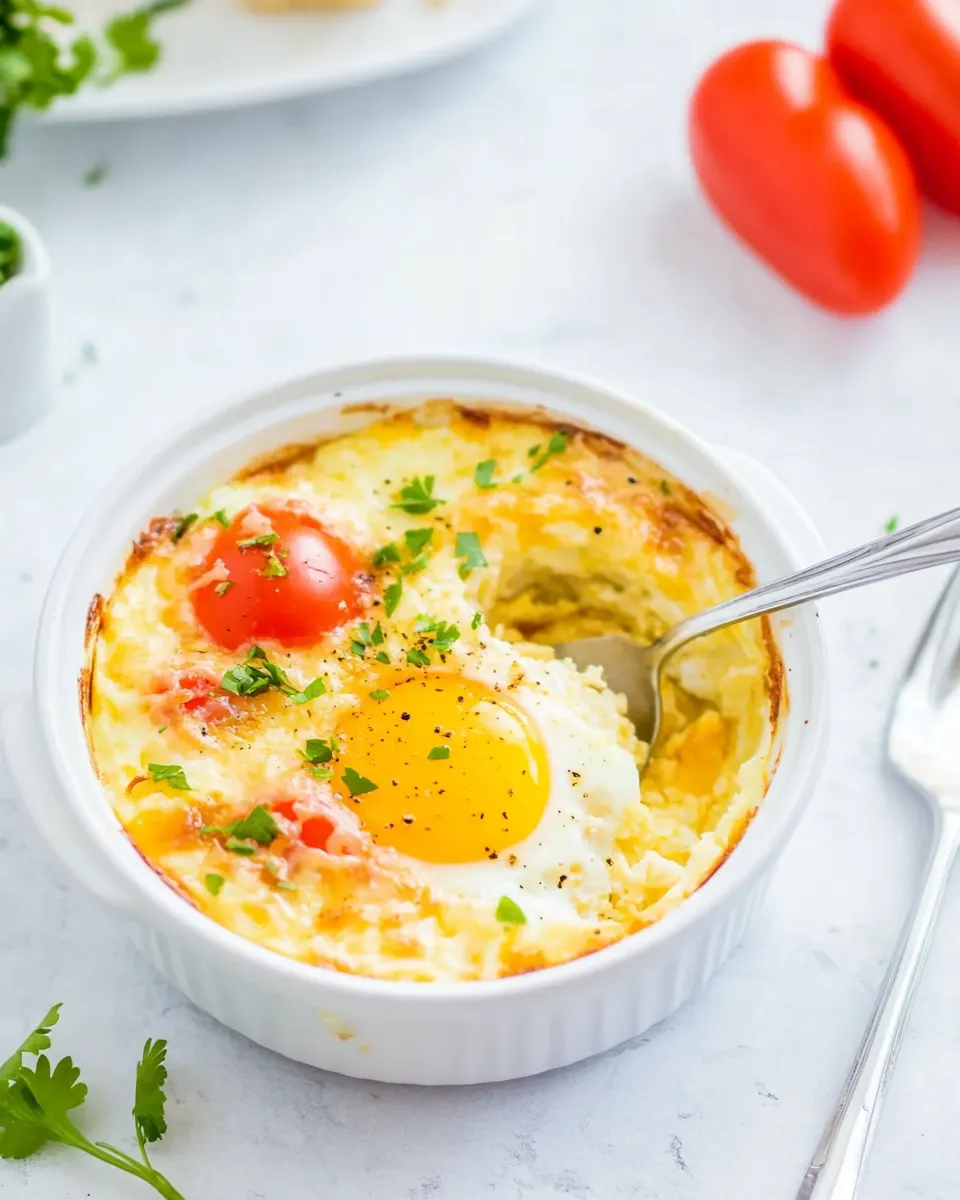
If you’re shopping on a budget or find yourself without a specific item, the recipe was written to be flexible by design. The ingredient list already names a few straightforward swaps:
- Cheese — mozzarella, Fontina, Monterey Jack, or pepper Jack are called out as alternatives. Use what melts well: fresher, milder cheeses give a silkier top; pepper Jack adds a touch of heat.
- Mustard — Dijon is the flavor anchor here but you can use a favorite yellow, hot, or spicy mustard if that’s what you have. The dish needs that acidic, sharp counterpoint, so don’t skip the mustard entirely.
- Herbs — parsley is optional, and basil or thyme are listed alternatives. Fresh herbs are finishing touches; omit if unavailable and the dish will still be solid.
Beyond those swaps, you can adapt the containers: ramekins are ideal for individual servings; a loaf pan scales the idea into an easy family portion. Both are noted in the directions, so pick what suits your pantry and budget.
Appliances & Accessories
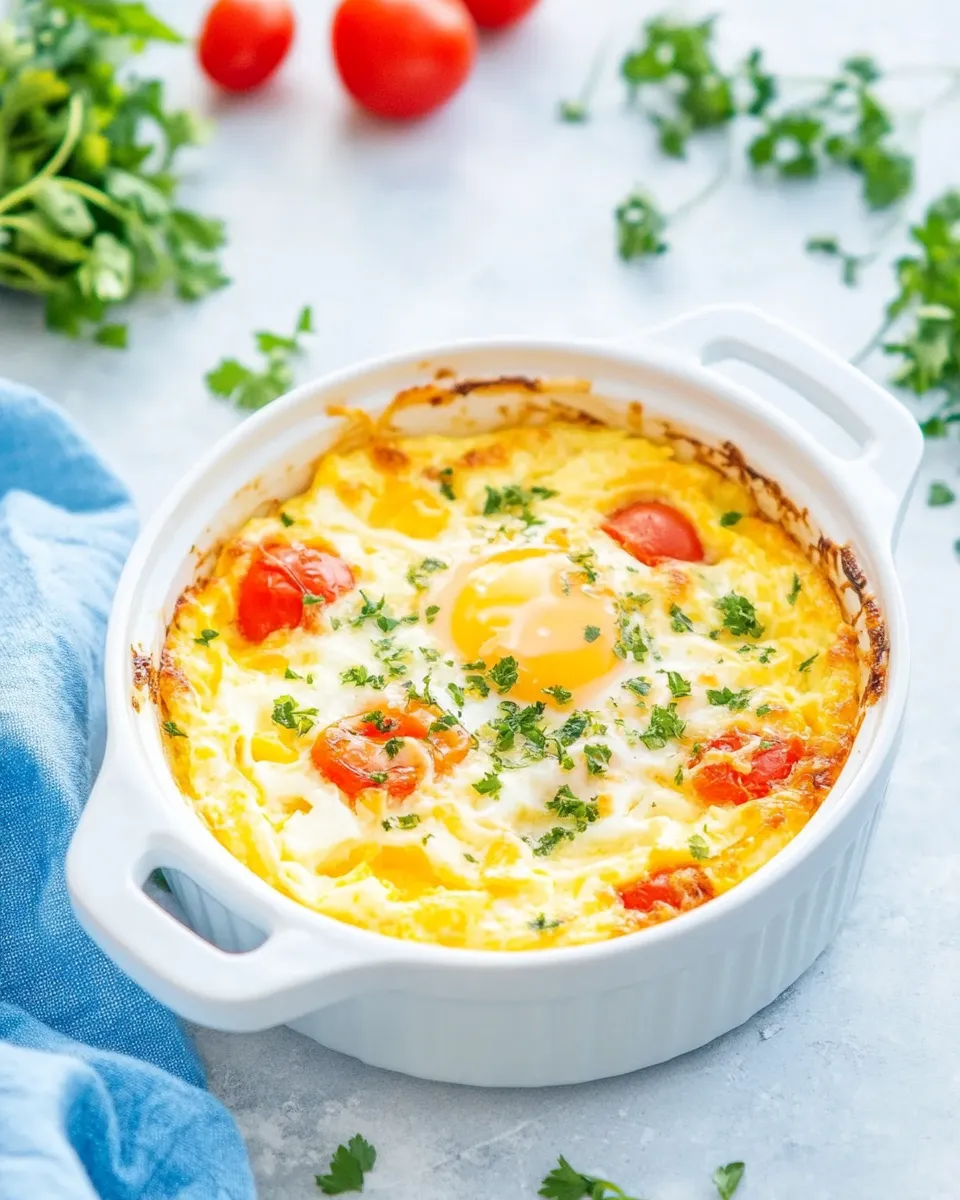
Keep the hardware simple. The recipe needs a standard oven and either two small ovenproof ramekins or an 8×4‑inch loaf pan. Put ramekins on a baking sheet for easier handling and to catch any overflow.
Other small items I reach for every time:
- small bowl — to mix the grated cheese and Dijon, so the mustard disperses evenly
- fork — to toss the cheese and mustard and to lightly smooth the topping
- measuring spoon — to get the 2 teaspoons of mustard consistent
If your ramekins tend to stick, use nonstick dishes or well‑seasoned ceramics as the directions suggest. No specialty tools are required; this is a kitchen‑friendly weeknight or weekend recipe.
Don’t Do This
Overbake the eggs. It’s the easiest way to ruin the texture. The oven time window is short: 10 minutes for runny yolks, up to roughly 18 for fully set. Pull them a minute or two early if in doubt—carryover heat will continue to firm the eggs.
Don’t skip the tomato or mustard entirely without replacing their roles. The tomato brings moisture and brightness; the mustard supplies the acid and bite that keep the cheese from feeling one‑dimensional.
And try not to pile the cheese on so thick that the eggs lose contact with heat. A 1/2 heaping cup of grated cheese is measured piled loosely; spread it evenly so the eggs cook through beneath the layer.
Season-by-Season Upgrades
Spring and summer: use basil as the finishing herb when it’s abundant. Fresh basil brightens the whole dish and pairs beautifully with tomato.
Late summer and early fall: if you have late tomatoes at their peak, dice them a touch larger for texture. The extra sweetness in ripened tomatoes plays nicely with the sharp cheddar.
Winter: thyme or parsley works well when basil isn’t at its best. If you lean into cozier flavors, choose Fontina or Monterey Jack for a creamier melt and use hot mustard for a warming edge.
Method to the Madness
The steps are intentionally straightforward, but a few small choices make the outcome reliable. First, measuring the cheese “piled loosely” matters more than it sounds because tightly packed cheese will yield more density and take longer to melt. Tossing the cheese with the mustard in a bowl means the tang is evenly distributed rather than concentrated in a single bite.
Placing ramekins on a baking sheet accomplishes two things: it makes the dishes easier to move in and out of the oven, and it catches any cheese or egg that might bubble over. If you use a loaf pan, space the eggs so the whites have room; crowding can make wonky shapes and uneven cooking.
Finally, use visual cues. Whites should be opaque and set; yolks have a range. If you want to be very precise, check at the earlier end of the time window and decide from there. The temperature is gentle on purpose so you can nudge the result to your liking.
How to Store & Reheat
These eggs are at their best warm and fresh, as the recipe notes. If you have leftovers, cool them to room temperature within two hours, then refrigerate in an airtight container. Stored in the fridge, they keep well for up to 3 days.
To reheat: the oven gives the most even result. Warm at 325°F until heated through, about 8–12 minutes depending on portion size and how cold they are. If you’re in a rush, microwave on medium power in 20–30 second bursts until warmed; expect a slight change in yolk texture.
A quick tip: add a sprinkle of water over the top before reheating in the oven and cover loosely with foil for a minute or two to prevent the cheese from drying out.
FAQ
Q: Can I make this ahead?
A: You can prepare the ramekins through step 8—assembled and ready to bake—then refrigerate covered for a few hours. Bring to room temperature briefly before baking and add a minute or two to the bake time as needed.
Q: Can I use pre‑shredded cheese?
A: Yes, but pre‑shredded cheese often contains anti‑caking agents that can slightly affect melt. Freshly grated if you can is best for a silky result, but pre‑shredded will work in a pinch.
Q: How do I achieve runny yolks?
A: Follow the timing: about 10 minutes at 350°F typically gives very runny yolks. Oven performance varies, so start checking a minute or two earlier the first time you try the recipe.
Q: Can I double the recipe?
A: Yes—use more ramekins or a larger pan and arrange eggs with room between them. Baking time may shift slightly; use visual cues (set whites, desired yolk texture) rather than relying solely on the clock.
Bring It Home
This is a small, confident recipe that rewards minimal attention with maximum comfort. It’s easy enough for a weekday breakfast, pretty enough for a relaxed brunch, and forgiving enough that the first try should be a success. Keep the directions handy, use your favorite mustard and cheese combo, and you’ll have a dependable, delicious dish.
If you make it, tell me how you like your yolks and which cheese swap you tried—those little choices are how a simple dish becomes your signature morning.
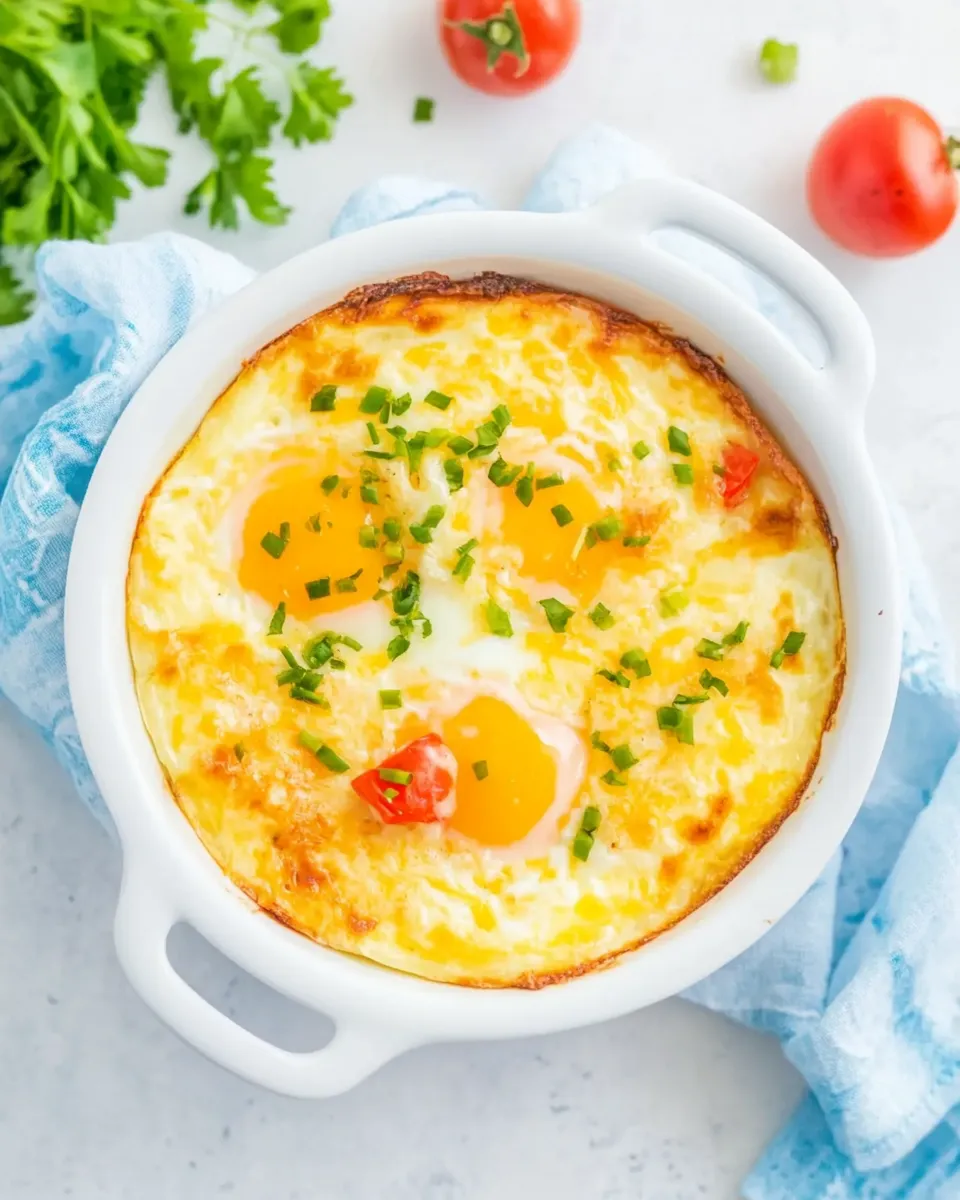
White Cheddar and Dijon Baked Eggs
Ingredients
Equipment
Method
- Preheat oven to 350°F (175°C).
- Choose two small ovenproof ramekins or an 8×4‑inch loaf pan. If your ramekins tend to stick, use nonstick or well‑seasoned dishes.
- Dice half of one small/medium tomato (about half an unpeeled Roma) into small pieces.
- Divide the diced tomato evenly between the two ramekins (or spread evenly across the loaf pan).
- Carefully crack 2 large eggs into each ramekin (total 4 eggs). If using a loaf pan, space the eggs so they have room.
- Season each ramekin with salt and pepper to taste.
- In a small bowl, combine about 1/2 heaping cup grated white cheddar (measured piled loosely) and 2 teaspoons Dijon mustard; toss with a fork until mixed.
- Divide the cheese‑mustard mixture evenly between the two ramekins and lightly smooth or spread the tops with a fork.
- Place the ramekins on a baking sheet (or put the loaf pan directly in the oven) and bake at 350°F. Bake about 10 minutes for very runny yolks, about 15 minutes for firmer but still slightly soft yolks, or about 18 minutes for fully set yolks; bake until the whites are set and the yolks are cooked to your preference.
- Remove from the oven, garnish with parsley (or basil/thyme) if using, and serve immediately. Eggs are best served warm and fresh.