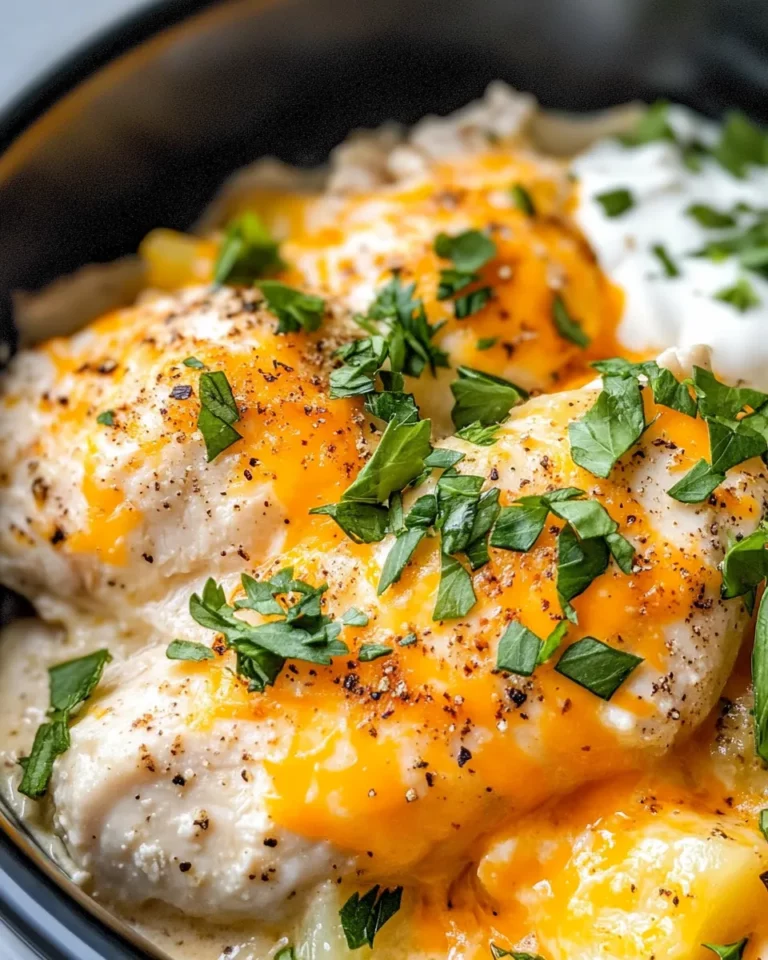
Baked Chipotle Chicken
I like recipes that are direct, flavorful, and forgiving — this Baked Chipotle Chicken is exactly that. It brings a smoky heat from canned chipotle in adobo balanced with a touch of sweetness and a simple pan-to-table finish. You don’t need a lot of technique to get reliably juicy breasts and a punchy sauce that doubles as a dipping or finishing drizzle.
The method is straightforward: blend, reserve a little sauce, marinate, bake, and finish. The marinade does the heavy lifting, tenderizing and infusing the chicken while you do something else. Timing is flexible; an hour works, overnight is even better.
Because the ingredients are pantry-friendly and the bake is hands-off, this is a dependable weeknight main that also behaves well for company. It scales and pairs easily with rice, roasted veggies, or a crisp salad.
What You’ll Gather
Nothing exotic here beyond a can of chipotle peppers in adobo and basic pantry staples. Read the ingredient list once to confirm you’ve got the chipotle can — that’s the flavor backbone — and then gather a baking dish and a food processor or blender.
Ingredients
- 2 chipotle peppers — from 1 can of chipotle peppers in adobo sauce; provides smoky heat and primary chile flavor.
- ¼ cup adobo sauce — from the same can; thins and flavors the marinade with smoky, tangy notes.
- ¼ cup chicken broth — (or water) — adds liquid to blend the marinade and keeps it from being too thick.
- 1 tablespoon maple syrup — (or honey) — balances the heat with a touch of sweetness.
- 2 tablespoons olive oil — helps emulsify the marinade and promotes browning in the oven.
- 1 tablespoon chili powder — deepens the chile flavor and adds warmth.
- 3 cloves garlic — (minced) — aromatic backbone; press or mince finely so it integrates into the sauce.
- 1 teaspoon ground cumin — adds earthiness and a subtle smoky note.
- ½ teaspoon dried oregano — a background herb that brightens the marinade.
- ½ teaspoon kosher salt — seasons the chicken and helps the flavors penetrate.
- 4 boneless, skinless chicken breasts — the protein; choose even-sized breasts for uniform cooking.
From Start to Finish: Baked Chipotle Chicken
- Add the 2 chipotle peppers, 1/4 cup adobo sauce, 1/4 cup chicken broth (or water), 1 tablespoon maple syrup (or honey), 2 tablespoons olive oil, 1 tablespoon chili powder, 3 cloves garlic (minced), 1 teaspoon ground cumin, 1/2 teaspoon dried oregano, and 1/2 teaspoon kosher salt to a food processor and pulse until smooth.
- Measure out and reserve 1/3 cup of the blended marinade into a small bowl; set it aside for serving.
- Pour the remaining marinade into a resealable plastic bag, add the 4 boneless, skinless chicken breasts to the bag, remove excess air, seal, and massage the bag so the chicken is evenly coated.
- Refrigerate the sealed bag and marinate the chicken for at least 1 hour or up to overnight, turning the bag occasionally to redistribute the marinade.
- When ready to cook, preheat the oven to 400°F.
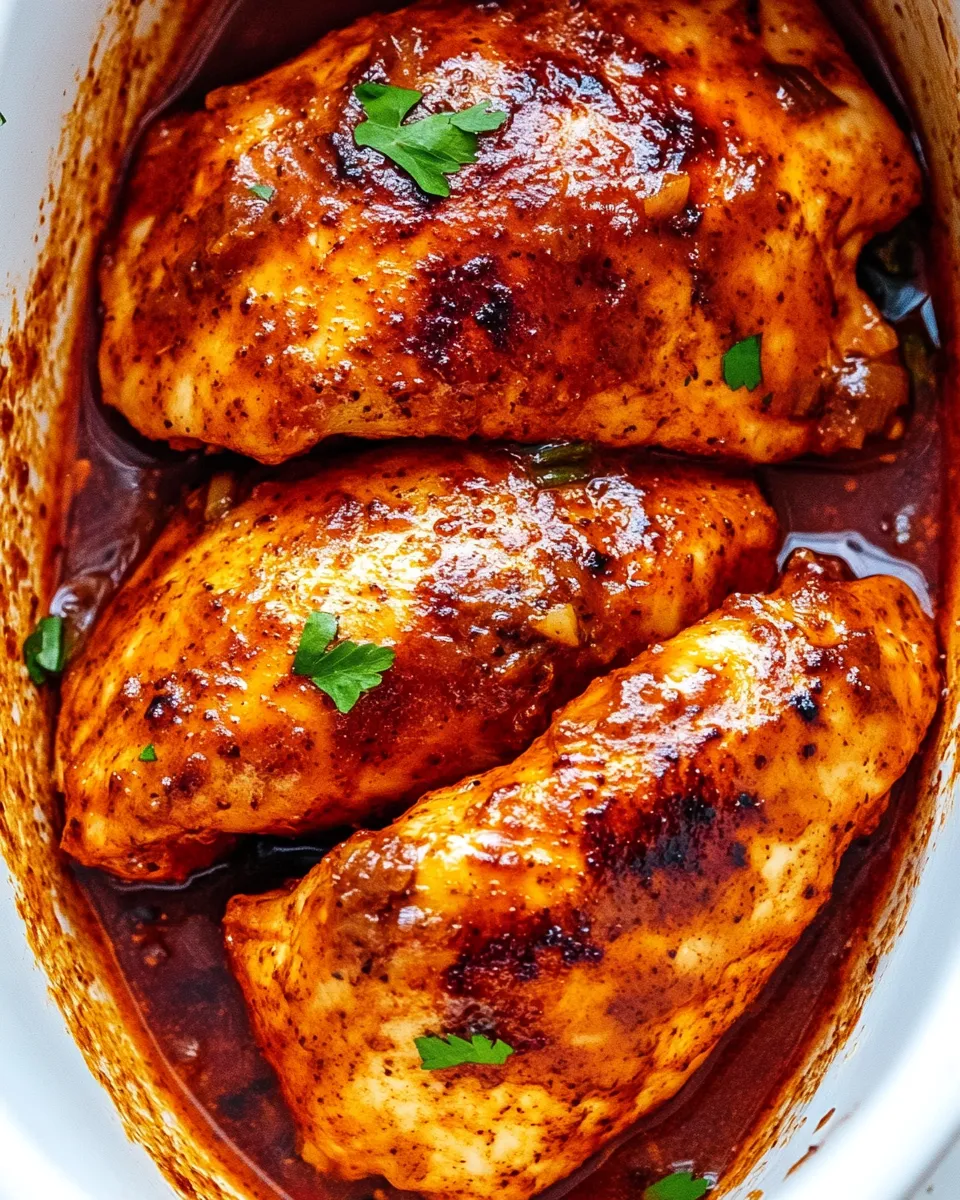
- Arrange the marinated chicken breasts in a single layer in a baking dish and pour the remaining marinade from the bag over the chicken.
- Bake the chicken for 25–35 minutes, until cooked through (internal temperature reaches 165°F and juices run clear).
- Let the chicken rest for a few minutes out of the oven, then pour the reserved 1/3 cup marinade over the chicken and serve.
Why This Recipe Works
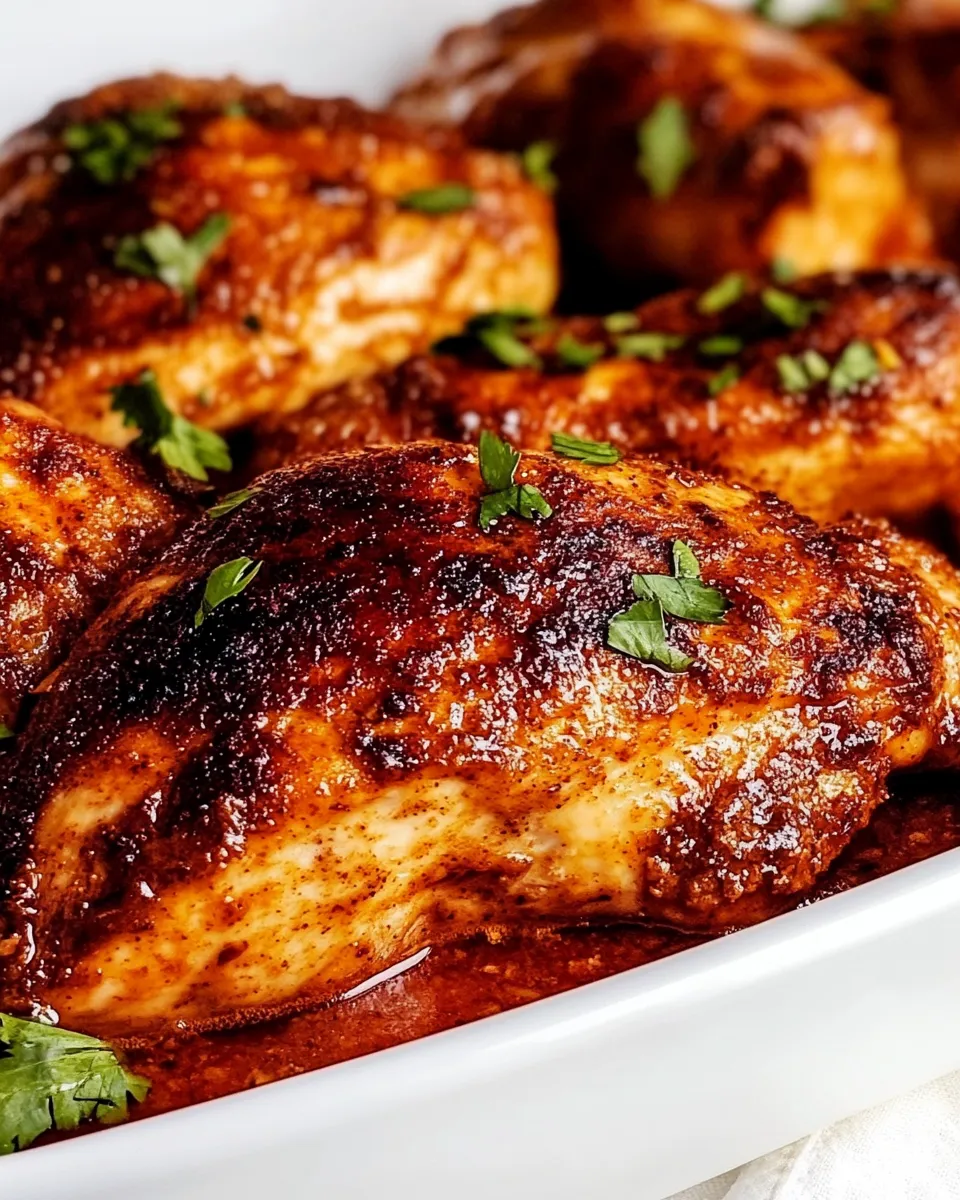
This recipe keeps the technique minimal and leans on bold ingredients to do the work. Canned chipotle in adobo is concentrated with smoke, acid, and spice; blending it with oil, broth, and a sweetener creates an emulsion that clings to the chicken and transfers flavor evenly. A short marinade time is enough to impart that flavor into the surface of the breasts, and the reserved 1/3 cup of marinade used after cooking refreshes the heat and shine so the chicken doesn’t feel dry or one-note.
Baking at 400°F is a good middle ground: it cooks through relatively quickly and gives the exterior a slight roast without forcing you to babysit the pan. The simple rest at the end allows juices to redistribute so each bite stays tender. Keeping the recipe ingredient-forward — rather than layering dozens of steps or components — is why it’s reliable across kitchens and cooks.
No-Store Runs Needed
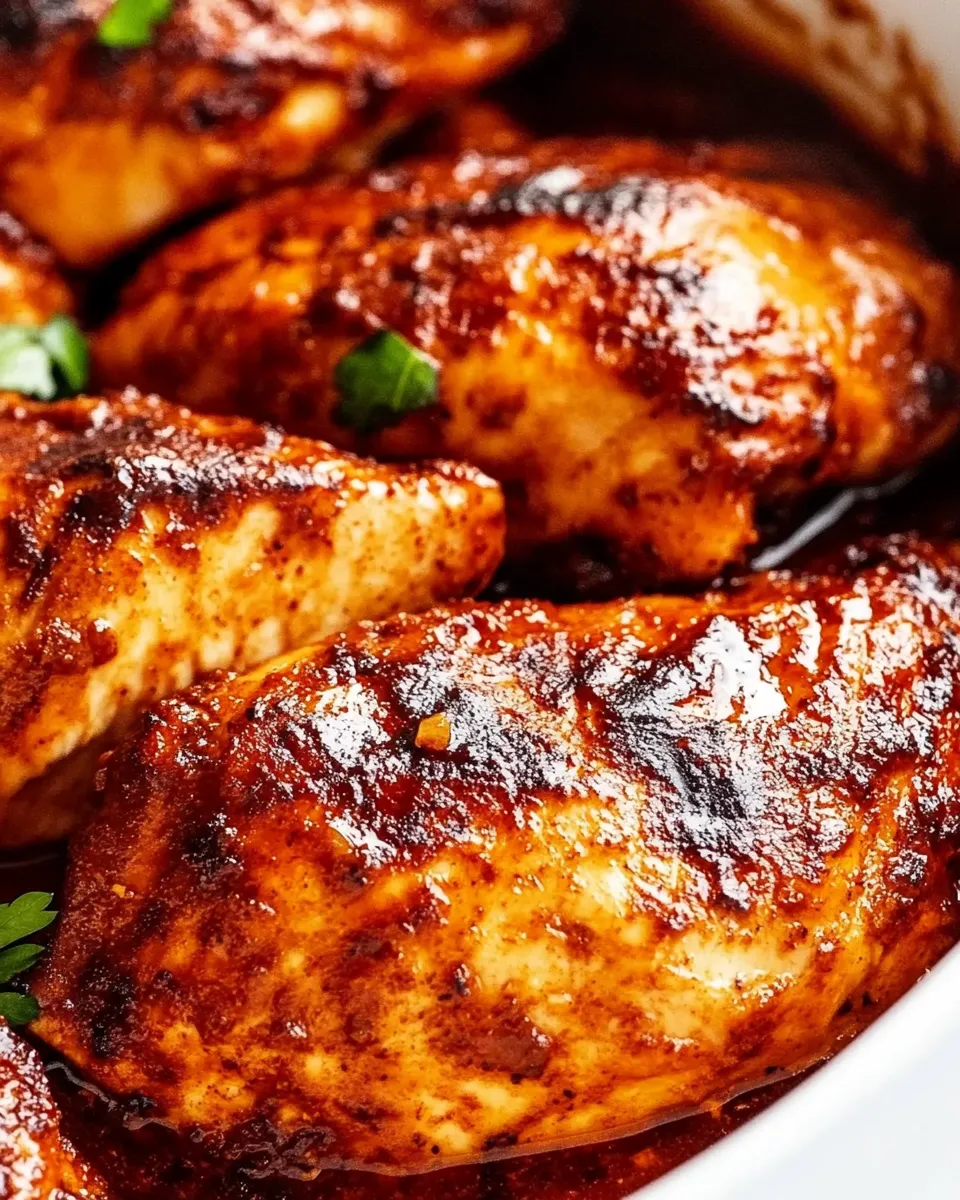
Most of these components live in a well-stocked pantry. If you already buy canned chipotles occasionally, you’re probably set. The only things that might send you out to the store are fresh chicken breasts (obvious) and, if you prefer a substitute, maple syrup versus honey — either works. Chicken broth can be swapped for water in a pinch; this recipe tolerates that change without falling apart. If you don’t have a food processor, a blender will do the same job.
Setup & Equipment
Minimal equipment keeps cleanup quick. Here’s what I use every time:
Must-haves
- Food processor or blender — to make the marinade smooth so it coats the chicken evenly.
- Resealable plastic bag — for an efficient, hands-on marinating method and easy cleanup.
- Baking dish — large enough to fit four chicken breasts in a single layer.
- Meat thermometer — the most reliable way to confirm the chicken reaches 165°F.
Nice-to-haves
- Rubber spatula — to scrape the processor and get every bit of marinade into the bag.
- Wire rack and rimmed sheet pan — if you prefer air circulation under the breasts for a slightly different roast texture.
Things That Go Wrong
There are a few predictable missteps and how to avoid them. Overcooking: chicken breasts can dry out if left in the oven too long; check temperature around 22–25 minutes for average-sized breasts and remove when the thermometer reads 165°F. Underseasoning: because the marinade is concentrated, skimping on the salt or oregano will make the dish flatter; measure the 1/2 teaspoon kosher salt as written. Uneven cooking: use similar-sized breasts or pound them to an even thickness so the 25–35 minute window is accurate.
If the marinade is too thick to blend, add a splash more broth or water. If you skip reserving the 1/3 cup, the finish lacks that glossy, concentrated hit — set the small bowl aside before bagging to avoid that mistake.
Fresh Seasonal Changes
This recipe is designed to spotlight the chipotle, so I keep seasonal changes subtle. In summer, serve the chicken over a bowl of cilantro-lime rice and a crisp corn and tomato salad. In winter, pair it with roasted sweet potatoes and wilted greens. If you have peak-season citrus, a squeeze of orange or lime over the finished chicken brightens the smoky profile without altering the core recipe. Don’t add fresh herbs into the marinade — they don’t always stand up to the intensity of the chipotle — but finish with chopped herbs for freshness when serving.
What I Learned Testing
I tested this multiple times with different marinating windows. One hour in the fridge yields very good flavor; overnight is more pronounced and more forgiving for meal prep. I also learned that you don’t need to pan-sear first — the oven-only method keeps cleanup low and produces a moist result. Reserving a small amount of the marinade for finishing makes a big difference in appearance and immediate flavor hit; without it, the chicken looked slightly matte and tasted less lively.
Blending until smooth matters. Tiny pepper bits can sing too aggressively if not fully processed, and a smooth emulsion adheres better during baking. Finally, consistent breast size keeps cooking time predictable; if your breasts are very large, plan for the upper end of the bake time and check temperature rather than relying solely on minutes.
Meal Prep & Storage Notes
This recipe is friendly to batch cooking. Make a double batch of the marinade, reserve the finishing 1/3 cup each time, and bake multiple breasts at once. Cool leftover chicken to room temperature and refrigerate in an airtight container for up to 4 days. Reheat gently in a 325°F oven covered with foil until warmed through, or slice and warm briefly in a skillet with a splash of broth to prevent drying.
The reserved 1/3 cup marinade that hasn’t touched raw chicken can be kept separately in the fridge for up to 3 days; any leftover that was used as a post-cook sauce should be treated as food and refrigerated promptly. For freezing, cooked chicken freezes well for up to 3 months; thaw in the fridge before reheating.
Troubleshooting Q&A
Q: My chicken was still pink but juices ran clear — is it safe?
A: Use a thermometer. Color alone can be misleading. Pull the chicken once it reaches 165°F at the thickest point.
Q: The marinade seemed too strong — how can I tone it down?
A: Reduce the number of chipotle peppers to one or increase the broth/water slightly to dilute the intensity. The recipe as written is meant to be boldly flavored.
Q: Can I use bone-in chicken?
A: Yes, but cooking time will increase. Bake until the internal temperature reaches 165°F in the thickest part; expect additional 10–20 minutes depending on size.
Q: Do I need to discard the marinade in the bag?
A: The instructions call for pouring the remaining marinade over the chicken before baking and reserving a small portion beforehand. If any marinade remains that contacted raw chicken and it’s to be used after cooking, boil it for a few minutes to make it safe, or avoid using it post-cook and rely on the reserved 1/3 cup.
Time to Try It
This is an approachable, high-flavor weeknight main that rewards a little preparation and leaves you with a confident, repeatable result. Read the ingredient list once, blend the marinade, reserve a small portion, and let the fridge do the work while you prepare sides. The bake is hands-off, and the finish gives you a glossy, smoky plate that brightens any midweek meal. Make it tonight, and tweak the chipotle level next time to match your tolerance for heat — it scales well.
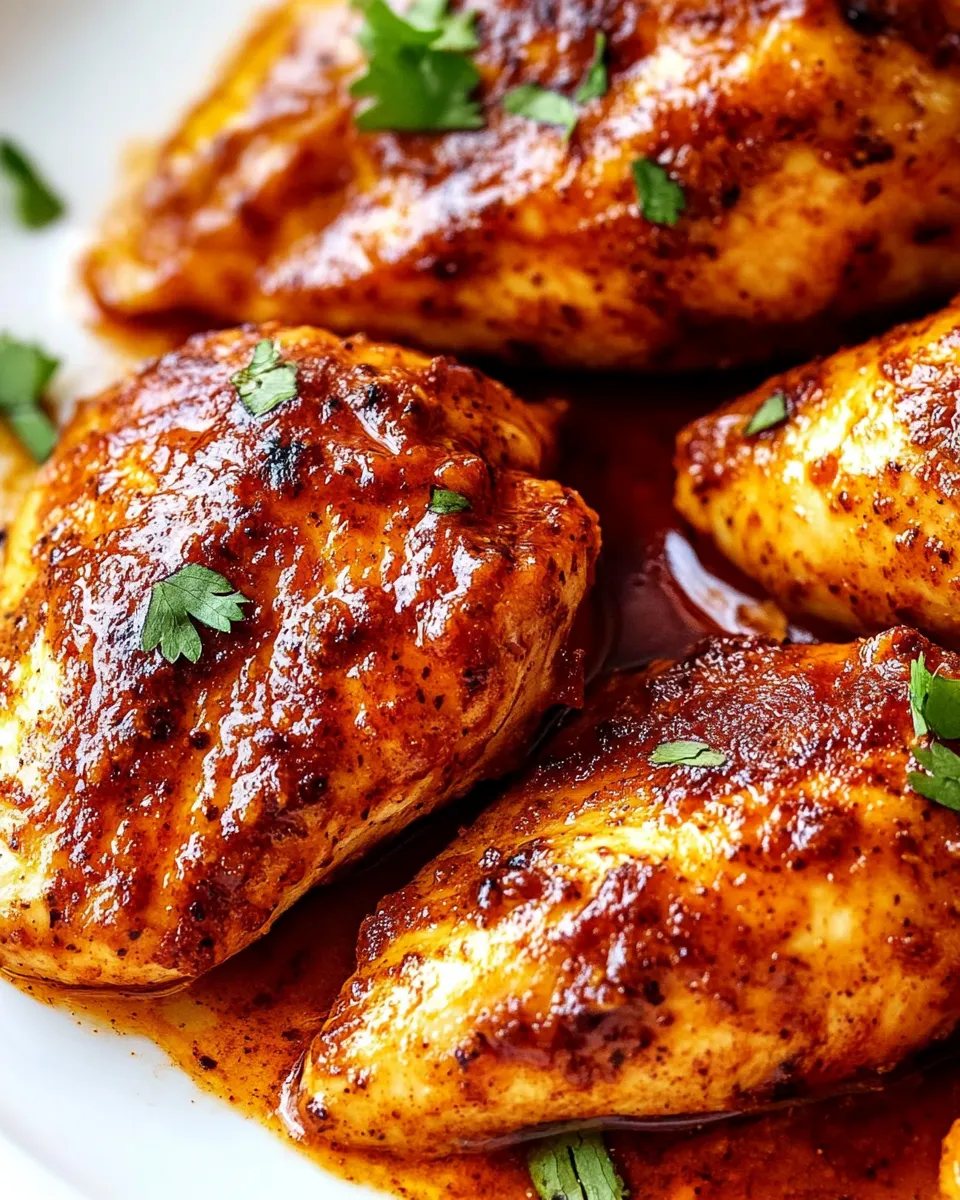
Baked Chipotle Chicken
Ingredients
Equipment
Method
- Add the 2 chipotle peppers, 1/4 cup adobo sauce, 1/4 cup chicken broth (or water), 1 tablespoon maple syrup (or honey), 2 tablespoons olive oil, 1 tablespoon chili powder, 3 cloves garlic (minced), 1 teaspoon ground cumin, 1/2 teaspoon dried oregano, and 1/2 teaspoon kosher salt to a food processor and pulse until smooth.
- Measure out and reserve 1/3 cup of the blended marinade into a small bowl; set it aside for serving.
- Pour the remaining marinade into a resealable plastic bag, add the 4 boneless, skinless chicken breasts to the bag, remove excess air, seal, and massage the bag so the chicken is evenly coated.
- Refrigerate the sealed bag and marinate the chicken for at least 1 hour or up to overnight, turning the bag occasionally to redistribute the marinade.
- When ready to cook, preheat the oven to 400°F.
- Arrange the marinated chicken breasts in a single layer in a baking dish and pour the remaining marinade from the bag over the chicken.
- Bake the chicken for 25–35 minutes, until cooked through (internal temperature reaches 165°F and juices run clear).
- Let the chicken rest for a few minutes out of the oven, then pour the reserved 1/3 cup marinade over the chicken and serve.
Notes
Marinate the chicken in the chipotle sauce for at least an hour. You can leave it as long as 12 hours in the fridge.
Use an instant-read thermometer to check that your chicken is fully cooked through! It should register at 165°F when inserted into the thickest part of the breast.