Cinnamon Roll Icing
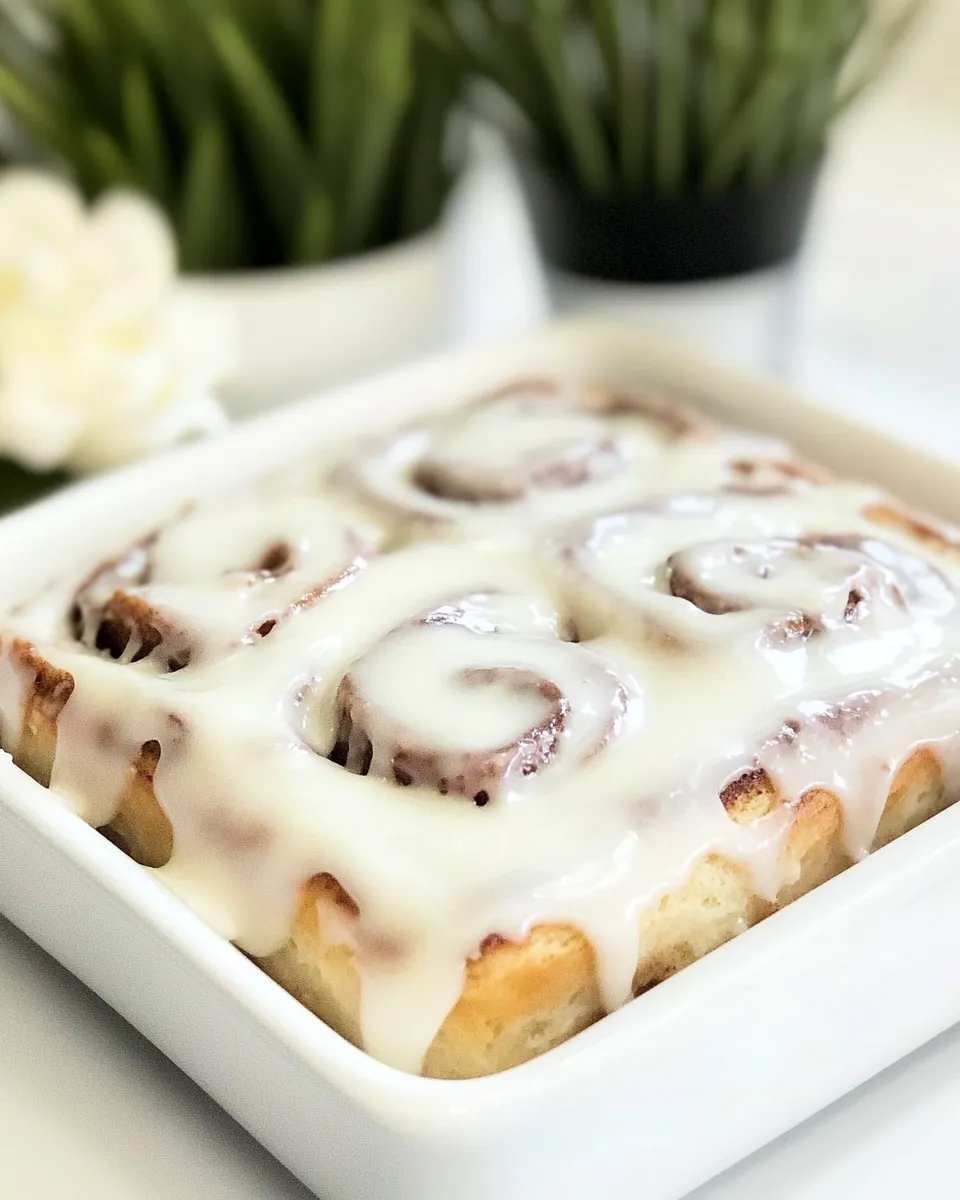
I make this icing more than I probably should admit. It’s the kind of simple, forgiving recipe that turns good cinnamon rolls into unforgettable ones — glossy, slightly tangy, and sweet without being cloying. If you’ve ever warmed a roll and spooned icing over it while it melted into the swirls, you know the comfort I mean. This icing is that moment, crystallized into an easy-to-follow formula.
No tricks, no obscure ingredients. You need butter, cream cheese, powdered sugar, and a splash of milk or half and half to get the right spreadable finish. It’s forgiving if your timing is off: a quick stir brings it back, and spreading over warm rolls makes it melt into the nooks and crannies.
Below I’ll give you the ingredient notes, the exact stepwise instructions, and practical tips I use every time I’m making these for family breakfasts, bake sales, or last-minute guests. Read the short essentials, follow the steps as written, and you’ll have glossy, dreamy Cinnamon Roll Icing in minutes.
The Essentials
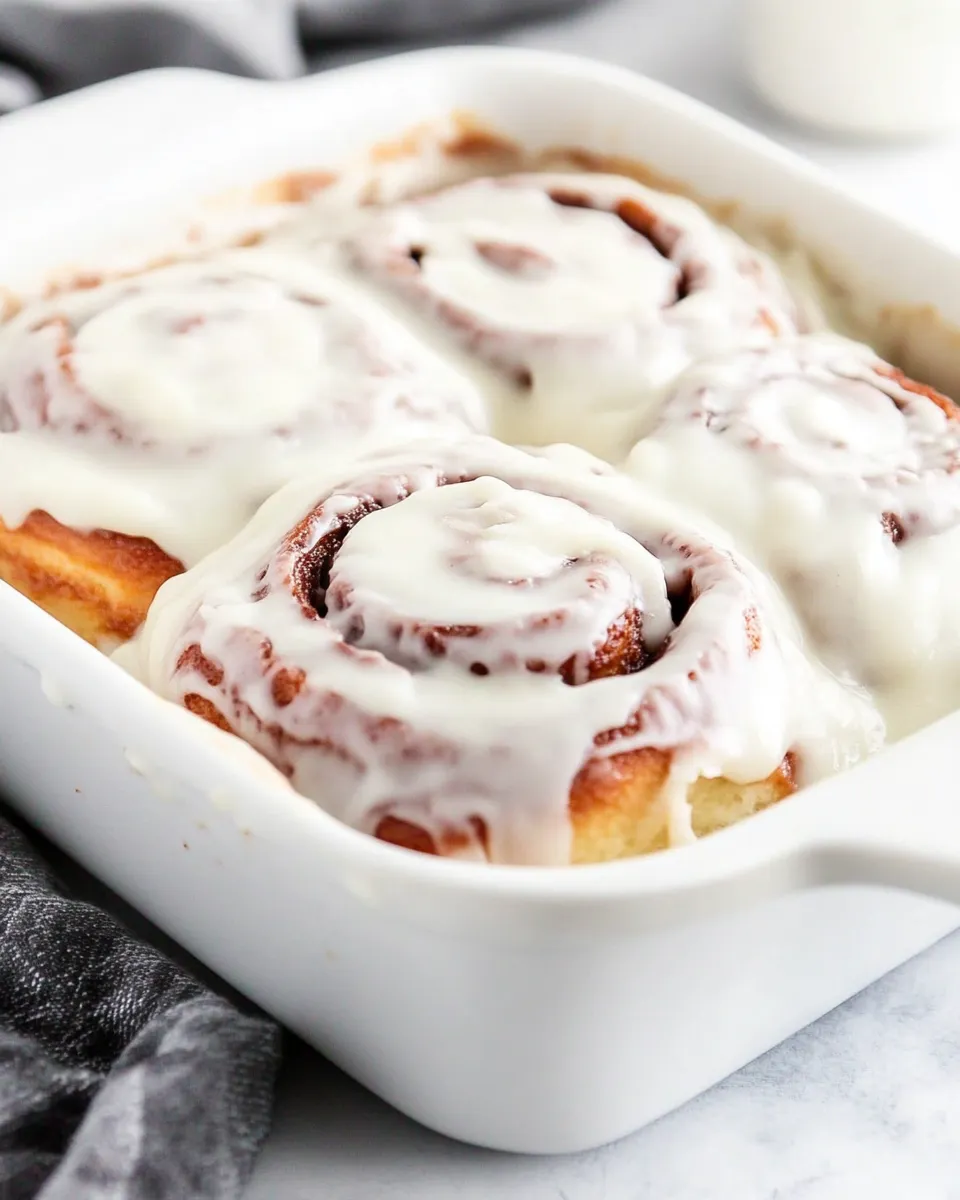
This icing balances richness from butter and cream cheese with sweetness from powdered sugar, thinned to the right spreadable texture with milk or half and half. The cream cheese adds a touch of tang that cuts through the sugar and complements the cinnamon filling. The whole thing comes together quickly with an electric mixer or even a sturdy whisk if you prefer.
One practical point: the rolls should be warm, not piping hot. Warm rolls help the icing melt into the layers without turning it runny. Also, softened butter and cream cheese are key — if they’re too cold you’ll get lumps and a fight with your mixer.
Ingredients
- ¼ cup butter, softened — provides richness and sheen; make sure it’s soft for smooth mixing.
- 3 cups powdered sugar — the sweet base and thickener; add in batches so it incorporates smoothly.
- 4 ounces cream cheese, softened — gives tang and a creamy texture; room temperature prevents lumps.
- milk or half and half: enough to make it a spreadable consistency. — use a small amount at a time to control how soft the icing becomes.
Cinnamon Roll Icing Made Stepwise
- Put the ¼ cup softened butter and 4 ounces softened cream cheese in a medium bowl. Beat with an electric mixer or whisk until smooth and fully combined.
- Add the 3 cups powdered sugar in batches, mixing after each addition until the sugar is fully incorporated and the mixture is smooth. Scrape down the sides and bottom of the bowl as needed.
- Add milk or half and half a small amount at a time, mixing after each addition, until the icing reaches a spreadable (soft but not runny) consistency.
- Spread the icing evenly over warm cinnamon rolls. Use immediately; give the icing a quick stir if it thickens before spreading.
Why Cinnamon Roll Icing is Worth Your Time
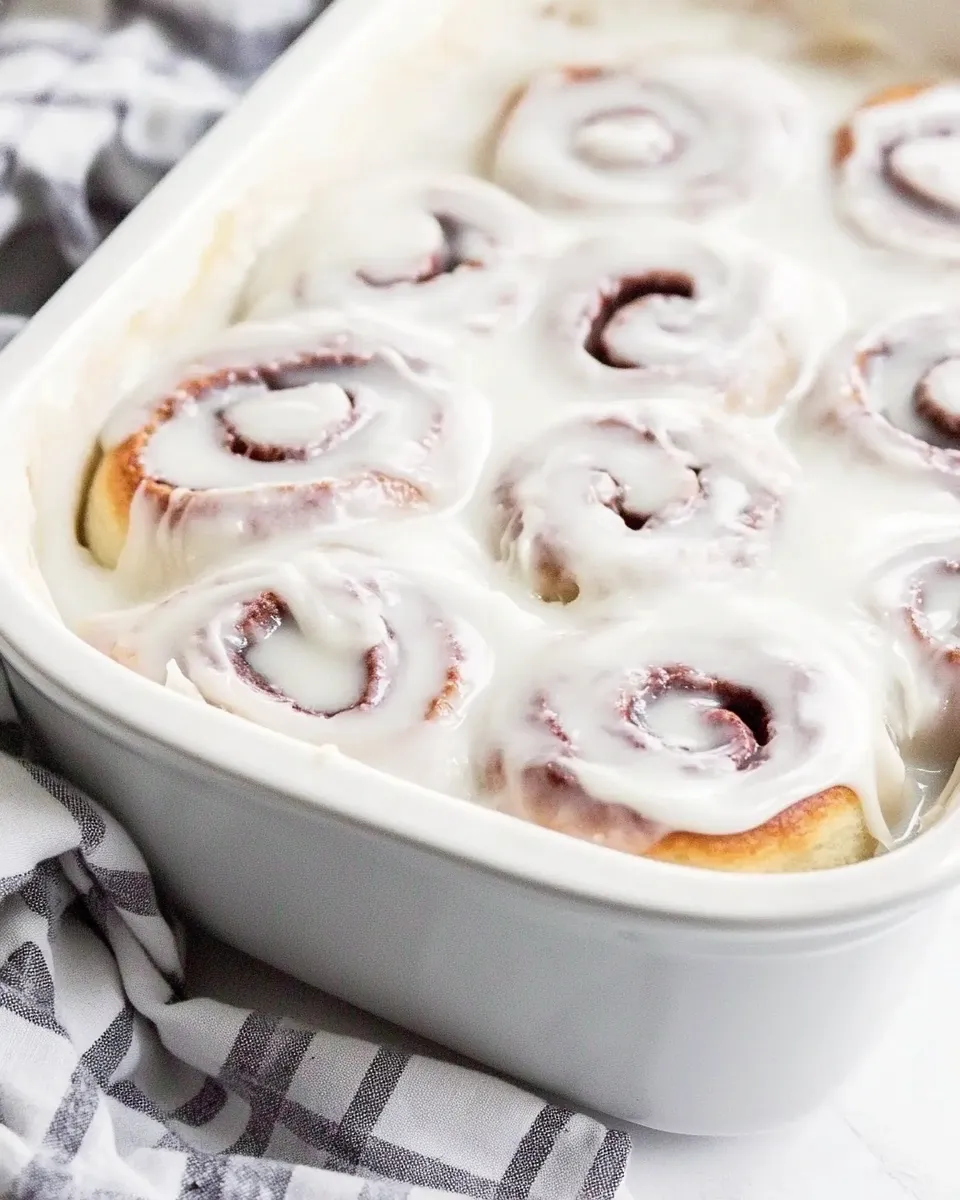
It’s fast. From softened ingredients to spreadable icing takes about five minutes with an electric mixer. That speed matters on busy weekend mornings or when you want to salvage slightly stale rolls — a fresh layer of icing does wonders.
It’s versatile. Use it on bakery-style cinnamon rolls, sticky buns, sweet breads, or even as a quick spread for sweet breakfast sandwiches. The tang from cream cheese brightens the sugar, preventing a flat, overly sweet finish.
And finally, it’s forgiving. Softened rather than melted dairy keeps the texture stable; powdered sugar absorbs minor differences in moisture. If the icing stiffens on the counter, a quick stir or a teaspoon of milk brings it back to life. If it feels too thin, a tablespoon of powdered sugar tightens it up.
Texture-Safe Substitutions

Substitutions can be made, but stay cautious about texture. If you swap half and half for milk, choose whole milk for similar richness. Using skim milk will thin the icing and flatten the mouthfeel. If you need to avoid dairy, there are plant-based cream cheeses and butters, but those can change flavor and how the icing sets — test small batches first.
If your cream cheese is too soft (almost melted), the icing can become looser; temper this by adding powdered sugar more slowly and chilling briefly if needed. Conversely, if butter or cream cheese is too cold, it won’t blend smoothly; let them sit at room temperature until very soft.
Recommended Tools
- Electric hand mixer — speeds up the process and ensures a smooth texture.
- Medium mixing bowl — roomy enough to scrape down sides while you work.
- Rubber spatula — for efficient scraping and smoothing over rolls.
- Measuring cups and scale (optional) — powdered sugar is forgiving, but accurate measures keep consistency predictable.
- Small whisk (optional) — handy if you don’t have a mixer; expect to work a bit harder for smoothness.
Slip-Ups to Skip
Don’t melt the butter or cream cheese. If either is melted, the icing will be too fluid and won’t hold its shape on warm rolls. Softened means pliable to the touch but not glossy or runny.
Don’t add all the milk at once. It’s tempting to dump a splash and call it done, but adding liquid gradually keeps you in control of spreadability. A little goes a long way.
Don’t ice piping-hot rolls. Scorching heat will liquefy the icing and wash it off the roll instead of glazing it. Aim for warm rolls so the icing softens on contact but remains visibly present.
Adaptations for Special Diets
Gluten-free: This icing is naturally gluten-free, so it’s ready for gluten-free rolls without change.
Dairy-free: Use a firm plant-based butter and a dairy-free cream cheese. Expect a subtle flavor shift and possibly a slightly different texture. Choose bar-style vegan butter rather than spreadable tub versions for better structure.
Lower-sugar: Powdered sugar is the structural element — cutting it drastically alters texture. You can try a blend of powdered sugar and a very small amount of powdered erythritol, but texture and sweetness will change. I don’t recommend making large substitutions when you need a dependable spreadable icing quickly.
Author’s Commentary
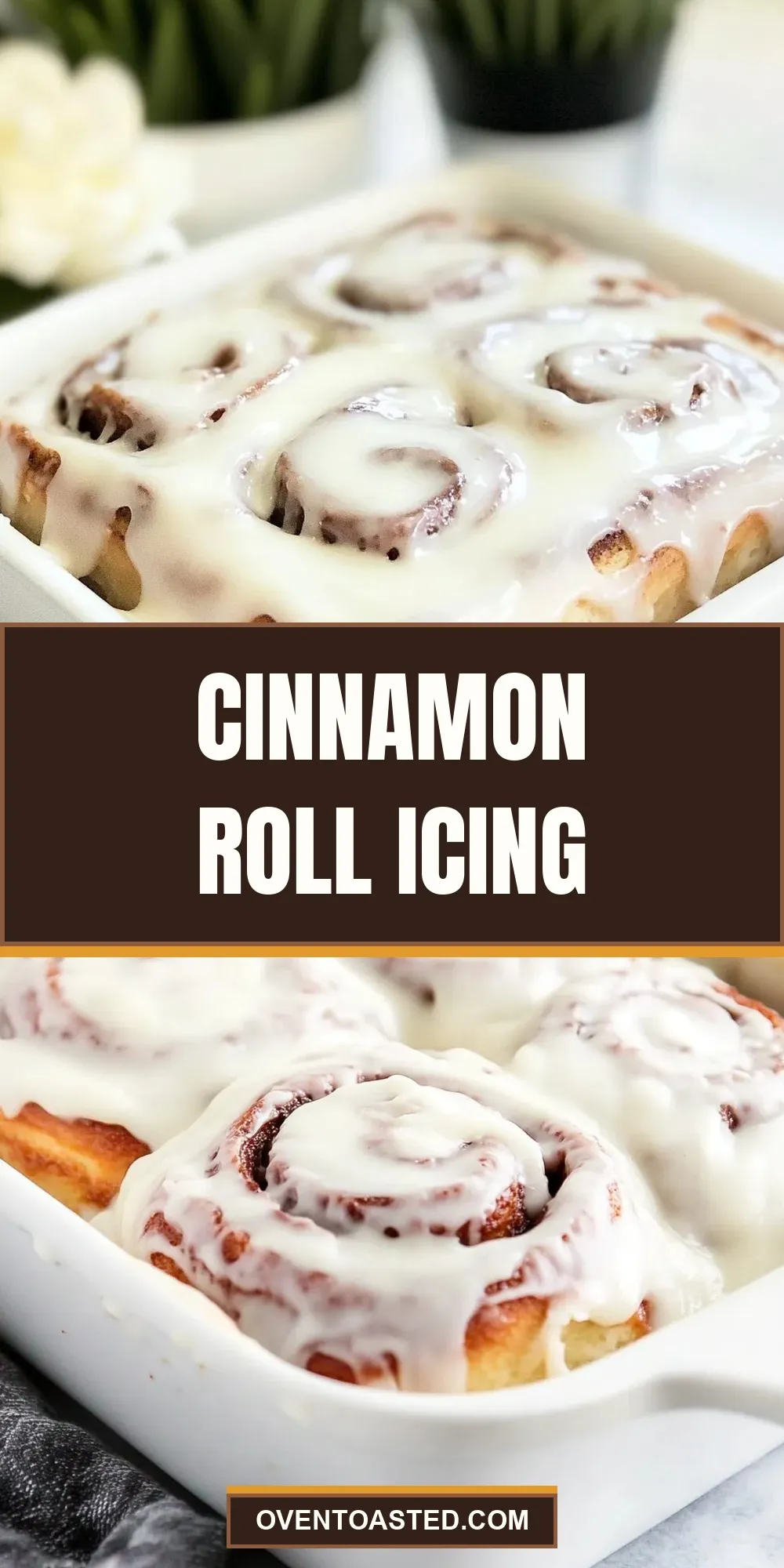
I keep this as my go-to because it’s reliable and quick. When hosting brunch, I’ll make the icing while the rolls finish baking so it’s perfect the moment they come out. A simple palette knife and a bowl are all I need. If you like a thinner glaze, increase milk slightly; if you prefer a dense frosting, reduce the milk and add another scant ¼ cup of powdered sugar.
One small trick I use: for visual appeal and a tiny flavor lift, I’ll reserve a tablespoon or two of icing in a smaller bowl, tint it with a dusting of instant espresso or a few drops of vanilla extract, then drizzle it back over the glazed rolls. It’s optional, but it elevates the presentation.
Shelf Life & Storage
Stored tightly in an airtight container, this icing keeps in the refrigerator for up to 5 days. Because it contains cream cheese and butter, refrigeration is necessary. Bring it back to room temperature and stir or briefly beat before using; the cold will firm it up.
For longer storage, you can freeze the icing in a sealed container for up to one month. Thaw overnight in the refrigerator, then bring to room temperature and re-whip briefly. Texture will be slightly different after freezing, so expect to rework it to a silky finish.
Quick Questions
Q: Can I make this ahead? A: Yes. Refrigerate and re-whip or stir back to spreadable consistency before using. Warm slightly at room temperature if it’s too stiff.
Q: My icing is lumpy. What happened? A: Cream cheese or butter was too cold. Let them soften fully and rebeat; if lumps persist, press through a fine sieve or warm briefly and reblend.
Q: Can I use powdered sugar substitutes? A: You can, but powdered sugar is both sweetener and structure. Substituting changes spread and mouthfeel. If you must, test small batches.
Bring It Home
This Cinnamon Roll Icing is the kind of recipe that makes mornings better with almost no fuss. Follow the stepwise directions exactly for consistent results: softened butter and cream cheese, powdered sugar in batches, liquid added sparingly, and spread over warm but not burning rolls. The payoff is immediate — glossy, tangy-sweet icing that melts into every swirl.
Keep the few tools and pantry items ready, and you’ll be glazing like a pro within minutes. Make it for guests, for family, or for yourself. It’s simple, fast, and genuinely elevates the humble cinnamon roll into something a little bit magical.
Cinnamon Roll Icing
Ingredients
Equipment
Method
- Put the ¼ cup softened butter and 4 ounces softened cream cheese in a medium bowl. Beat with an electric mixer or whisk until smooth and fully combined.
- Add the 3 cups powdered sugar in batches, mixing after each addition until the sugar is fully incorporated and the mixture is smooth. Scrape down the sides and bottom of the bowl as needed.
- Add milk or half and half a small amount at a time, mixing after each addition, until the icing reaches a spreadable (soft but not runny) consistency.
- Spread the icing evenly over warm cinnamon rolls. Use immediately; give the icing a quick stir if it thickens before spreading.
Notes
Texture.
For thinner icing add more milk, for thicker icing add powdered sugar.
Store the icing.
Keep it covered in the fridge for a couple of weeks until ready to use, or freeze it for 3-4 months. Let it sit on the counter to soften before spreading it over your cinnamon rolls.
Store frosted cinnamon rolls.
Due to the cream cheese, the frosted cinnamon rolls can be kept at room temperature overnight but should be refrigerated for longer storage or frozen for up to 8 weeks.