Coconut Crackers
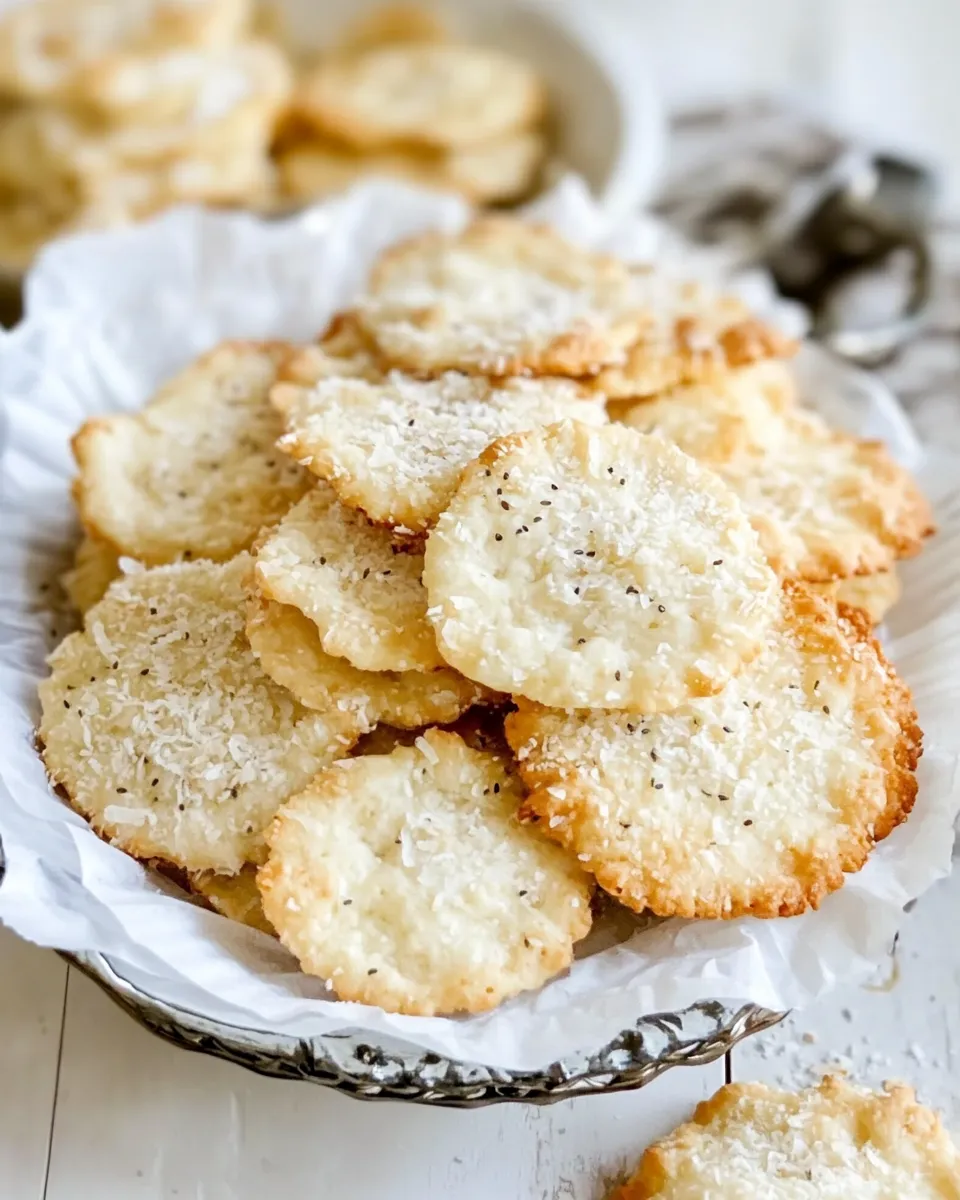
These coconut crackers are crisp, savory little discs that show how a few strong ingredients can make a snack sing. They rely on coconut flour for a grain-free backbone, a bold cheddar punch, a bit of parmesan saltiness, and thyme for an herbal lift. They bake quickly and cool into a satisfying crunch — ideal for charcuterie boards, soup toppers, or a simple nibble with tea.
I test recipes with practicality in mind: straightforward steps, predictable timing, and notes that help you avoid wasted batches. This one is forgiving in technique but precise in ingredient balance, so follow the amounts and you’ll get consistent results. I’ll walk you through the exact method and offer tips for timing, swaps, storage, and common mistakes.
Ready to make a small tray of crackers that taste homemade and look like you spent more time than you did? Gather your ingredients and a couple of basic tools. The dough comes together fast, rests briefly, and then bakes to golden edges — no rolling pin required.
Gather These Ingredients
Ingredients
- 3 tablespoons coconut flour (24 g) — the main dry binder; it soaks up moisture and creates structure in these crackers.
- 2 tablespoons butter, melted (28 g) — provides fat for flavor and helps the dough hold together once cooled slightly.
- ½ cup strong cheddar, grated (50 g) — bold cheddar is split between dough and topping; it brings sharpness and melty richness.
- ¼ cup parmesan, grated (25 g) — adds savory umami and a dryer texture to balance the cheddar.
- 1 egg — the primary binder; it sets during baking and helps the crackers hold their shape.
- fresh thyme leaves to taste, or dried thyme — aromatic garnish; fresh gives a brighter herbaceous note, dried is more concentrated.
The Method for Coconut Crackers
- Preheat the oven to 180°C (350°F) for a conventional/electric oven, or 160°C (320°F) for a fan/convection oven. Line a baking sheet with parchment paper.
- Melt the 2 tablespoons (28 g) butter and let it cool slightly so it is warm but not hot.
- In a mixing bowl, combine 3 tablespoons (24 g) coconut flour, the full ½ cup strong cheddar (50 g) grated but reserve half of this cheddar (about 25 g) to sprinkle on top later, and the ¼ cup parmesan (25 g) grated. Stir to mix the dry ingredients and the portion of cheese that stays in the dough.
- Add the cooled melted butter and 1 egg to the bowl. Mix until the ingredients are evenly combined into a cohesive dough (by hand, with an electric mixer, or in a food processor).
- Let the dough rest for 3–5 minutes so the coconut flour can absorb the moisture and the dough firms up.
- Divide the dough into 8 equal portions. Place the portions on the prepared baking sheet, leaving some space between them.
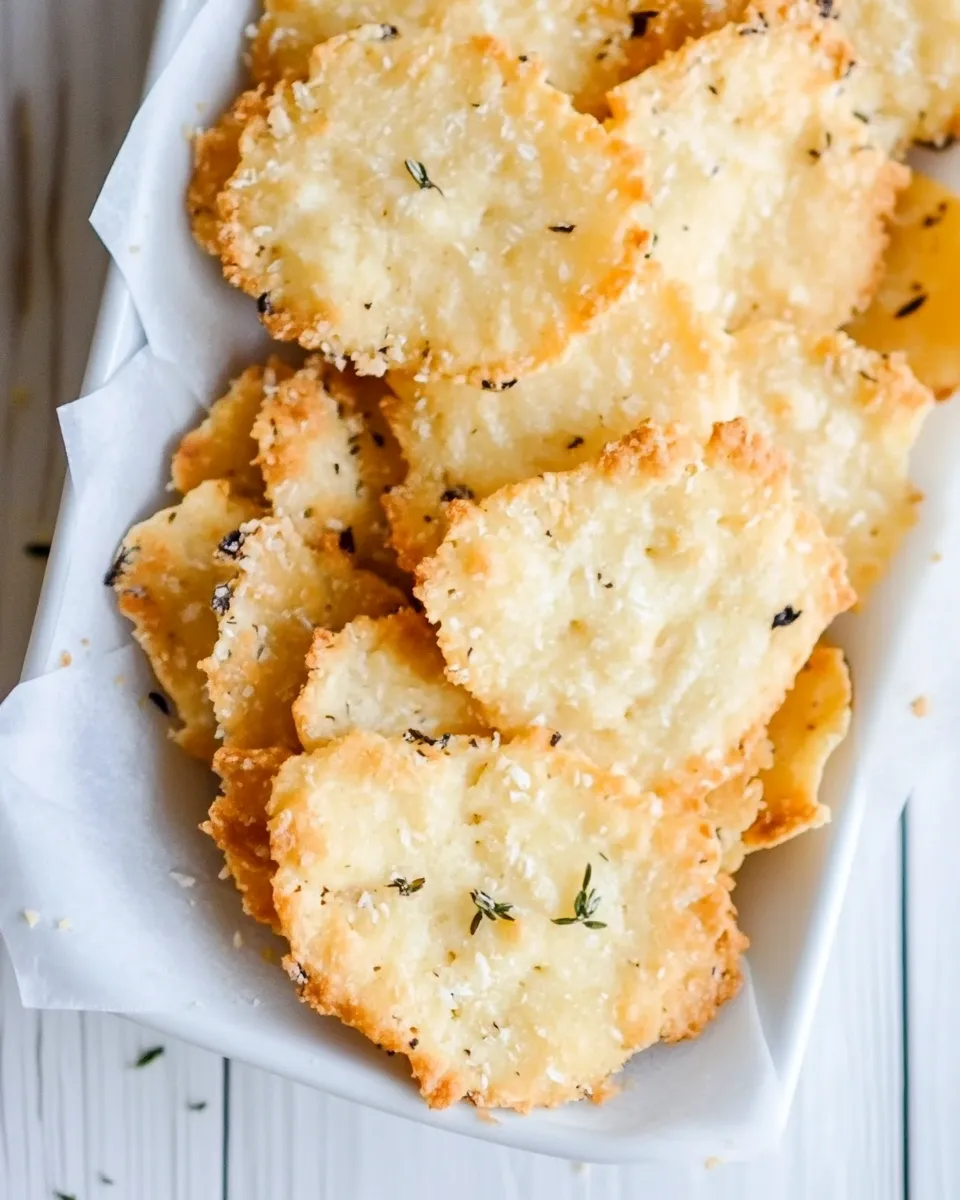
- Use your hands to press each portion into a small flat disc. Sprinkle the reserved cheddar (remaining half of the grated cheddar) evenly over the tops, then add fresh thyme leaves to taste (or sprinkle dried thyme) on each cracker.
- Bake in the preheated oven for 12–15 minutes, until the edges are nicely browned.
- Remove the crackers from the oven and let them cool on the baking sheet for a few minutes before transferring to a wire rack to finish cooling and crisping.
What You’ll Love About This Recipe

- Speed: The dough takes minutes to assemble and bakes in about a dozen minutes. Great for last-minute snacks.
- Texture: Coconut flour gives a distinctive, slightly crumbly crunch once the crackers cool.
- Flavor punch: Strong cheddar plus parmesan delivers salty, savory layers without needing extra seasoning.
- Low-fuss shaping: No rolling or cutting — you portion and press, which saves time and cleanup.
- Versatility: Serve them on a cheese board, with spreads, as a soup garnish, or alongside roasted vegetables.
International Equivalents
- Oven temperatures: 180°C equals 350°F for conventional ovens. If you use a fan/convection oven, set it to 160°C (320°F).
- Weight vs volume: The recipe gives weights where useful (24 g coconut flour, 28 g butter, 50 g cheddar, 25 g parmesan) so you can use scales for accuracy; the cup and tablespoon measures align with those weights.
- Cheese naming: “Strong cheddar” can be called “mature cheddar” or “sharp cheddar” in some regions — use one with a pronounced taste.
- Butter: If you measure butter in sticks, 2 tablespoons is 28 g (or about 1/8 cup in U.S. terms).
Kitchen Gear Checklist
- Baking sheet lined with parchment — ensures easy release and simple cleanup.
- Mixing bowl — for combining dry and wet ingredients; a medium bowl is sufficient.
- Grater — to grate the cheddar and parmesan freshly; pre-grated will work but fresh grating melts and flavors better.
- Spoon or spatula — for initial mixing; you can finish by hand or in a food processor.
- Kitchen scale (optional but helpful) — to measure the small ingredient weights accurately.
- Wire rack — cools crackers so they crisp rather than steam on the sheet.
Mistakes That Ruin Coconut Crackers
- Skipping the rest time. If you don’t let the dough sit 3–5 minutes, the coconut flour won’t absorb enough moisture and the discs can be too wet to shape cleanly.
- Using hot butter. If the melted butter is too hot it can cook the egg when mixed and make the dough grainy or curdled. Let the butter cool until warm.
- Overcrowding the baking sheet. Place the eight discs with space between them so heat circulates evenly and edges brown properly.
- Underbaking or removing too soon. The crackers continue to crisp as they cool — pull them when edges are browned as instructed. Removing early yields soft centers.
- Overbaking. Bake until edges are nicely browned; beyond that you risk a bitter, overly hard cracker.
- Substituting large volumes of other flours. Coconut flour behaves very differently to wheat or almond flours; swapping without adjusting liquid will break the texture.
Seasonal Adaptations
- Spring: Add a few fresh minced chives or sprinkle lemon zest lightly over the cheddar before baking for brightness.
- Summer: Swap thyme for finely chopped fresh basil or oregano for a garden-fresh note.
- Autumn: Stir a small pinch of ground fennel or smoked paprika into the dough for warming spice (use sparingly).
- Winter: Add a touch of cracked black pepper on top with the reserved cheddar and thyme to lift the richer cheeses.
Flavor Logic
The base of these crackers is intentionally simple. Coconut flour is highly absorbent and gives a dry, crumbly crumb when baked; it needs a fat (butter) and an egg to bind and set. The cheddar provides the primary flavor profile — sharpness and fat — while parmesan adds concentrated umami and a drier texture so the finished crackers aren’t overly gooey. The reserved cheddar on top melts and browns to create a toasty crust that contrasts the interior. Thyme is a restrained herbal choice: it pairs with cheese and doesn’t compete with the cheddar’s boldness.
Balancing moisture is key. Coconut flour will take what it needs quickly; that’s why the rest period is short but essential. The little rest lets fibers swell so you can form cohesive discs rather than sticky blobs. Cooling is equally important: the crackers firm as they come to room temperature, so immediate transfer to a rack helps them crisp properly rather than trapping steam on the baking sheet.
Make-Ahead & Storage
- Make-ahead: You can form the discs and refrigerate the baking sheet, covered, for a few hours before baking. Allow the chilled dough to sit a minute at room temperature if the butter firms too much, then bake as directed.
- Storage: Once fully cooled, store crackers in an airtight container at room temperature for up to 4 days. Keep them dry — any trapped moisture softens the crisp.
- Freezing: Because they’re small and delicate, the crackers don’t freeze well after baking (they can lose crispness). If you need to save dough, shape portions and freeze them unbaked on a tray, then transfer to a bag; bake from frozen adding a couple extra minutes to the bake time.
Popular Questions
- Can I use almond flour instead of coconut flour? Not directly. Coconut flour is much more absorbent. If you must use almond flour, you’ll need to change liquid ratios significantly; this recipe is tuned to coconut flour.
- Can I skip the parmesan? You can, but parmesan contributes a salty umami note and a drier texture that balances the cheddar. Omitting it will alter flavor and texture.
- Are these gluten-free? Yes — with the ingredients listed, they are naturally gluten-free.
- Why should I reserve some cheddar for the top? A portion left for topping melts and browns separately from the dough, creating a toasted, slightly crisp top layer that improves texture and appearance.
- Can I use vegan substitutes? If you replace butter and egg, expect a different texture. The egg is a primary binder here; replacing it will require testing with an appropriate binder and may not crisp the same way.
Wrap-Up
Coconut Crackers are a quick, small-batch snack with a focused flavor profile: coconut flour’s dry sturdiness, sharp cheddar’s richness, parmesan’s umami, and thyme’s lift. The technique is simple — measure, mix, rest briefly, shape, top, and bake — but each step protects the intended texture. Follow the measured amounts and the short rest time, and you’ll have evenly browned, crisp crackers that complement spreads, cheeses, and soups.
Make them once to learn how your oven browns the edges. After that, tweak small elements — extra herbs, a different cheddar, or a dusting of spice — but keep the ingredient ratios as written to preserve the balance. Enjoy the crackle.
Ingredients
Equipment
Method
- Preheat the oven to 180°C (350°F) for a conventional/electric oven, or 160°C (320°F) for a fan/convection oven. Line a baking sheet with parchment paper.
- Melt the 2 tablespoons (28 g) butter and let it cool slightly so it is warm but not hot.
- In a mixing bowl, combine 3 tablespoons (24 g) coconut flour, the full ½ cup strong cheddar (50 g) grated but reserve half of this cheddar (about 25 g) to sprinkle on top later, and the ¼ cup parmesan (25 g) grated. Stir to mix the dry ingredients and the portion of cheese that stays in the dough.
- Add the cooled melted butter and 1 egg to the bowl. Mix until the ingredients are evenly combined into a cohesive dough (by hand, with an electric mixer, or in a food processor).
- Let the dough rest for 3–5 minutes so the coconut flour can absorb the moisture and the dough firms up.
- Divide the dough into 8 equal portions. Place the portions on the prepared baking sheet, leaving some space between them.
- Use your hands to press each portion into a small flat disc. Sprinkle the reserved cheddar (remaining half of the grated cheddar) evenly over the tops, then add fresh thyme leaves to taste (or sprinkle dried thyme) on each cracker.
- Bake in the preheated oven for 12–15 minutes, until the edges are nicely browned.
- Remove the crackers from the oven and let them cool on the baking sheet for a few minutes before transferring to a wire rack to finish cooling and crisping.
Notes
0.7g net carbs per cracker. Makes 8 crackers.
For a variation, leave out the thyme and add paprika, cumin or even a hint of cayenne.
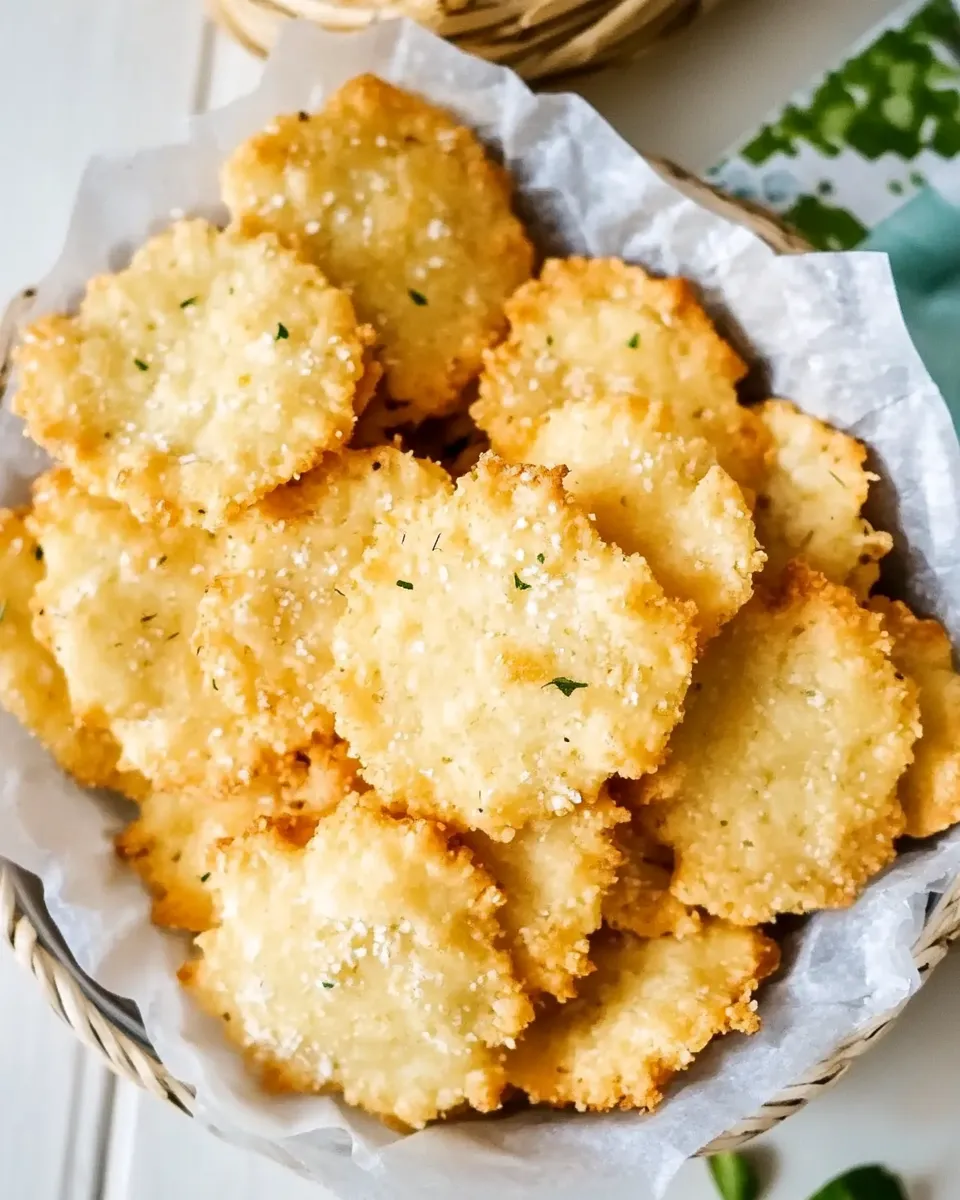
The flatter you make the crackers and the longer you keep them in the oven, the crunchier they will be.
Store in an airtight container at room temperature for 4 days or in the fridge for up to 7. Alternatively, freeze for up to 3 months.