Crepes
I make crepes on busy weeknights and for relaxed Sunday brunches alike. They’re simple, forgiving, and endlessly adaptable — sweet or savory, folded or rolled, quick to assemble but happiest when given a little resting time. This recipe uses a blender for a silky batter and a short chill so the crepes cook thin and strong, not fragile and full of holes.
No frills, no complicated technique: a handful of pantry staples, a nonstick pan, and a light hand when spreading. I’ll walk you through the exact steps I use, plus the common mistakes to avoid and my favorite ways to store leftovers. If you’re nervous about flipping, don’t be — the resting step and the right pan heat do most of the work for you.
These crepes are a great base for morning fruit and yogurt, a savory mushroom filling, or an elegant dessert with a squeeze of citrus and a dusting of sugar. Read on for the ingredients, the exact method, and practical tips so your first batch comes out just how you want it.
What You’ll Need
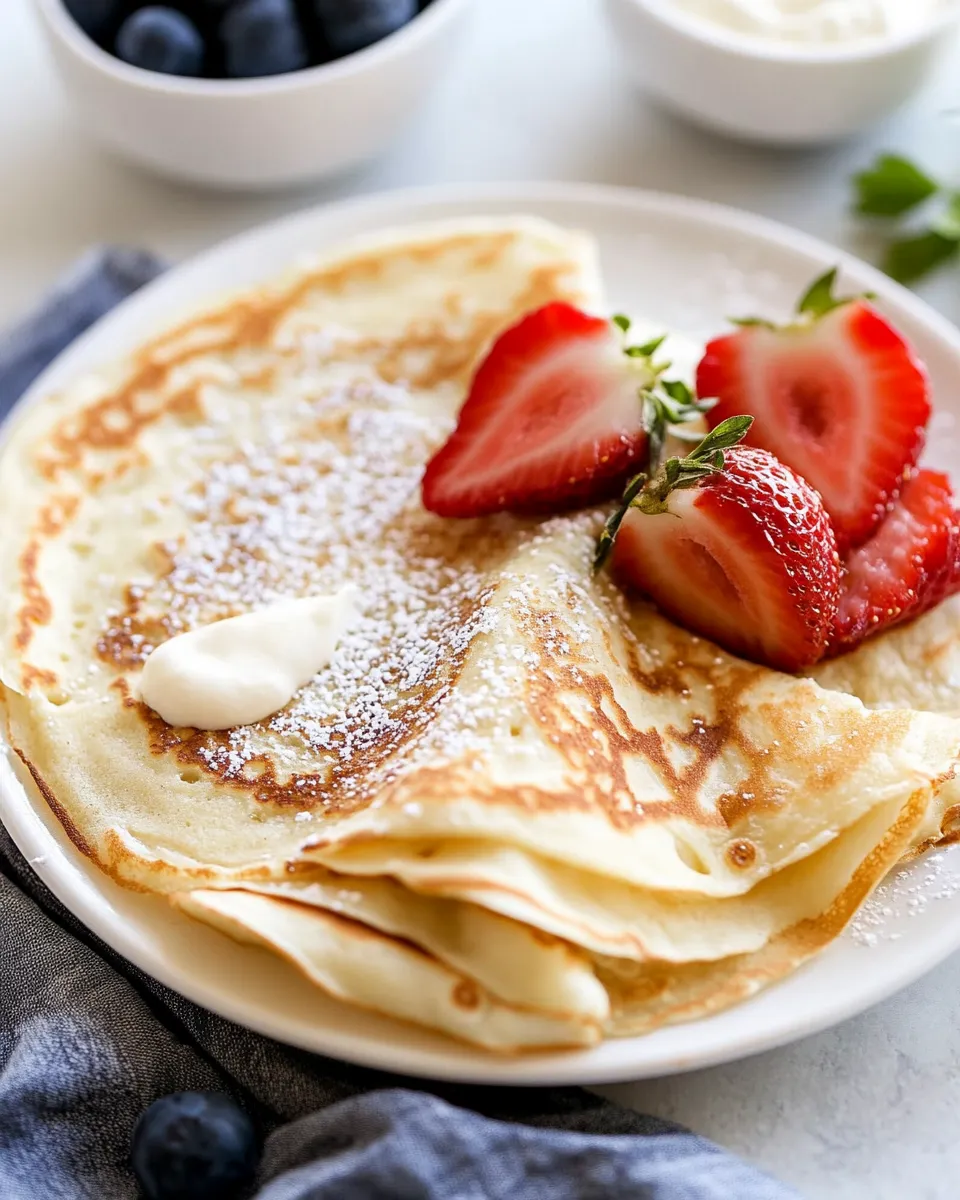
Ingredients
- 2 large eggs — bind the batter and add structure; room temperature eggs mix more smoothly.
- 1 cup flour — provides the body; all-purpose works well for tender, thin crepes.
- 3/4 cup milk — thins the batter and adds richness; use what you have on hand.
- 1/2 cup water — helps thin the batter for the ultra-thin texture characteristic of crepes.
- 1/2 teaspoon vanilla — subtle sweet aroma for dessert crepes; omit for savory versions.
- 2 tablespoons butter, melted — folded into the batter for flavor and tenderness.
- additional butter for sauteing — a small amount to grease the pan between crepes to prevent sticking.
Crepes Made Stepwise
- Put the batter ingredients — 2 large eggs; 1 cup flour; 3/4 cup milk; 1/2 cup water; 1/2 teaspoon vanilla; and 2 tablespoons butter, melted — into a blender. Do not add the additional butter for sautéing. Puree until the batter is smooth and free of lumps.
- Cover and refrigerate the batter for at least 1 hour or overnight to let bubbles settle (this helps prevent tearing when cooking).
- When ready to cook, heat a nonstick sauté pan or crepe pan over medium heat.
- Lightly grease the pan with a small amount of the additional butter.
- Pour 2 tablespoons of batter into the center of the hot pan, then immediately lift and swirl or tilt the pan so the batter spreads into a thin, even layer covering the surface.
- Cook the crepe until the top is set and the edges look dry, about 1 minute. Flip and cook the other side about 30 seconds, or until just beginning to become golden.
- Transfer the finished crepe to a plate. Repeat with the remaining batter, adding more of the additional butter to the pan between crepes as needed to prevent sticking.
- Fill or spread each crepe as desired, fold in half or roll, and serve immediately.
What Sets This Recipe Apart
This method relies on three small, intentional choices that make a noticeable difference: blending the batter, resting it in the refrigerator, and using just a tablespoon or less of batter per crepe so each one is paper-thin.
Blending makes the batter uniformly smooth, eliminating lumps without overworking the flour. The rest in the fridge lets bubbles rise and relaxes the gluten so the crepes won’t shrink or tear when you cook them. And the measured 2 tablespoons of batter per crepe keeps size and thickness consistent — you’ll end up with delicate, flexible crepes rather than thick pancakes that don’t fold neatly.
Ingredient Swaps & Substitutions
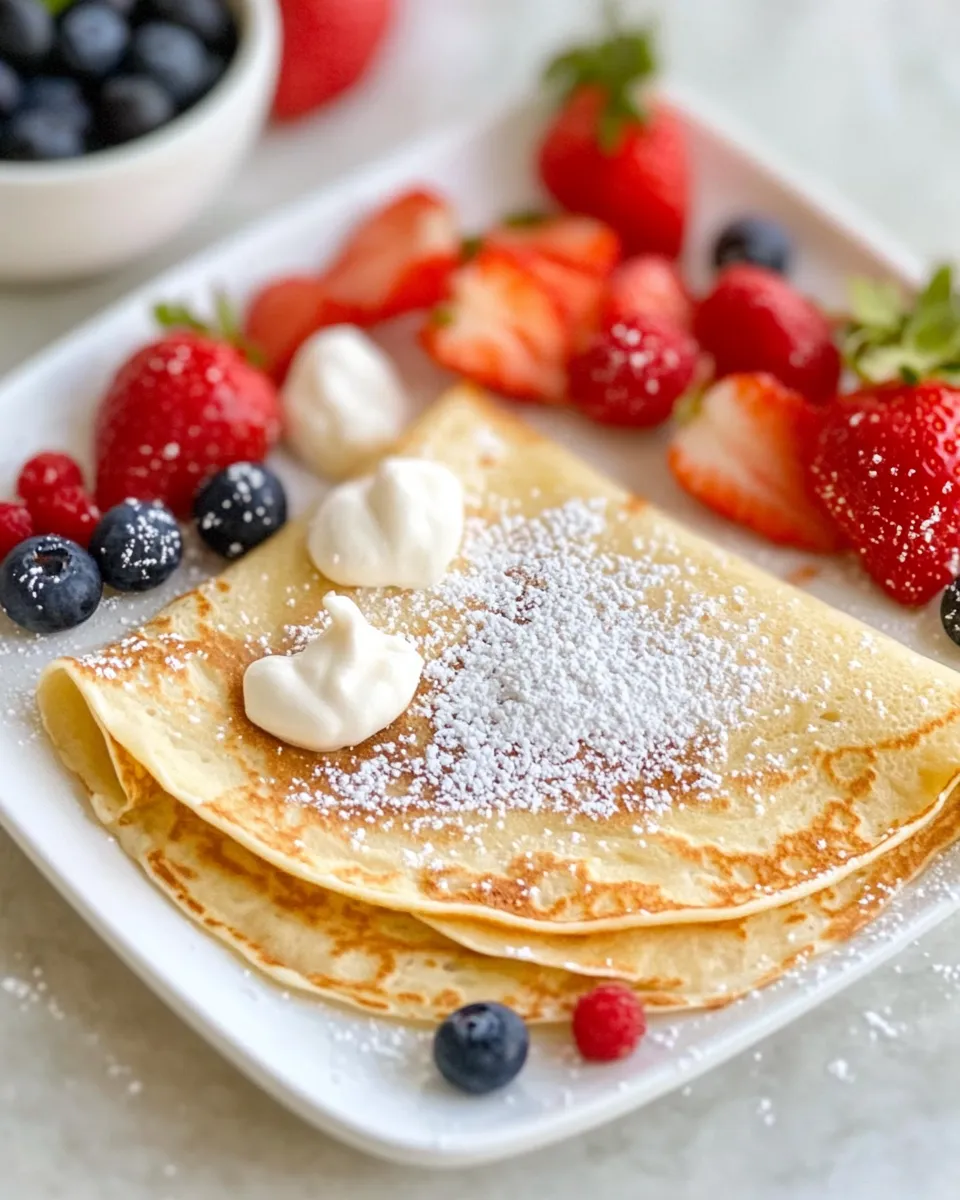
Want to adapt the recipe? Keep ratios in mind and swap in equal volumes where possible.
- Milk — swap with an equal volume of a plant-based milk if you need dairy-free crepes; the texture will be comparable but watch for flavor differences.
- Flour — you can experiment with a portion of whole-grain or pastry flour; expect a slightly denser crepe and adjust by adding a splash more liquid if the batter feels thick.
- Butter — if you prefer not to use butter for sautéing, a neutral oil works to grease the pan; butter in the batter keeps flavor and tenderness.
- Vanilla — omit for savory crepes or replace with a small pinch of salt for a savory twist when using herbs or cheese fillings.
Before You Start: Equipment
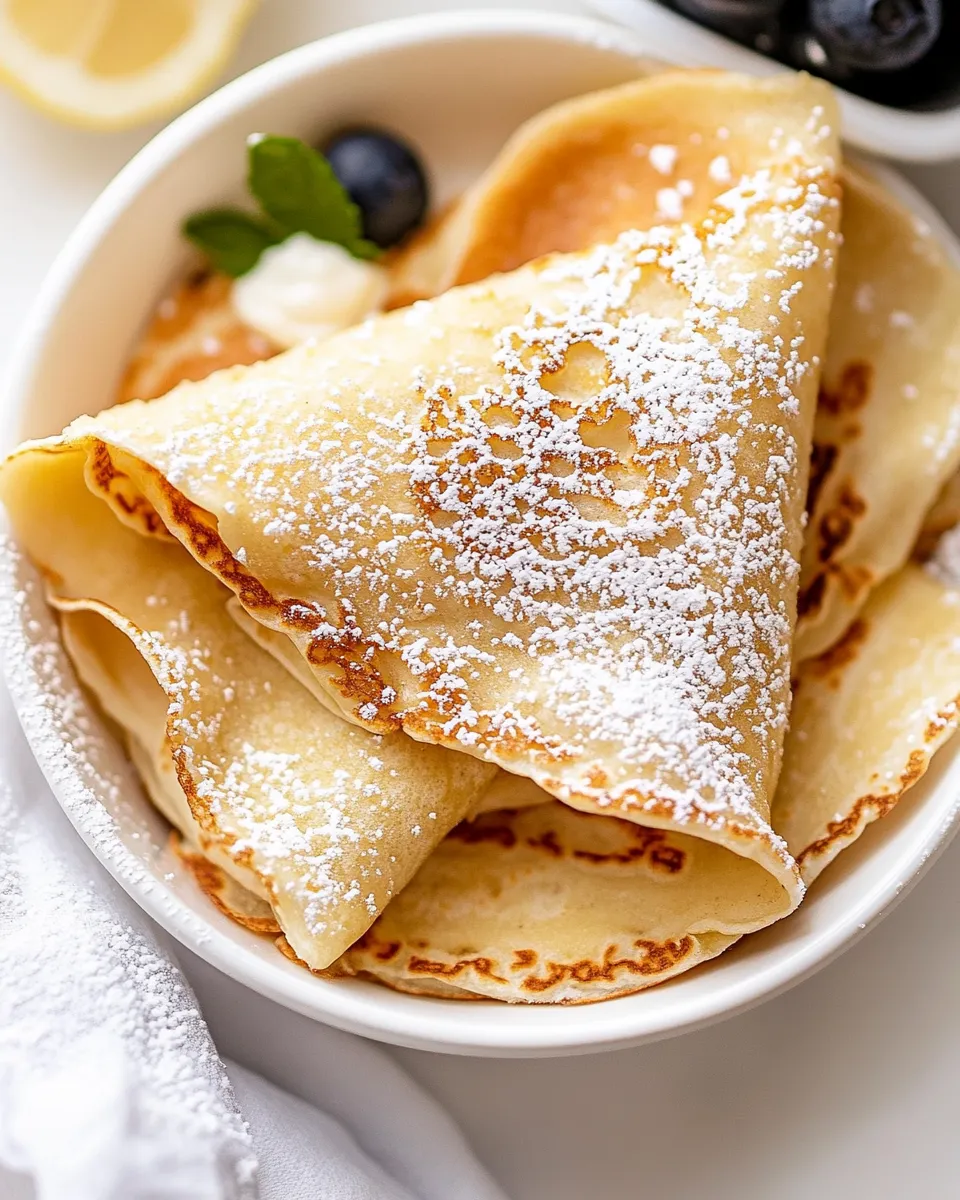
Good tools make the job easier. You don’t need anything fancy, but the right pieces matter:
- Blender — for a silky, lump-free batter; a whisk will work but expect more manual effort and possibly small lumps.
- Nonstick sauté pan or crepe pan — a well-seasoned crepe pan is ideal; nonstick ensures easy flipping.
- Thin spatula or flexible turner — helps get under the crepe cleanly for flipping.
- Measuring cups and spoons — the 2-tablespoon batter measure helps control thinness and consistency.
- Cooling plate and small bowl for melted butter — keep things organized and move quickly between crepes.
Errors to Dodge
- Skipping the rest: Cooked immediately, the batter often tears or bubbles dramatically. Chill for at least an hour.
- Pan too hot: If the pan smokes or the batter browns instantly, lower the heat. Medium is the sweet spot.
- Using too much batter: More than 2 tablespoons makes thicker pancake-like rounds instead of thin crepes.
- Over-greasing: A tiny amount of the additional butter is enough. Excess butter fries the edges and changes texture.
- Flipping too early: Wait until the top looks set and edges look dry; premature flipping causes tearing.
Make It Year-Round
Crepes are evergreen. In spring and summer use fresh berries, a dollop of yogurt, or a quick macerated fruit filling. In fall and winter fill with warm spiced fruit or a savory mushroom and cheese mix warmed in a skillet. Keep a stack of cooled crepes in the fridge to assemble quickly at any hour.
If you want to keep crepes on hand for a season of breakfasts, freeze them between sheets of parchment. They thaw and reheat fast, so you can have a warm crepe in minutes without making a fresh batter each time.
Pro Tips & Notes
- Batter consistency: It should be pourable and thin, similar to heavy cream. If it seems too thick after chilling, whisk in a tablespoon of water or milk until it loosens.
- Temperature control: Heat the pan, then test with a tiny drop of batter before committing to a full crepe. The batter should spread easily and set within about a minute.
- Swirling technique: Pour into the center and immediately tilt the pan in a circular motion to coat the surface. If the batter pools, the pan was level for too long; lift and swirl quickly.
- Flip confidence: Use a thin spatula and a decisive motion. If the crepe looks dry at the edges and the top is set, it will flip without tearing.
- Stacking: Stack finished crepes on a plate with a clean towel or parchment between them to prevent steaming if you plan to hold them briefly.
Leftovers & Meal Prep
To store: cool crepes completely on a single layer, then stack with parchment between each if freezing to prevent sticking. Refrigerate a stack covered for up to 3 days. Freeze for up to 2 months; thaw overnight in the fridge or at room temperature for 30–60 minutes.
Reheat gently in a warm pan for 10–20 seconds per side, in a 300°F oven wrapped in foil for a few minutes, or microwave covered for 10–15 seconds per crepe if you’re in a hurry. Add fillings after reheating to keep textures fresh.
Handy Q&A
Q: Can I make the batter ahead of time?
A: Yes. The recipe says to refrigerate for at least 1 hour or overnight. Overnight is fine and often improves the texture as bubbles settle.
Q: How thin should each crepe be?
A: Use 2 tablespoons of batter and swirl to a paper-thin layer that covers the pan surface. It should be thin enough to fold without feeling doughy.
Q: The crepes tear when I flip. What am I doing wrong?
A: Most often the batter wasn’t rested, the pan was too hot, or you tried to flip before the top set. Let the batter rest, lower the heat, and wait until edges look dry.
Q: Can I make savory crepes with vanilla in the batter?
A: For strictly savory crepes, omit the vanilla. The 1/2 teaspoon in this batter is subtle and won’t overpower if you’re filling with mildly savory ingredients, but omitting it is easiest for a purely savory profile.
In Closing
Crepes feel a little special but are very doable. Follow the simple sequence — blend, chill, measure, and cook — and you’ll have consistent, flexible crepes every time. Start with plain crepes and experiment with fillings to find your favorites. It’s one of those recipes that rewards small adjustments: a little more butter for richness, a splash more milk for thinness, a shorter rest for immediacy. Try a few batches; you’ll soon have a routine that fits your kitchen and taste.
Happy crepe-making — and if you try a new filling combo you love, make a note of it. These crepes are a blank canvas that forgives and delights.
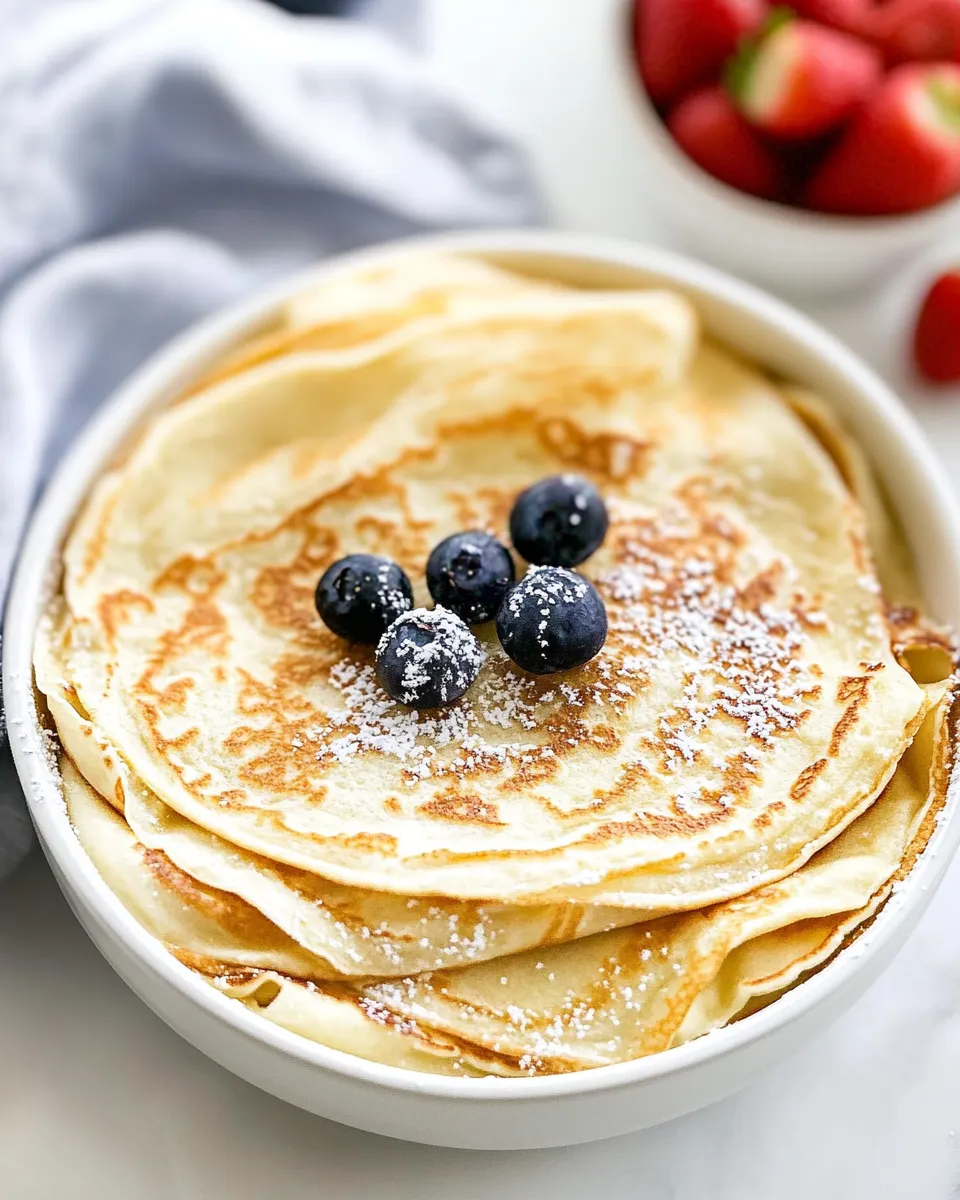
Crepes
Ingredients
Equipment
Method
- Put the batter ingredients — 2 large eggs; 1 cup flour; 3/4 cup milk; 1/2 cup water; 1/2 teaspoon vanilla; and 2 tablespoons butter, melted — into a blender. Do not add the additional butter for sautéing. Puree until the batter is smooth and free of lumps.
- Cover and refrigerate the batter for at least 1 hour or overnight to let bubbles settle (this helps prevent tearing when cooking).
- When ready to cook, heat a nonstick sauté pan or crepe pan over medium heat.
- Lightly grease the pan with a small amount of the additional butter.
- Pour 2 tablespoons of batter into the center of the hot pan, then immediately lift and swirl or tilt the pan so the batter spreads into a thin, even layer covering the surface.
- Cook the crepe until the top is set and the edges look dry, about 1 minute. Flip and cook the other side about 30 seconds, or until just beginning to become golden.
- Transfer the finished crepe to a plate. Repeat with the remaining batter, adding more of the additional butter to the pan between crepes as needed to prevent sticking.
- Fill or spread each crepe as desired, fold in half or roll, and serve immediately.
Notes
Twirl the Pan:Pour the batter right into the center of your hot, buttery pan. Then, give it a lift and a twirl. You want the batter to spread out nice and thin. The thinner the crepe, the better the texture.
Butter The Pan Between Each Crepe:While it may seem like a small detail, buttering the pan between each crepe is key to achieving that golden-brown exterior and preventing sticking. Additionally, the butter adds flavor and helps create a beautifully crisp exterior on the crepes, enhancing their overall texture and taste.
To Make Ahead:Whip up your batter up to a day ahead. Seal it tightly in your blender or pour it into a mixing bowl, cover it, and pop it in the fridge. Then, when you’re ready to make the crepes, just pull it out and start cooking them the next day.
To Store:While crepes are undeniably best fresh off the griddle, you can stash any extras in the fridge for a day or two. Simply reheat them in the microwave for a quick fix. Alternatively, arrange them on a baking sheet (yes, they can overlap!), cover them with foil, and warm them gently in an oven at 250°F for about 10 minutes.
To Freeze:After step 5, allow to cool, place crepes on a sheet tray, layer a piece of parchment paper between each crepe. Place in zipper bag, label and freeze up to 4 months. When ready, defrost in fridge for 24 hours and heat in a dry pan for 30 seconds on each side and follow remaining steps.
Tools For this Recipe (affiliate links):Blender| Sauté Pan orCrepe Maker