Ingredients
Equipment
Method
Instructions
- Put the batter ingredients — 2 large eggs; 1 cup flour; 3/4 cup milk; 1/2 cup water; 1/2 teaspoon vanilla; and 2 tablespoons butter, melted — into a blender. Do not add the additional butter for sautéing. Puree until the batter is smooth and free of lumps.
- Cover and refrigerate the batter for at least 1 hour or overnight to let bubbles settle (this helps prevent tearing when cooking).
- When ready to cook, heat a nonstick sauté pan or crepe pan over medium heat.
- Lightly grease the pan with a small amount of the additional butter.
- Pour 2 tablespoons of batter into the center of the hot pan, then immediately lift and swirl or tilt the pan so the batter spreads into a thin, even layer covering the surface.
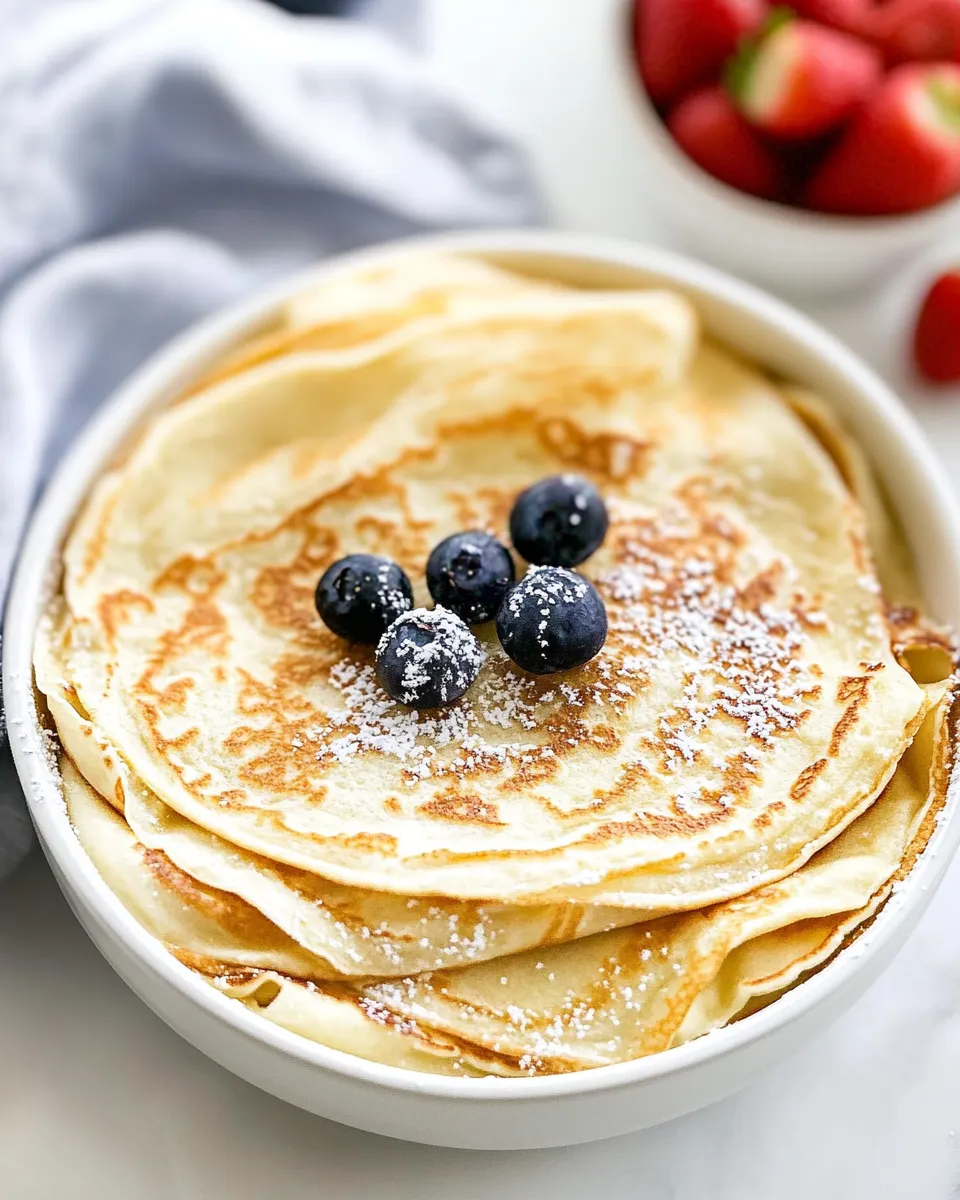
- Cook the crepe until the top is set and the edges look dry, about 1 minute. Flip and cook the other side about 30 seconds, or until just beginning to become golden.
- Transfer the finished crepe to a plate. Repeat with the remaining batter, adding more of the additional butter to the pan between crepes as needed to prevent sticking.
- Fill or spread each crepe as desired, fold in half or roll, and serve immediately.
Notes
Refrigerate the Batter:This step is crucial and will make a huge difference in the texture and consistency of your crepes. Letting the batter chill in the refrigerator for an hour (or even overnight) helps the crepe batter becomes smoother and more cohesive, resulting in crepes with a tender, delicate texture. Plus, chilling the batter gets rid of the air bubbles, ensuring a smoother surface and more even cooking.
Twirl the Pan:Pour the batter right into the center of your hot, buttery pan. Then, give it a lift and a twirl. You want the batter to spread out nice and thin. The thinner the crepe, the better the texture.
Butter The Pan Between Each Crepe:While it may seem like a small detail, buttering the pan between each crepe is key to achieving that golden-brown exterior and preventing sticking. Additionally, the butter adds flavor and helps create a beautifully crisp exterior on the crepes, enhancing their overall texture and taste.
To Make Ahead:Whip up your batter up to a day ahead. Seal it tightly in your blender or pour it into a mixing bowl, cover it, and pop it in the fridge. Then, when you’re ready to make the crepes, just pull it out and start cooking them the next day.
To Store:While crepes are undeniably best fresh off the griddle, you can stash any extras in the fridge for a day or two. Simply reheat them in the microwave for a quick fix. Alternatively, arrange them on a baking sheet (yes, they can overlap!), cover them with foil, and warm them gently in an oven at 250°F for about 10 minutes.
To Freeze:After step 5, allow to cool, place crepes on a sheet tray, layer a piece of parchment paper between each crepe. Place in zipper bag, label and freeze up to 4 months. When ready, defrost in fridge for 24 hours and heat in a dry pan for 30 seconds on each side and follow remaining steps.
Tools For this Recipe (affiliate links):Blender| Sauté Pan orCrepe Maker
Twirl the Pan:Pour the batter right into the center of your hot, buttery pan. Then, give it a lift and a twirl. You want the batter to spread out nice and thin. The thinner the crepe, the better the texture.
Butter The Pan Between Each Crepe:While it may seem like a small detail, buttering the pan between each crepe is key to achieving that golden-brown exterior and preventing sticking. Additionally, the butter adds flavor and helps create a beautifully crisp exterior on the crepes, enhancing their overall texture and taste.
To Make Ahead:Whip up your batter up to a day ahead. Seal it tightly in your blender or pour it into a mixing bowl, cover it, and pop it in the fridge. Then, when you’re ready to make the crepes, just pull it out and start cooking them the next day.
To Store:While crepes are undeniably best fresh off the griddle, you can stash any extras in the fridge for a day or two. Simply reheat them in the microwave for a quick fix. Alternatively, arrange them on a baking sheet (yes, they can overlap!), cover them with foil, and warm them gently in an oven at 250°F for about 10 minutes.
To Freeze:After step 5, allow to cool, place crepes on a sheet tray, layer a piece of parchment paper between each crepe. Place in zipper bag, label and freeze up to 4 months. When ready, defrost in fridge for 24 hours and heat in a dry pan for 30 seconds on each side and follow remaining steps.
Tools For this Recipe (affiliate links):Blender| Sauté Pan orCrepe Maker