Easy Caesar Dressing Recipe
Caesar dressing is one of those staples that turns a handful of greens into a meal. It’s bold, tangy, and a little savory — the kind of dressing that finishes a salad with authority. This version is intentionally straightforward: pantry-forward ingredients, quick whisking, and no blender required.
There’s a reason this combination has lasted decades. Lemon and anchovy bring brightness and umami. Dijon and Worcestershire add structure. Mayonnaise makes it creamy without fuss. I keep this ratio in my back pocket for weeknight salads, grilled chicken, or as a dip for roasted vegetables.
No fluff here — just practical guidance so you can make a reliable Caesar in minutes. Follow the steps, notice how the flavor develops, and tweak to taste. You’ll have a dressing that clings to lettuce and sings alongside crunchy croutons.
What You’ll Need
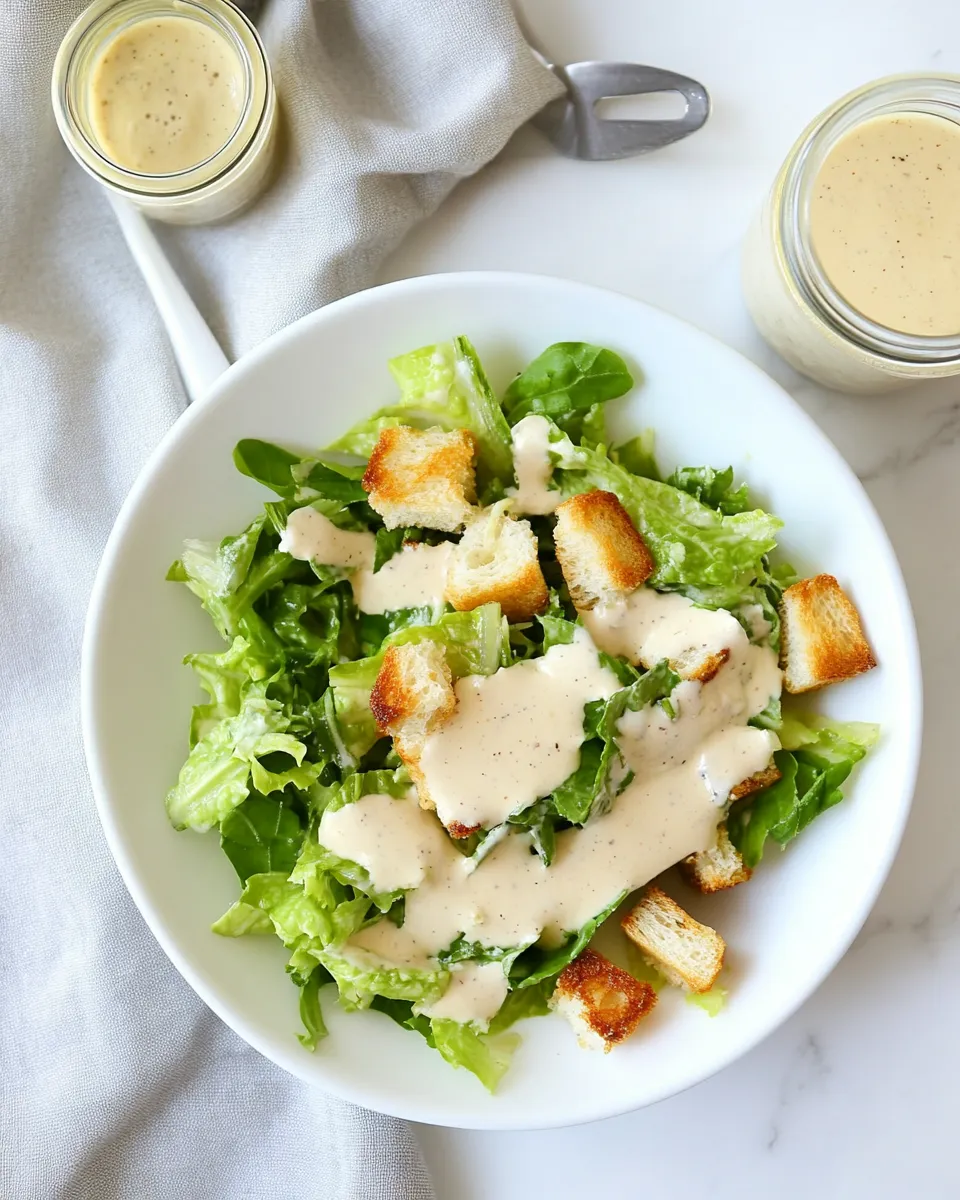
Gather the ingredients and a few simple tools. The entire process is done in a medium bowl with a whisk, so it’s fast and clean. Read the ingredient notes below before you start — knowing what each item does helps you adjust confidently.
Ingredients
- 2 tablespoons lemon juice — provides fresh acidity to balance the richness.
- 1 clove garlic, minced — adds sharp pungency; mince finely so it blends smoothly.
- 1 teaspoon Worcestershire sauce, or coconut aminos — brings savory depth and a hint of sweetness.
- 1 1/2 teaspoons anchovy paste — concentrated umami that defines classic Caesar; it melts into the dressing.
- 1 1/2 teaspoons Dijon mustard — helps emulsify and adds a gentle bite.
- 1 cup mayonnaise, or Greek yogurt — the creamy base; mayo yields the most classic texture, Greek yogurt makes it tangier and lighter.
- 1/2 cup finely grated Parmesan cheese — salty, nutty finish that thickens and flavors the dressing.
- 1/4 teaspoon kosher salt — seasons the mix; adjust to taste after combining with the cheese.
- 1/4 teaspoon ground black pepper — brightens the profile with a mild heat.
Caesar Dressing: How It’s Done
- In a medium bowl, whisk together 2 tablespoons lemon juice, 1 clove garlic (minced), 1 teaspoon Worcestershire sauce (or coconut aminos), 1 1/2 teaspoons anchovy paste, and 1 1/2 teaspoons Dijon mustard until well combined.
- Add 1 cup mayonnaise (or Greek yogurt) and whisk until the mixture is smooth and creamy.
- Stir in 1/2 cup finely grated Parmesan cheese, 1/4 teaspoon kosher salt, and 1/4 teaspoon ground black pepper until evenly incorporated.
- Taste and adjust seasoning if desired. Serve immediately or transfer the dressing to an airtight container and refrigerate until ready to use.
Why This Caesar Dressing Stands Out
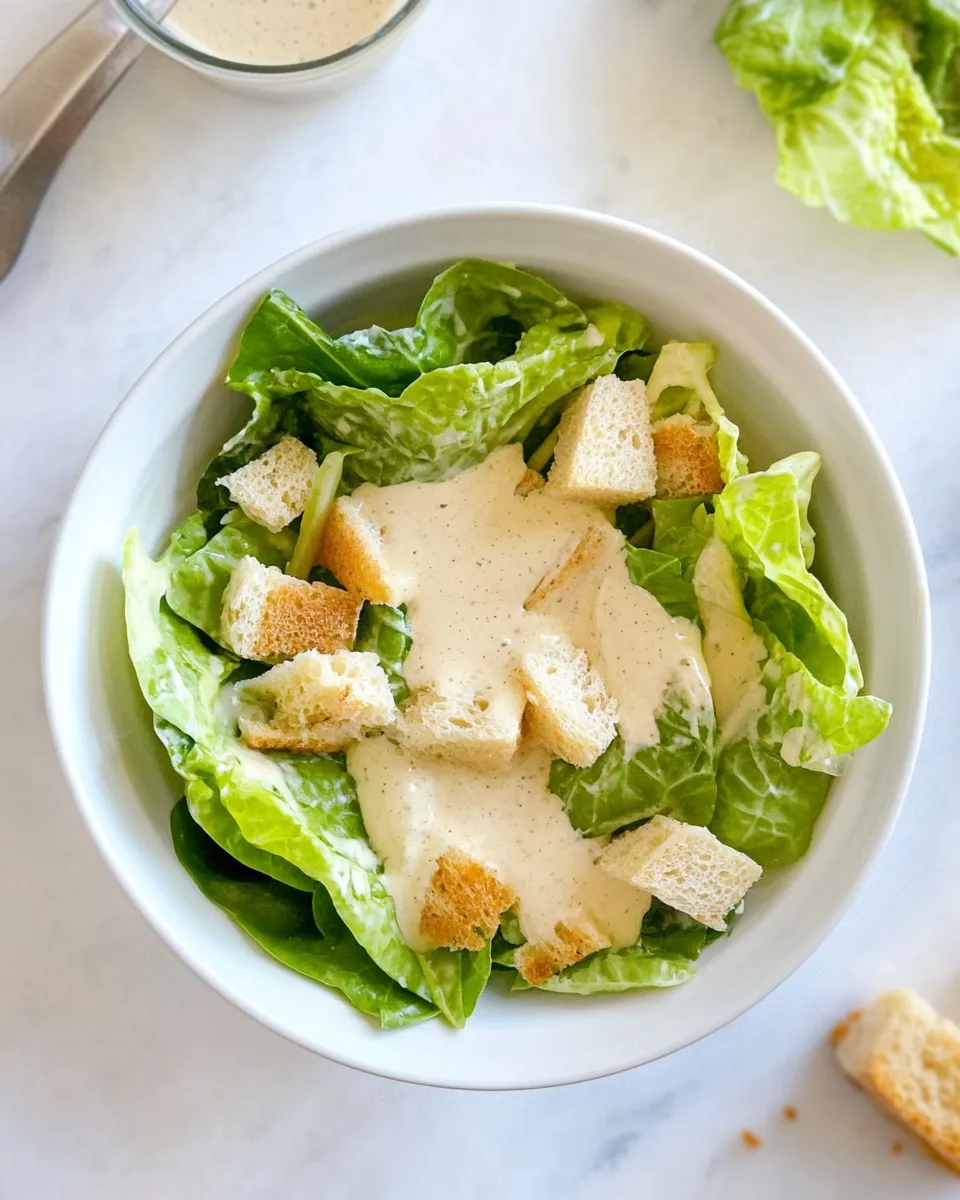
This recipe balances three pillars: acidity, fat, and umami. Lemon juice cuts through the mayonnaise; anchovy paste and Worcestershire supply the savory backbone; Parmesan finishes with salty, nutty flavor. That triad is what makes a Caesar more than a creamy salad dressing.
It’s also forgiving. You can swap mayonnaise for Greek yogurt to lighten the fat content without losing structure. Anchovy paste disperses easily, so you get the anchovy flavor without whole filets. Dijon works double-duty here — it binds oil and water phases and adds a subtle sharpness that keeps the dressing from tasting flat.
Finally, the texture is designed for cling. A cup of mayo and half a cup of finely grated Parmesan produce a coating consistency that adheres to leaves and croutons. The cheese also adds body, so the dressing doesn’t run off the salad.
Flavor-Forward Alternatives
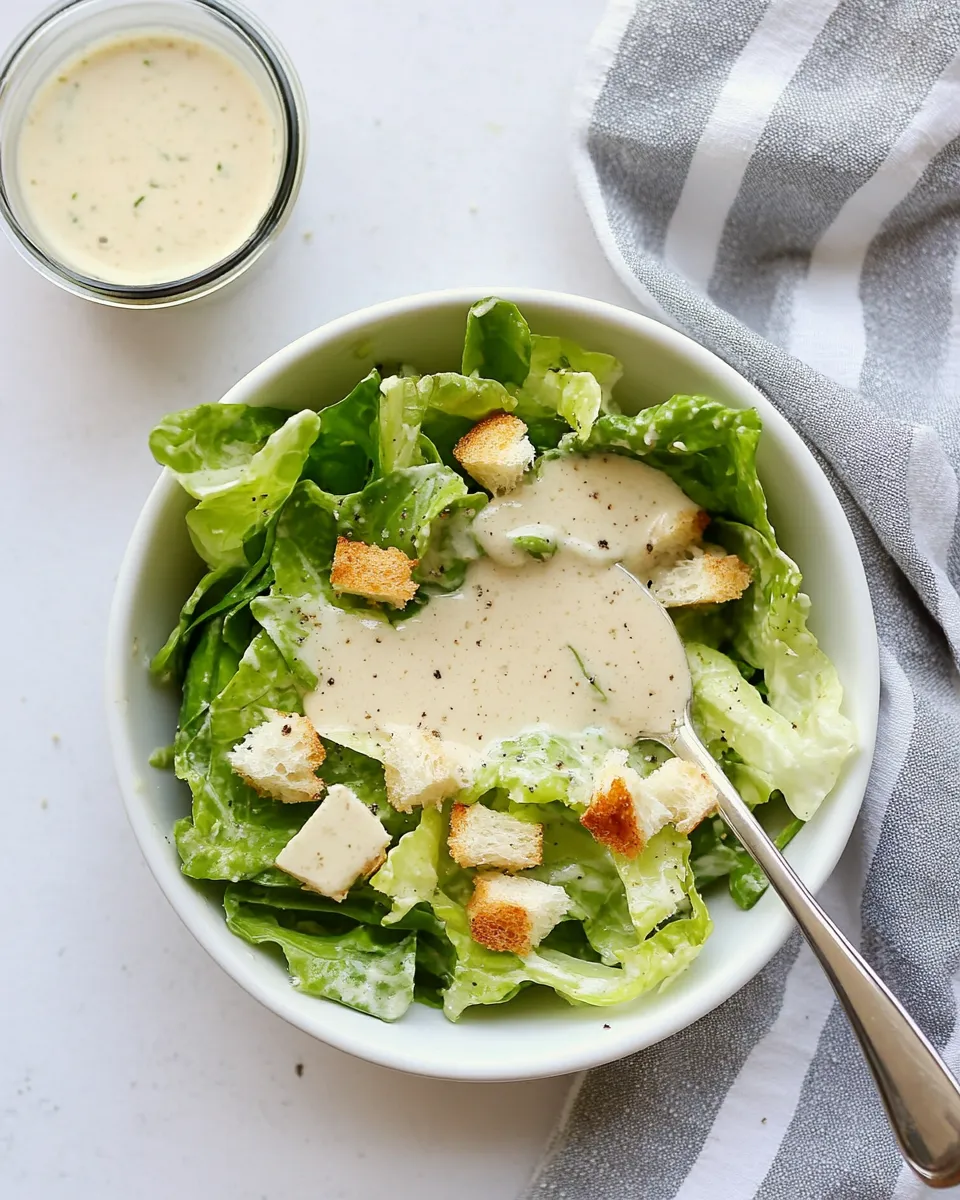
- Smoky Caesar: Add a pinch (a small amount) of smoked paprika or swap half the Worcestershire for a splash of liquid smoke. This deepens the profile and pairs well with grilled romaine.
- Herbed Brightness: Stir in a tablespoon of finely chopped fresh parsley or chives just before serving. The herbs lighten the richness and add freshness.
- Spicy Kick: Whisk in 1/4 to 1/2 teaspoon of hot sauce or a pinch of cayenne for heat that lifts the dressing.
- Garlicky Boost: If you love garlic, gently roast a clove first to tame its sharpness, then mash and use in place of raw garlic for a sweeter, more mellow garlic note.
- Lighter, Citrus-Forward: Replace half the mayo with Greek yogurt and add a teaspoon of lemon zest for a brighter, tangier finish.
Must-Have Equipment
This dressing needs almost nothing. Still, a few tools make it easier and more consistent.
- Medium mixing bowl — large enough to whisk without splashing.
- Whisk — a small balloon whisk ensures smooth emulsification and a silky texture.
- Microplane or fine grater — for finely grating Parmesan; it melts into the dressing better than coarse shreds.
- Airtight container — for refrigeration and storage; a jar with a tight lid or a small food storage container works well.
Mistakes Even Pros Make
Overpowering the Anchovy
Anchovy paste is potent. A little goes a long way. Using more than the recipe calls for can push the dressing into fishy territory rather than savory. Start with the listed 1 1/2 teaspoons and increase only if you’re sure you want a stronger umami hit.
Adding Cheese Too Coarsely
Using large, shredded Parmesan interrupts the texture and doesn’t integrate as smoothly. Finely grate the cheese so it dissolves into the dressing and contributes to thickness rather than graininess.
Skipping the Tasting Step
Salt levels change depending on how salty your Parmesan is and whether you swapped mayo for Greek yogurt. Always taste and adjust at the end. A squeeze more lemon, a pinch more salt, or a grind of pepper can transform the dressing.
Dietary Swaps & Alternatives
This recipe is flexible enough to accommodate common dietary needs without losing much flavor.
- Dairy-free: Omit the Parmesan and replace mayonnaise with a plant-based mayo. Add a little nutritional yeast for a cheesy note.
- Vegetarian: Use vegetarian Worcestershire (some brands contain anchovy) and replace anchovy paste with a tablespoon of caper paste blended with a pinch of salt, or increase umami with a small splash of soy sauce or tamari instead of Worcestershire if you’re avoiding anchovy flavors entirely.
- Lower-fat: Substitute half or all of the mayonnaise with plain Greek yogurt. Expect a tangier, thinner dressing; adjust lemon and salt to taste.
- Gluten concerns: Most ingredients are gluten-free, but check Worcestershire sauce labels — some contain malt or other gluten-containing ingredients. Coconut aminos is a safe, gluten-free alternative listed in the recipe.
Chef’s Rationale
I design recipes with two priorities: faithful flavor and repeatability. This Caesar dressing honors the classic components — lemon, anchovy, garlic, Parmesan — while removing barriers to home cooking. Anchovy paste is easier to store and measure than whole anchovies; mayonnaise simplifies the emulsion step that can intimidate home cooks.
The proportions here are chosen so a single bowl yields enough dressing for a family-sized salad without wasting leftovers. The Dijon and Worcestershire work together to round out the profile: mustard holds the dressing together while Worcestershire contributes background sweetness and savory notes that mimic the depth you get from fermented ingredients.
Finally, finishing with Parmesan inside the dressing adds texture and a umami-rich salinity that performs well even when the salad greens are simple romaine and croutons. It keeps the dressing from tasting one-dimensional.
Storage Pro Tips
Refrigeration
Transfer the dressing to an airtight container and refrigerate. It will keep for up to one week. The flavors meld and often improve after a few hours in the fridge, but the garlic will become more pronounced over time.
Separation and Re-whisking
If the dressing separates slightly in the fridge, give it a quick stir or whisk before using. If it thickens too much, whisk in a teaspoon of water or lemon juice at a time until you reach the desired consistency.
Make-Ahead Notes
You can make this a day ahead. If you plan on keeping it longer than a week, consider freezing small portions in an ice cube tray and thawing what you need; note that texture may change slightly after freezing, so use thawed dressing as a dip or mix it once to restore consistency.
Reader Questions
Q: Can I leave out the anchovy paste?
A: Yes, but expect a noticeable difference. Anchovy paste provides deep umami. If you omit it, replace with a small splash of soy sauce or a teaspoon of caper paste to add savory complexity.
Q: Is raw garlic necessary?
A: Raw garlic gives a bright, sharp note. If you prefer a milder garlic presence, roast the garlic or use less. Mince it extremely fine or mash it into a paste with a pinch of salt to distribute it more evenly.
Q: How much dressing does this make?
A: The recipe yields roughly 1 1/2 to 1 3/4 cups of dressing, enough for a large salad serving 4–6 people, depending on how heavily dressed you like your greens.
Q: Can I use this as a marinade?
A: Yes — it works well as a quick marinade for chicken or a flavor base for grilled shrimp. Because of the salt and acid, limit marinating time to 30 minutes to 2 hours depending on the protein to avoid overpowering or changing texture too much.
Final Bite
This Caesar dressing is designed to be practical without sacrificing the classic notes that define the style. It’s quick to make, easy to scale, and forgiving with substitutions. Keep the pantry staples on hand, whisk it up in a few minutes, and you’ll have a reliable dressing for salads, proteins, and veggies. Make it once, then tweak the small things — lemon, anchovy, or garlic — until it feels like your signature version.
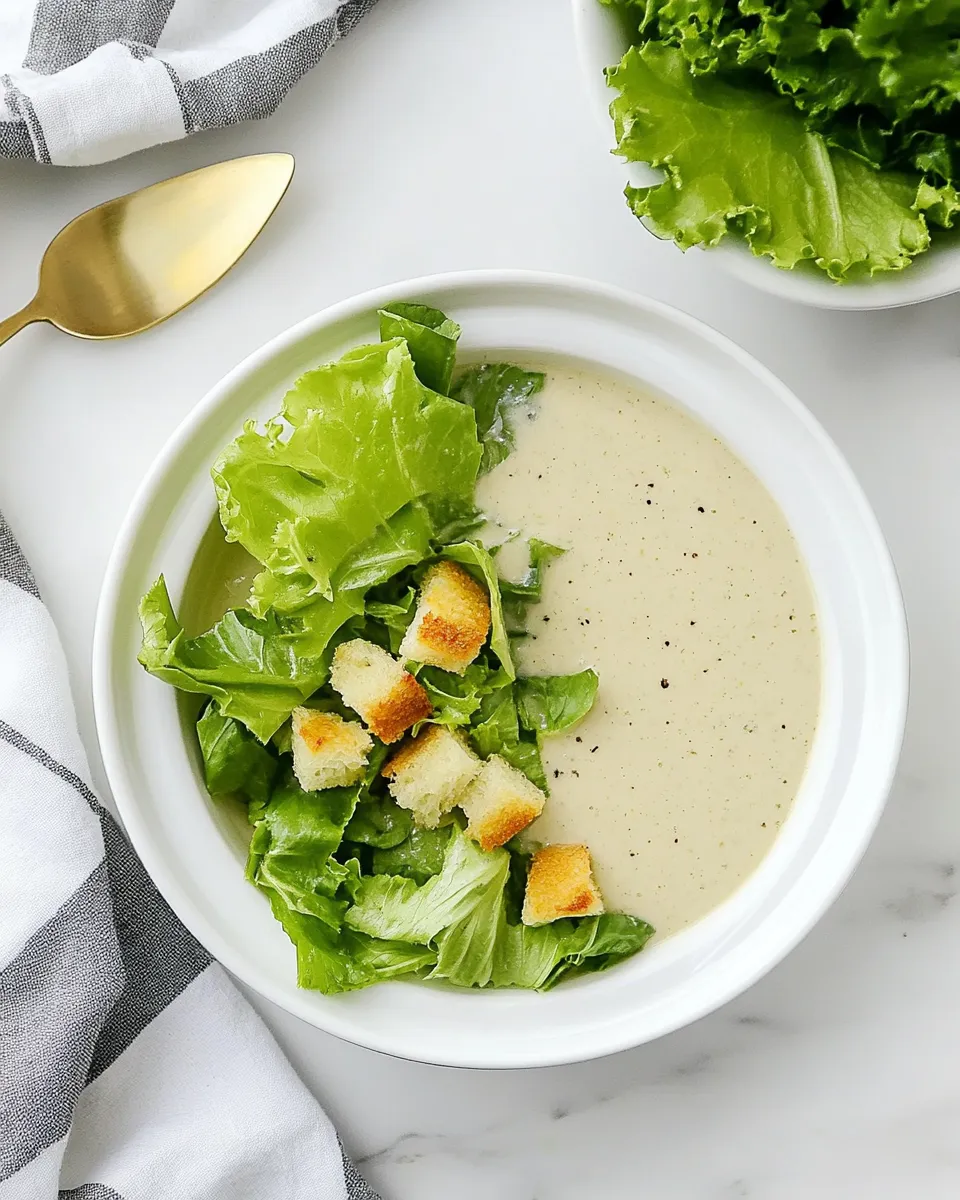
Easy Caesar Dressing Recipe
Ingredients
Equipment
Method
- In a medium bowl, whisk together 2 tablespoons lemon juice, 1 clove garlic (minced), 1 teaspoon Worcestershire sauce (or coconut aminos), 1 1/2 teaspoons anchovy paste, and 1 1/2 teaspoons Dijon mustard until well combined.
- Add 1 cup mayonnaise (or Greek yogurt) and whisk until the mixture is smooth and creamy.
- Stir in 1/2 cup finely grated Parmesan cheese, 1/4 teaspoon kosher salt, and 1/4 teaspoon ground black pepper until evenly incorporated.
- Taste and adjust seasoning if desired. Serve immediately or transfer the dressing to an airtight container and refrigerate until ready to use.
Notes
Yield:
Makes 1 3/4 cups.
How to Store:
Store in an airtight container in the refrigerator for up to 7 days. Whisk to serve, if needed.