Garlic Herb Roasted Olives with Burrata.
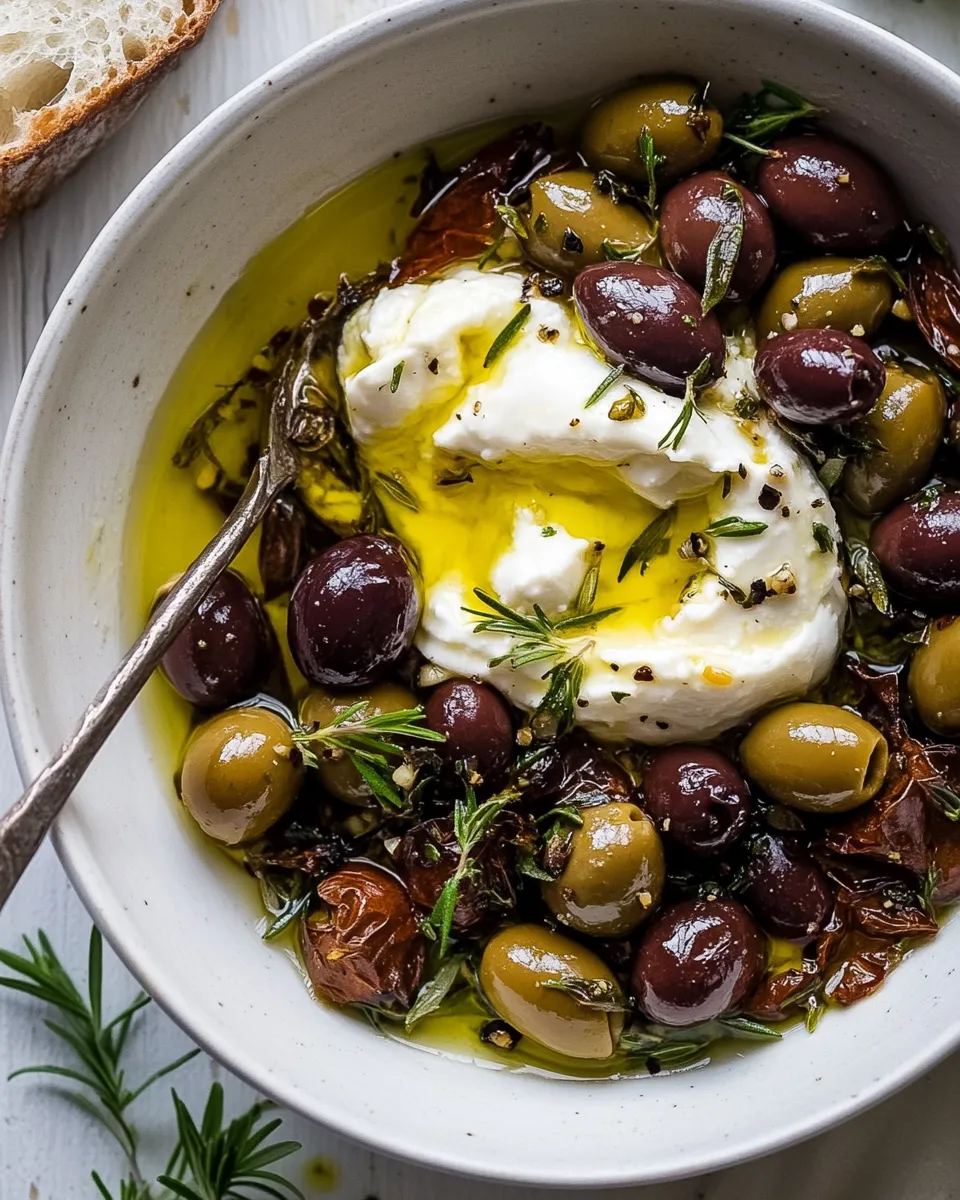
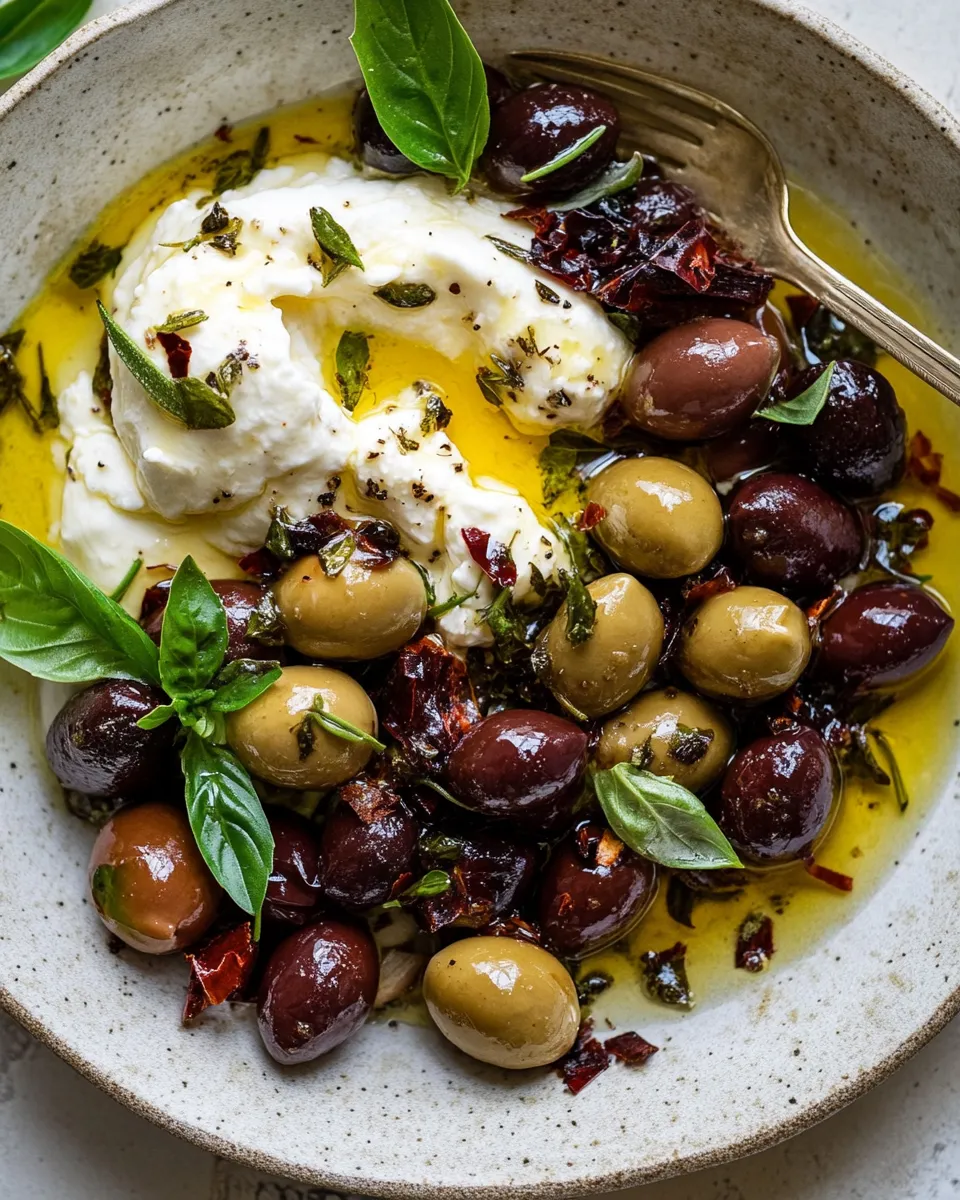
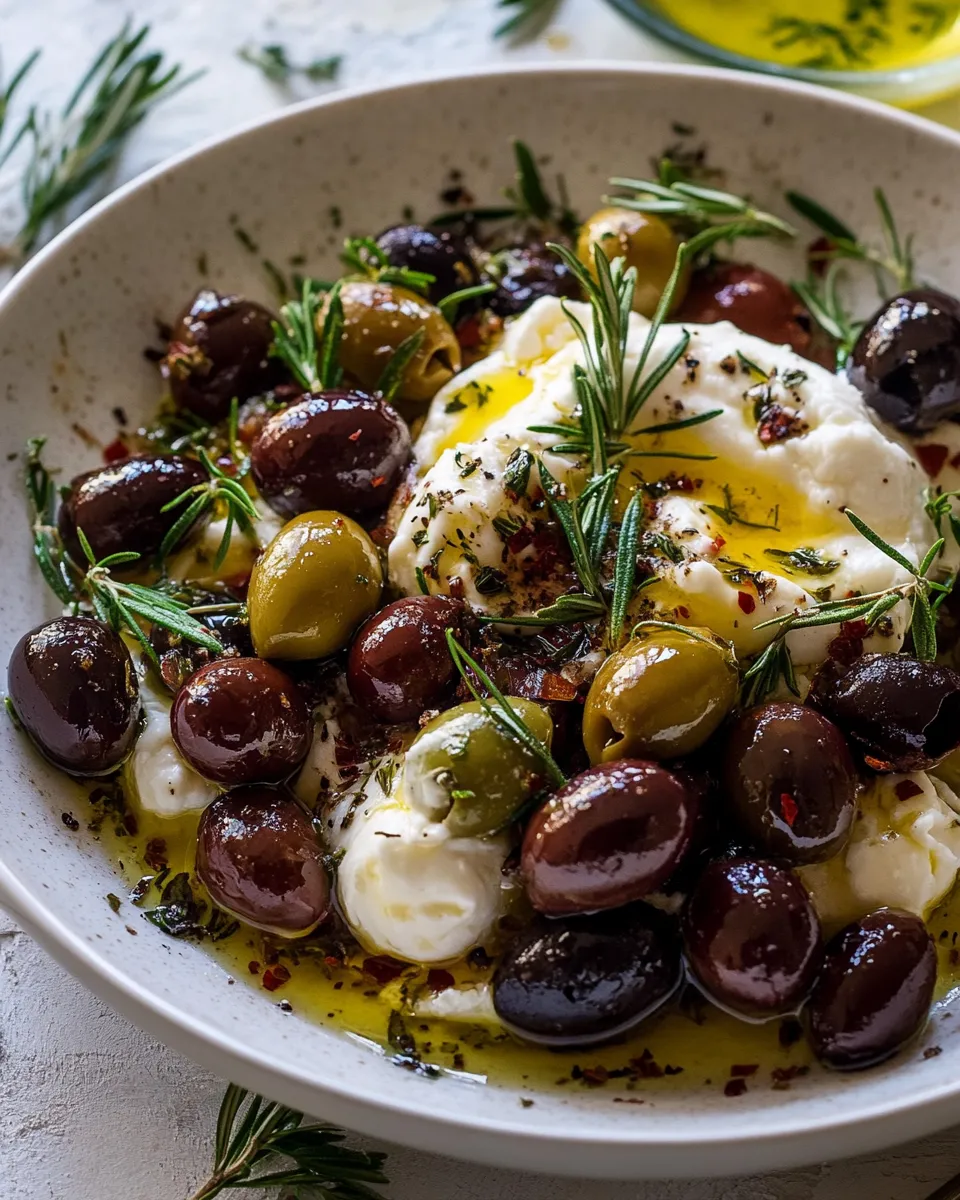
I love recipes that look like they took genius and talent, but are actually very forgiving. Garlic Herb Roasted Olives with Burrata is one of those dishes: it shines at a dinner party, but it’s equally at home as a lazy weekend snack. A hot bowl of blistered olives spiked with smashed garlic and lemon, finished with torn burrata and a drizzle of honey, feels like a small, elegant celebration on the table.
This is practical food — quick to assemble, easy to scale, and built from pantry-friendly ingredients plus a few fresh sprigs of herbs. The technique is simple: roast the olives with aromatics until the oil is sizzling, then nestle pieces of burrata into the hot oil so the cheese softens and picks up all that roasted flavor. Serve it with toasted bread and watch people dip and scrape the bowl clean.
Below I break down exactly what goes into the bowl, step-by-step instructions you can follow as written, troubleshooting tips, and useful variations so you can make this dish all year long. Follow the method closely for the best balance of heat, oil, and soft, creamy burrata.
What’s in the Bowl
- 2 cups mixed olives, pitted — the base of the dish; mixed varieties give a balance of brine, meatiness and skin texture.
- 1/3 cup extra virgin olive oil — carries the flavors and sizzles in the oven; use a good-quality oil you enjoy eating raw.
- 6 cloves garlic, smashed — makes for soft, golden bites and infuses the oil; smashing releases more flavor than slicing.
- 1 shallot, quartered — mild sweetness and a little bite; quartering keeps the pieces intact while roasting.
- 1 lemon, quartered — adds bright citrus pockets that roast and mellow; squeeze if you want extra brightness before serving.
- 2 sprigs fresh thyme — woody, savory notes; leave on the stem while roasting for easy removal.
- 2 sprigs fresh oregano — aromatic and slightly peppery; combines well with thyme for an herby backbone.
- chili flakes — a big pinch in the method adds warmth and contrast; adjust to taste.
- 3-4 balls burrata cheese, at room temperature — the creamy finish; bringing it to room temp prevents shock and helps it soften faster in the hot oil.
- 2-3 tablespoons honey — a final drizzle that plays beautifully against salty olives and tangy cheese.
- black pepper — freshly ground just before serving to add bright spice and aroma.
- fresh basil and or dill, for serving — finishing herbs for color and a final layer of freshness.
Method: Garlic Herb Roasted Olives with Burrata
- Preheat the oven to 450°F. Place an ovenproof baking dish ready for the olives.
- In the baking dish, combine 2 cups mixed pitted olives, 1/3 cup extra virgin olive oil, 6 smashed garlic cloves, 1 shallot (quartered), 1 lemon (quartered), 2 sprigs fresh thyme, 2 sprigs fresh oregano, and a big pinch of chili flakes. Stir so the olives and aromatics are evenly coated in oil.
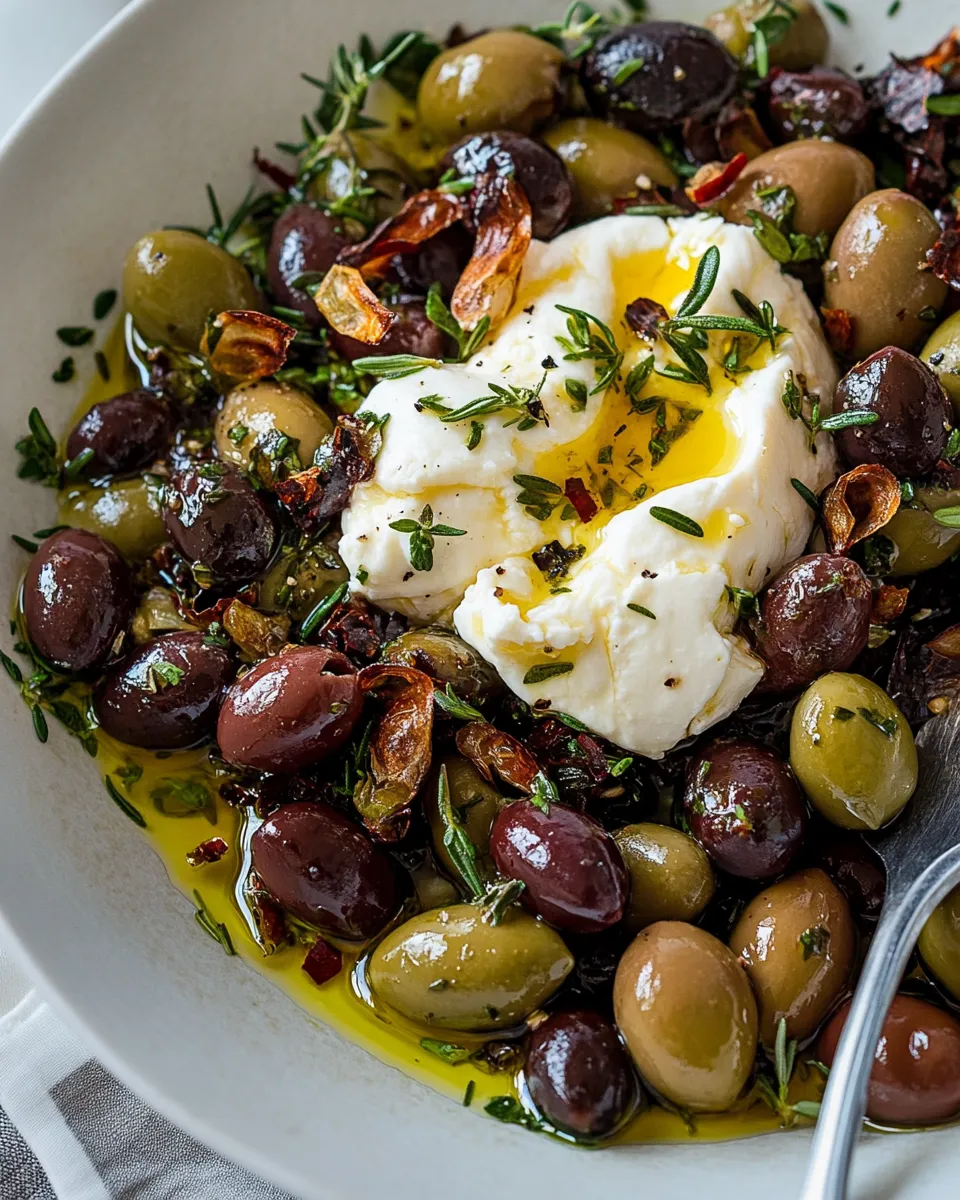
- Roast in the preheated oven 20–25 minutes, until the garlic turns golden and the oil is sizzling. Check at 20 minutes to avoid over-browning.
- While the olives roast, gently dab 3–4 balls burrata dry with paper towels if there is excess liquid. Keep the burrata at room temperature.
- Remove the baking dish from the oven and, using tongs or a spoon, tear each burrata ball into 2–3 large pieces and tuck the pieces into the hot oil and olives so the cheese contacts the oil. (Work carefully—the dish and oil will be very hot.)
- Let the dish sit off the heat for 5 minutes to allow the burrata to soften and warm. Drizzle 2–3 tablespoons honey over the burrata and olives, then finish with a generous grind of black pepper and scatter fresh basil and/or dill.
- Serve immediately (warm). Toasted bread is recommended for dipping into the oil and melted burrata.
Why You’ll Love This Recipe
This dish hits multiple textures and flavor contrasts in a single bowl: the briny chew of olives, soft, roasted garlic, warm, silky burrata, and the surprising pop of honey. It looks like a composed appetizer but requires minimal hands-on time. The roasting step concentrates flavor and softens pungent aromatics, turning ordinary olives into something rich and indulgent.
It’s flexible. Use whatever mixed olives you have on hand — Castelvetrano for butteriness, Kalamata for depth, or any pitted assortment — and keep a ball or two of burrata in the fridge for moments like this. The result is showy but attainable, perfect for last-minute guests or a relaxed evening where you want to eat with your hands.
Flavor-Forward Alternatives
- Add preserved lemon slices for an extra citrus punch — they bring saline brightness if you want more acidity.
- Swap honey for aged balsamic reduction if you like a darker, tangy-sweet finish.
- Use za’atar or smoked paprika sprinkled on before serving for a regional twist and smoky notes.
- Stir in a handful of toasted pine nuts just before serving for crunch and a nutty counterpoint to the creaminess.
- For a sharper heat profile, finish with a drizzle of chili oil instead of (or in addition to) chili flakes.
Tools & Equipment Needed
- Ovenproof baking dish — large enough to hold 2 cups of olives in a single layer so they roast evenly.
- Measuring tools — a 1/3 cup measure and tablespoon for accuracy with oil and honey.
- Kitchen tongs or a slotted spoon — to handle hot olives and to tuck burrata pieces into the oil safely.
- Paper towels — for gently dabbing excess liquid from burrata so it doesn’t water down the oil.
- Small spatula or spoon — for mixing the bowl and for serving the warm olives and cheese onto plates or bread.
- Sharp knife and cutting board — for quartering the shallot and lemon and tearing the burrata if needed.
Problems & Prevention
Over-browned garlic: Roasting hits a narrow sweet spot — golden, not charred. Start checking at 20 minutes and pull the dish as soon as the garlic turns golden and the oil sizzles. You want the garlic soft and nutty, not bitter.
Watery burrata: Burrata often contains excess whey. Gently dab the outer surface with paper towels to remove visible liquid. Keep the cheese at room temperature so it warms quickly and integrates with the oil without breaking apart into stringy clumps.
Oil splatter and hot handling: The oil will be very hot coming from the oven. Use an oven mitt and let the dish rest on a heat-resistant surface. When tucking burrata into the oil, work carefully with tongs or a spoon; avoid leaning directly over the dish to prevent burns from hot oil.
Too salty: Mixed olives vary in saltiness. If your olives are very salty, skip adding extra finishing salt and balance with more honey or a squeeze of lemon when serving. If the mixture tastes extremely briny after roasting, serve with unsalted toasted bread to even things out.
Year-Round Variations
Spring: Add a handful of quickly blanched pea shoots or young arugula scattered on top just before serving for peppery green notes. Fresh mint also pairs nicely with lemon and burrata.
Summer: Throw in sun-ripened cherry tomatoes halved before roasting. They will blister and release juicy sweetness into the oil, complementing the olives.
Autumn: Swap oregano for a sprig of rosemary and finish with a handful of roasted hazelnuts for deeper, wooded flavors and crunch.
Winter: Bring in preserved or roasted citrus — like orange slices or preserved lemon — and double down on herbs like thyme and oregano to brighten the richer winter palate.
Flavor Logic
Every ingredient in this dish plays a purposeful role. The oil acts as both cooking medium and flavor carrier; it absorbs garlic, shallot, herb, and lemon notes during roasting and then becomes a luscious dip when combined with burrata. Olives provide the saline, umami backbone that stands up to honey and soft cheese.
Smashed garlic and roasted shallot mellow out in the oven, trading sharpness for sweet, caramelized complexity. The herbs (thyme and oregano) add aromatic lift and a savory, slightly floral layer that keeps the bowl from tasting one-dimensional. Honey is a finishing counterpoint — a small touch that makes the olives and burrata sing together rather than simply coexisting.
Refrigerate, Freeze, Reheat
Best served immediately and warm. If you have leftovers, refrigerate them in an airtight container for up to 2 days. The texture will change: the burrata will firm up and the oil may congeal. Reheat gently in a low oven (300°F) just until the oil loosens and the cheese softens again — about 8–10 minutes depending on portion size.
Do not freeze this dish. Burrata’s texture and the delicate roasted aromatics suffer badly in the freezer; the cheese will separate and the olive texture will degrade.
When reheating, do so slowly. Quick high heat will tighten the cheese and can make the garlic bitter. A gentle warm-up restores the bowl to an enjoyable dipping consistency without overcooking the cheese.
Questions People Ask
Can I use jarred marinated olives? Yes. Jarred olives work, but adjust the added oil and skip extra salt. If the jarred olives already contain herbs, taste first and reduce the fresh herbs in the recipe to avoid over-flavoring.
What if I don’t have burrata? You can use fresh mozzarella as a stand-in, but it won’t be as creamy. Burrata gives this dish its luxurious, melting center. If using mozzarella, increase the quantity slightly and expect a firmer texture.
How spicy is this? The recipe calls for a big pinch of chili flakes — mild to medium heat. Adjust to taste. Toasted chili flakes or a dash of hot honey can elevate heat without overpowering.
Can I make this vegan? For a dairy-free version, omit the burrata and finish with a thick tahini drizzle or a dollop of whipped, smashed roasted eggplant to mimic creaminess. The olives themselves roast beautifully without cheese.
Ready, Set, Cook
Preheat the oven, assemble the olives and aromatics in an ovenproof dish, and roast until the oil sizzles and the garlic is golden. Warm, tear-able burrata tucked into the hot oil finishes the dish in minutes. Drizzle with honey, grind fresh black pepper, scatter herbs, and serve with plenty of toasted bread for dipping. This is a simple, hospitable recipe that rewards a little attention and encourages sharing. Enjoy.
Garlic Herb Roasted Olives with Burrata.
Ingredients
Equipment
Method
- Preheat the oven to 450°F. Place an ovenproof baking dish ready for the olives.
- In the baking dish, combine 2 cups mixed pitted olives, 1/3 cup extra virgin olive oil, 6 smashed garlic cloves, 1 shallot (quartered), 1 lemon (quartered), 2 sprigs fresh thyme, 2 sprigs fresh oregano, and a big pinch of chili flakes. Stir so the olives and aromatics are evenly coated in oil.
- Roast in the preheated oven 20–25 minutes, until the garlic turns golden and the oil is sizzling. Check at 20 minutes to avoid over-browning.
- While the olives roast, gently dab 3–4 balls burrata dry with paper towels if there is excess liquid. Keep the burrata at room temperature.
- Remove the baking dish from the oven and, using tongs or a spoon, tear each burrata ball into 2–3 large pieces and tuck the pieces into the hot oil and olives so the cheese contacts the oil. (Work carefully—the dish and oil will be very hot.)
- Let the dish sit off the heat for 5 minutes to allow the burrata to soften and warm. Drizzle 2–3 tablespoons honey over the burrata and olives, then finish with a generous grind of black pepper and scatter fresh basil and/or dill.
- Serve immediately (warm). Toasted bread is recommended for dipping into the oil and melted burrata.