Homemade Hummus Recipe
Hummus is one of those pantry heroes I reach for without thinking — it brightens a snack, anchors a simple lunch, and always disappears first at a party. This version leans on a few thoughtful steps that make a genuine difference: simmering the canned chickpeas with baking soda, gently mellowing the garlic in lemon, and adding ice to lift the tahini into a silkier texture. The result is creamy, bright, and reliably crowd-pleasing.
I test small technique changes obsessively and share the ones that actually matter. You don’t need rare tools or obscure ingredients, just a little patience and a decent food processor. I’ll walk you through every step, explain why each one matters, and offer practical fixes if something goes sideways.
Gather These Ingredients
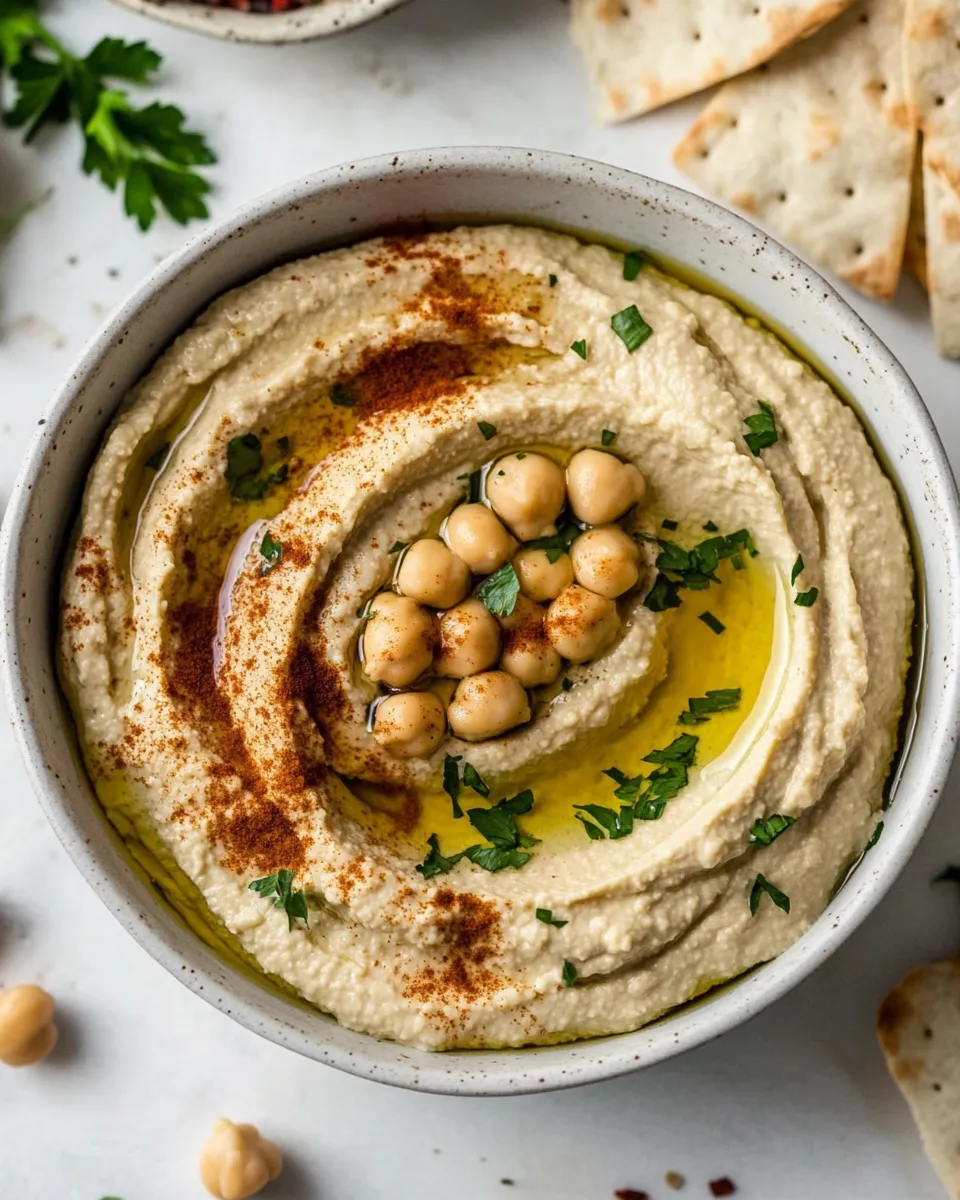
- 1 (15-ounce) can chickpeas, rinsed and drained — provides the creamy base; rinsing removes canning liquid and reduces any tinny flavor.
- ½ teaspoon baking soda — softens the chickpeas during simmering so the hummus becomes silkier.
- 1 large clove garlic — minced and mellowed in lemon to avoid sharp, raw garlic bites.
- ¼ cup freshly squeezed lemon juice plus additional to taste — brightens and balances the richness from tahini.
- 1 teaspoon kosher salt plus additional to taste — essential for bringing out flavor; always adjust after blending.
- ½ cup plus 2 tablespoons tahini — gives body, depth, and that characteristic sesame flavor.
- 2 ice cubes — blunt but effective trick to chill the tahini emulsion and make the hummus lighter.
- 3 to 5 tablespoons ice water — used to adjust consistency to a thick-yogurt stage without watering down flavor.
- Big drizzle extra-virgin olive oil — finish for richness, glossy appearance, and flavor.
- Sprinkle of ground paprika or sumac — adds color and a hint of warm or tart spice.
- Sprinkle of zaatar — herbaceous, lemony, and savory finish.
Make Homemade Hummus: A Simple Method
- Place the rinsed and drained 1 (15-ounce) can chickpeas in a medium pot. Add enough water to cover the chickpeas by 1½ inches. Stir in ½ teaspoon baking soda.
- Bring to a boil, then reduce the heat to a simmer. Simmer the chickpeas for 20 minutes, until they are very soft, some skins float to the surface, and a few chickpeas begin to break down.
- While the chickpeas cook, peel and finely mince (or grate) the 1 large clove garlic. Put the minced garlic in a small bowl and stir in ¼ cup freshly squeezed lemon juice. Let the garlic and lemon sit for 10 minutes to mellow.
- After simmering, drain the chickpeas into a colander. Rinse them briefly with warm water, swishing them with your hand to remove any tinny taste. Pour off and discard the rinse water and any loose skins.
- Set aside 1 tablespoon of the most intact whole chickpeas for garnish, if you like. Immediately transfer the remaining warm chickpeas to a food processor or high-speed blender. There is no need to remove the remaining skins.
- Strain the lemon/garlic mixture through a fine-mesh sieve into the food processor, pressing the solids with the back of a spoon to extract the liquid. (If you prefer a stronger raw garlic flavor, you may skip straining and add the mixture directly.) Add 1 teaspoon kosher salt.
- Process the chickpeas for at least 1 full minute, stopping to scrape down the sides as needed, until the mixture is as smooth as you can get it at this stage.
- Add ½ cup plus 2 tablespoons tahini and the 2 ice cubes to the processor. Blend until very smooth and creamy, scraping down the bowl as needed.
- With the processor running, add 3 to 5 tablespoons ice water, starting with 3 tablespoons and adding up to 2 more tablespoons 1 tablespoon at a time, until the hummus reaches a thick-yogurt consistency you like.
- Taste and adjust seasoning with additional kosher salt and/or more lemon juice to taste.
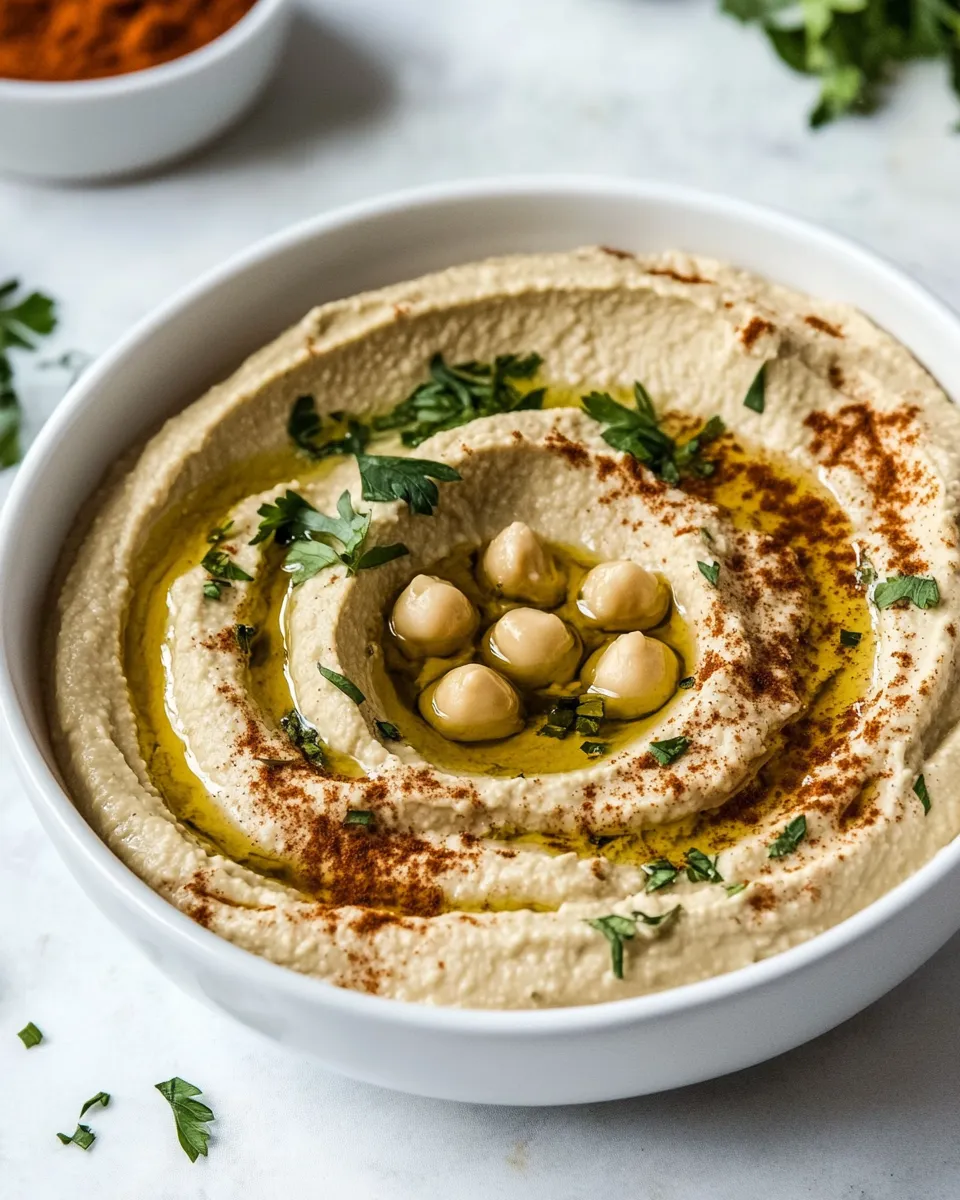
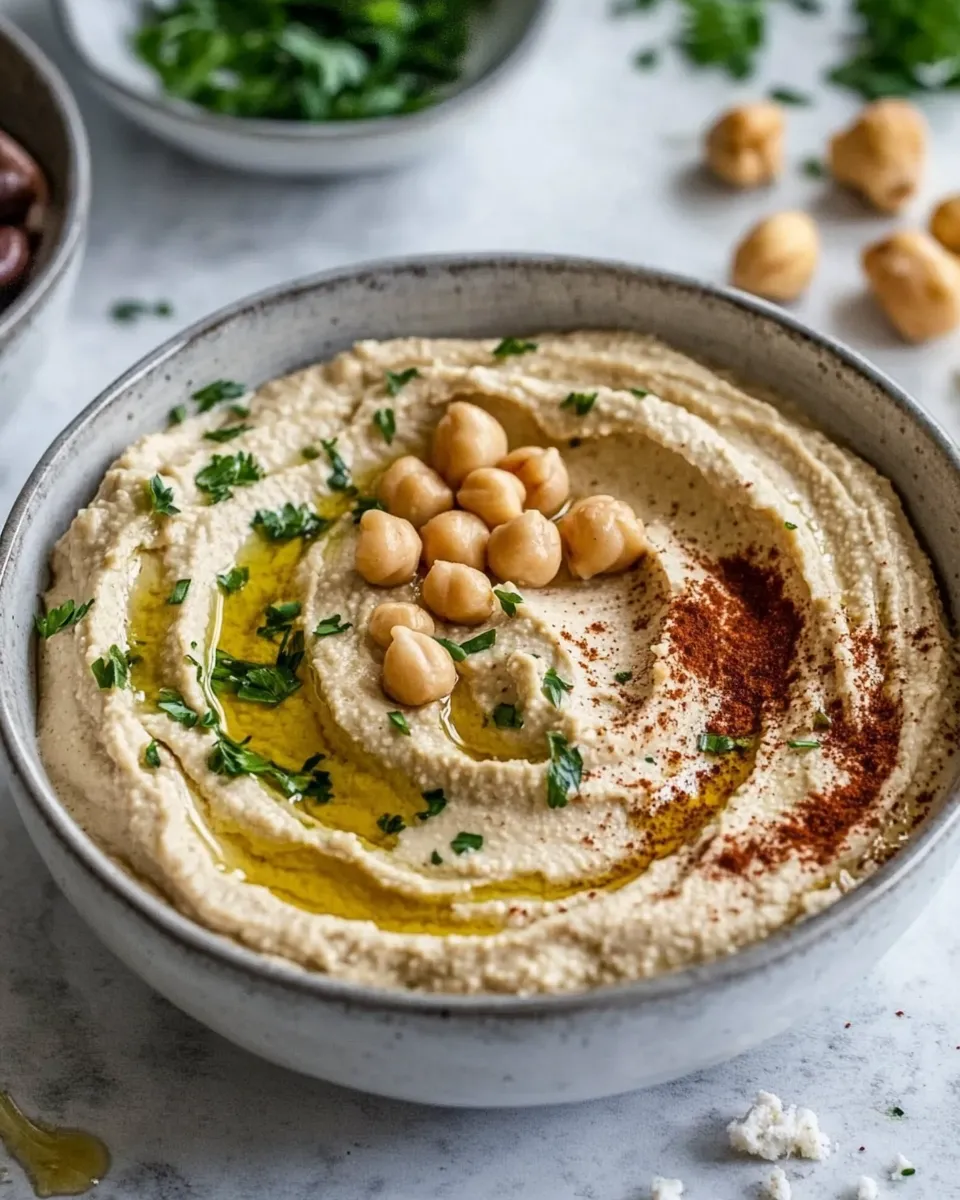
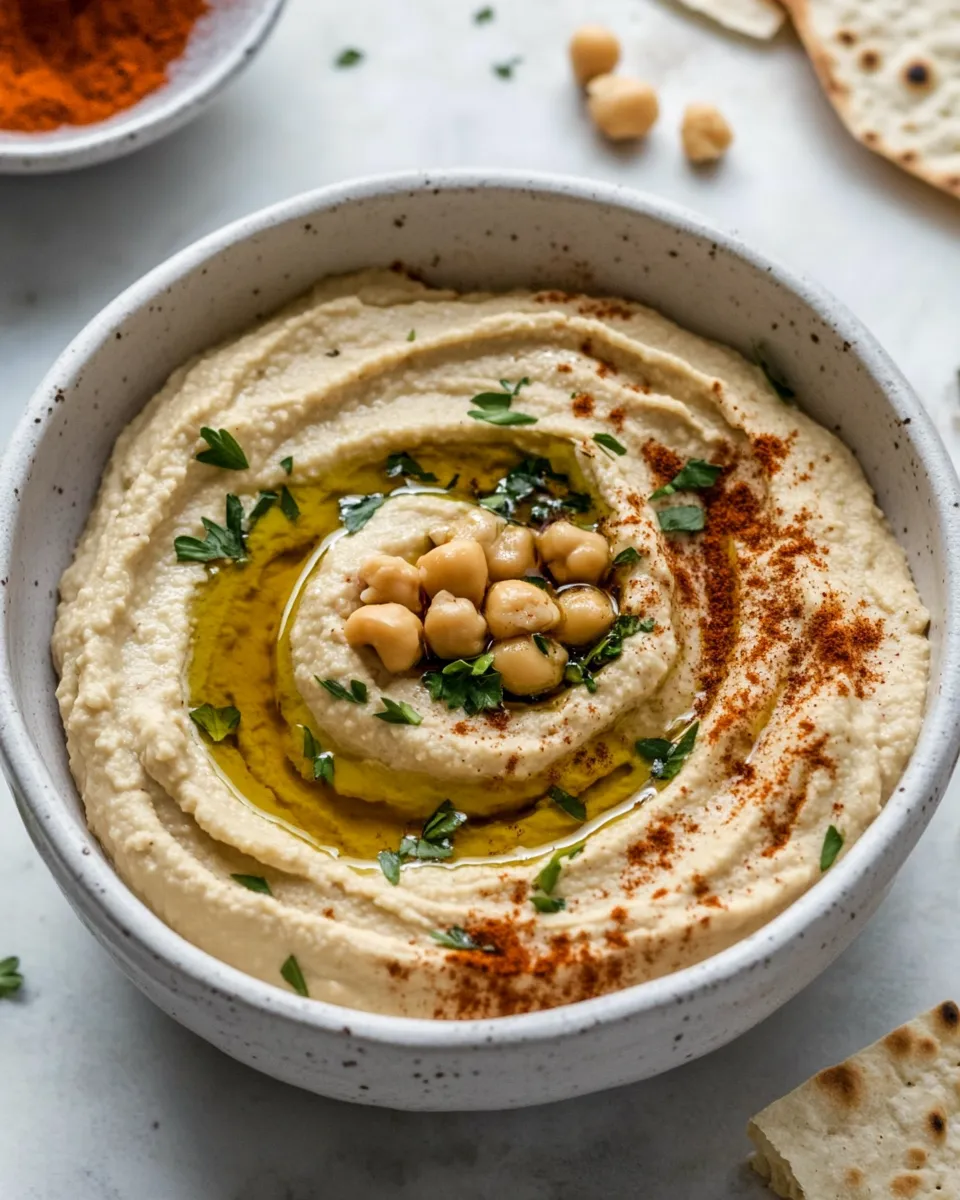
- Transfer the hummus to a serving plate. Use the back of a spoon to make a shallow well in the center. Drizzle a big drizzle of extra-virgin olive oil over the hummus.
- Place the reserved chickpea(s) in the well, then finish with a sprinkle of ground paprika or sumac and a sprinkle of zaatar to taste.
Why It’s Crowd-Pleasing
This hummus hits the familiar pillars: creaminess, bright acidity, and a balanced sesame presence. The simmer step with baking soda makes the chickpeas fall-apart soft in a way that skipping it won’t replicate. The lemon-garlic resting mellows raw sharpness and keeps the garlic from dominating. Adding ice to the tahini blend is a small trick that lightens texture without watering down flavor.
Because the flavors are straightforward and familiar, it appeals to a broad audience. The finish with olive oil and the sparks of paprika, sumac, and zaatar add visual appeal and an aromatic lift that makes it feel special on any platter.
What to Use Instead
If you need to tweak the recipe, here are practical substitutions and adjustments without changing the spirit of the hummus:
- Chickpeas: If your pantry only holds cooked (not canned) chickpeas, use an equivalent quantity by weight of well-cooked chickpeas. If using home-cooked, you can skip the simmer step but consider a short simmer with a pinch of baking soda for extra silkiness.
- Tahini adjustments: If your tahini is unusually bitter, stir it well before measuring or use slightly less and make up texture with a little more ice water and olive oil.
- Garlic intensity: If you prefer less garlic, reduce to a half clove and still let it sit in the lemon briefly; the flavor will still integrate.
- Seasoning: If the hummus tastes flat, more lemon is the quick fix; if it tastes dull, add a touch more salt and re-blend.
Must-Have Equipment
Essential
- Medium pot — for simmering the chickpeas.
- Colander — to drain and rinse the chickpeas cleanly.
- Food processor or high-speed blender — for smooth, even texture.
- Fine-mesh sieve — to strain the lemon/garlic mixture and avoid large bits.
- Measuring spoons and cups — for accurate seasoning and tahini amounts.
Nice-to-have
- Serving plate with a shallow well — for a classic presentation.
- Microplane or grater — for very fine garlic if you prefer that texture.
Common Errors (and Fixes)
- Result is grainy rather than silky — usually the chickpeas weren’t soft enough. Make sure to simmer for the full 20 minutes with the baking soda and look for some skins to float and a few chickpeas beginning to break down.
- Bitter or tinny flavor — rinse the canned chickpeas well after draining, then briefly rinse again after simmering as the recipe directs; discard the rinse water and any loose skins.
- Too thin or watery — add less ice water; blend, then let rest a few minutes to allow textures to settle. If already too thin, a small extra tablespoon of tahini will help thicken (but adjust seasoning).
- Garlic too sharp — the lemon soak step calms raw garlic. If it’s still sharp, add a touch more lemon juice and a pinch more salt, then let the hummus rest in the fridge for an hour to mellow.
- Tahini too pasty or heavy — the ice cubes are critical here; they make the tahini component lighter. Blend the tahini with the ice cubes thoroughly before adding any more water.
Seasonal Flavor Boosts
- Spring: Finish with a scattering of fresh herbs (parsley or mint) for a bright, verdant note.
- Summer: Fold in or top with charred sweet peppers or fresh tomatoes for a sweet, smoky contrast.
- Autumn: A sprinkle of toasted seeds or a drizzle of a spiced oil pairs well with squash-based sides.
- Winter: A pinch of warm spice (cumin or smoked paprika in addition to the listed finishes) adds comforting depth.
Cook’s Commentary
I started making hummus the way my mother did — a quick blend with canned beans — but small technique changes made it infinitely better. Simmering the drained canned chickpeas with baking soda is an extra ten minutes that pays off with a silkier mouthfeel. Letting the minced garlic sit in lemon for a short rest knocks the sharp edge off and distributes garlic flavor more evenly. And yes, the ice cubes work wonders; they help the tahini emulsify into something lighter and more mousse-like.
This recipe isn’t about complexity; it’s about treating simple ingredients with small, deliberate steps. They’re the difference between “good” hummus and hummus that people ask you to make again.
Make-Ahead & Storage
This hummus stores beautifully. Transfer it to an airtight container and refrigerate for up to 5 days. For the best appearance and flavor, pour a thin layer of olive oil across the top before sealing — it helps prevent skinning and keeps the surface glossy.
To freeze, portion the hummus into freezer-safe containers, leaving a little headspace for expansion. Freeze up to 3 months. Thaw in the refrigerator overnight and rewhip briefly with a tablespoon of ice water or olive oil if it seems separated.
Questions People Ask
Q: Why simmer canned chickpeas instead of just blending them straight from the can?
A: Simmering with a little baking soda softens the beans further, breaking down fibers and creating a smoother texture. Canned chickpeas can be firm; the extra simmer helps mimic the creaminess of well-cooked dried chickpeas.
Q: What do the ice cubes do?
A: Ice chills and loosens the tahini emulsion as it blends, producing a lighter, creamier texture. It’s a simple trick to prevent a heavy, claggy tahini mouthfeel.
Q: Can I skip straining the garlic-lemon mix?
A: Yes, if you like more assertive garlic and a bit of texture. Straining mellows the garlic and keeps the hummus ultra-smooth. It’s a matter of personal preference.
Q: How do I know when to add more water versus more lemon or salt?
A: Water controls texture; lemon controls brightness and lift; salt sharpens flavor. If the hummus is too thick, add ice water a tablespoon at a time. If it’s bland, brightening with lemon often does more than salt alone, but adjust both to taste.
In Closing
Simple steps yield a reliably exceptional hummus: a quick simmer with baking soda, a mellowed garlic-lemon base, and the little lift of ice during the tahini blend. This recipe is practical and forgiving, and it scales well. Make it for a weeknight dip, a picnic, or to impress friends — it’s one of those recipes people remember for its texture as much as its flavor.
If you make a batch, start with the recipe exactly as written once. After that, tweak lemon, salt, and water until it’s your perfect version. Happy blending — and enjoy the most spoonable hummus you’ve made at home.
Homemade Hummus Recipe
Ingredients
Equipment
Method
- Place the rinsed and drained 1 (15-ounce) can chickpeas in a medium pot. Add enough water to cover the chickpeas by 1½ inches. Stir in ½ teaspoon baking soda.
- Bring to a boil, then reduce the heat to a simmer. Simmer the chickpeas for 20 minutes, until they are very soft, some skins float to the surface, and a few chickpeas begin to break down.
- While the chickpeas cook, peel and finely mince (or grate) the 1 large clove garlic. Put the minced garlic in a small bowl and stir in ¼ cup freshly squeezed lemon juice. Let the garlic and lemon sit for 10 minutes to mellow.
- After simmering, drain the chickpeas into a colander. Rinse them briefly with warm water, swishing them with your hand to remove any tinny taste. Pour off and discard the rinse water and any loose skins.
- Set aside 1 tablespoon of the most intact whole chickpeas for garnish, if you like. Immediately transfer the remaining warm chickpeas to a food processor or high-speed blender. There is no need to remove the remaining skins.
- Strain the lemon/garlic mixture through a fine-mesh sieve into the food processor, pressing the solids with the back of a spoon to extract the liquid. (If you prefer a stronger raw garlic flavor, you may skip straining and add the mixture directly.) Add 1 teaspoon kosher salt.
- Process the chickpeas for at least 1 full minute, stopping to scrape down the sides as needed, until the mixture is as smooth as you can get it at this stage.
- Add ½ cup plus 2 tablespoons tahini and the 2 ice cubes to the processor. Blend until very smooth and creamy, scraping down the bowl as needed.
- With the processor running, add 3 to 5 tablespoons ice water, starting with 3 tablespoons and adding up to 2 more tablespoons 1 tablespoon at a time, until the hummus reaches a thick-yogurt consistency you like.
- Taste and adjust seasoning with additional kosher salt and/or more lemon juice to taste.
- Transfer the hummus to a serving plate. Use the back of a spoon to make a shallow well in the center. Drizzle a big drizzle of extra-virgin olive oil over the hummus.
- Place the reserved chickpea(s) in the well, then finish with a sprinkle of ground paprika or sumac and a sprinkle of zaatar to taste.
Notes
TO FREEZE: Store homemade hummus in an airtight container in the freezer for up to 3 months. Let it thaw overnight in the refrigerator before serving; stir in a little extra olive oil or water if needed to thin it out.