Muhammara: Middle Eastern Red Pepper Dip
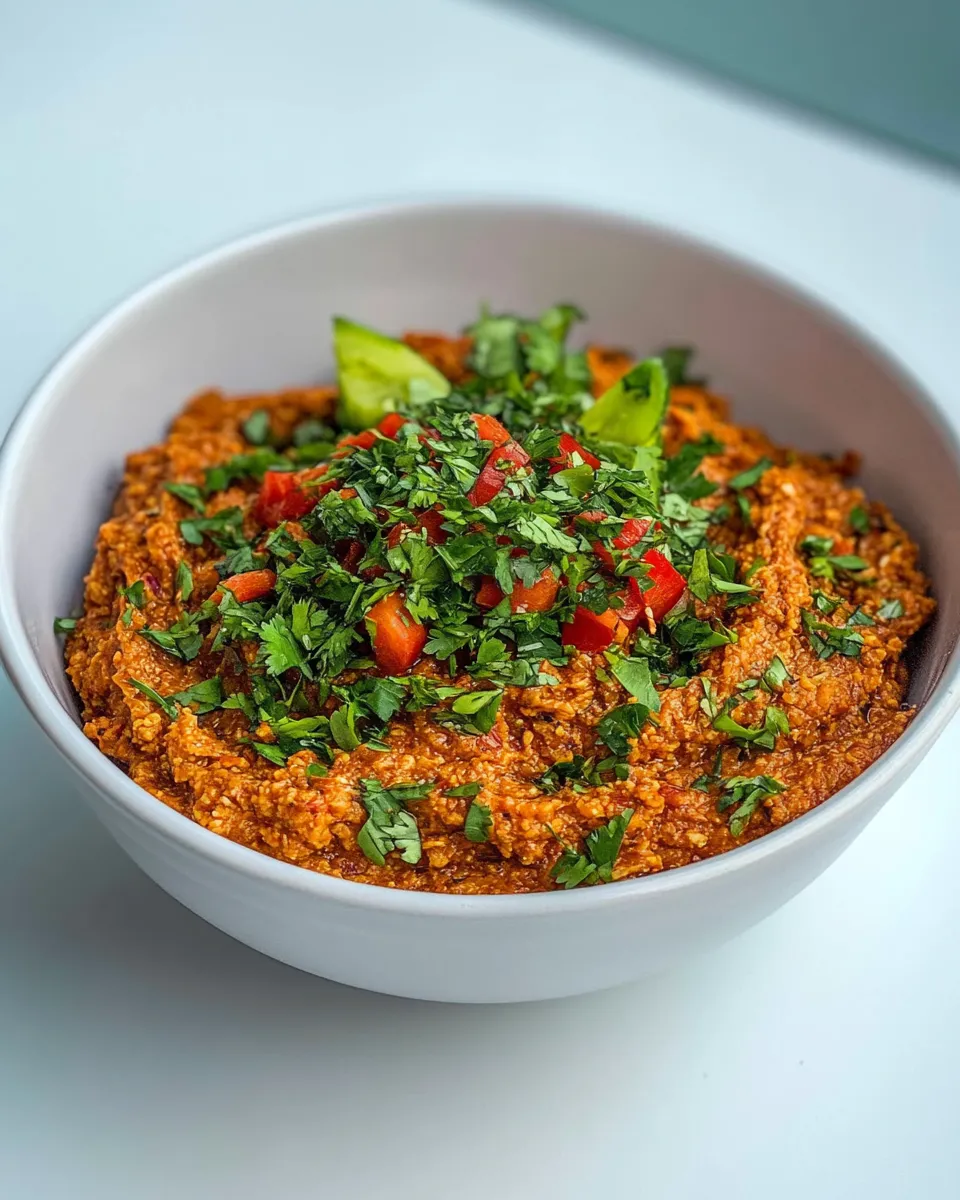
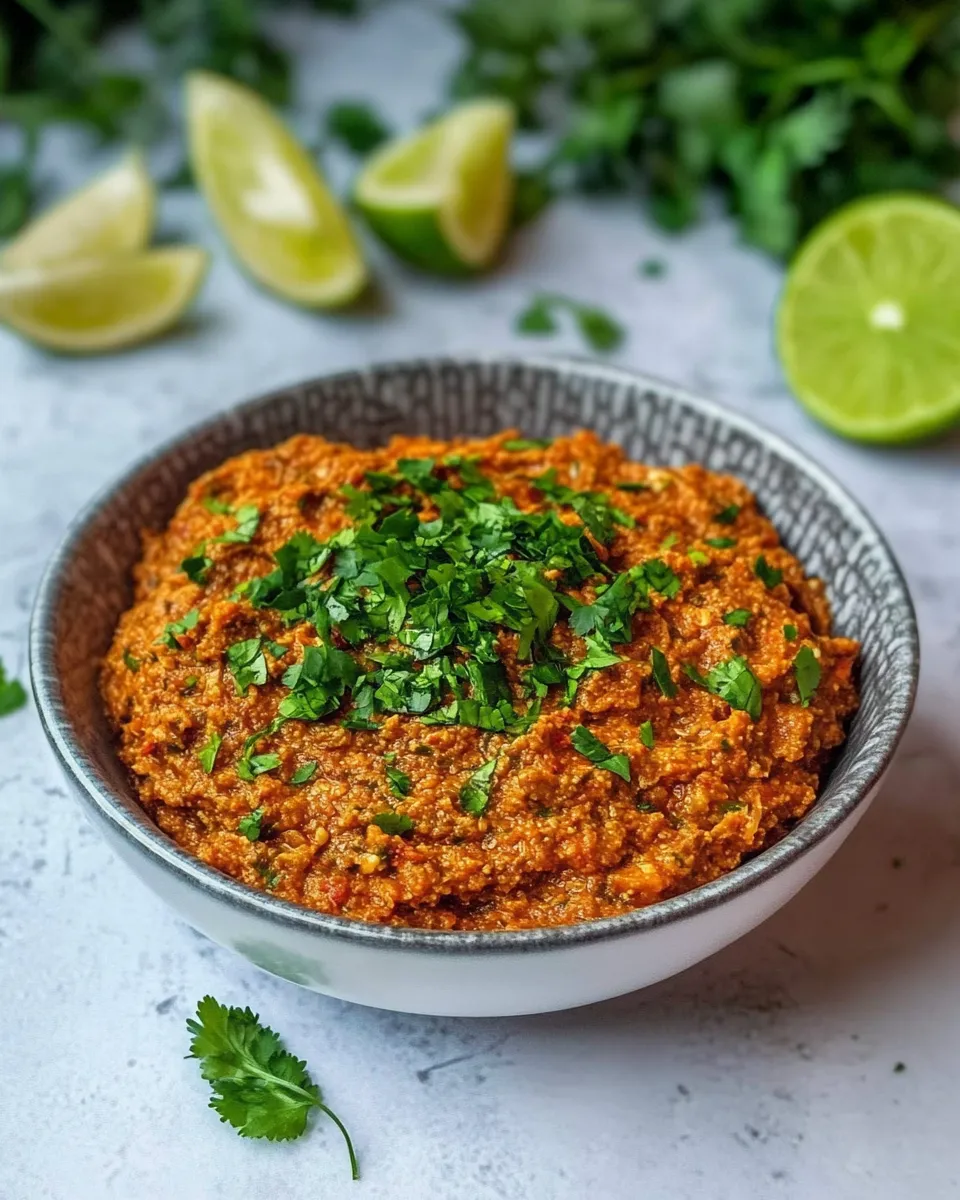
This muhammara lives halfway between a dip and a condiment: rich, slightly smoky, nutty, and with a bright, tangy lift from pomegranate molasses. I fell for it on a trip to a busy market where someone handed me a smear on warm pita. It was simple, urgent, and impossible to forget.
I make it in a food processor in under ten minutes when I want something impressive without fuss. The texture can be rustic or silky-smooth depending on how long you process it, and it pairs with so many things—bread, raw veg, and even grilled meats. Keep the core ingredients on hand and you’ll find yourself reaching for this jar more often than you expect.
Below I’ll walk you through the ingredients, the exact steps, and practical tips so your first try comes out exactly as it should: balanced, bold, and ready to share.
Ingredient Rundown
- 400 g jar of roasted red peppers — the base flavor and color; drain and pat dry so the dip isn’t watery. (Or roast your own red peppers for fresher char.)
- 150 g walnut crumbs — provides body, nuttiness, and a pleasant grainy texture; toasty walnuts deepen the flavor if you want to roast them first.
- 60 g rusk, grated (or 60 g breadcrumbs) — binds the mixture and absorbs excess moisture so the muhammara holds together.
- 60-80 ml olive oil — adds richness and sheen; start with 60 ml and add up to 80 ml if you prefer a looser consistency.
- 1 tbsp tahini — lends creaminess and a subtle sesame note that rounds the dip.
- 2 tbsp pomegranate molasses — the sweet-tart backbone; don’t skip it unless you have a suitable acidic substitute on hand.
- ½ tsp crushed chili flakes — gives gentle heat; use Greek bukovo if you prefer its texture and flavor.
- salt — essential for balance; add to taste.
- pepper — fresh ground is best; adjust as you go.
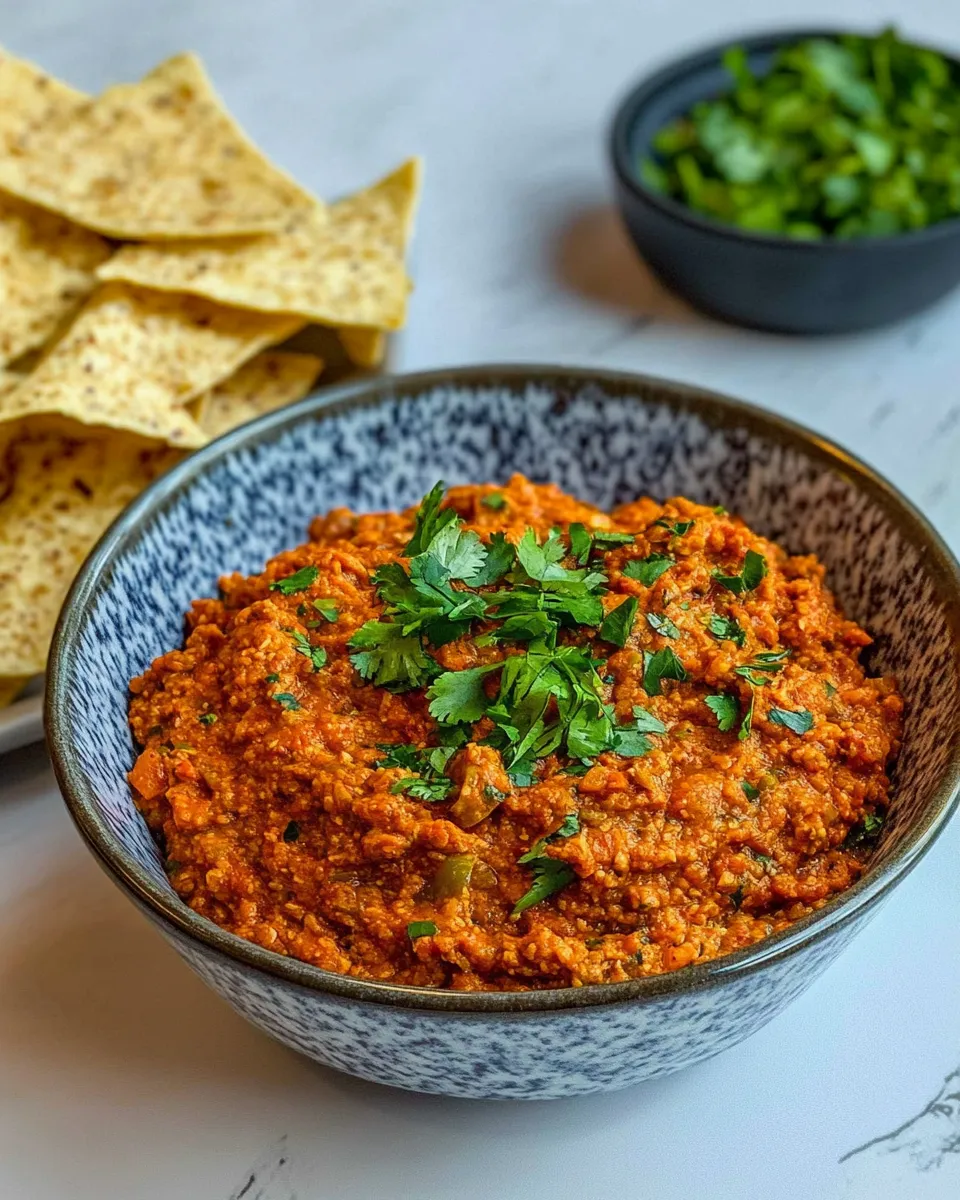
- nachos — one serving option; the crunch and salt are a fun contrast to the dip.
- baked pita bread, as for souvlaki — warm and slightly chewy, perfect for scooping.
- homemade pita bread — if you have it, serve warm for the best experience.
- sourdough bread — a tangy, sturdy option for thicker spreads.
- raw vegetable sticks — a lighter, refreshing way to serve the muhammara and keep it low-GI on the plate.
Step-by-Step: Muhammara
- Drain the 400 g jar of roasted red peppers and pat them dry; roughly chop if whole.
- Place the drained peppers, 150 g walnut crumbs, 60 g grated rusk (or 60 g breadcrumbs), 1 tbsp tahini, 2 tbsp pomegranate molasses, and ½ tsp crushed chili flakes into a food processor. Season with salt and pepper to taste.
- Pulse the ingredients until coarsely combined, stopping to scrape down the sides as needed.
- With the processor running, pour in 60 ml olive oil. Continue processing until the mixture reaches your desired consistency; if it is too thick, add more olive oil a little at a time, up to 80 ml total.
- Taste and adjust seasoning (salt, pepper, or crushed chili flakes) as needed. Pulse once more to combine any additions.
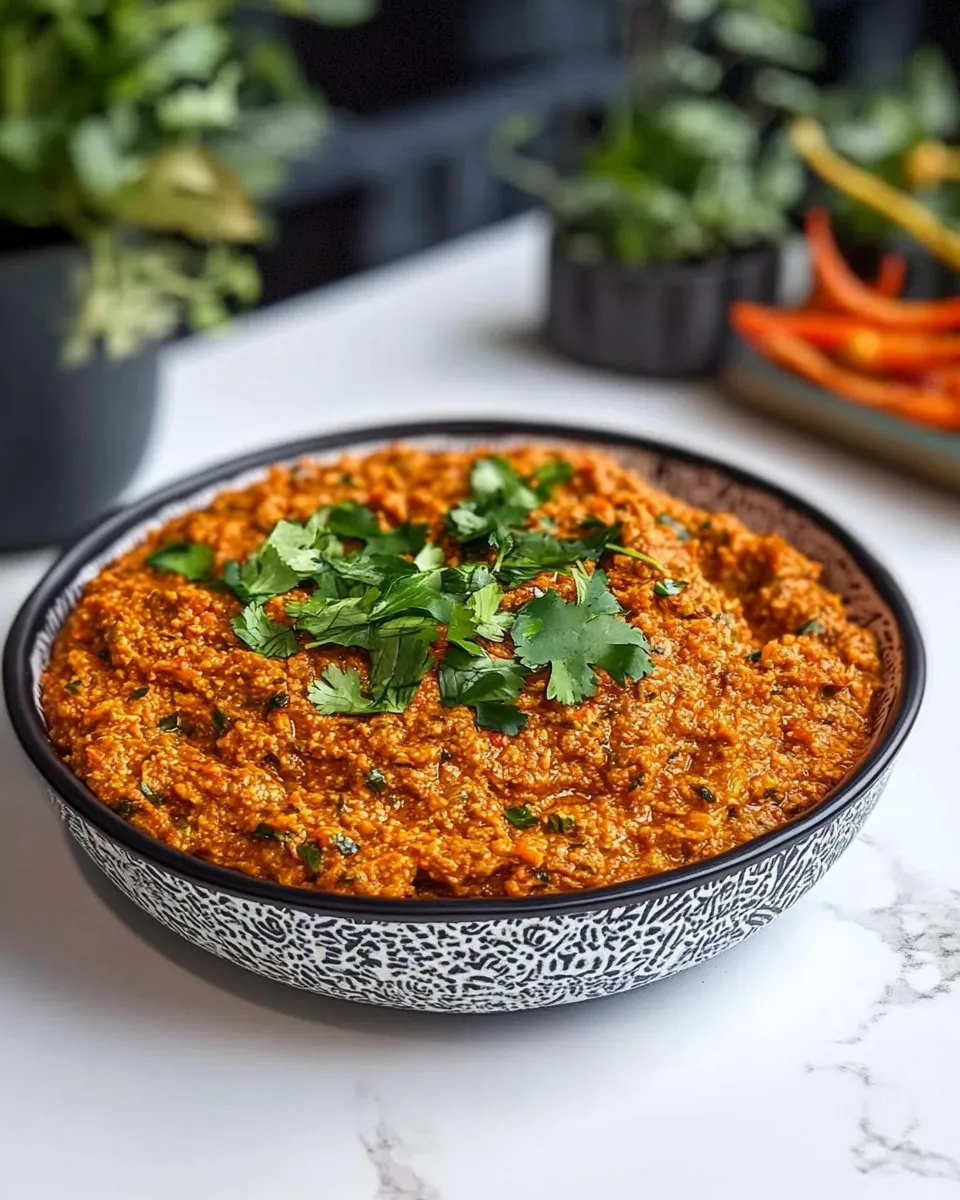
- Transfer the muhammara to a serving bowl and serve with nachos, baked pita bread, homemade pita bread, sourdough bread, or raw vegetable sticks.
Why You’ll Keep Making It
This muhammara is forgiving and adaptable, yet it hits a precise combination of textures and flavors: sweet-tart pomegranate molasses, crunchy walnut body, and the gentle bite of chili flakes. It’s fast to make and stores well, so it becomes a go-to for last-minute entertaining, sandwich spreads, or an elevated snack.
It scales easily. Double it for a party; halve it for a solo lunch. Because the ingredient list is short and pantry-friendly (jarred peppers and walnuts are shelf-stable until opened), I find it’s one of those dishes that consistently gets pulled into rotation.
Low-Carb/Keto Alternatives
If you’re keeping carbs low, focus on the components that add body without breaded fillers. Two practical swaps work well without changing the essence:
- Omit the 60 g rusk/breadcrumbs and increase the walnut crumbs slightly to maintain texture and body.
- Serve exclusively with raw vegetable sticks (already in the ingredient list) instead of crackers or bread—this keeps the dip high in healthy fats and low in carbs.
Because olive oil and walnuts are keto-friendly, you don’t need to change the fat profile. Taste and texture will shift when you remove the rusk, so add olive oil carefully until the consistency feels right.
Equipment at a Glance
- Food processor — required for the recipe; it gives the best texture and speed.
- Measuring spoons and scale — to keep the balance of nuts, oil, and molasses accurate.
- Serving bowl — present the dip simply; a shallow bowl with a drizzle of oil looks inviting.
- Spatula — useful for scraping the sides and transferring the muhammara cleanly.
Pitfalls & How to Prevent Them
Too Watery
If the dip becomes watery, it’s usually from excess liquid in the jarred peppers. Always drain the 400 g jar and pat the peppers dry with paper towels. If it still seems loose after pulsing, add the rusk/breadcrumbs a little at a time until the texture firms up.
Too Thick or Grainy
Overly thick muhammara can be loosened with olive oil—add 60 ml first, then up to 80 ml total if needed. If the texture is grainy because the walnuts were not processed enough, pulse longer but pause to scrape the bowl so everything integrates evenly.
Flat Flavor
Always taste before serving. The key balancing act is salt versus pomegranate molasses. If it tastes flat, a pinch more salt will sharpen the flavors. If it’s too sharp, a touch more walnut or olive oil will mellow it.
Too Spicy
The recipe calls for ½ tsp crushed chili flakes. If you’re sensitive to heat, start with less and add after the initial pulse so you can control the final bite.
Year-Round Variations
Keep the core technique and vary minor elements based on what’s available. A few options that require no new ingredients:
- Use home-roasted peppers (as the ingredient note suggests) when they’re in season for a fresher, smokier profile.
- Toast the walnuts briefly in a dry pan to intensify their flavor before making the walnut crumbs.
- Adjust the olive oil between 60–80 ml depending on season: in winter, I often use the lower end so it’s denser; in summer, a looser, cooler dip is refreshing.
- Swap the bread for the listed serving options—nachos for casual gatherings, baked pita for a classic presentation, or raw veg for lighter fare.
Cook’s Notes
Texture control is the single most useful thing to focus on. Pulse to a coarse mix for a chunky spread you can scoop, or process longer with the full 60 ml olive oil for a smoother, almost pâté-like result. If you add more olive oil, do it slowly and check after each tablespoon.
Pomegranate molasses is non-negotiable for authenticity; it provides a unique sweet-tart anchor you can’t mimic with plain vinegar. Tahini is subtle but important for mouthfeel—don’t skip it. The rusk (or breadcrumbs) is the structural element: it soaks up moisture and keeps the muhammara from separating.
Save It for Later
Store in an airtight container in the fridge for up to 5 days. A thin film of olive oil on the surface helps preserve the color and flavor—press a small layer on top before sealing. Bring the dip to room temperature before serving for the best aroma and looseness.
Freezing is possible but not ideal: the texture can change slightly when thawed because of the oil and nuts. If you must freeze, use a freezer-safe container, leave a little headspace, and consume within a month. Thaw overnight in the fridge and stir well before serving.
Handy Q&A
Q: Can I roast my own peppers instead of using jarred?
A: Yes. Roasting your own adds freshness and a charred note. After roasting, peel and drain them well before using so you don’t add excess liquid.
Q: What if I don’t have pomegranate molasses?
A: The flavor will change without it. The dip may be missing its signature sweet-tart edge; if you don’t have any, increase tahini slightly and be cautious with salt, but the result won’t be the classic muhammara profile.
Q: How spicy is this?
A: Mild to moderate, depending on your crushed chili flakes. Use less if you prefer gentle warmth, or the full ½ tsp for a noticeable bite.
Q: Can I make it ahead?
A: Absolutely. Make it a day ahead—the flavors meld and deepen. Bring to room temperature before serving and give it a quick stir.
Hungry for More?
If you liked this muhammara, try pairing it with grilled meats as a condiment, or use it as a sandwich spread in place of mayonnaise for a flavorful lunch. It’s one of those recipes that quietly upgrades whatever you serve it with—toast, roasted vegetables, or simply a bowl with a stack of warm pita on the side.
Bookmark this post and keep a jar of roasted peppers and walnuts in your pantry. You’ll be surprised how often this red pepper dip becomes the simplest, most satisfying answer to “what’s for dinner?”
Muhammara: Middle Eastern Red Pepper Dip
Ingredients
Equipment
Method
- Drain the 400 g jar of roasted red peppers and pat them dry; roughly chop if whole.
- Place the drained peppers, 150 g walnut crumbs, 60 g grated rusk (or 60 g breadcrumbs), 1 tbsp tahini, 2 tbsp pomegranate molasses, and ½ tsp crushed chili flakes into a food processor. Season with salt and pepper to taste.
- Pulse the ingredients until coarsely combined, stopping to scrape down the sides as needed.
- With the processor running, pour in 60 ml olive oil. Continue processing until the mixture reaches your desired consistency; if it is too thick, add more olive oil a little at a time, up to 80 ml total.
- Taste and adjust seasoning (salt, pepper, or crushed chili flakes) as needed. Pulse once more to combine any additions.
- Transfer the muhammara to a serving bowl and serve with nachos, baked pita bread, homemade pita bread, sourdough bread, or raw vegetable sticks.
Notes
We can replace the molasses with grape molasses and instead of walnuts we can use white almonds.