Orange Ginger Chicken Stir Fry
I cook a lot, and some of my favorite weeknight dinners are the ones that feel bright and intentional without asking for an hour of my evening. This Orange Ginger Chicken Stir Fry is one of those recipes: citrus-forward, ginger-spiked, and built around tender, marinated chicken thighs and quick-roasted vegetables. It’s the kind of dish that looks like you spent more time than you did.
What I love about this version is the make-ahead flexibility. The sauce blends up in minutes, and the chicken marinates in it so the flavors sink in. When you’re ready to cook, the whole meal comes together in a single 12-inch skillet. The sauce uses coconut milk to round the acidity of the orange juice and liquid aminos to give gentle umami without overpowering the brightness.
No gimmicks, no long ingredient lists — just straightforward steps and a pantry-friendly sauce that doubles as a reserved cooking liquid to get the vegetables tender and glossy. Below I’ll walk you through what each component brings, how to adapt textures, common mistakes to avoid, and how to store leftovers so the second-night meal is still great.
What’s in the Bowl
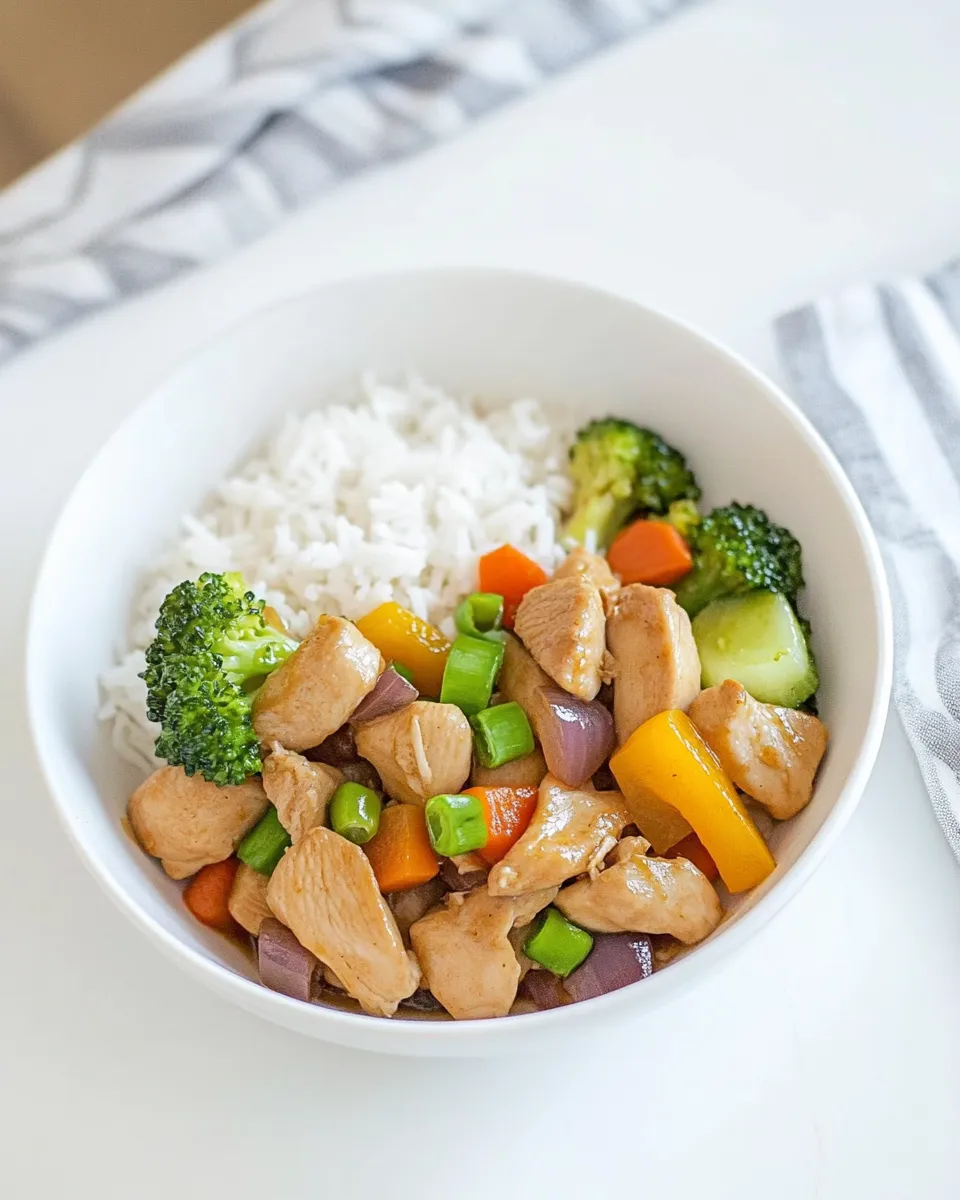
Before we fire up the skillet, here’s a snapshot of what you’ll have on hand: a blended orange-ginger sauce that flavors and tenderizes the chicken, plus a mix of onion, carrots, bell pepper, broccoli, and zucchini for color and crunch. The marinade is the flavor hero here, and the same sauce, reserved and heated first, helps start the vegetables cooking so nothing ends up underdone.
Ingredients
- 1/2cup orange juice — bright acid base for the sauce and marinade.
- 1/4cup liquid aminos or coconut aminos — salty, savory backbone (choose coconut aminos if you want soy-free).
- 3Tbsp avocado oil — neutral oil that blends smoothly into the sauce and tolerates high heat.
- 1/4cup full-fat canned coconut milk — adds richness and helps mellow the citrus.
- 12-inch nub fresh ginger, peeled — intense ginger flavor; adjust if you prefer milder heat.
- 1Tbsp fish sauce — deep umami; a little goes a long way.
- 1Tbsp red curry paste (optional) — adds spice and complexity; omit for a milder profile.
- 1/2tsp sea salt to taste — anchors the flavors; add more at the end if needed.
- 1.5lbs chicken thighs chopped — dark meat stays juicy under higher-heat cooking and longer simmering.
- 1/2 red onion sliced — sweet, aromatic base that softens quickly.
- 2 large carrots peeled and chopped — add natural sweetness and bite.
- 1/2 red bell pepper cut into match sticks — color and a tender-crisp texture.
- 1 large crown broccoli chopped into florets — provides bulk and a good contrast to the chicken.
- 1 medium zucchini squash chopped — cooks fast and absorbs sauce.
Orange Ginger Chicken Stir Fry Made Stepwise
- Make the orange ginger sauce: in a blender add 1/2cup orange juice, 1/4cup liquid aminos or coconut aminos, 3Tbsp avocado oil, 1/4cup full-fat canned coconut milk, the 12-inch nub fresh ginger (peeled and roughly chopped), 1Tbsp fish sauce, 1Tbsp red curry paste (optional), and 1/2tsp sea salt. Blend until smooth.
- Pour 1/4 cup of the blended sauce into a small bowl and set it aside (this is the reserved cooking sauce).
- Place the chopped 1.5lbs chicken thighs into a Tupperware container or a zip-top bag. Pour the remaining blended sauce over the chicken, seal the container or bag, and refrigerate for at least 1 hour and up to 12 hours.
- While the chicken is marinating (or just before cooking), prepare the vegetables: slice 1/2 red onion; peel and chop 2 large carrots; cut 1/2 red bell pepper into matchsticks; chop 1 large crown broccoli into florets; and chop 1 medium zucchini squash.
- When ready to cook, heat a large 12-inch skillet with deep sides (or a large saucepan) over medium heat. Pour the reserved 1/4 cup of sauce into the skillet and heat until it begins to bubble.
- Add the sliced onion and chopped carrots to the bubbling sauce, cover the skillet, and cook, stirring occasionally, until the onion and carrots begin to soften, about 2 minutes.
- Add the bell pepper, broccoli florets, and chopped zucchini, stir to combine with the onion and carrots, cover, and cook 1 to 2 minutes.
- Push the vegetables to one side of the skillet. Add the marinated chicken and any sauce left in the container to the empty side of the skillet. Allow the chicken to sit and brown without stirring for 2 minutes.
- Stir the chicken into the vegetables so everything is well combined. Bring the mixture to a full boil, then cover the skillet. Reduce heat to maintain a gentle boil (a low simmer) and cook, stirring occasionally, for 15 minutes.
- Remove the cover and continue cooking, stirring occasionally, until the sauce thickens and the chicken is cooked through, about 8 to 15 minutes.
Why It Works Every Time
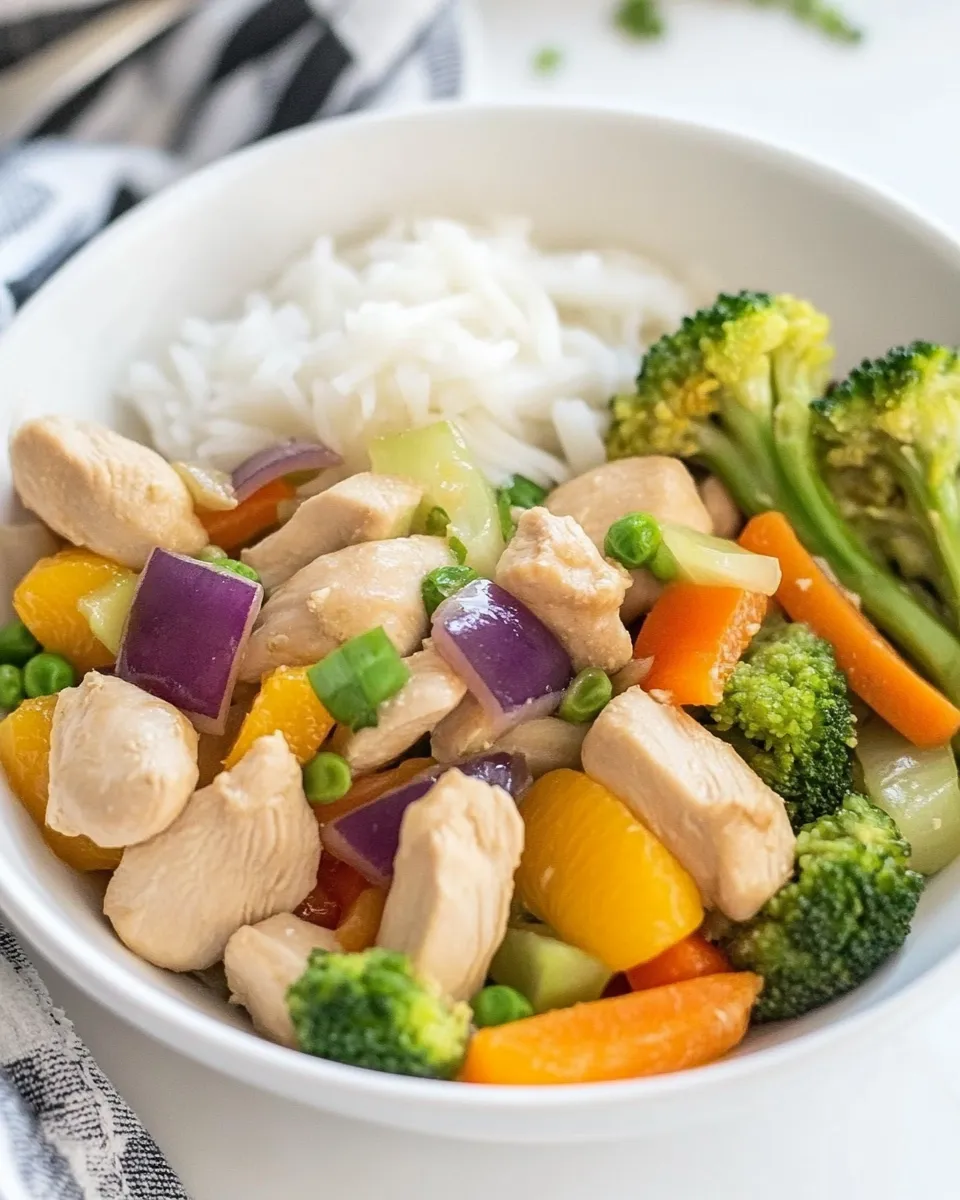
There are three simple mechanics that keep this stir fry dependable: a balanced wet marinade, a staged cooking order, and heat control. The blended sauce is both an acid and fat vehicle — orange juice for brightness, coconut milk for silk, and oil to carry aromatics. Marinating the chicken in that sauce allows the fibers to absorb flavor and stay moist through the final simmer.
Staging the vegetables matters. The reserved 1/4 cup of sauce goes into the skillet first so the onion and carrots begin to steam and soften; that prevents the dish from ending with raw vegetables and overcooked chicken. Browning the chicken briefly before folding it into the veg locks in flavor and gives a little texture contrast. Finally, finishing covered at a gentle simmer lets the chicken reach a safe internal temperature without drying out.
Texture-Safe Substitutions
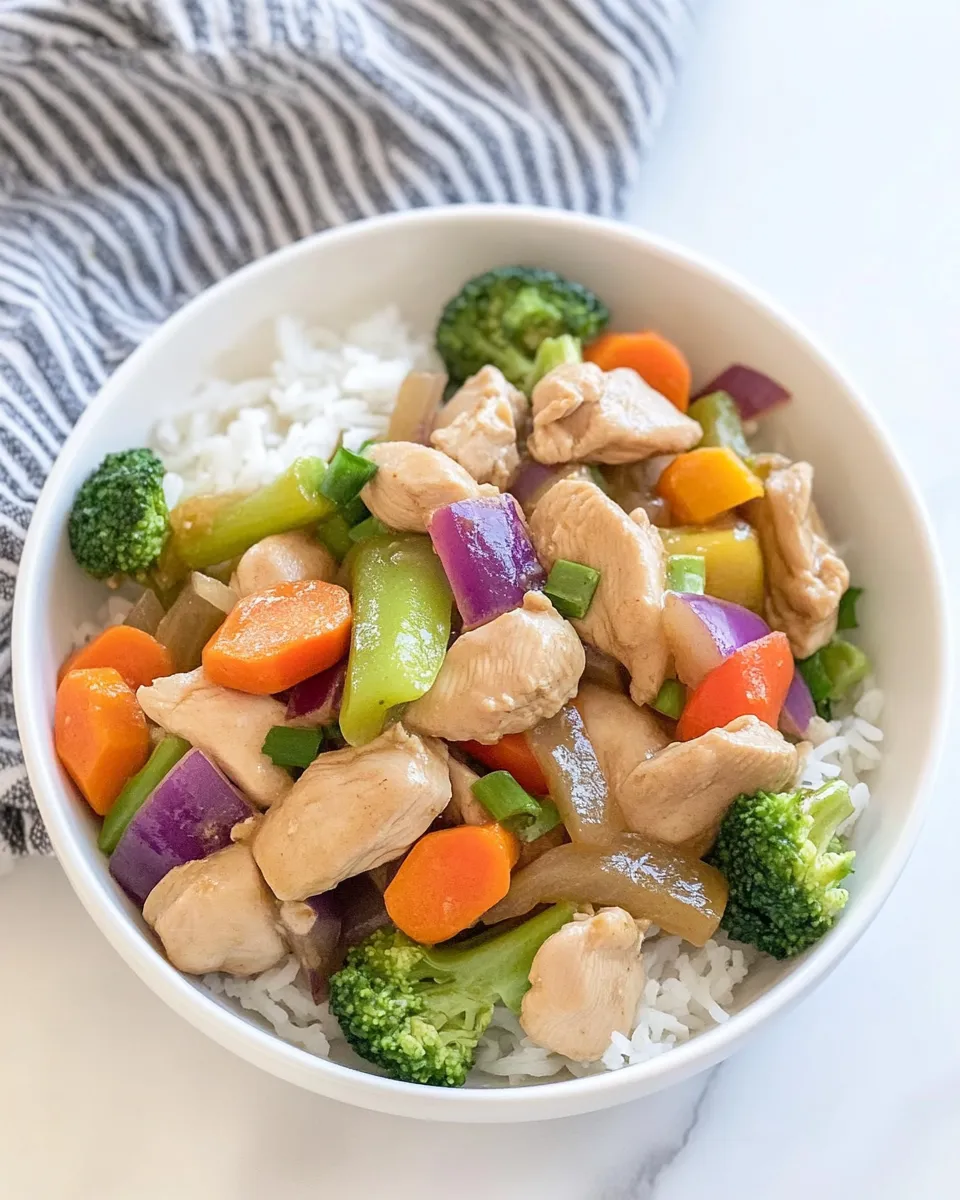
If you want to preserve textures while swapping ingredients, pick options that match cooking speed and moisture content.
- Chicken thighs — swap for boneless, skinless chicken breast only if you reduce simmer time; breast cooks faster and will dry if over-simmered.
- Carrots — use baby carrots or parsnips; they need similar pre-softening.
- Broccoli — broccolini or cauliflower florets work; cauliflower needs a touch longer to soften.
- Zucchini — summer squash or halved asparagus tips are fine; add them later to prevent mushiness.
- Liquid aminos — use tamari or reduced-sodium soy sauce if you don’t have liquid aminos; reduce salt at the end.
What’s in the Gear List
You don’t need special equipment. A 12-inch skillet with deep sides or a large saucepan is the only real must-have. Here’s what I use and why:
- 12-inch skillet with deep sides — gives enough surface for browning and room to stir without spilling.
- Blender — smooths the sauce quickly; an immersion blender could work in a tall jar.
- Cutting board and a sharp knife — for quick, even chops so everything cooks uniformly.
- Tupperware container or a zip-top bag — for marinating the chicken efficiently and cleanly.
- Measuring cups and spoons — to keep the sauce balanced and consistent.
Pitfalls & How to Prevent Them
Common mistakes are easy to avoid if you know what to watch for.
- Under-seasoned sauce: The sauce blends citrus and umami; taste and adjust salt after the final reduction, not before. Salt concentrates as the sauce reduces.
- Soggy vegetables: Add quick-cooking veg like zucchini late, and don’t over-cover once things are tender — remove the lid to thicken the sauce and retain texture.
- Dry chicken: Avoid using chicken breast unless you shorten simmer time. Chicken thighs tolerate the 15-minute covered simmer without drying.
- Burning the sauce: Keep heat at medium or a gentle simmer after you bring it to a boil. High heat can scorch the sugars from the orange juice.
Better-for-You Options
Want to nudge this dish toward lighter or more nutrient-dense? Small swaps keep the spirit intact.
- Use coconut aminos and reduce added salt to lower sodium while preserving umami.
- Increase the ratio of vegetables to chicken for more fiber and volume. Add leafy greens like spinach at the very end so they wilt quickly.
- Swap avocado oil for a smaller amount of extra-virgin olive oil if you prefer monounsaturated fats, though flavor and smoke point will differ slightly.
- Serve over cauliflower rice or a smaller scoop of brown rice for a lower-carb or higher-fiber base.
Insider Tips
Little adjustments make the dinner feel polished without extra time.
- Grate the ginger if your blender isn’t high-speed — it disperses more evenly and you won’t get fibrous chunks.
- Reserve exactly 1/4 cup sauce before marinating — it’s enough to start the vegetables without thinning the final pan sauce.
- Don’t overcrowd the pan when browning the chicken. If your skillet is too full, brown in two batches or press the chicken gently to increase contact with the pan.
- If you like a glossy finish, stir in a teaspoon of cornstarch slurry (1 tsp cornstarch + 1 tbsp cold water) at the very end and simmer for a minute to thicken.
How to Store & Reheat
Cool leftovers quickly and store in an airtight container in the fridge for up to 3 days. The sauce will thicken as it chills — that’s normal.
- Reheat gently in a skillet over medium-low, adding a splash of water or extra orange juice to loosen the sauce and revive the vegetables’ juiciness.
- Microwave reheating works in a pinch; cover and heat in 30–45 second bursts, stirring between intervals to distribute heat and prevent overcooking the chicken.
- Do not freeze the finished stir fry if you want the best texture; the zucchini and broccoli can become mushy. You can, however, freeze the marinated raw chicken in its sauce for up to one month — thaw overnight in the fridge before cooking.
Troubleshooting Q&A
Here are quick answers to the questions I get most often.
- Q: My sauce is too thin — how do I fix it? A: Remove the lid and simmer uncovered until it reduces and thickens. If you want speed, stir in a small cornstarch slurry (1 tsp cornstarch with 1 tbsp cold water) and simmer a minute.
- Q: The chicken smells fishy from the fish sauce — is it ruined? A: Fish sauce is potent raw; when cooked it should mellow. If it’s strong, add a squeeze of fresh orange juice and a pinch of sugar to balance, and finish with fresh herbs.
- Q: Vegetables came out overcooked — how to avoid next time? A: Cut vegetables to similar sizes and add the fastest-cooking ones last (zucchini, bell pepper). Reduce covered cooking time by a minute or two.
- Q: Can I double this recipe? A: Yes, but use a larger pan or cook in batches. Overcrowding prevents proper browning and even simmering.
Ready, Set, Cook
Here’s a simple rundown to get you from fridge to table in about 35–45 minutes, including marinating time (short marinate = 1 hour). I keep this checklist on my phone when I’m making the dish for the first time.
Quick checklist
- Blend the sauce and reserve 1/4 cup.
- Marinate chicken for 1–12 hours in the remaining sauce.
- Chop vegetables to uniform sizes.
- Start sauce, soften onion + carrots, add remaining veg, then brown chicken.
- Cover and simmer 15 minutes, uncover and reduce until thickened.
- Taste, adjust salt, and serve immediately.
Serve this Orange Ginger Chicken Stir Fry over rice or cauliflower rice, and garnish with chopped scallions or a handful of cilantro if you like. It’s honest cooking: bright, layered flavors that come together without fuss. Try it on a busy weeknight—the prep is short, the payoff is reliably delicious.
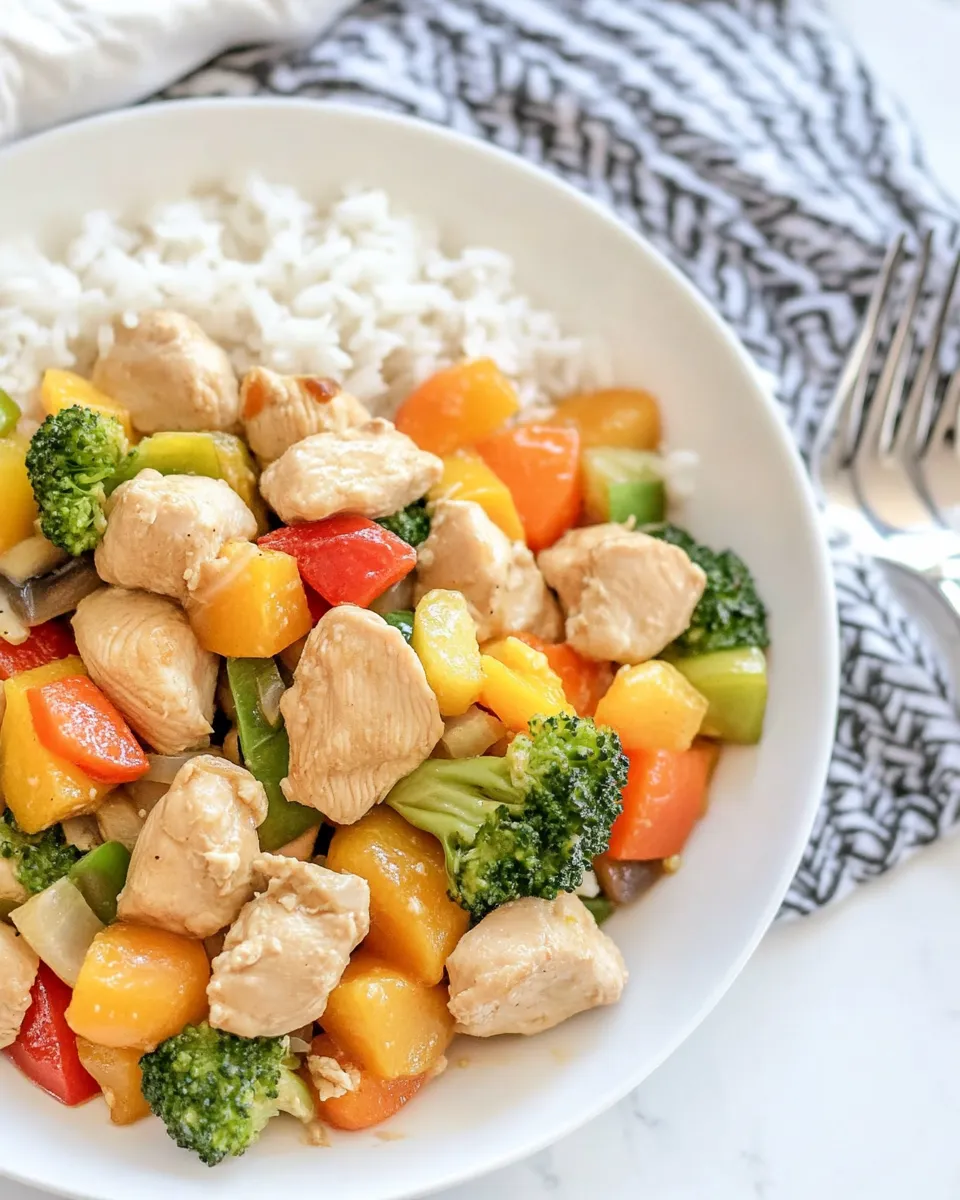
Orange Ginger Chicken Stir Fry
Ingredients
Equipment
Method
- Make the orange ginger sauce: in a blender add 1/2cup orange juice, 1/4cup liquid aminos or coconut aminos, 3Tbsp avocado oil, 1/4cup full-fat canned coconut milk, the 12-inch nub fresh ginger (peeled and roughly chopped), 1Tbsp fish sauce, 1Tbsp red curry paste (optional), and 1/2tsp sea salt. Blend until smooth.
- Pour 1/4 cup of the blended sauce into a small bowl and set it aside (this is the reserved cooking sauce).
- Place the chopped 1.5lbs chicken thighs into a Tupperware container or a zip-top bag. Pour the remaining blended sauce over the chicken, seal the container or bag, and refrigerate for at least 1 hour and up to 12 hours.
- While the chicken is marinating (or just before cooking), prepare the vegetables: slice 1/2 red onion; peel and chop 2 large carrots; cut 1/2 red bell pepper into matchsticks; chop 1 large crown broccoli into florets; and chop 1 medium zucchini squash.
- When ready to cook, heat a large 12-inch skillet with deep sides (or a large saucepan) over medium heat. Pour the reserved 1/4 cup of sauce into the skillet and heat until it begins to bubble.
- Add the sliced onion and chopped carrots to the bubbling sauce, cover the skillet, and cook, stirring occasionally, until the onion and carrots begin to soften, about 2 minutes.
- Add the bell pepper, broccoli florets, and chopped zucchini, stir to combine with the onion and carrots, cover, and cook 1 to 2 minutes.
- Push the vegetables to one side of the skillet. Add the marinated chicken and any sauce left in the container to the empty side of the skillet. Allow the chicken to sit and brown without stirring for 2 minutes.
- Stir the chicken into the vegetables so everything is well combined. Bring the mixture to a full boil, then cover the skillet. Reduce heat to maintain a gentle boil (a low simmer) and cook, stirring occasionally, for 15 minutes.
- Remove the cover and continue cooking, stirring occasionally, until the sauce thickens and the chicken is cooked through, about 8 to 15 minutes.