Pan-Seared Halibut with Vegetables
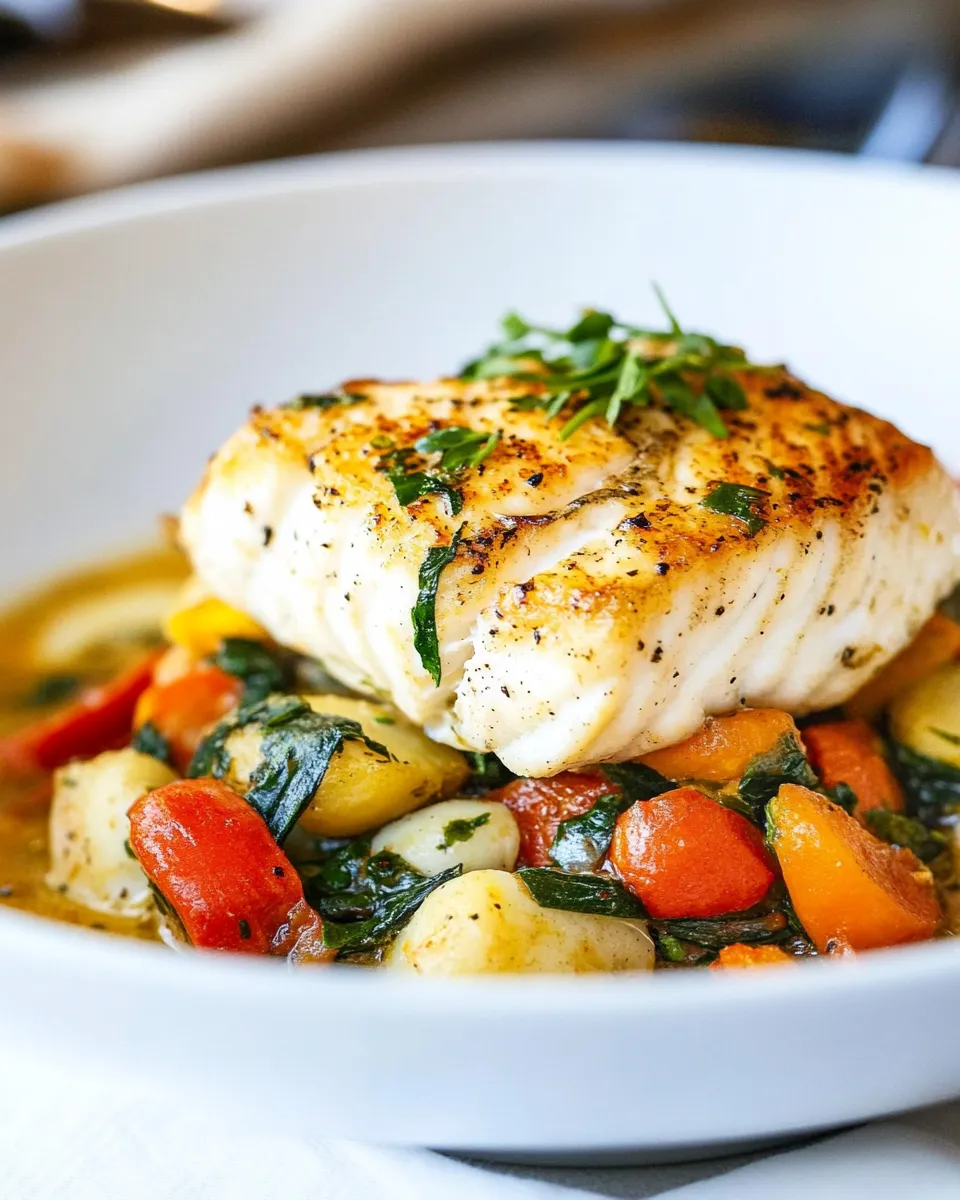
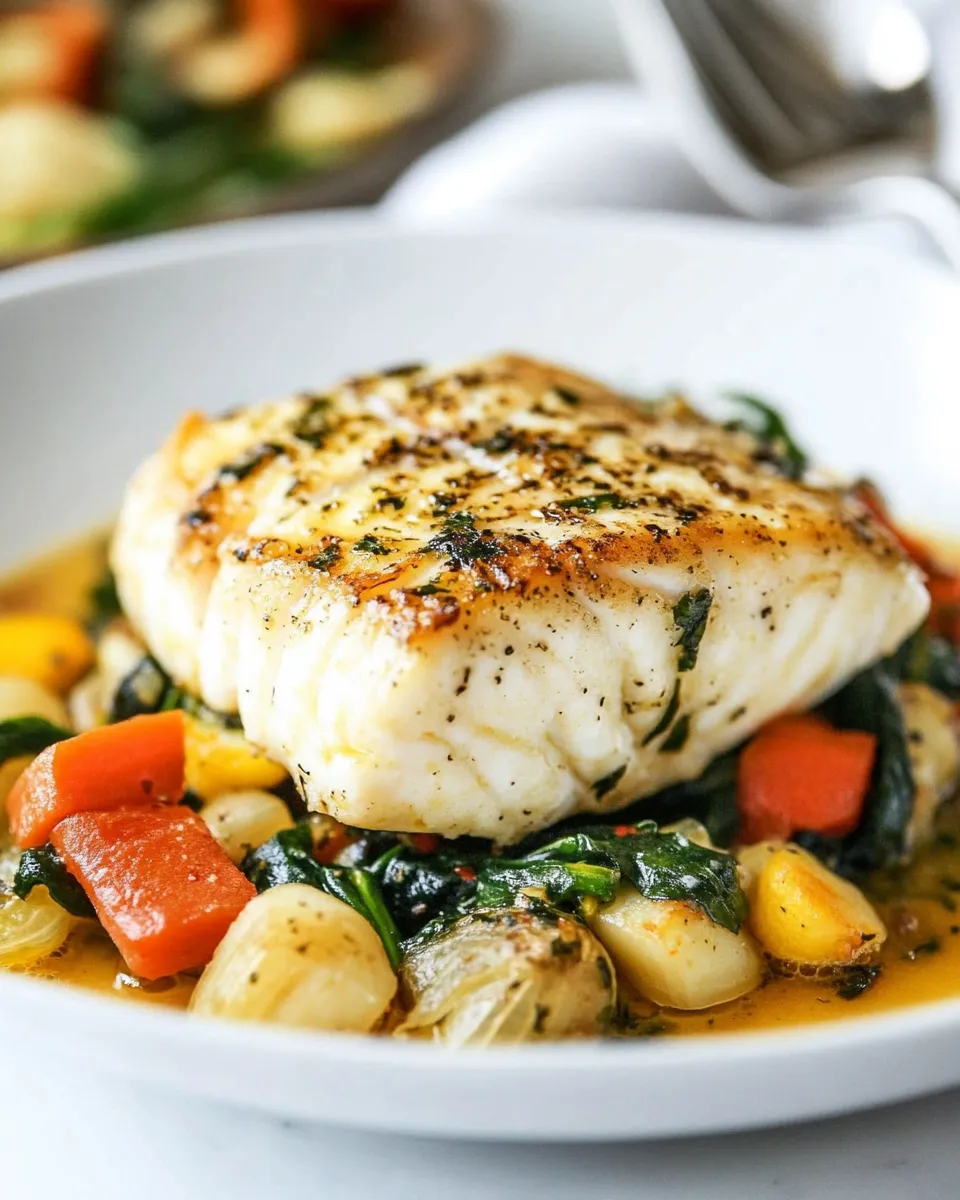
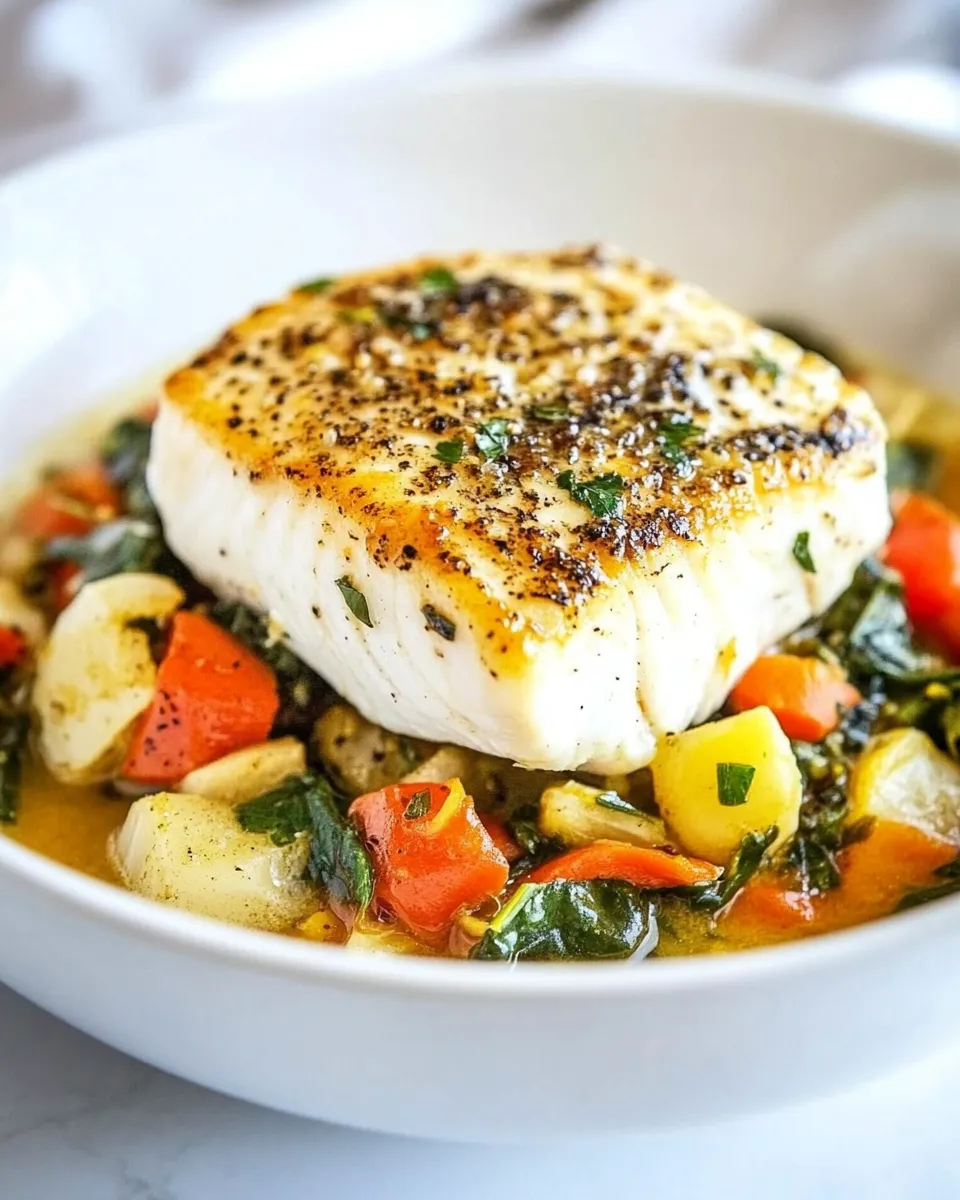
This is a straightforward, weeknight-friendly recipe that finishes beautifully for guests. The halibut gets a quick, high-heat sear to build color, then rests in a bright, savory vegetable-and-bean sauce that softens the fish just enough without overcooking. It comes together in a single skillet and lands somewhere between rustic and refined.
I keep the technique practical: pat the fish dry, season simply, sear, build the pan sauce, nestle the fillets back in, and finish covered for a few minutes. The sauce — onions, garlic, tomatoes, cannellini beans, spinach, olives and herbs — provides texture and flavor contrasts, and a squeeze of lemon at the end lifts everything.
Below you’ll find a clear ingredients list, the step-by-step directions verbatim, and plenty of tips for timing, common fixes, storage and low-carb swaps. Read through once, then cook confidently. Halibut is forgiving when you give it a little attention.
Ingredients
- 46 oz halibut fillets — the main protein; pat dry to promote a good sear.
- Salt and freshly ground black pepper — essential for seasoning; add in stages and taste the sauce before finishing.
- 2 tablespoon olive oil — for searing; use a neutral or good-quality olive oil that can handle medium-high heat.
- 2 tablespoon unsalted butter — adds browning and flavor; melts into the pan to help baste the fish.
- ½ cup red onion chopped — builds the aromatic base; chop evenly so it softens uniformly.
- 4 cloves garlic minced — adds quick, aromatic punch; add after the onion so it doesn’t burn.
- 1 teaspoon rosemary fresh, chopped (or ½ teaspoon dried) — woody herb note; chop finely if fresh.
- 1 teaspoon thyme fresh, chopped (or ½ teaspoon dried) — bright herb layer; complements the fish and tomatoes.
- ¾ cup cherry tomatoes halved — quick-simmering tomatoes that soften without collapsing.
- ⅔ cup chicken broth — deglazes the pan and builds the sauce body; low-sodium is fine.
- ½ cup cannellini beans drained and rinsed — adds creaminess and substance to the sauce.
- 5 oz spinach fresh, stemmed, and washed — wilted into the sauce for color and a tender bite.
- 2 tablespoon lemon juice from 2 lemons — bright finish; add at the end to preserve brightness.
- ½ cup green olives pitted, halved — briny counterpoint; halved for even distribution.
- Pinch red pepper flakes — optional heat; adjust to taste.
The Essentials
Skill level: approachable. Equipment needs are minimal: a large skillet with a lid, a spatula or tongs, and a thermometer if you like to check the fish temperature. Timing is mostly active searing and a short covered finish — plan on roughly 20–30 minutes from start to table for most home cooks, depending on stove and batch size.
Technique highlights: get the skillet hot, use oil and butter for flavor and browning, don’t move the fillets while searing, and nestle the fish back into the sauce to finish gently. The recipe balances texture (golden crust) and tenderness (brief steam through the covered finish).
Pan-Seared Halibut with Vegetables: From Prep to Plate
- Pat the 46 oz halibut fillets dry with paper towels and season both sides with Salt and freshly ground black pepper.
- Heat a large skillet with a lid over medium-high heat. Add 2 tablespoons olive oil and heat until shimmering. Add 2 tablespoons unsalted butter and swirl until melted.
- Add the halibut fillets, skin-side up or presentation-side down, and sear without moving until the bottom is golden brown, about 3 minutes. Do not overcrowd the pan; sear in batches if necessary. Transfer seared fillets to a plate.
- Reduce the heat to medium and add ½ cup chopped red onion to the skillet. Cook, stirring occasionally, until the onion is soft, about 4 minutes.
- Add 4 cloves minced garlic and cook, stirring, until fragrant, about 30 seconds.
- Stir in 1 teaspoon chopped rosemary and 1 teaspoon chopped thyme, then add ¾ cup halved cherry tomatoes. Cook, stirring occasionally, 1 to 2 minutes to soften the tomatoes.
- Pour in ⅔ cup chicken broth and add ½ cup drained and rinsed cannellini beans. Bring the mixture to a gentle simmer.
- Add the 5 oz spinach in batches if it won’t fit all at once, stirring each addition until completely wilted before adding more.
- Stir in 2 tablespoons lemon juice, ½ cup pitted halved green olives, and the pinch of red pepper flakes. Taste and adjust seasoning with Salt and freshly ground black pepper as needed.
- Turn the heat to medium-low. Nestle the seared halibut fillets into the vegetables and sauce, cover the skillet, and cook about 3 minutes (or until the fillets reach an internal temperature of 130–135°F and are cooked through).
- Spoon the vegetable-and-bean sauce into shallow bowls, place a halibut fillet in each bowl, spoon more sauce over the top, and serve immediately.
Reasons to Love Pan-Seared Halibut with Vegetables
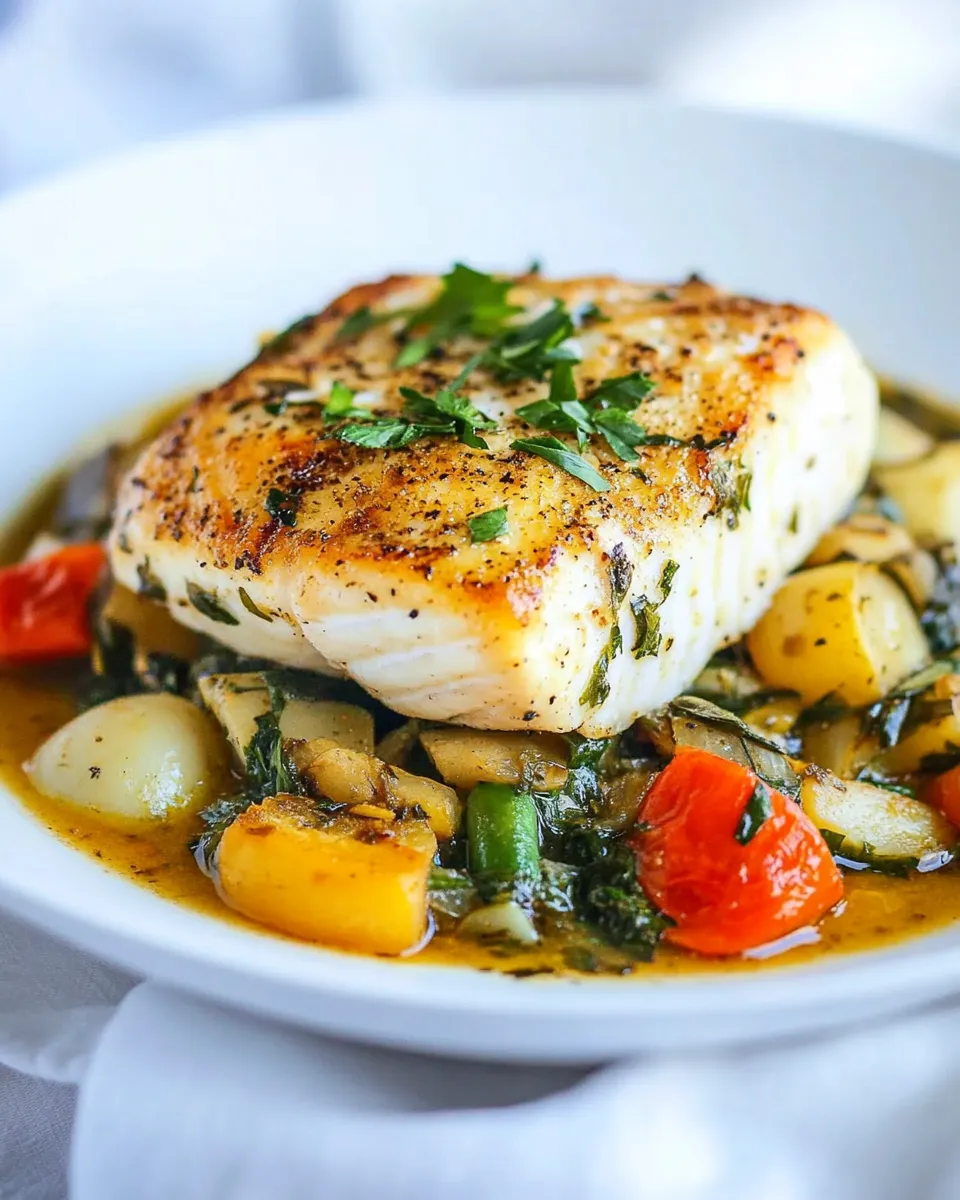
This dish balances speed and sophistication. You get the immediate gratification of a crisp, golden exterior and the comfort of a warm, herb-infused sauce with beans and greens. It reads as special but actually comes together quickly.
Flavorwise, it hits multiple registers: the fatty finish of butter, the tang of lemon, the brine of olives, the sweetness of tomatoes, and the earthiness of herbs. Texture is just as important — a slight crust on the halibut and tender vegetables beneath.
Low-Carb/Keto Alternatives
- Omit the cannellini beans entirely to cut carbs. Add extra olives or more spinach for volume and texture.
- Replace cherry tomatoes with a smaller amount of chopped roasted red pepper for lower sugar but similar sweetness.
- Serve over cauliflower rice or a bed of sautéed zucchini ribbons instead of bread or grains to keep the meal low-carb.
Cook’s Kit
- Large skillet with lid — preferably heavy-bottomed to hold heat.
- Tongs or a wide spatula — for safe handling of delicate fish.
- Paper towels — for drying fillets.
- Measuring spoons/cups and a sharp knife — for prep.
- Instant-read thermometer (optional) — handy to confirm 130–135°F for doneness.
Missteps & Fixes
- Problem: Fish sticks to the pan. Fix: Make sure the skillet is hot and the fillets are well dried and seasoned. Give the fillet time to form a crust before trying to turn or move it.
- Problem: Onions or garlic burned. Fix: Reduce heat slightly and stir more frequently; add garlic only after onions have softened.
- Problem: Sauce too thin. Fix: Reduce the sauce a minute or two longer before adding the spinach, or remove the fillets while you reduce and return them when the sauce is closer to the desired consistency.
- Problem: Fish overcooked. Fix: Remove from heat earlier and allow residual heat to finish cooking under the covered pan. Use a thermometer and aim for 130–135°F for tender, slightly translucent center.
Nutrition-Minded Tweaks
To lower sodium: use low-sodium chicken broth and rinse the olives thoroughly, or reduce olives to ¼ cup. To lower fat: use 1 tablespoon olive oil and 1 tablespoon butter, or skip the butter and cook in oil only, keeping an eye on the sear.
To increase fiber and plant protein: leave the cannellini beans in — they add creaminess and substance. Swap part of the halibut portion for additional vegetables if you prefer a lighter protein load.
Insider Tips
- Dry the fish well. Moisture is the enemy of a good sear.
- Sear presentation-side down first (the plated side) if you prefer a pristine look when serving; this gives a golden face to show off.
- Don’t overcrowd the pan. Sear in batches to keep the skillet hot and avoid steaming the fillets.
- Use the pan fond. After searing, the browned bits on the skillet carry real flavor; deglazing with chicken broth pulls that into the sauce.
- Finish in the covered skillet for a short time. It gently cooks the fish through while keeping it moist.
Cooling, Storing & Rewarming
Cool leftovers quickly. Transfer fish and sauce to an airtight container and refrigerate within two hours. Use within 2–3 days for best quality.
To reheat: gently warm in a skillet over low heat with a splash of chicken broth or water to loosen the sauce and keep the fish moist. Heat just until warmed through. Avoid microwaving at high power; it can dry the halibut and make the spinach rubbery.
Popular Questions
- Q: How do I know when halibut is done? A: The internal temp should reach 130–135°F for a tender center. If you don’t use a thermometer, look for opaque flesh that flakes with gentle pressure but still looks moist.
- Q: Can I use frozen halibut? A: Yes — fully thaw and pat dry before seasoning and searing. Soggy fillets won’t sear properly.
- Q: Can I swap the beans? A: You can replace cannellini beans with white beans of similar texture or omit them for a lower-carb version. Keep in mind they add body to the sauce.
- Q: Is the recipe freezer-friendly? A: Cooked fish is best eaten fresh; the sauce freezes OK without fish. Freeze the sauce separately and add fresh-cooked fish when serving.
Serve & Enjoy
Spoon the vegetable-and-bean sauce into shallow bowls, place a halibut fillet in each bowl, spoon more sauce over the top, and serve immediately. Serve with crusty bread or cauliflower rice, depending on preference. Garnish with a little extra lemon if you like a brighter finish.
Leftovers make a great lunch when reheated gently. This is one of those dishes that looks composed but is forgiving — a small effort you’ll be glad you made for weeknights or a simple dinner with friends.
Pan-Seared Halibut with Vegetables
Ingredients
Equipment
Method
- Pat the 46 oz halibut fillets dry with paper towels and season both sides with Salt and freshly ground black pepper.
- Heat a large skillet with a lid over medium-high heat. Add 2 tablespoons olive oil and heat until shimmering. Add 2 tablespoons unsalted butter and swirl until melted.
- Add the halibut fillets, skin-side up or presentation-side down, and sear without moving until the bottom is golden brown, about 3 minutes. Do not overcrowd the pan; sear in batches if necessary. Transfer seared fillets to a plate.
- Reduce the heat to medium and add ½ cup chopped red onion to the skillet. Cook, stirring occasionally, until the onion is soft, about 4 minutes.
- Add 4 cloves minced garlic and cook, stirring, until fragrant, about 30 seconds.
- Stir in 1 teaspoon chopped rosemary and 1 teaspoon chopped thyme, then add ¾ cup halved cherry tomatoes. Cook, stirring occasionally, 1 to 2 minutes to soften the tomatoes.
- Pour in ⅔ cup chicken broth and add ½ cup drained and rinsed cannellini beans. Bring the mixture to a gentle simmer.
- Add the 5 oz spinach in batches if it won’t fit all at once, stirring each addition until completely wilted before adding more.
- Stir in 2 tablespoons lemon juice, ½ cup pitted halved green olives, and the pinch of red pepper flakes. Taste and adjust seasoning with Salt and freshly ground black pepper as needed.
- Turn the heat to medium-low. Nestle the seared halibut fillets into the vegetables and sauce, cover the skillet, and cook about 3 minutes (or until the fillets reach an internal temperature of 130–135°F and are cooked through).
- Spoon the vegetable-and-bean sauce into shallow bowls, place a halibut fillet in each bowl, spoon more sauce over the top, and serve immediately.
Notes
See the video near the top of the blog post for visual guidance. If you liked the video, please
subscribe to our YouTube channel
.
Substitutes for halibut are cod, haddock, flounder, grouper, and dogfish.
We highly recommend using a nonstick skillet for this dish. Flakey fish tends to stick to skillets, even with oil and butter.
If desired, go with a total of 2 to 3 tbsps of olive oil and omit the butter.
Leftovers will keep in the fridge for up to 2 days, however, this dish is definitely served best right off the stove.