Pink Grapefruit Marmalade
I love marmalade for its bright, honest flavor and the way it makes an ordinary slice of toast feel important. This pink grapefruit version is sharp, floral, and just a touch bitter—the kind of spread that wakes up your morning or lifts an afternoon cheese plate. It uses whole fruit and a minimal ingredient list, so you taste grapefruit, not sugar and frills.
There are a couple of straightforward steps that make the difference: a short blanching of the thin slices, reserving chopped pulp and juice, then a concentrated simmer to glaze everything into marmalade. Follow the sequence, be careful with the knife, and rely on the chilled-plate test or a candy thermometer for the set.
This post walks you through exactly what I do, what gear helps, common problems and fixes, and how to store the finished jars. No complicated jargon. Just clear steps, honest tips, and a bright jar of marmalade at the end.
The Essentials
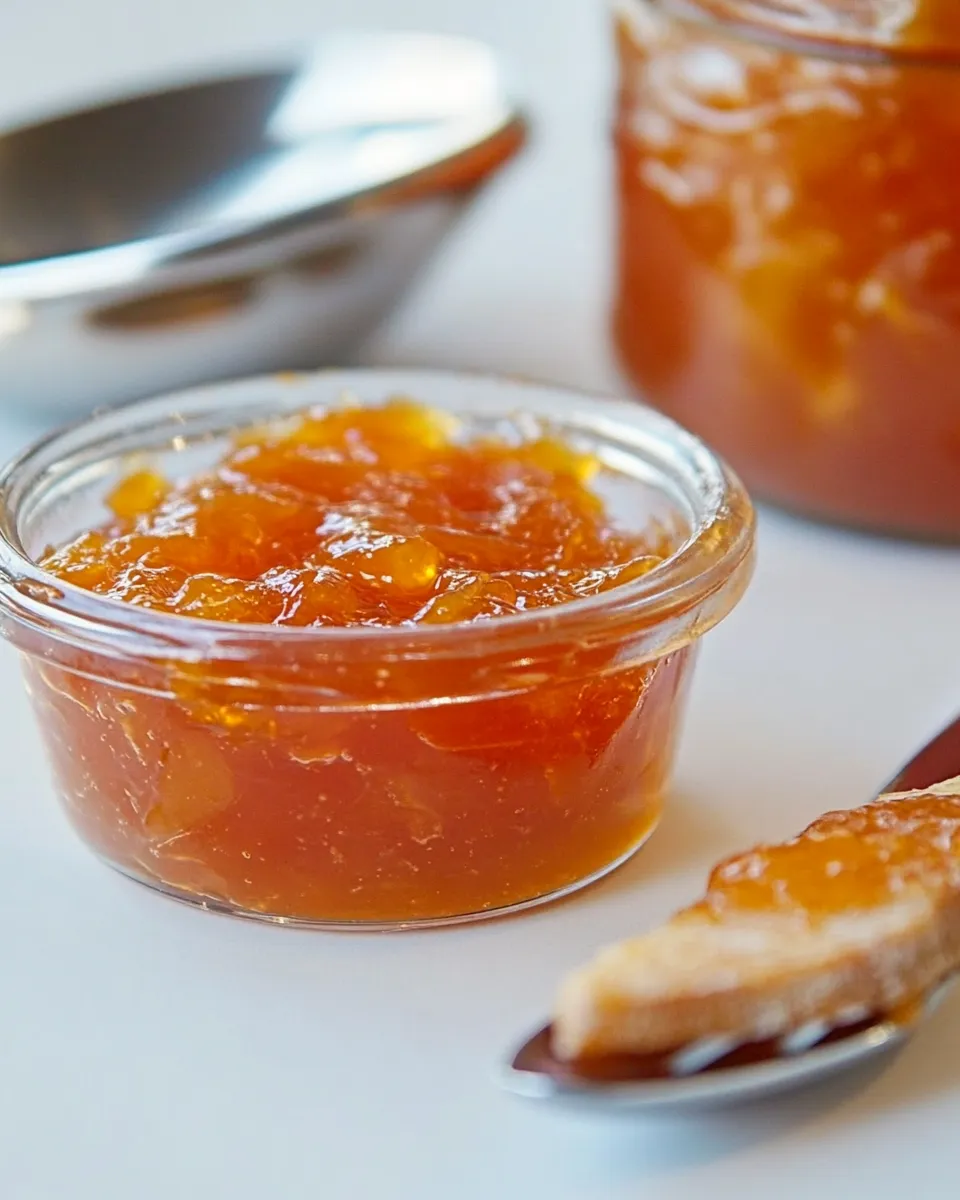
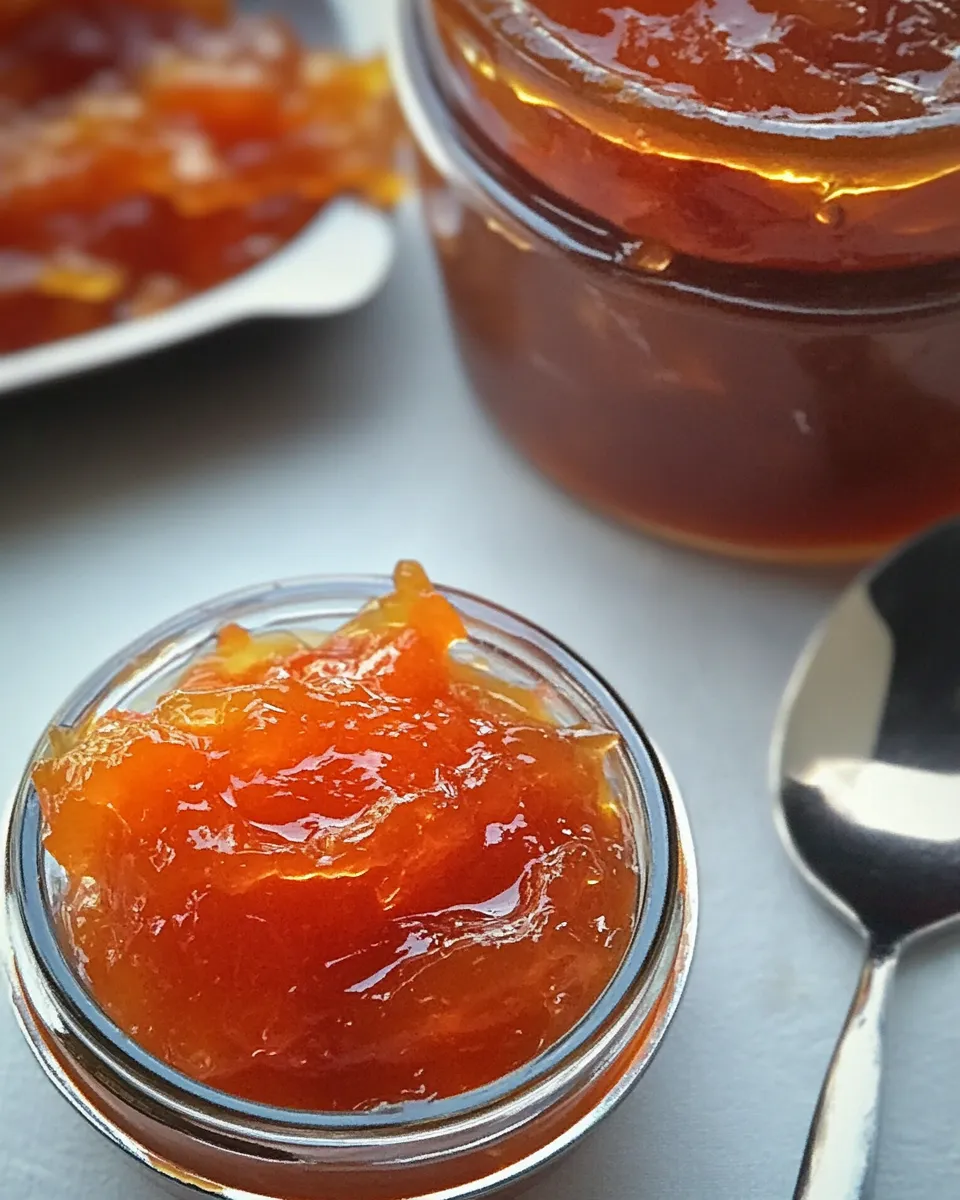
Pink Grapefruit Marmalade is straightforward: citrus, water, sugar, a squeeze of lemon. The texture should be syrupy with suspended thin slices and small chunks of pulp that shine through the glaze. You’ll want a clean, heavy-bottomed pot so the sugar doesn’t scorch and enough patience to cook it slowly enough to concentrate flavors without burning.
Temperature matters. Cook it until the mixture reaches about 216–218°F (102–103°C) or passes the chilled-plate wrinkle test. The recipe calls for several water steps—one to soften the slices, another to build the marmalade—so pay attention to which water you’re using where.
Ingredients
- 4mediumpink grapefruits,(about 2 1/2 pounds, 1kg), preferably unsprayed or organic — provides the flesh, peel, and characteristic pink color; unsprayed/organic eases the use of peel if desired.
- 5cups (1,4l)water,plus more for cooking the grapefruit slices in step 3 — main cooking liquid; additional water is used specifically to blanch the slices first.
- 3 1/2cups (700g)sugar — sweetens and helps the marmalade set into a syrupy glaze.
- the juice of 1lemon — brightens the flavor and provides acid to balance sweetness and aid setting.
Build Pink Grapefruit Marmalade Step by Step
- Wash the grapefruits. Cut each grapefruit in half crosswise so you have eight halves.
- Choose four of the halves and use a small spoon to scoop the pulp into a bowl. Remove any seeds, coarsely dice the pulp, and scrape any juice from the cutting board into the bowl. Set the chopped pulp and juices aside.
- Take the remaining four grapefruit halves, remove any seeds, and slice each half into thin slices (as thin as you can safely manage). Use a sharp knife and take care—the fruit can be slippery.
- Put the grapefruit slices into a large nonreactive pot or Dutch oven. Add enough additional water to the pot to fully cover the slices (this is extra water for cooking the slices — do not use the 5 cups called for later). Bring the water to a boil over high heat.
- Reduce the heat to a simmer and cook the slices for 5 minutes. Turn off the heat and let the slices sit in the hot water until they are soft and translucent. When they are ready, pour the slices into a colander and discard the cooking water. Return the drained, cooked slices to the pot.
- To the pot with the cooked slices, add the reserved chopped grapefruit pulp and any juices from step 2, 5 cups (1.4 L) water, 3 1/2 cups (700 g) sugar, and the juice of 1 lemon. Stir to combine and dissolve the sugar.
- Cook the mixture over medium-high heat, stirring occasionally, until it reduces and thickens and the marmalade becomes syrupy. If using a candy thermometer, it should reach about 216–218°F (102–103°C). If you don’t have a thermometer, test doneness by placing a teaspoon of hot marmalade on a chilled plate: if it gels and wrinkles when you push it with your finger, it’s done.
- Ladle the hot marmalade into clean jars, cover, and let cool to room temperature. Store covered; refrigerate after opening.
What Sets This Recipe Apart
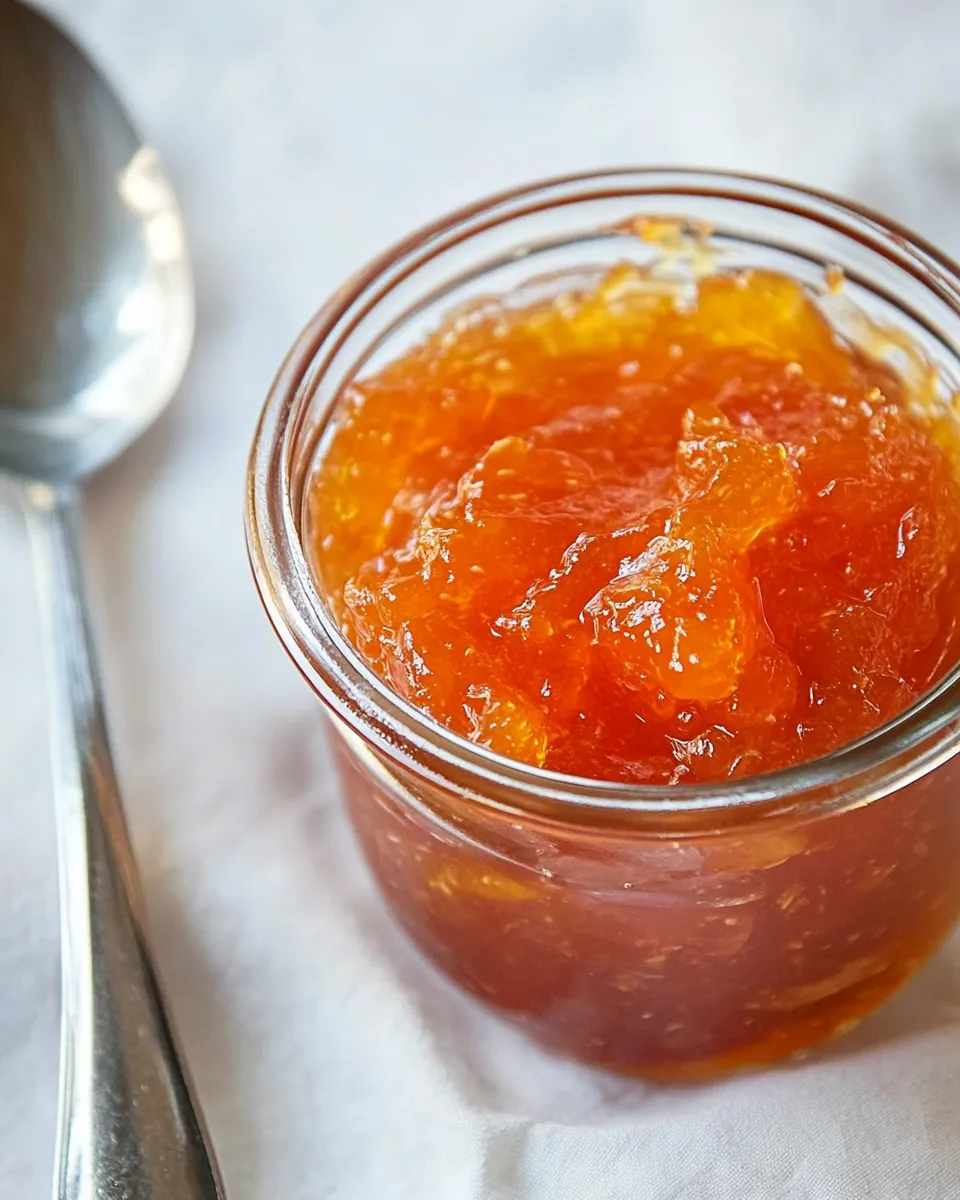
This is an unfussy, single-batch marmalade that keeps the pink grapefruit front and center. There’s no additional pectin listed, so the set relies on reduction and the balance of sugar and acid. The short blanch of the thin slices does three things: it softens the membrane so the texture is pleasant, it tempers raw bitterness, and it concentrates the translucent pink color that makes the jar so appealing.
It’s a method that favors texture as much as flavor—expect visible slices and bits of pulp floating in a glossy syrup rather than a fully smooth conserves. That contrast is what makes it versatile: spoon it on toast, pair it with goat cheese, or fold it into yogurt.
Vegan & Vegetarian Swaps
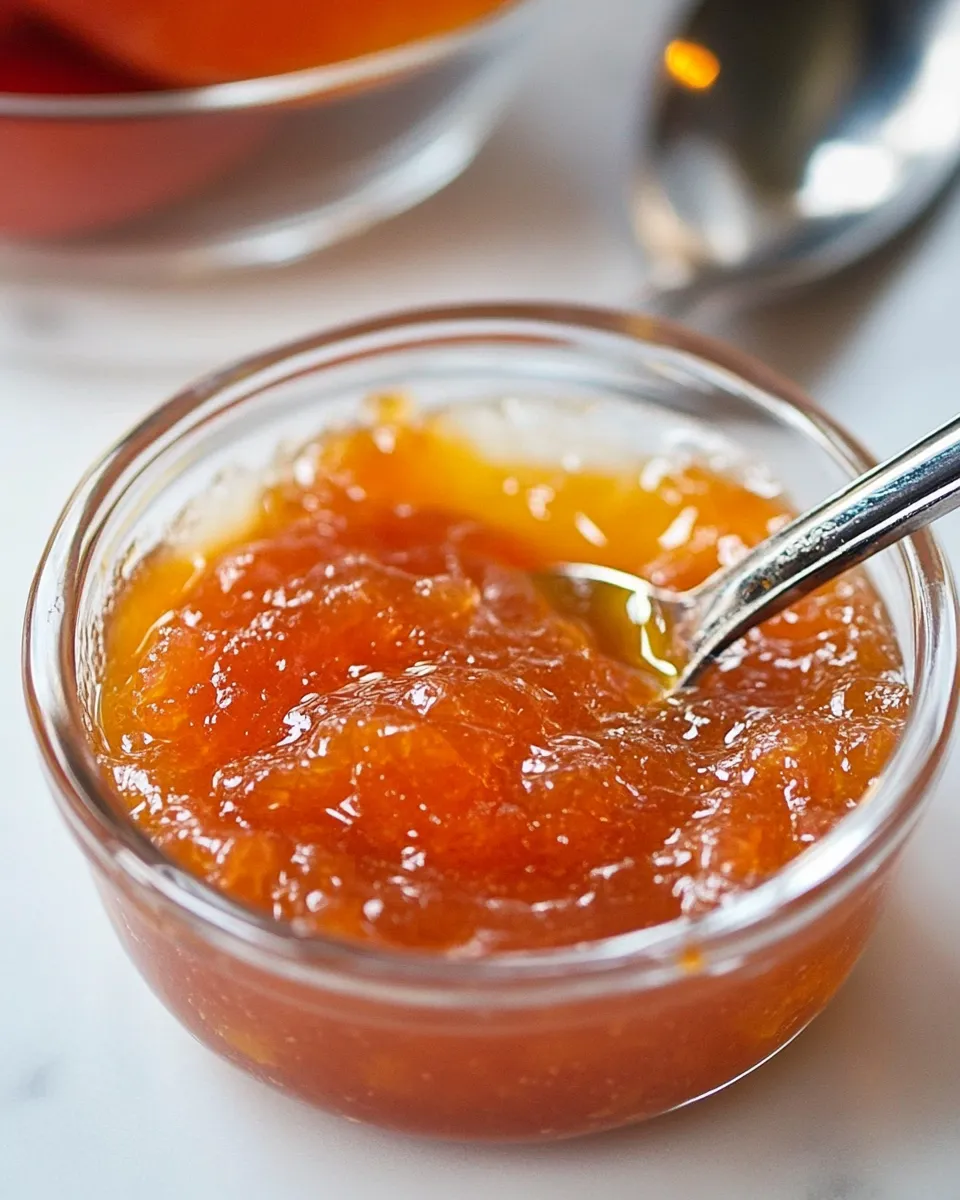
No swaps needed. This marmalade is naturally vegan and vegetarian: fruit, water, sugar, and lemon. If you want a different sweetener, keep in mind adjusting the cooking time and the set—this recipe is calibrated for sugar as listed.
What You’ll Need (Gear)
Must-haves
- Large nonreactive pot or Dutch oven — for even heating and to avoid metallic flavors.
- Sharp knife and sturdy cutting board — thin, safe slices depend on them.
- Colander — to drain the par-cooked slices.
- Spatula or wooden spoon — for stirring sugar into the hot mixture.
- Clean jars with lids — for storing the finished marmalade.
Helpful extras
- Candy thermometer — speeds up doneness checks and removes guesswork.
- Chilled plate — used for the wrinkle test if you don’t have a thermometer.
- Small spoon and bowl — for scooping and collecting pulp and juice neatly.
Watch Outs & How to Fix
- Burning or sticking — use a heavy-bottomed pot and moderate heat. If the bottom begins to darken, reduce heat and stir more frequently. Do not scrape burnt bits into the final jar; that flavor will carry through.
- Too bitter — remove seeds promptly when scooping and slicing; they concentrate bitter compounds. If bitterness is stronger than you like, a little longer cooking can mellow it, but avoid over-reduction which leads to sugariness.
- Runny marmalade — keep cooking until you hit 216–218°F (102–103°C) or pass the chilled-plate wrinkle test. If you think you undercooked, return the batch to the pot and simmer to reduce further.
- Over-thick or crystallized — if it seems overly firm after cooling, you can gently warm a spoonful with a drop of hot water to loosen it before use. Avoid overcooking the whole batch next time; err toward slightly under rather than over until you learn your stove’s behavior.
- Safety with jars — the recipe’s finish step says to ladle into clean jars and let cool. If you want shelf-stable jars, follow a tested canning/water-bath canning method separately; this recipe text does not provide canning instructions and recommends refrigeration after opening.
Seasonal Ingredient Swaps
If grapefruit aren’t in season or you want a different profile, swap in other citrus with similar texture and acidity. Pink or ruby red grapefruits give the signature color. For a sweeter, less bitter marmalade, try blood oranges or navel oranges. Mixing citrus can be interesting—orange plus grapefruit gives a balanced sweetness with tang. Adjust sugar slightly based on fruit sweetness and your preference, and remember this recipe’s cooking method and water ratios when adapting.
Author’s Commentary
I make this marmalade in small batches because the intense citrus aroma fills the kitchen and disappears quickly into jars. The thin slices and chopped pulp give it a lively texture—each spoonful tells you it’s grapefruit. I appreciate recipes that are transparent about technique, so I’ve kept the process clear: blanch, combine, reduce, test, and jar.
One habit I recommend: label the jars with the date right away. Even without canning instructions, I find labeled jars help me rotate through preserves and avoid mystery-opened jars lingering in the back of the fridge.
Keep-It-Fresh Plan
Follow the recipe’s final step exactly: ladle the hot marmalade into clean jars, cover, and let cool to room temperature. Store covered; refrigerate after opening. The method doesn’t include a water-bath canning step, so treat jars as refrigerated preserves once opened. Keep them in a cool pantry spot before opening, and refrigerate after you first unseal a jar.
Your Top Questions
- Do I need to peel the grapefruit? No—this recipe uses the thin slices and pulp, and the blanching softens membranes. If you prefer less peel texture, you can remove the pithy white parts before slicing, but that’s a personal choice.
- Can I cut down the sugar? Sugar affects both taste and setting. Reducing sugar will change the texture and may make the marmalade looser; you can experiment, but expect to cook longer to concentrate and possibly use a gelling agent if you go low-sugar.
- How do I know it’s done? Either use a candy thermometer and reach 216–218°F (102–103°C) or test with a chilled plate: a teaspoon of hot marmalade should gel and wrinkle when pushed.
- What about pectin? This recipe does not call for added pectin. The set comes from reduction plus sugar and acid balance. If you’re in a hurry or prefer a firmer set, commercial pectin could be used—but follow the manufacturer’s directions for amounts and timing.
- Is this shelf-stable? The recipe instructs to ladle into clean jars and let cool, then store covered and refrigerate after opening. It does not provide a tested canning process for shelf stability. If you want shelf-stable jars, use an established canning procedure (water-bath canning) following trusted canning guidelines.
Final Bite
Pink Grapefruit Marmalade is direct, bright, and worth the few careful steps. It brings real citrus character to morning toast and makes an understated but special gift. Keep your knife sharp, watch the heat, and trust the plate test or thermometer. In return you’ll have jars of cheerful, tangy marmalade that make a small piece of each grapefruit last beyond a single season.
Pink Grapefruit Marmalade
Ingredients
Equipment
Method
- Wash the grapefruits. Cut each grapefruit in half crosswise so you have eight halves.
- Choose four of the halves and use a small spoon to scoop the pulp into a bowl. Remove any seeds, coarsely dice the pulp, and scrape any juice from the cutting board into the bowl. Set the chopped pulp and juices aside.
- Take the remaining four grapefruit halves, remove any seeds, and slice each half into thin slices (as thin as you can safely manage). Use a sharp knife and take care—the fruit can be slippery.
- Put the grapefruit slices into a large nonreactive pot or Dutch oven. Add enough additional water to the pot to fully cover the slices (this is extra water for cooking the slices — do not use the 5 cups called for later). Bring the water to a boil over high heat.
- Reduce the heat to a simmer and cook the slices for 5 minutes. Turn off the heat and let the slices sit in the hot water until they are soft and translucent. When they are ready, pour the slices into a colander and discard the cooking water. Return the drained, cooked slices to the pot.
- To the pot with the cooked slices, add the reserved chopped grapefruit pulp and any juices from step 2, 5 cups (1.4 L) water, 3 1/2 cups (700 g) sugar, and the juice of 1 lemon. Stir to combine and dissolve the sugar.
- Cook the mixture over medium-high heat, stirring occasionally, until it reduces and thickens and the marmalade becomes syrupy. If using a candy thermometer, it should reach about 216–218°F (102–103°C). If you don’t have a thermometer, test doneness by placing a teaspoon of hot marmalade on a chilled plate: if it gels and wrinkles when you push it with your finger, it’s done.
- Ladle the hot marmalade into clean jars, cover, and let cool to room temperature. Store covered; refrigerate after opening.
Notes
*You can use the grapefruit rinds to make
Candied Grapefruit Peel
.