Quick Chickpea and Spinach Curry (Chana Masala)
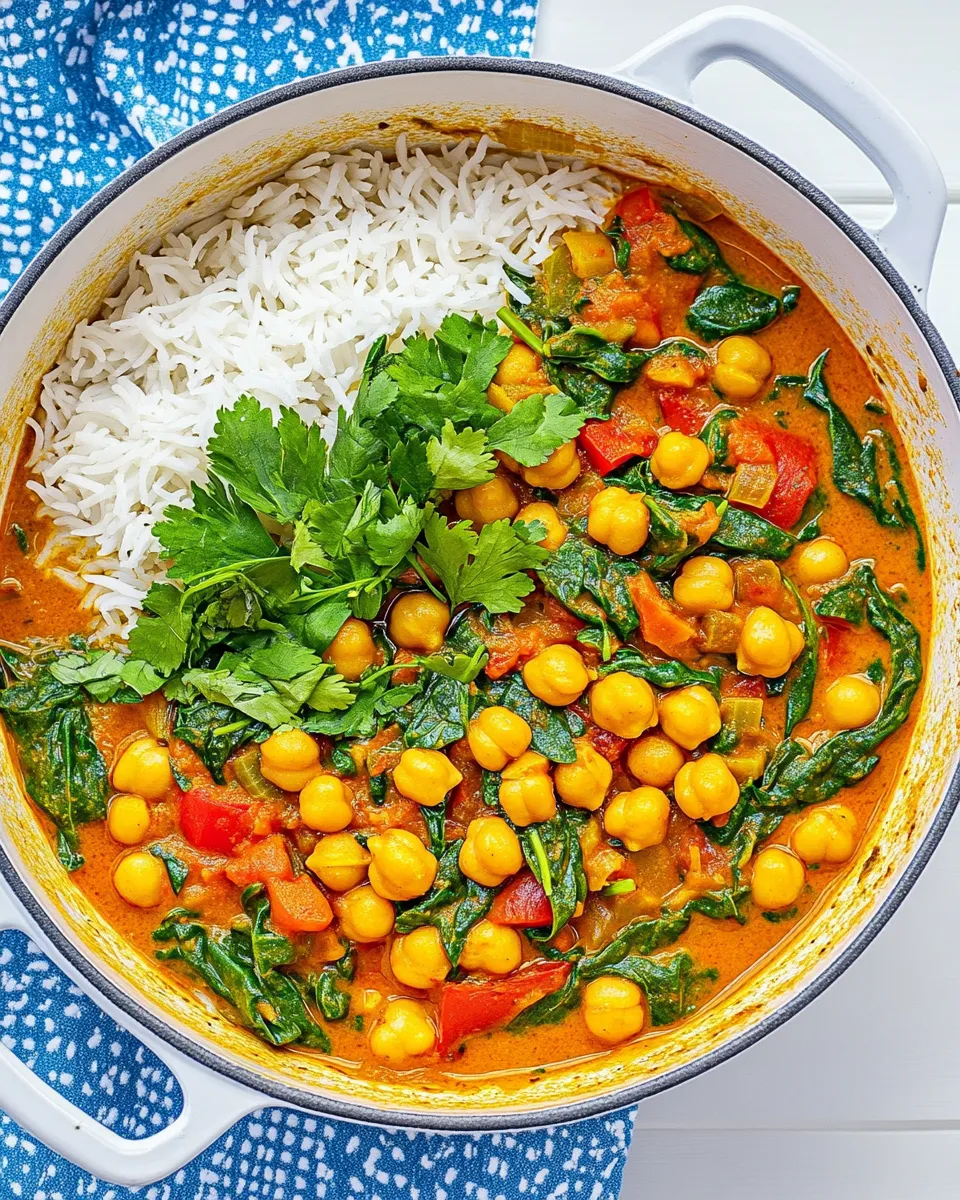
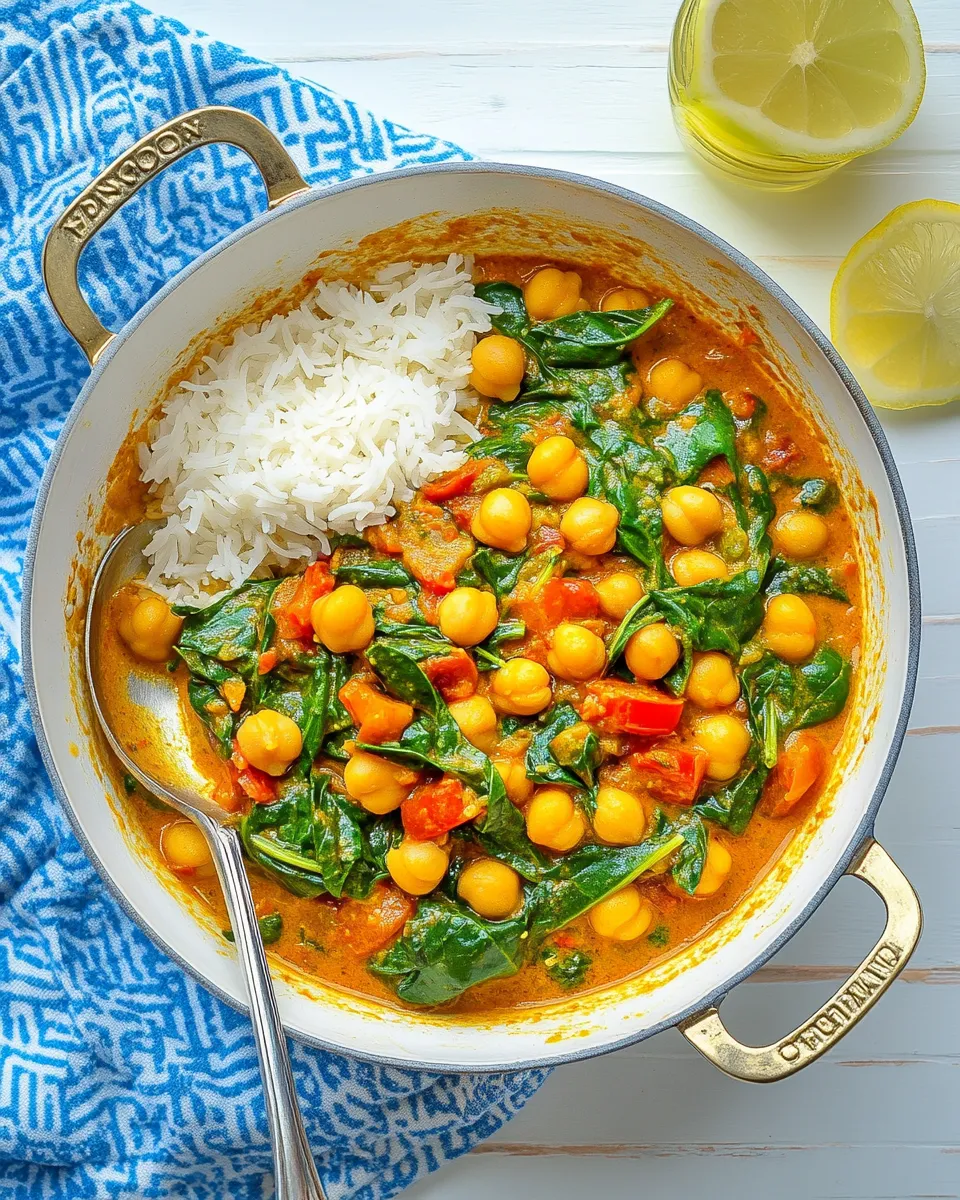
This is the weeknight curry I turn to when I want something hearty, green, and ready in under 30 minutes. It’s forgiving, bright with lemon, and layered with warm spices that don’t demand a pantry full of specialty jars. I love how the chickpeas hold their shape while the spinach softens into the sauce—comfort without heaviness.
There’s no long soak or slow simmer required. A quick blitz of onions, garlic, and ginger, a short spell of blooming spices, and a handful of pantry staples pull together a satisfying meal. If you’re new to Indian-style curries, this one teaches a few simple rules—bloom spices, balance-acid, finish with fresh herbs—that make other dishes easier to cook later.
Below I walk you through the exact ingredient list and the straightforward method I use every time. I include small troubleshooting tips, storage advice, and simple seasonal tweaks so you can adapt the dish to what’s already in your kitchen.
The Ingredient Lineup
Ingredients
- 3 onions, cut into quarters — form the aromatic base; pulse in a processor for a fast, silky start.
- 3 garlic cloves — adds savory depth; process with the onions so it cooks quickly and evenly.
- 2 cm fresh ginger, peeled, about 1 teaspoon grated — bright, warming note; grating or pulsing releases more flavor.
- 2 tablespoon vegetable oil or ghee — the cooking fat; ghee adds nuttiness, vegetable oil keeps it neutral.
- ½ teaspoon ground cumin — earthy backbone for the spice mix; toast briefly in the pan to bloom.
- ½ teaspoon ground coriander — citrusy, rounds out cumin and turmeric.
- 1 teaspoon turmeric — color and mild earthiness.
- 1 teaspoon garam masala — warm, fragrant finish to the spice blend; add early to soften or at the end for aroma.
- 1 teaspoon ground cayenne pepper, optional — brings heat; add only if you like the curry spicy.
- fine sea salt, to taste — essential for balance; add gradually and taste before serving.
- 1 teaspoon amchoor powder, optional — dry mango powder for tang; use if you want a fruity acidity instead of extra lemon.
- 3 whole canned tomatoes, or 300 gr canned chopped tomatoes — the saucy body; whole tomatoes can be crushed for texture, chopped tomatoes are ready to go.
- 800 g jarred or canned chickpeas, drained, 2 cans — protein and texture; drained and ready so the curry stays quick.
- 150 g spinach leaves — wilts into the sauce and stretches the meal; baby leaves work best for speed.
- 1 tablespoon lemon juice — brightens and lifts the finished curry.
- 300 ml hot water, or vegetable stock — loosens the sauce and helps the flavors mingle; hot liquid keeps the pan from cooling down.
- 380 g steamed jasmin or basmati rice — the classic accompaniment; have it warmed and waiting.
- 2 tablespoon fresh coriander leaves, finely chopped — fresh herb finish; adds color and an herbal lift.
- 1 lemon, cut into wedges — extra acid for serving; let people add more if desired.
The Method for Chickpea and Spinach Curry (Chana Masala)
- Drain and rinse the 800 g jarred or canned chickpeas. If using whole canned tomatoes, drain liquid if desired and crush the 3 whole canned tomatoes by hand or in a bowl; if using 300 g canned chopped tomatoes, leave them as-is. Put the 3 onions (cut into quarters), 3 garlic cloves and 2 cm fresh ginger (peeled) into a food processor and pulse until creamy but still slightly chunky. If you don’t have a food processor, finely mince the onions and garlic and grate the ginger. Have the 380 g steamed jasmine or basmati rice warmed and ready to serve.
- Heat 2 tablespoons vegetable oil or ghee in a large sauté pan over medium heat until shimmering.
- Add the processed onion–garlic–ginger mixture to the pan and sauté, stirring frequently, for 4–5 minutes until the onion softens and becomes translucent.
- Stir in ½ teaspoon ground cumin, ½ teaspoon ground coriander, 1 teaspoon turmeric, 1 teaspoon garam masala, and a generous pinch of fine sea salt. If using, add 1 teaspoon ground cayenne pepper now. Cook and stir for 1–2 minutes to bloom the spices, adding a tablespoon of water if the mixture starts to stick.
- Add the tomatoes to the pan. If you used whole tomatoes, use the back of a spoon to break them up in the pan; if you used chopped tomatoes, just stir them in. Cook for 2–3 minutes, stirring, until the tomatoes start to soften and form a chunky sauce.
- Add the drained chickpeas, 150 g spinach leaves, and 300 ml hot water or vegetable stock. Stir to combine.
- Bring the mixture to a gentle simmer, then reduce the heat to medium-low and cook, uncovered, for 3–5 minutes, stirring occasionally, until the spinach has wilted and the chickpeas are heated through. Taste and add more fine sea salt if needed.
- Remove the pan from the heat and stir in 1 tablespoon lemon juice. If using, sprinkle in 1 teaspoon amchoor powder and stir to combine. Adjust cayenne or salt to taste.
- Serve the curry over or alongside the 380 g steamed rice. Sprinkle with 2 tablespoons finely chopped fresh coriander leaves and serve with lemon wedges.
What Makes This Recipe Special
This version is built around speed and balance. Using canned chickpeas and canned tomatoes keeps the clock down to minutes, but the technique—blooming whole spices briefly and softening onions until translucent—creates the depth you’d expect from a longer-cooked curry. The lemon and optional amchoor powder give a bright, layered acidity that elevates the dish without complexity.
The spinach is a simple change that lightens the curry and adds color and vitamins. It wilts quickly, so it doesn’t weigh the dish down. Finally, finishing with fresh coriander and lemon wedges makes every bite lively, which is exactly what a quick curry needs to feel finished rather than thrown together.
If You’re Out Of…
- Vegetable oil or ghee — use whichever one you have from the ingredient list; the recipe allows either without changing quantities.
- Ground cayenne pepper — omit it; the curry will still be flavorful from the garam masala and black pepper (if you use it at the table).
- Amchoor powder — leave it out and add a touch more lemon juice at the end for acidity.
- Spinach leaves — you can increase the chickpeas slightly from the cans you have, or stir in extra coriander for a green finish, but keep quantities as written for timing.
- Steamed rice — serve the curry alongside bread or on any rice you have already cooked and warmed (the method assumes 380 g of warmed steamed rice ready to serve).
Toolbox for This Recipe
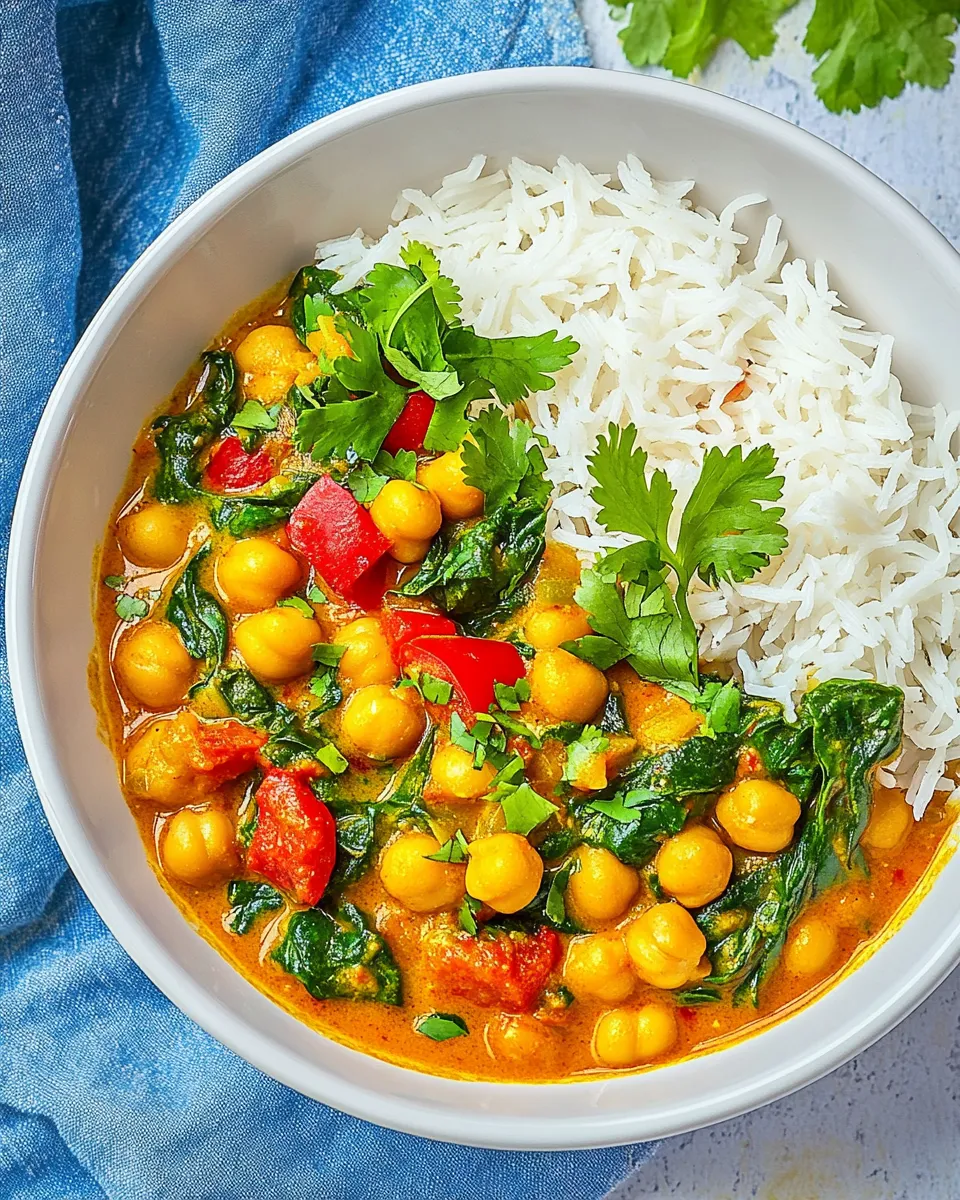
Keep these pieces of equipment handy for a smooth, fast cook:
- Large sauté pan with a lid or a wide, heavy skillet — gives space to stir and simmer without crowding.
- Food processor or sharp knife — the processor speeds up the aromatics; finely minced onion, garlic, and grated ginger work too.
- Measuring spoons and a tablespoon — the recipe uses precise teaspoon and tablespoon measures for spice balance.
- Wooden spoon or spatula — for stirring and breaking up whole canned tomatoes if needed.
- Serving bowls and rice cooker or pot for the 380 g steamed rice — have rice warm and ready before you finish the curry.
Problems & Prevention
Sticky pan: if the onion mix begins to stick when you add the spices, add a tablespoon of water as instructed and stir. That liquid helps the spices bloom without burning.
Flat flavor: always taste before you finish. The recipe asks you to add lemon juice and optionally amchoor powder at the end—that’s where the curry gets its lift. If it feels dull, a pinch more salt and the lemon will usually fix it.
Soggy spinach: add the 150 g spinach towards the end (as instructed) and only cook until wilted—3–5 minutes. Overcooking makes it lose color and texture.
Season-by-Season Upgrades
Spring: increase the coriander leaves to a generous handful at the end for a herbier finish. The fresh burst matches the lighter season.
Summer: if you have ripe fresh tomatoes, you can reduce the canned tomatoes and add chopped fresh tomatoes in the same quantity for a brighter sauce—just be mindful of moisture and simmer briefly.
Autumn & Winter: lean into warming spices—add the full 1 teaspoon garam masala early and finish with an extra squeeze of lemon to balance richness. The heartiness of chickpeas and the warmth of spices feel comforting on cooler nights.
Testing Timeline
Prep (5–8 minutes): drain chickpeas, pulse onions/garlic/ginger, warm the rice.
Sauté and spice bloom (6–8 minutes): heat fat, soften onion mix (4–5 minutes), then bloom spices (1–2 minutes).
Tomato and simmer (5–8 minutes): add tomatoes and cook to a chunky sauce (2–3 minutes), add chickpeas, spinach and liquid, then simmer 3–5 minutes until spinach wilts.
Total active time: roughly 20–25 minutes from start to plate when you have the canned items and warmed rice ready.
Storage & Reheat Guide
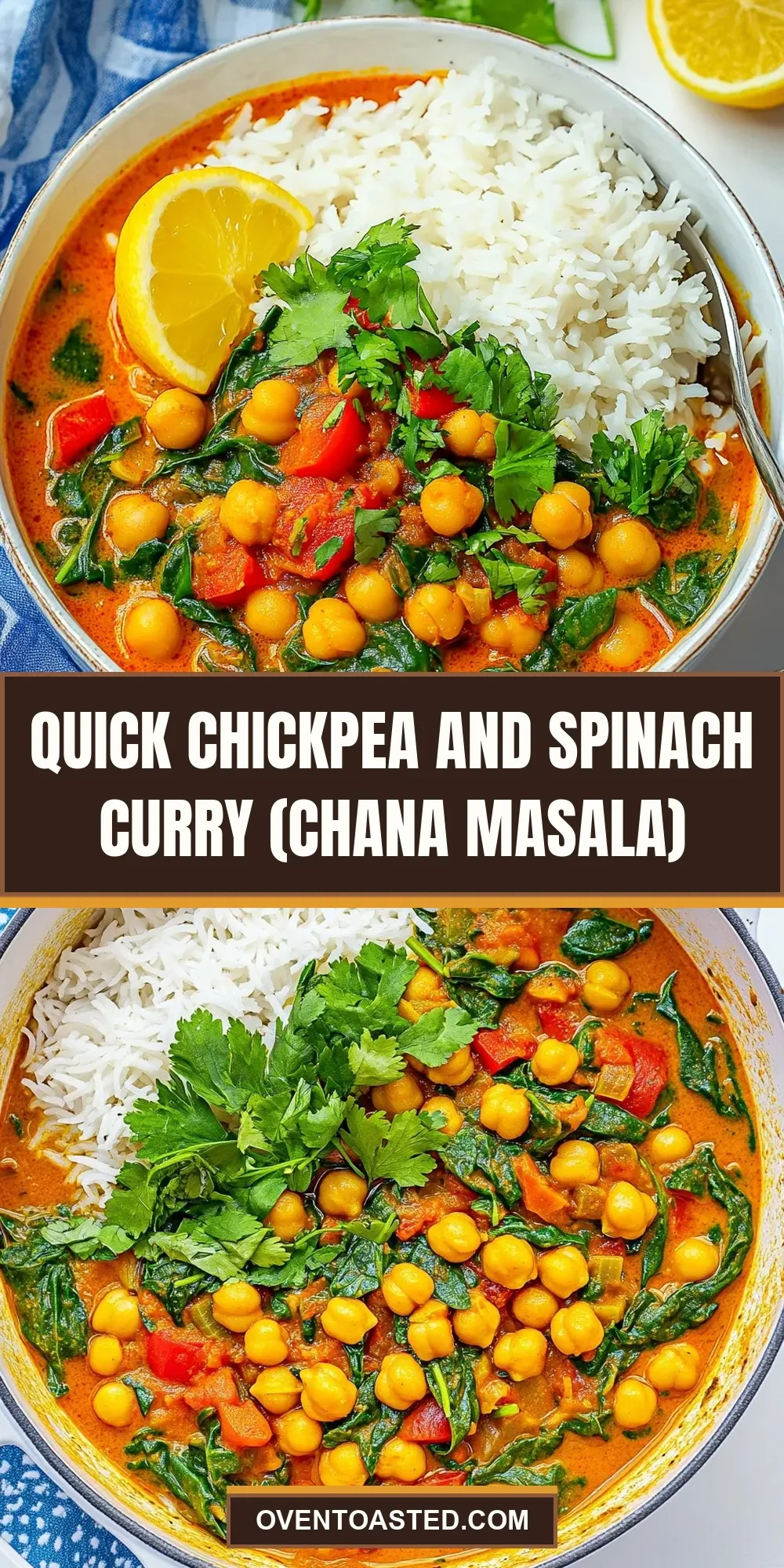
Cool the curry to room temperature within an hour, then refrigerate in an airtight container for up to 3 days. The spinach will continue to soften in the fridge, so the texture will feel a bit different on day two or three.
Freeze for up to 2 months in a freezer-safe container, leaving about 2 cm headspace. Thaw overnight in the refrigerator before reheating.
Reheat gently on the stovetop over low-medium heat with a splash of water or hot vegetable stock to loosen the sauce and revive the texture. Microwave in intervals, stirring between bursts, until hot through. Finish with fresh coriander and a squeeze of lemon before serving.
Your Top Questions
Can I use dried chickpeas?
You can, but dried chickpeas need to be soaked and cooked separately; that will add several hours. This recipe is written for 800 g jarred or canned chickpeas (2 cans) to keep it quick.
Can I make this spicier or milder?
Yes. The 1 teaspoon ground cayenne pepper is optional—omit it for mild, add it (or more) for heat. Remember that garam masala adds warmth but not direct heat.
Do I have to use amchoor powder?
No. Amchoor is optional. If you don’t have it, the 1 tablespoon lemon juice will provide the necessary acidity. Add amchoor only if you like a fruity, tangy note.
Will the chickpeas fall apart?
If you prefer firmer chickpeas, drain and rinse them gently and add them at step 6 as written—minimal stirring preserves shape. Overcooking can soften them further, so stick to the 3–5 minute simmer.
Serve & Enjoy
Serve the curry hot over or alongside the warmed 380 g steamed jasmine or basmati rice. Sprinkle the 2 tablespoons finely chopped fresh coriander leaves over each portion and offer the lemon wedges on the side for extra brightness. A simple cucumber-yogurt side or a plain salad pairs nicely if you want something crisp, but the curry with rice and lemon is perfectly satisfying on its own.
Leftovers reheat well and make an excellent base for a quick lunch—top with fresh coriander and an extra squeeze of lemon to bring it back to life. This recipe is unfussy, forgiving, and perfect for nights when you want something flavorful without fuss. Enjoy.
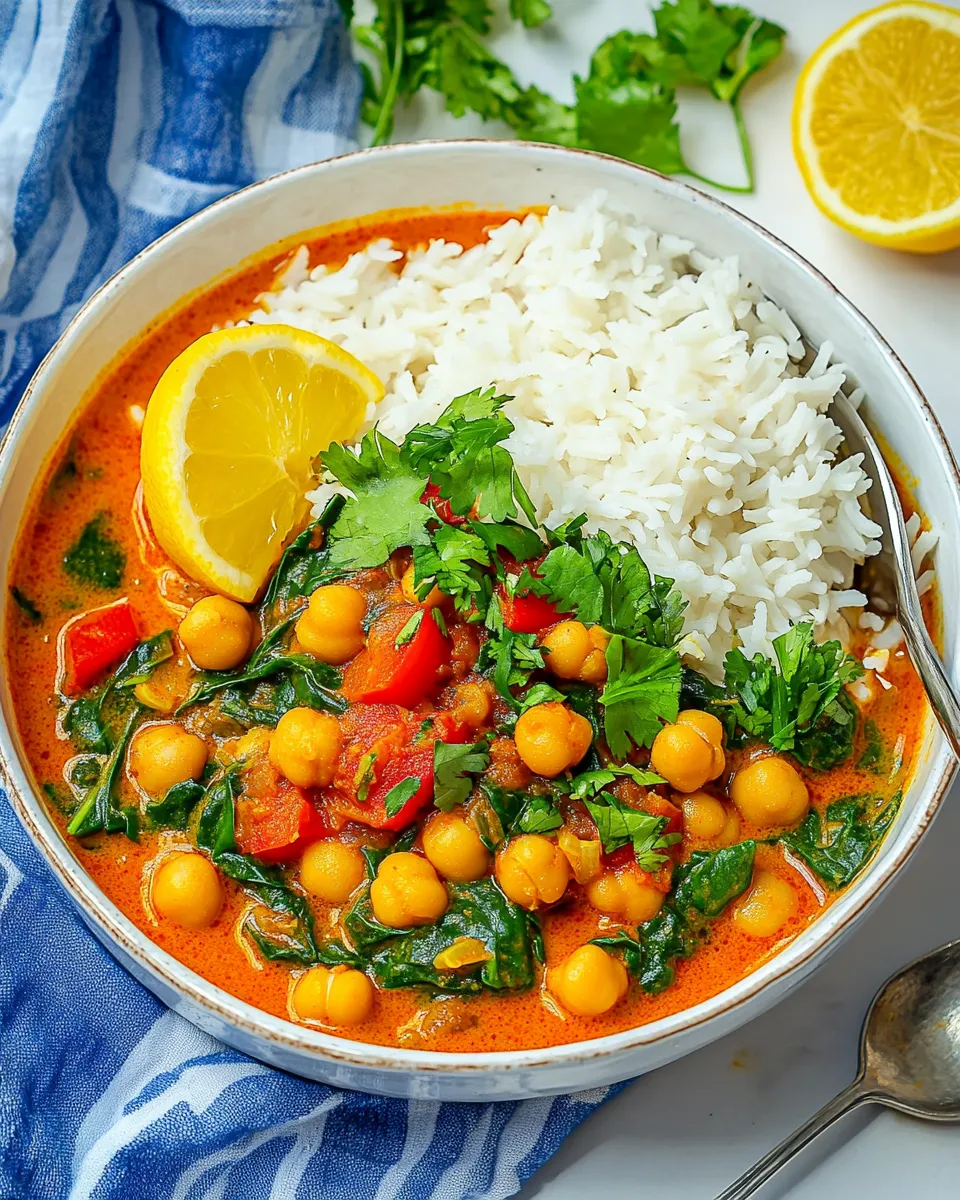
Quick Chickpea and Spinach Curry (Chana Masala)
Ingredients
Equipment
Method
- Drain and rinse the 800 g jarred or canned chickpeas. If using whole canned tomatoes, drain liquid if desired and crush the 3 whole canned tomatoes by hand or in a bowl; if using 300 g canned chopped tomatoes, leave them as-is. Put the 3 onions (cut into quarters), 3 garlic cloves and 2 cm fresh ginger (peeled) into a food processor and pulse until creamy but still slightly chunky. If you don't have a food processor, finely mince the onions and garlic and grate the ginger. Have the 380 g steamed jasmine or basmati rice warmed and ready to serve.
- Heat 2 tablespoons vegetable oil or ghee in a large sauté pan over medium heat until shimmering.
- Add the processed onion–garlic–ginger mixture to the pan and sauté, stirring frequently, for 4–5 minutes until the onion softens and becomes translucent.
- Stir in ½ teaspoon ground cumin, ½ teaspoon ground coriander, 1 teaspoon turmeric, 1 teaspoon garam masala, and a generous pinch of fine sea salt. If using, add 1 teaspoon ground cayenne pepper now. Cook and stir for 1–2 minutes to bloom the spices, adding a tablespoon of water if the mixture starts to stick.
- Add the tomatoes to the pan. If you used whole tomatoes, use the back of a spoon to break them up in the pan; if you used chopped tomatoes, just stir them in. Cook for 2–3 minutes, stirring, until the tomatoes start to soften and form a chunky sauce.
- Add the drained chickpeas, 150 g spinach leaves, and 300 ml hot water or vegetable stock. Stir to combine.
- Bring the mixture to a gentle simmer, then reduce the heat to medium-low and cook, uncovered, for 3–5 minutes, stirring occasionally, until the spinach has wilted and the chickpeas are heated through. Taste and add more fine sea salt if needed.
- Remove the pan from the heat and stir in 1 tablespoon lemon juice. If using, sprinkle in 1 teaspoon amchoor powder and stir to combine. Adjust cayenne or salt to taste.
- Serve the curry over or alongside the 380 g steamed rice. Sprinkle with 2 tablespoons finely chopped fresh coriander leaves and serve with lemon wedges.
Notes
1.If you use dry chickpeas, remember to soak them overnight. Then, the next day, drain them and boil them in plenty of water for about an hour and a half.
2. You can use frozen spinach leaves instead of fresh. Simply add them frozen whilst your curry sauce cooks.
3. You can use canned tomatoes, or fresh tomatoes. I like to use canned whole tomatoes but chopped tomatoes work just fine.
If you don't fancy their chunky texture, blitz the tomatoes with the onion/garlic/ginger mix, or use pureed tomatoes.
4. Although it's totally optional, feel free to substitute some of the water with a splash of coconut milk if you fancy.
Storage tips:
Place leftovers in an airtight container and store in the fridge up to 2 days. Alternatively, store in the freezer for up to 2 months.