Red Velvet Cinnamon Rolls
I bake for a living and I write about food like it’s a language we all share. These Red Velvet Cinnamon Rolls started as an experiment: a dry red-velvet baking mix that keeps on the shelf until you decide how to finish it. It’s not the classic make-everything-from-scratch cinnamon roll in one go — it’s a concentrated, portable red-velvet base that colors and flavors the dry elements of the bake.
This post keeps things practical. I’ll walk you through what’s in the mix, how the provided directions proceed, what’s missing if you expect a fully formed cinnamon roll, and sensible ways to store and use the mix. No fluff — just what works, what to watch for, and options if you want to take this dry mix to the next step.
If you like clear steps and level-headed troubleshooting from someone who has tested a lot of recipes in a busy kitchen, you’ll find this useful. The mix is straightforward to handle; the important part is recognizing its limits and how to incorporate it into a dough recipe that supplies the missing wet and filling components.
What You’ll Need
Ingredients
- 1 1/2 cups all purpose flour — provides structure; measure by spooning into the cup and leveling for consistency.
- 1 1/2 cups granulated sugar — sweetens and helps bulk the dry mix; keeps the mix shelf-stable.
- 2 tsp cocoa powder — gives the signature red-velvet hint and a touch of chocolate flavor; use unsweetened cocoa.
- 1/2 tsp salt — balances sweetness and strengthens dough once wet ingredients are added.
- 1/2 tsp baking powder — a dry leavening component; it’s part of the lifting agents in the mix but will need liquid and possibly additional leavening in your dough recipe.
- 1 1/2 tsp baking soda — reacts in the presence of acid and liquid; included here for lift and color interaction when finished with the proper wet ingredients.
- 2 tsp red gel food coloring (add more if needed) — concentrated color for the red-velvet look; gel disperses more evenly in dry mixes when folded well.
Red Velvet Cinnamon Rolls: From Prep to Plate
- In a large bowl, whisk together 1 1/2 cups all purpose flour, 1 1/2 cups granulated sugar, 2 tsp cocoa powder, 1/2 tsp salt, 1/2 tsp baking powder, and 1 1/2 tsp baking soda until evenly combined.
- Add 2 tsp red gel food coloring. Using a rubber spatula or spoon, fold and press the gel into the dry mixture until the color is distributed as evenly as possible; the gel may cause small clumps—work them apart until the mix is uniform.
- Scrape the mixture into an airtight container or a bowl for immediate use. This yield is a dry red-velvet baking mix; do not add other ingredients here because none are listed in the ingredient list.
- Important: the ingredient list provided does not include any liquid (water, milk), fat (butter, oil), eggs, yeast, brown sugar, cinnamon, or icing ingredients that are required to form, fill, proof, and bake traditional cinnamon rolls. With only the listed ingredients you cannot complete the original roll-shaping, rising, baking, or icing steps.
- If you want to convert this dry mix into a dough and finish cinnamon rolls, follow a separate cinnamon-roll dough recipe that supplies the missing wet/fat/leavening/filling/icing ingredients and procedures; this written directions set intentionally stops here to remain consistent with the provided ingredient list.
Why I Love This Recipe
This dry mix is convenient: it concentrates the red-velvet elements (flour, sugar, cocoa, leaveners, and color) into a single container so you can quickly add wet ingredients when you’re ready. For busy cooks or bakers who like to prep ahead, it’s a clean way to portion the base and keep it airtight until use.
I also appreciate the controlled color. Using gel coloring in a dry mix avoids large puddles of dye when you’re working with liquid. The method in the directions — folding and pressing the gel into the dry — minimizes streaks and gives you an even foundation so your final dough or batter takes on a consistent red-velvet tone.
Quick Replacement Ideas
The component list is small and specific, so swap options are limited without changing the recipe intent. Here are small, safe adjustments that respect the source mix:
- Red gel flexibility — you can increase the red gel food coloring slightly if you prefer a deeper red; add a little at a time, folding it in until uniform.
- Cocoa choices — if you use a different brand of unsweetened cocoa powder, treat it as a straight replacement by weight; darker dutched cocoas will give a richer tone.
- Salt/sweet balance — if your kitchen feels particularly warm or your flour measures differently, adjust the salt very slightly when you incorporate wet elements; the dry mix itself should remain unchanged.
Cook’s Kit
Tools make a difference. For the steps provided, keep a few reliable items on hand:
- Large mixing bowl — roomy enough to whisk the dry ingredients thoroughly.
- Whisk — to combine flour, sugar, leaveners, cocoa, and salt evenly.
- Rubber spatula — essential to press and fold in the gel coloring without tearing your bowl or leaving large clumps.
- Airtight container or storage jar — for keeping the dry mix fresh and free from moisture.
- Spoon or small offset spatula — handy when scraping the mix into storage or bagging portions.
Troubles You Can Avoid
Most issues with a dry color-forward mix come down to two things: moisture and uneven color distribution. Here’s how to avoid both.
Keep everything dry. Gel food coloring contains moisture and will clump if you add too much at once or if your mixing tool isn’t working the gel into the particles. Press and tease the clumps apart with a spatula until the mix is homogeneous. Store the finished mix in a truly airtight container and don’t leave it exposed to steam or humidity.
In-Season Flavor Ideas
Because this is a dry red-velvet base, think seasonally about the wet and filling components you’ll add later, not the dry mix itself. For example, in colder months, richer fillings and warm spices in your separate cinnamon-roll dough will pair well with this mix’s chocolate-red profile. In warmer months, lighter creams and tangy finishes complement the color without weighing things down.
What Could Go Wrong
Expectations versus reality can trip you up. If you follow only the provided ingredient list, you will not be able to shape, proof, or bake cinnamon rolls because essential components (liquid, fat, yeast, cinnamon, etc.) are absent. The mix is not a standalone cinnamon-roll dough.
Other likely issues are color clumps and a dry mix that has absorbed moisture. If you notice sticky spots or an off smell, discard the batch. If the color is uneven after mixing, press and sift the clumps through a fine-mesh strainer into a clean bowl and rework; discard any parts that show strong moisture signs.
Freezer-Friendly Notes
This dry mix freezes well. Portion it into freezer-safe bags or containers and remove as much air as possible before sealing. Label with the date. When you’re ready to use a portion, thaw in the refrigerator or at room temperature and give a quick whisk to re-fluff before adding to a wet dough recipe.
Avoid refreezing a thawed portion if the seal was broken or if any moisture contacted the mix. Properly sealed, the dry mix will keep a long time in the freezer — much longer than at room temperature — and it’s convenient for make-ahead baking sessions.
Your Top Questions
Q: Can I make cinnamon rolls with this mix alone?
A: No. The provided ingredient list intentionally excludes liquids, fats, eggs, yeast, brown sugar, cinnamon, and icing components. This yields a dry red-velvet baking mix. To make cinnamon rolls, you must follow a separate dough recipe that supplies the missing elements and procedures for forming, proofing, and baking.
Q: How much wet ingredients will I need to convert this into dough?
A: The directions here stop before wet ingredients are added. Use a trusted cinnamon-roll dough recipe that specifies liquid, fat, and any yeast or eggs needed; combine this dry mix with those wet components according to that recipe’s measurements and process.
Q: Will the red gel dye stain my hands or work surface?
A: Gel dyes can stain. Work with gloves if you’re worried about staining, and wipe surfaces promptly with a damp cloth and a mild detergent.
Q: Is the cocoa powder necessary?
A: It contributes the subtle chocolate note typical of red-velvet profiles and helps the color play against a darker background. Omitting it changes the character of the mix; any such change falls outside the source ingredient list and recommendations.
Wrap-Up
This Red Velvet dry baking mix is a focused tool: a tidy, storable base that brings color, sweetness, and a hint of cocoa to whatever finished product you plan. The directions intentionally stop at the dry mix stage — the rest is up to the dough recipe you choose to pair it with. Treat the mix as a component, not a finished product.
Store it properly, work the gel in patiently, and plan a separate, complete cinnamon-roll procedure that provides the wet ingredients, fat, filling, and icing. Do that, and you’ll enjoy the best of both worlds: the convenience of a pre-made red-velvet base and the satisfaction of finished, rolled, baked, and glazed cinnamon rolls made your way.
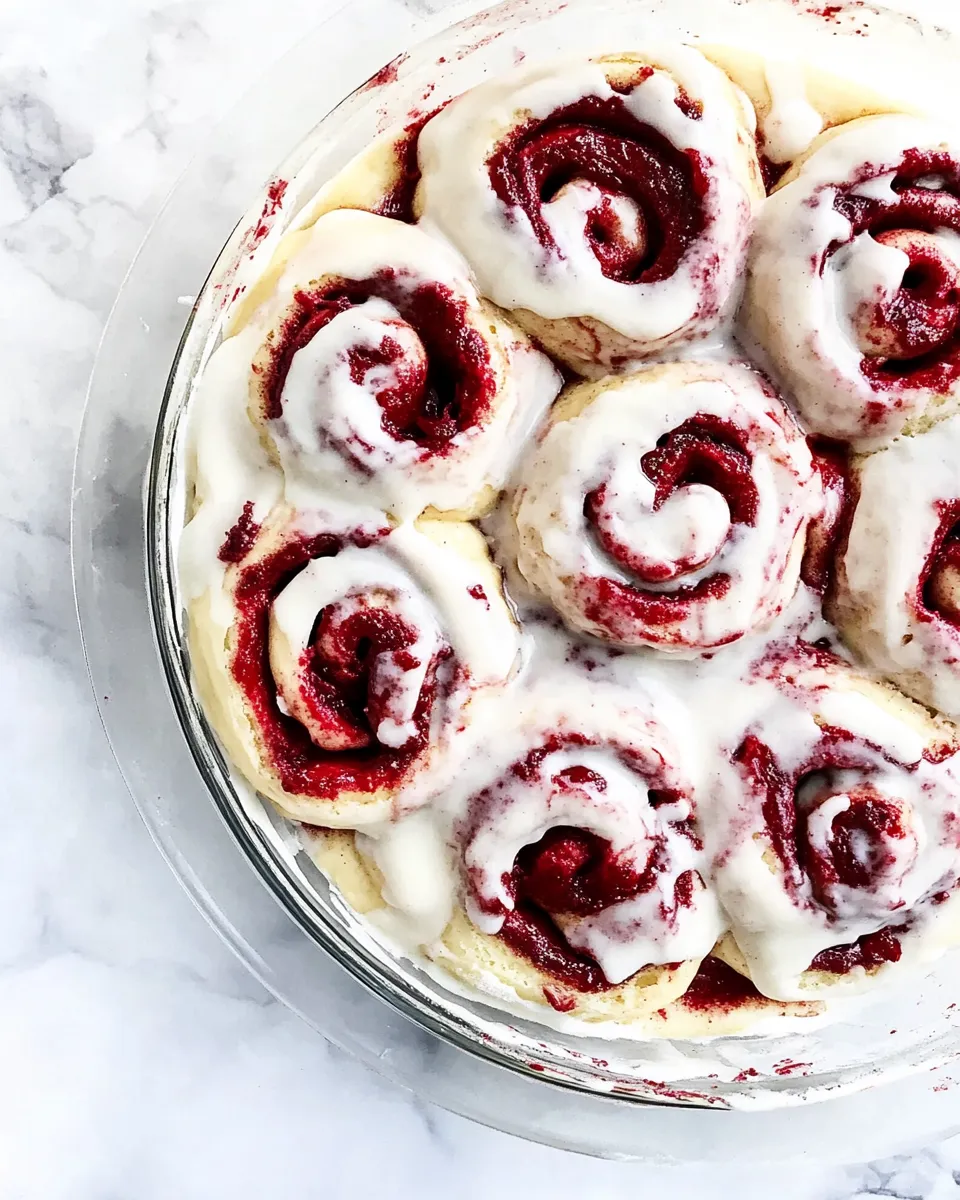
Red Velvet Cinnamon Rolls
Ingredients
Equipment
Method
- In a large bowl, whisk together 1 1/2 cups all purpose flour, 1 1/2 cups granulated sugar, 2 tsp cocoa powder, 1/2 tsp salt, 1/2 tsp baking powder, and 1 1/2 tsp baking soda until evenly combined.
- Add 2 tsp red gel food coloring. Using a rubber spatula or spoon, fold and press the gel into the dry mixture until the color is distributed as evenly as possible; the gel may cause small clumps—work them apart until the mix is uniform.
- Scrape the mixture into an airtight container or a bowl for immediate use. This yield is a dry red-velvet baking mix; do not add other ingredients here because none are listed in the ingredient list.
- Important: the ingredient list provided does not include any liquid (water, milk), fat (butter, oil), eggs, yeast, brown sugar, cinnamon, or icing ingredients that are required to form, fill, proof, and bake traditional cinnamon rolls. With only the listed ingredients you cannot complete the original roll-shaping, rising, baking, or icing steps.
- If you want to convert this dry mix into a dough and finish cinnamon rolls, follow a separate cinnamon-roll dough recipe that supplies the missing wet/fat/leavening/filling/icing ingredients and procedures; this written directions set intentionally stops here to remain consistent with the provided ingredient list.
Notes
Reheat by giving the roll a quick zap in the microwave. I like to do 15 second intervals- they heat up really quick! One second you have a cold cinnamon roll, the next second it’s bubbling volcano with molten cream cheese icing.