White Chocolate and Chocolate Dipped Mandarin Oranges
I love a dessert that looks elegant but takes minutes to pull together. These white chocolate and chocolate dipped mandarin oranges hit that sweet spot — bright, juicy segments coated in glossy chocolate, finished with a sprinkle of sea salt or a confetti of sprinkles. They feel special, but the technique is simple and forgiving.
There’s a rhythm to this recipe: melt, dip, chill. No tempering, no complex tools. You can make them for a weeknight treat, a party platter, or to tuck into little gift boxes. I’ll walk you through shopping, timing, equipment, and the small details that make the texture and presentation sing.
Read on for step-by-step instructions, ingredient notes, troubleshooting and a few flavor variations. Keep your chocolate bowls handy and your fridge open — these set quickly and disappear faster.
Your Shopping Guide
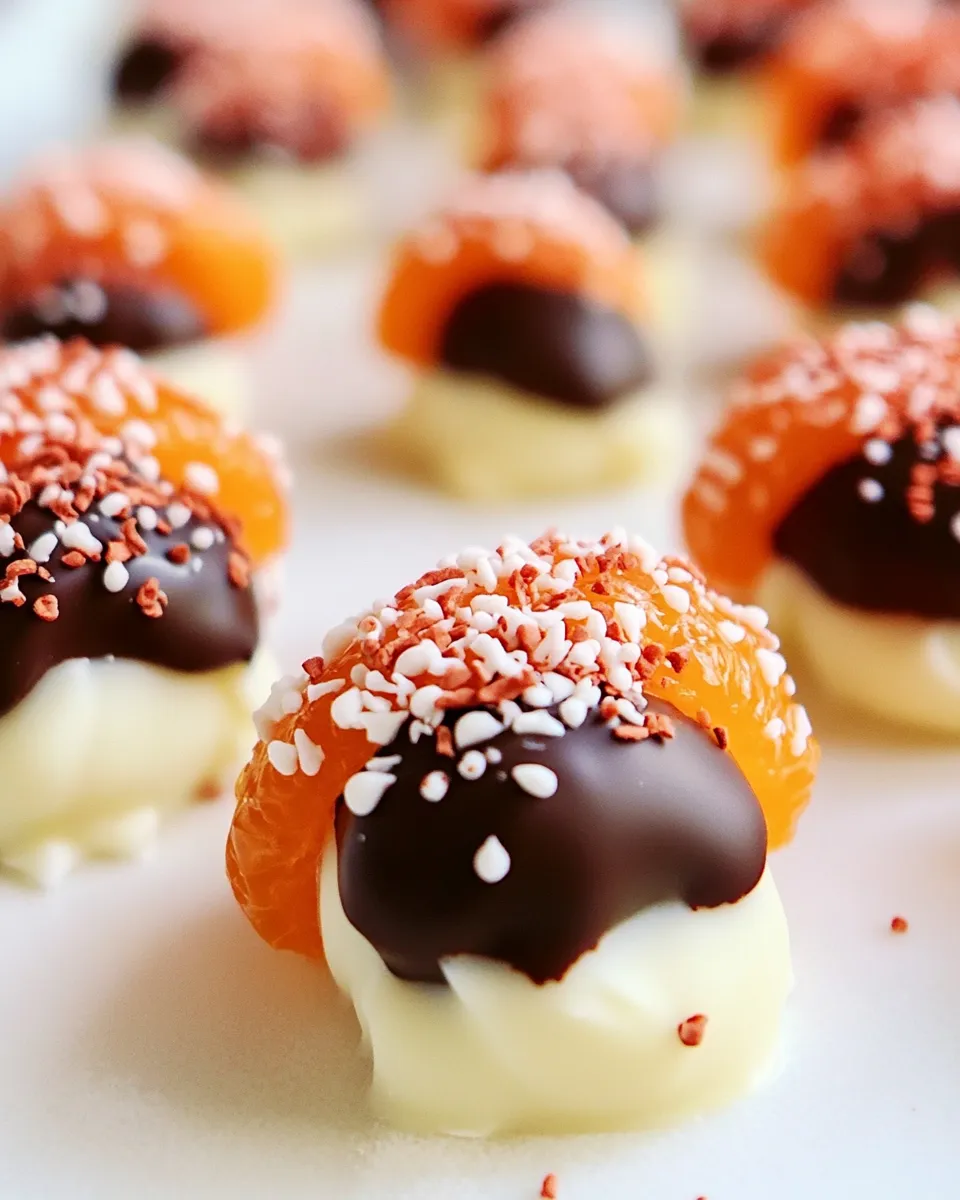
Start with good chocolate. You don’t need couverture, but choose bars you enjoy eating. If you prefer a sweeter, creamier finish, milk chocolate works; for contrast and a less sweet bite, choose dark. White chocolate should be creamy and real — not a flavored coating if you want the best texture. I usually shop for 4-ounce bars, which keeps portions tidy and reduces waste.
Buy mandarins that feel heavy for their size and have smooth, glossy skin. Heavier fruit means juicier segments. If you can, pick mandarins with a thin membrane; that makes peeling and segmenting easier and yields cleaner chocolate coverage. For finishing accents, keep coarse or flaked sea salt and a jar of multi-color sprinkles on hand — both optional, but they transform the finished look.
Finally, get parchment paper and two small microwave-safe bowls if you don’t already have them. That’s literally all you need. A baking sheet and the chill of the fridge finish the job.
Ingredients
- 4 oz dark chocolate or milk chocolate, chopped — melts smoothly for a classic chocolate coating; choose dark for less sweetness or milk for creamier flavor.
- 4 oz white chocolate, chopped — provides a bright, sweet contrast and a beautiful canvas for sprinkles.
- 6 – 7 large mandarin oranges, peeled and segmented (about 1 1/2 lbs)* — the fruit base; pick heavy, juicy mandarins and remove all white pith for cleaner chocolate adhesion.
- Coarse or flaked sea salt (optional) — a light sprinkle on dark chocolate enhances flavor and balances sweetness.
- Multi-color sprinkles (optional) — add immediately after dipping for a festive look; use sparingly so the segment doesn’t lose its citrus bite.
White Chocolate and Chocolate Dipped Mandarin Oranges Made Stepwise
- Line 2 baking sheets with parchment paper and set them on your work surface.
- Put the 4 oz white chocolate (chopped) in a microwave-safe bowl. Heat in the microwave in 20-second intervals, stirring well between each interval, until the chocolate is fully melted and smooth.
- While the white chocolate is melting, divide the peeled and segmented mandarin oranges into two roughly equal piles (one pile for white chocolate, one for dark chocolate).
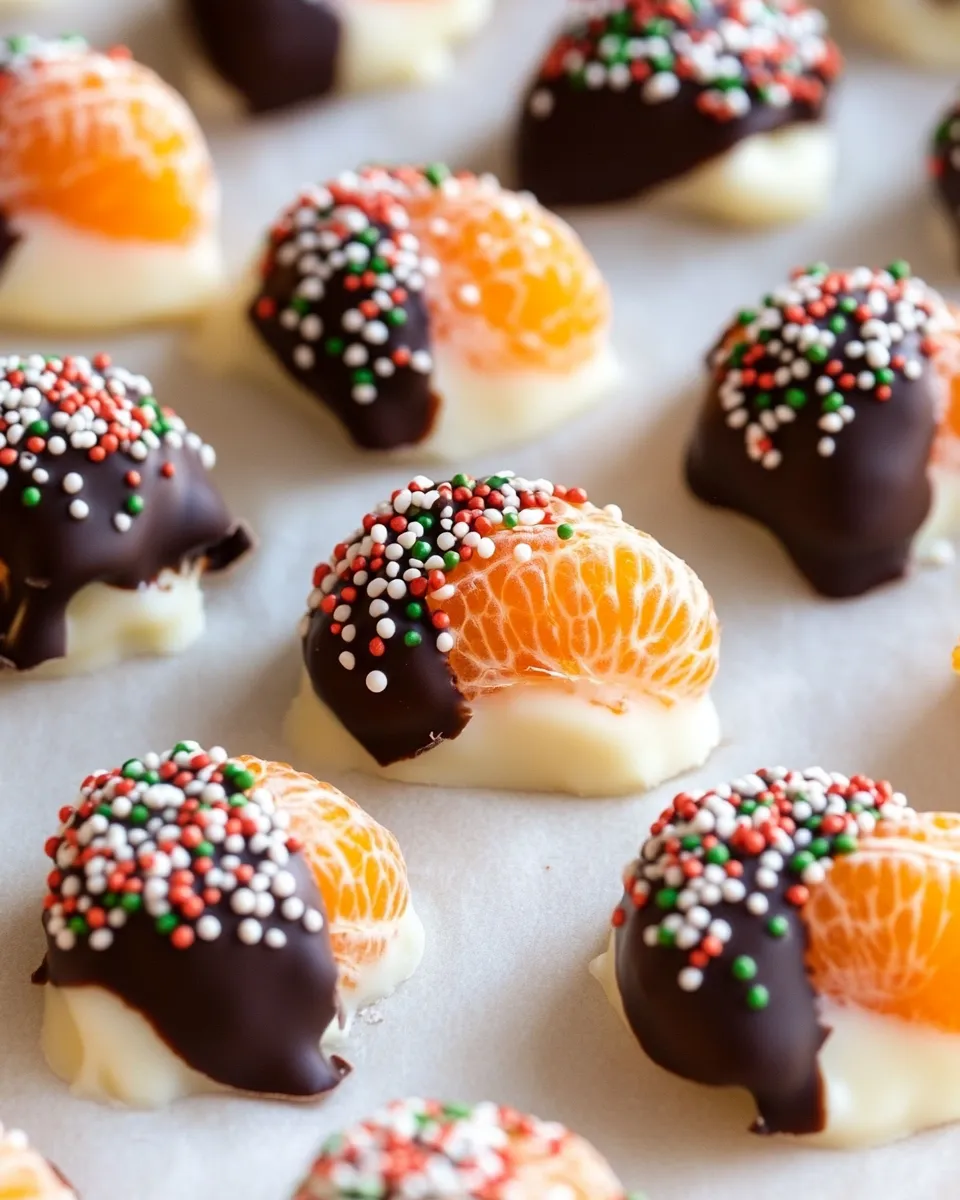
- Working with the pile for white chocolate, dip each mandarin segment so that about half of the segment is coated. Lift the segment and allow excess chocolate to drip back into the bowl. Place each dipped segment on the prepared parchment-lined baking sheet in a single layer, leaving a little space between pieces.
- If using multi-color sprinkles, lightly sprinkle them onto the white chocolate-coated segments immediately after placing them on the sheet (before the chocolate begins to set).
- Put the 4 oz dark or milk chocolate (chopped) in a separate microwave-safe bowl. Heat in the microwave in 20-second intervals, stirring well between each interval, until the chocolate is fully melted and smooth.
- Dip each segment from the remaining pile into the dark chocolate, coating about half of each segment. Lift and let excess chocolate drip back into the bowl, then place the dipped segments on the second prepared parchment-lined baking sheet in a single layer.
- If using coarse or flaked sea salt, lightly sprinkle it onto the dark chocolate-coated segments immediately after placing them on the sheet (before the chocolate begins to set).
- Transfer both baking sheets to the refrigerator and chill until the chocolate is set, about 5–10 minutes.
- Remove from the refrigerator and serve immediately for best texture and flavor.
Why This Recipe Is Reliable
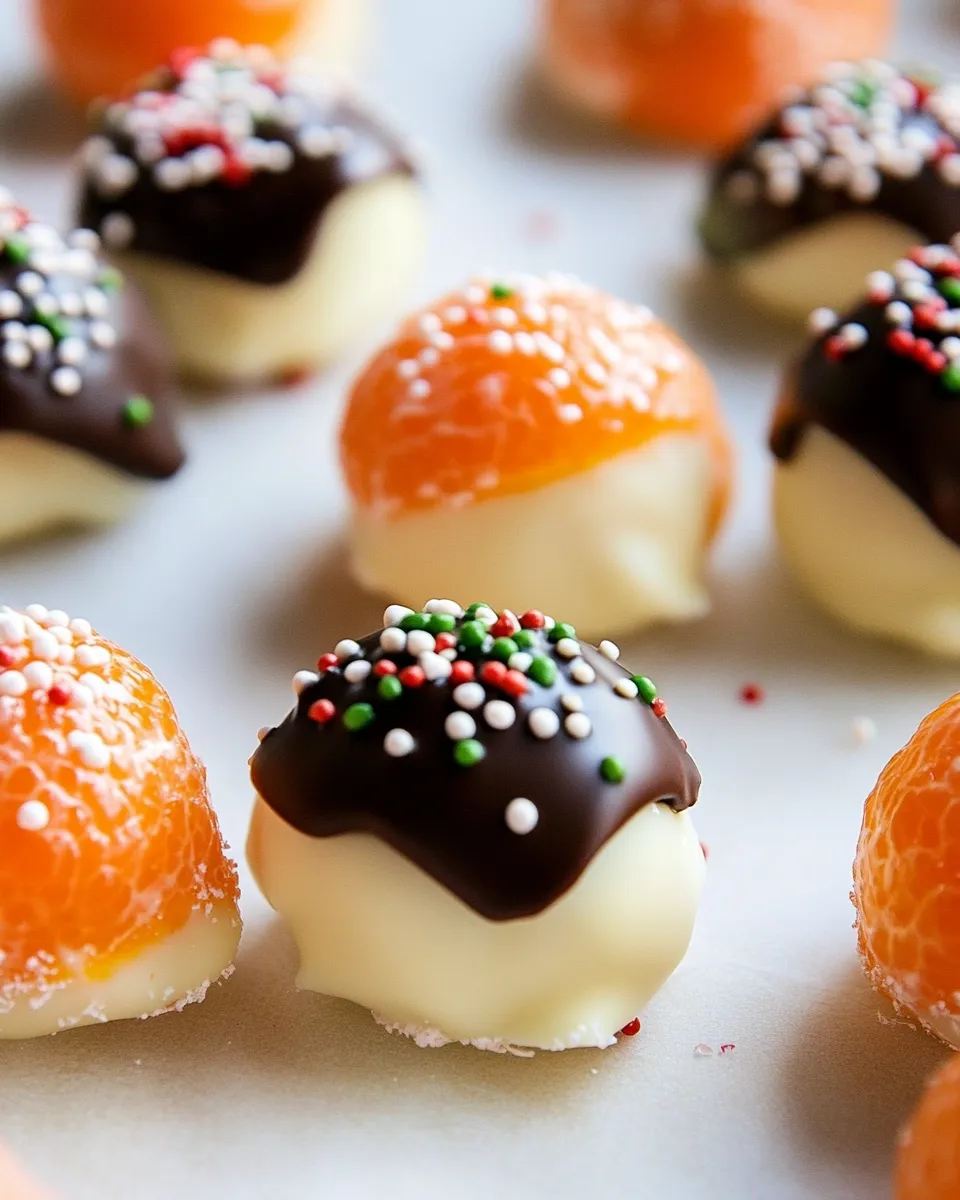
There’s a reason this method works every time: it keeps steps few and predictable. You melt chocolate steadily in short microwave bursts, which prevents overheating. By dipping only half the segment, you get a perfect balance of juicy citrus and chocolate in every bite. The quick chill sets the coating fast so the fruit doesn’t weep.
Because there’s no tempering, the method is forgiving. Tempering requires careful control of temperature to get that sheen and snap, but for fruits that will be eaten quickly, the simple melt-and-chill approach yields glossy, pleasant results without the fuss. The brief refrigeration prevents sweating and locks in the chocolate coating while preserving the orange’s texture.
International Equivalents
Mandarins are interchangeable with several small citrus types globally. In Spain and Latin America, look for clementinas or satsumas. In parts of Asia you may find mikan — similar in sweetness and easy-to-peel skin. If mandarins aren’t available, use peeled segments of tangerines or small seedless oranges, adjusting the segment size you dip.
For chocolate, the terms vary: “dark” might be labeled as “bitter” or “semisweet” in some countries, while white chocolate sometimes appears as “white confectionery coating.” If you prefer high-cocoa solids chocolate, choose one labeled 60% cocoa or higher for a pronounced contrast with the fruit.
Equipment Breakdown
You don’t need fancy gear for these. Here’s what matters:
Essential
- Microwave-safe bowls — two, so you can melt white and dark separately.
- Baking sheets — two, lined with parchment for easy retrieval and cleanup.
- Parchment paper — prevents sticking and keeps the chocolate glossy.
- Refrigerator — chills and sets the chocolate quickly.
Nice-to-have
- Tongs or a fork — helpful for lifting segments cleanly from the chocolate, especially if you’re making many at once.
- Small offset spatula or spoon — for smoothing drips or nudging stray sprinkles.
- Small shallow bowls — for sprinkles or salt so you can finish quickly after dipping.
Pitfalls & How to Prevent Them
Common issues are easy to fix once you know the causes.
- Chocolate seizes: This happens when even a drop of water meets melted chocolate. Keep bowls dry and avoid steam or wet spoons. If it seizes, set it aside and start fresh — adding liquid won’t help the chocolate recover reliably.
- Fruit bleeds or becomes soggy: Work quickly and chill immediately after dipping. Don’t let segments sit at room temperature for long periods before refrigerating.
- Uneven coating: Allow excess chocolate to drip back into the bowl for a second or two before placing the segment on parchment. Tip the bowl slightly to create a controlled flow when dipping.
- Sprinkles sink or fall off: Add sprinkles immediately after dipping, when chocolate is still tacky but not pooling. Press lightly if needed, but don’t push hard — the segment can tear.
Seasonal Flavor Boosts
Mandarins have a natural sweetness that pairs beautifully with a few seasonal twists.
- Winter: Add a light dusting of ground cinnamon or a tiny pinch of orange zest to the white chocolate before dipping for warm spice notes.
- Spring: Use pastel sprinkles and a few edible flower petals for a bright presentation at showers and brunches.
- Holiday: Swap sprinkles for finely chopped pistachios on the white chocolate, and use red sugar crystals on dark chocolate for a festive look.
- Summer: Keep it simple — a tiny flake of sea salt on dark chocolate enhances the fruit’s brightness without overpowering it.
Method to the Madness
The technique is intentionally minimal. Heating chocolate in 20-second bursts is about control: stir between intervals to distribute heat evenly. Microwaves can have hot spots, so stirring makes the difference between glossy and grainy.
Divide the segments first so you can work efficiently. Dip in small batches to avoid temperature swings in your bowls of chocolate. If the chocolate starts to thicken because it’s cooling, pop it back in the microwave for a few seconds — but stir and watch closely.
Shelf Life & Storage
Because these are fresh citrus segments, they are best eaten the day they’re made. Store them in a single layer in a shallow container in the refrigerator for up to 24 hours. Longer storage dulls the chocolate’s sheen and softens the fruit.
If you must prepare ahead, keep the chocolate-coated segments chilled and remove them from the fridge about 10 minutes before serving to let the fruit’s flavor open up. Avoid freezing — freezing changes the texture of the fruit and makes the chocolate prone to cracking when thawed.
Quick Questions
Q: Can I temper the chocolate for a snappier finish?
A: Yes. If you prefer a firmer snap and glossy sheen at room temperature, temper both chocolates before dipping. For most home uses where they’ll be chilled and eaten soon, the melt-and-chill method is simpler and fine.
Q: Can I dip whole mandarins instead of segments?
A: Whole mandarins are thicker and harder to eat neatly after dipping. Segments give a perfect bite-sized balance of citrus and chocolate and are better for presentation and portion control.
Q: What about using candy melts or chips labeled “for dipping”?
A: They work, especially if you’re serving outdoors or need brighter colors. Real chocolate usually tastes better, though, so use what matches your priorities: flavor vs. color stability.
That’s a Wrap
These White Chocolate and Chocolate Dipped Mandarin Oranges are a quick, charming treat that requires minimal fuss and yields maximum smiles. They’re perfect when you need something pretty on the plate without spending hours in the kitchen. Keep the chocolate smooth, work in small batches, and finish with a thoughtful sprinkle or a flake of salt.
Make a tray, chill for five to ten minutes, and watch them vanish. If you try any seasonal tweaks or presentation ideas, I’d love to hear what you do — small edits yield delightful results.
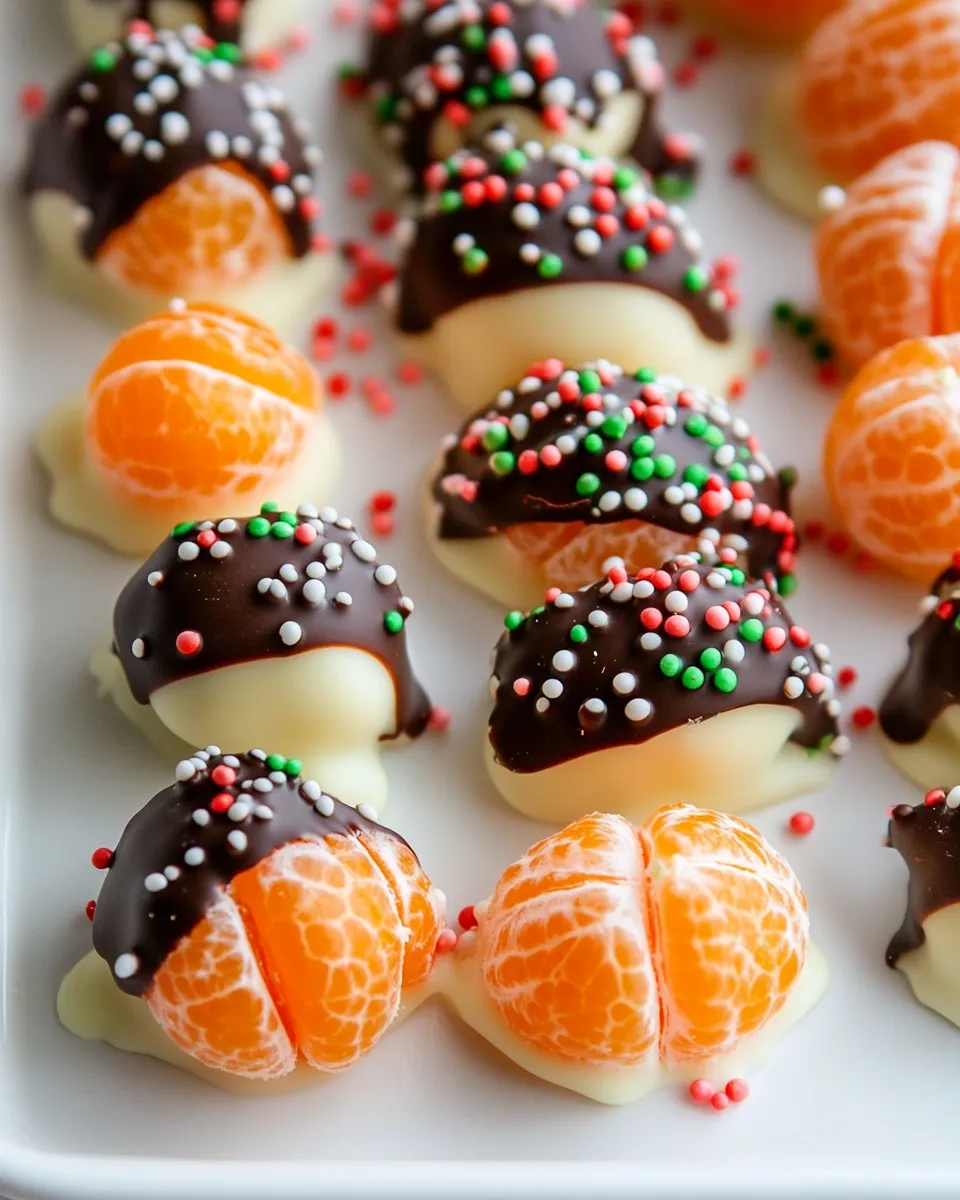
White Chocolate and Chocolate Dipped Mandarin Oranges
Ingredients
Equipment
Method
- Line 2 baking sheets with parchment paper and set them on your work surface.
- Put the 4 oz white chocolate (chopped) in a microwave-safe bowl. Heat in the microwave in 20-second intervals, stirring well between each interval, until the chocolate is fully melted and smooth.
- While the white chocolate is melting, divide the peeled and segmented mandarin oranges into two roughly equal piles (one pile for white chocolate, one for dark chocolate).
- Working with the pile for white chocolate, dip each mandarin segment so that about half of the segment is coated. Lift the segment and allow excess chocolate to drip back into the bowl. Place each dipped segment on the prepared parchment-lined baking sheet in a single layer, leaving a little space between pieces.
- If using multi-color sprinkles, lightly sprinkle them onto the white chocolate-coated segments immediately after placing them on the sheet (before the chocolate begins to set).
- Put the 4 oz dark or milk chocolate (chopped) in a separate microwave-safe bowl. Heat in the microwave in 20-second intervals, stirring well between each interval, until the chocolate is fully melted and smooth.
- Dip each segment from the remaining pile into the dark chocolate, coating about half of each segment. Lift and let excess chocolate drip back into the bowl, then place the dipped segments on the second prepared parchment-lined baking sheet in a single layer.
- If using coarse or flaked sea salt, lightly sprinkle it onto the dark chocolate-coated segments immediately after placing them on the sheet (before the chocolate begins to set).
- Transfer both baking sheets to the refrigerator and chill until the chocolate is set, about 5–10 minutes.
- Remove from the refrigerator and serve immediately for best texture and flavor.
Notes
Serve immediately for best results as the oranges tend to dry out once peeled.