Ingredients
Equipment
Method
Instructions
- Measure the flour as listed (spoon into the measuring cup and level off). In the bowl of a stand mixer fitted with the dough hook, add the flour, the instant/rapid-rise yeast, and the salt. Mix on low speed about 30 seconds to combine.
- In a separate bowl, whisk together the lukewarm water, the vegetable oil, the honey, two of the whole eggs, and the separate egg yolk until blended.
- With the mixer running on medium-low speed, pour the wet mixture into the dry ingredients and knead 5 to 7 minutes, until the dough is sticky and clings to the bottom of the bowl. The dough should be tacky and slightly wet — this is normal.
- Generously dust your hands and a work surface with the extra flour from the ingredient list. Scrape the dough from the mixer bowl onto the floured surface, dust the top lightly with flour, and knead briefly just to form a smooth, soft ball.
- Lightly grease a large bowl with a little oil. Place the dough in the bowl, turn it once so the top is lightly oiled, and cover the bowl with plastic wrap. Let the dough rise in a warm, draft-free spot until it is puffy and doubled in size, about 2 to 3 hours.
- Prepare a lightly floured work surface. Invert the risen dough onto the surface and dust the top lightly with flour — the dough will deflate.
- Divide the dough into four even pieces (about 9 oz / 255 g each if you prefer to weigh them). Stretch and roll each piece into a rope about 20 inches (50 cm) long. Lay the four ropes side by side vertically and pinch them tightly together at the top; fan them out so they lie parallel and separate.
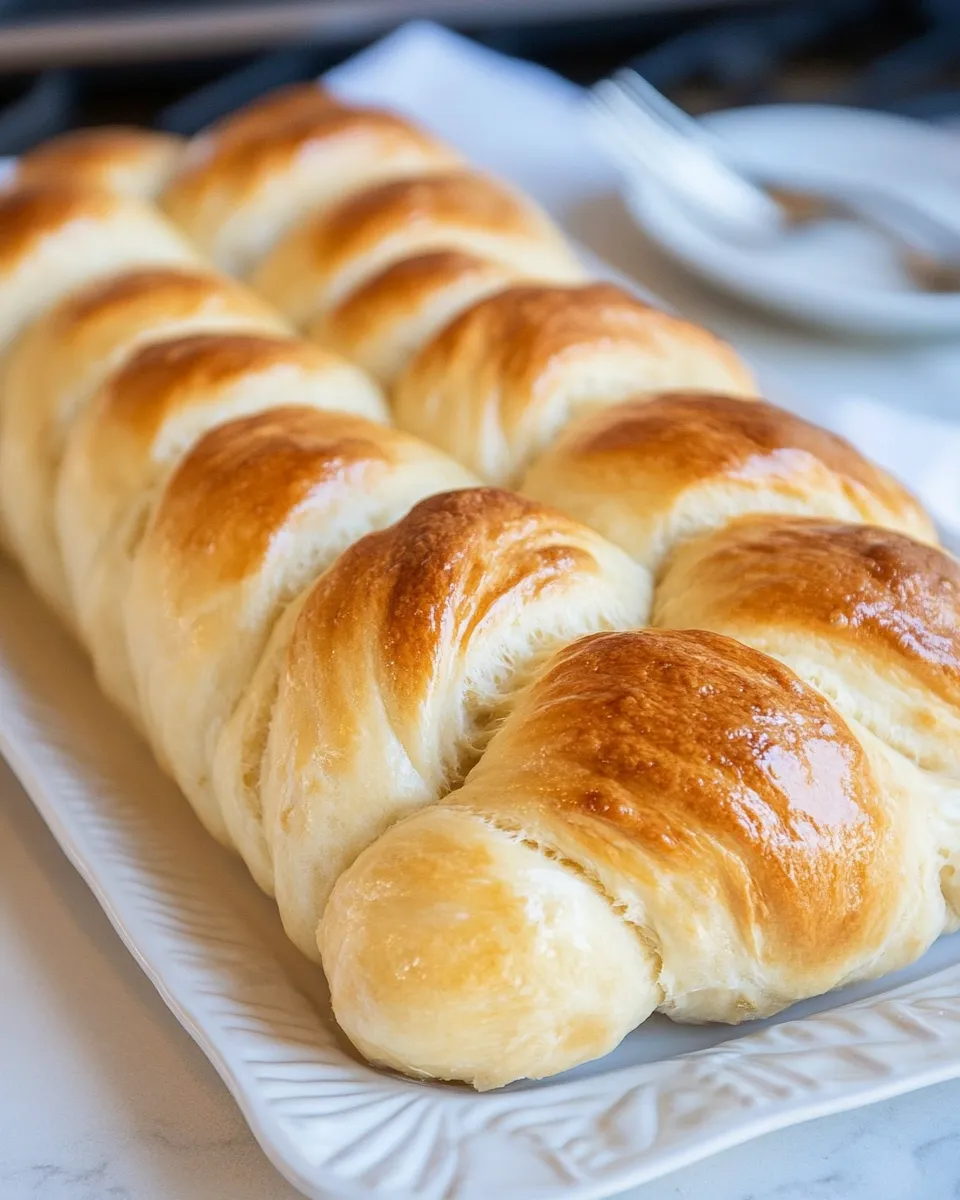
- Braid the four ropes using this method: always work with the strand farthest to the right. Take that rightmost strand and pass it leftward across the other strands in this sequence: over the first strand, under the next strand, then over the last strand. After that move, reposition the strands and again take the (new) rightmost strand and repeat over–under–over. Continue repeating this pattern — always starting with the strand farthest to the right — until you reach the ends.
- When the braid is complete, tuck the ends under to neaten the loaf and gently press to seal so the braid holds its shape.
- Line a 13 x 18-inch (33 x 46-cm) baking sheet with parchment paper and carefully transfer the braided loaf onto it. Loosely cover the loaf with plastic wrap and let it rise in a warm, draft-free spot until it is about 1.5 times its size, about 1 to 2 hours. Toward the end of this rising time, preheat the oven to 350°F (175°C) and set an oven rack in the middle position.
- In a small bowl, beat the remaining whole egg. Remove the plastic wrap and brush the beaten egg generously over the surface of the risen loaf.
- Place the prepared baking sheet on top of a second baking sheet (to help prevent the bottom from browning too much). Bake on the middle rack for 25 to 35 minutes, until the crust is a rich brown and an instant-read thermometer inserted into the center registers 190°F to 200°F (88°C to 93°C). Note that the loaf will continue to rise in the oven.
- Remove the challah from the oven and transfer it to a wire rack to cool. Let it cool before slicing. Store any leftovers in a sealed plastic bag for a few days.
Notes
Notes
Active dry yeast may be used instead of instant/rapid-rise yeast, however, the dough will take longer to rise. If you’re using yeast that comes in the packets, the quantity required for this recipe (1 tablespoon) is more than one packet. When baking yeast breads, rising times are only a guide; the temperature in your kitchen, the humidity level outdoors, and how you knead the dough will all affect the rising time.
Make-Ahead Instructions:
Prepare the loaf up to the point where it’s braided and on the pan. Cover it with greased plastic wrap, and place it in the refrigerator overnight. The next day, remove the braided dough from the refrigerator and set it on the countertop (keep it covered). Let it come to room temperature and rise for about 1 hour before baking as directed.
Freezer-Friendly Instructions:
Challah can be baked, cooled, tightly wrapped, and frozen for up to 3 months. Allow it to thaw at room temperature for at least 3 hours before serving.
Active dry yeast may be used instead of instant/rapid-rise yeast, however, the dough will take longer to rise. If you’re using yeast that comes in the packets, the quantity required for this recipe (1 tablespoon) is more than one packet. When baking yeast breads, rising times are only a guide; the temperature in your kitchen, the humidity level outdoors, and how you knead the dough will all affect the rising time.
Make-Ahead Instructions:
Prepare the loaf up to the point where it’s braided and on the pan. Cover it with greased plastic wrap, and place it in the refrigerator overnight. The next day, remove the braided dough from the refrigerator and set it on the countertop (keep it covered). Let it come to room temperature and rise for about 1 hour before baking as directed.
Freezer-Friendly Instructions:
Challah can be baked, cooled, tightly wrapped, and frozen for up to 3 months. Allow it to thaw at room temperature for at least 3 hours before serving.