Ingredients
Equipment
Method
Instructions
- Prepare ingredients: warm the 1/2 cup heavy cream and cut the 6 Tbsp softened unsalted butter into cubes so they are ready to add.
- Combine sugar and water in a heavy-bottomed saucepan. Stir just until the sugar dissolves into the water and the mixture is clear.
- Set the pan over medium-low heat. Once the mixture starts to simmer and is clear, stop stirring. Swirl the pan occasionally until the syrup is completely liquid and turns a light amber color (about 6–8 minutes). Do not use higher heat or let it darken too far, or it will taste bitter.
- Reduce the heat to low. Carefully whisk in the butter in two additions (whisk half the cubes in first, then the rest). The mixture will bubble vigorously; keep whisking until the butter is fully incorporated. If the mixture separates, remove from the heat and whisk until it comes together.
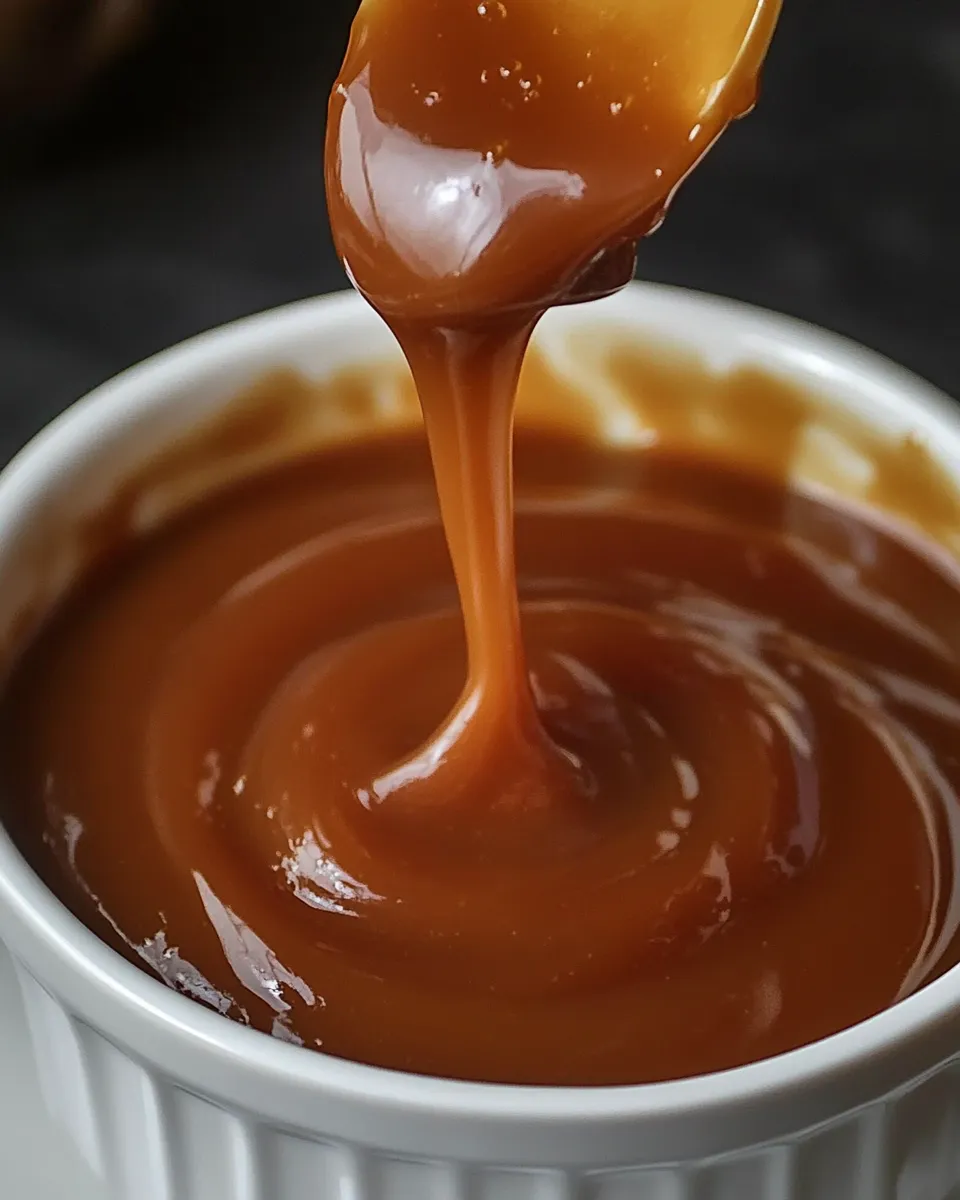
- Slowly stream in the warm heavy cream while whisking constantly. It will bubble and steam—continue whisking until the sauce is smooth. If using a candy thermometer, the caramel is done at about 220°F.
- Remove the pan from the heat. Whisk in the 1 tsp pure vanilla extract and 1 tsp sea salt (or to taste). Taste and adjust the salt if needed.
- Let the caramel cool slightly before using; it will thicken as it cools. Store in an airtight container in the refrigerator for up to 2 weeks. Rewarm gently before drizzling or serving.
Notes
Tips for Success with Homemade Caramel:Don’t use non-stick pans - they heat too quickly and crystallize.
Don’t brush the sides of the pan with water once the mixture is simmering. Water droplets can cause the whole mixture to crystallize and seize. I avoid brushing at all for this reason, and once the sugar is simmering, swirling will remove the crystals at the edge naturally.
Don’t heat over too high of heat or the water will evaporate before the sugar crystals have a chance to melt and they can crystallize. Melt the sugar mixture patiently over medium/low heat.
Use a heavy saucepan for even heat distribution, not a flimsy one.
Use warm cream so it doesn’t splatter, separate, or burst, which can happen if you add cold liquid to a blazing hot caramel sauce.
Add room temperature butter when it looks a light amber color- don’t wait until it’s brown or it will taste burned.
European butter has less sputtering since it has a higher fat and lower water content.
Caramel is super hot; do not touch it or lick utensils with hot caramel or melted sugar.
To fix Crystalized Caramel- Add 1 or 2 tablespoons of water to the broken mixture and reheat, whisking until the sugar dissolves.
Don’t brush the sides of the pan with water once the mixture is simmering. Water droplets can cause the whole mixture to crystallize and seize. I avoid brushing at all for this reason, and once the sugar is simmering, swirling will remove the crystals at the edge naturally.
Don’t heat over too high of heat or the water will evaporate before the sugar crystals have a chance to melt and they can crystallize. Melt the sugar mixture patiently over medium/low heat.
Use a heavy saucepan for even heat distribution, not a flimsy one.
Use warm cream so it doesn’t splatter, separate, or burst, which can happen if you add cold liquid to a blazing hot caramel sauce.
Add room temperature butter when it looks a light amber color- don’t wait until it’s brown or it will taste burned.
European butter has less sputtering since it has a higher fat and lower water content.
Caramel is super hot; do not touch it or lick utensils with hot caramel or melted sugar.
To fix Crystalized Caramel- Add 1 or 2 tablespoons of water to the broken mixture and reheat, whisking until the sugar dissolves.