Ingredients
Equipment
Method
Instructions
- Bring a large pot of water to a rolling boil. Once boiling, add 1 tablespoon fine sea salt.
- Add the entire 1 (16-ounce) package fettuccine and cook, stirring occasionally, until just al dente—use the lowest time on the package. Before draining, remove and reserve 1 cup of the pasta cooking water. Drain the pasta and do not rinse.
- While the pasta cooks, melt the 6 tablespoons unsalted butter (cut into tablespoons) in a very large, heavy-bottomed pan over medium-high heat—choose a pan large enough to hold all the pasta and sauce.
- If using fresh aromatics: add heaping 1/2 cup finely minced onion and 1-1/2 teaspoons minced garlic to the melted butter and sauté 2–3 minutes, until softened and lightly golden. If using powders: do not sauté them—you will add 1 teaspoon onion powder and/or 1 teaspoon garlic powder in the next step.
- Pour in 1 cup heavy cream. Add 1/2 teaspoon Italian seasoning and the onion/garlic powders now if you are using them. Season with salt and pepper to taste (about 1/4 teaspoon of each is a common starting point).
- As soon as the cream mixture comes to a gentle boil, reduce the heat to medium-low and simmer until the sauce slightly thickens, about 1–3 minutes.
- Remove the pan from the heat. Stir in 1-1/2 cups freshly grated Parmesan cheese until it melts and the sauce becomes mostly smooth.
- Add the drained fettuccine to the pan with the sauce along with 1/2 cup of the reserved pasta water. Return the pan to medium heat and gently toss the pasta with tongs until the sauce emulsifies and coats the noodles, about 1 minute. Add more reserved pasta water a few tablespoons at a time if the sauce seems too thick or dry.
- Remove from heat, taste and adjust seasoning with salt and pepper if needed. Serve immediately, garnished with fresh parsley and an extra sprinkle of Parmesan and black pepper if desired.
Notes
Recipe Notes
Note 1:
To emulsify the pasta with sauce and reserved pasta water, you’ll need a very large skillet or pot—otherwise tossing things can be tricky (and take longer to emulsify).
Note 2:
Be sure to
very
finely chop the onion so it sautés quickly and integrates into the dish well. If there are big pieces of onion, it will be overpowering (and crunchy). Not a fan of onion? Leave it out!
Note 3:
Parmesan makes the biggest difference to the overall flavor in this recipe. Do not use canned or pre-shredded/grated Parmesan—the sauce won’t work (cheese won’t melt smoothly and you’ll be left with a big clump). Instead, use a block of cheese to freshly and finely grate on the small side of a grater or
zester
. Or try
Parmigiano Reggiano
—it’s incredible in this dish.
Note 4:
The sauce should be thick enough to coat the back of a wooden spoon. Lift up the spoon and immediately trace a line across the back of the spoon with your fingertip. If the line retains a clear track, the sauce is thick enough. If not, the sauce needs to simmer a bit longer.
Note 5:
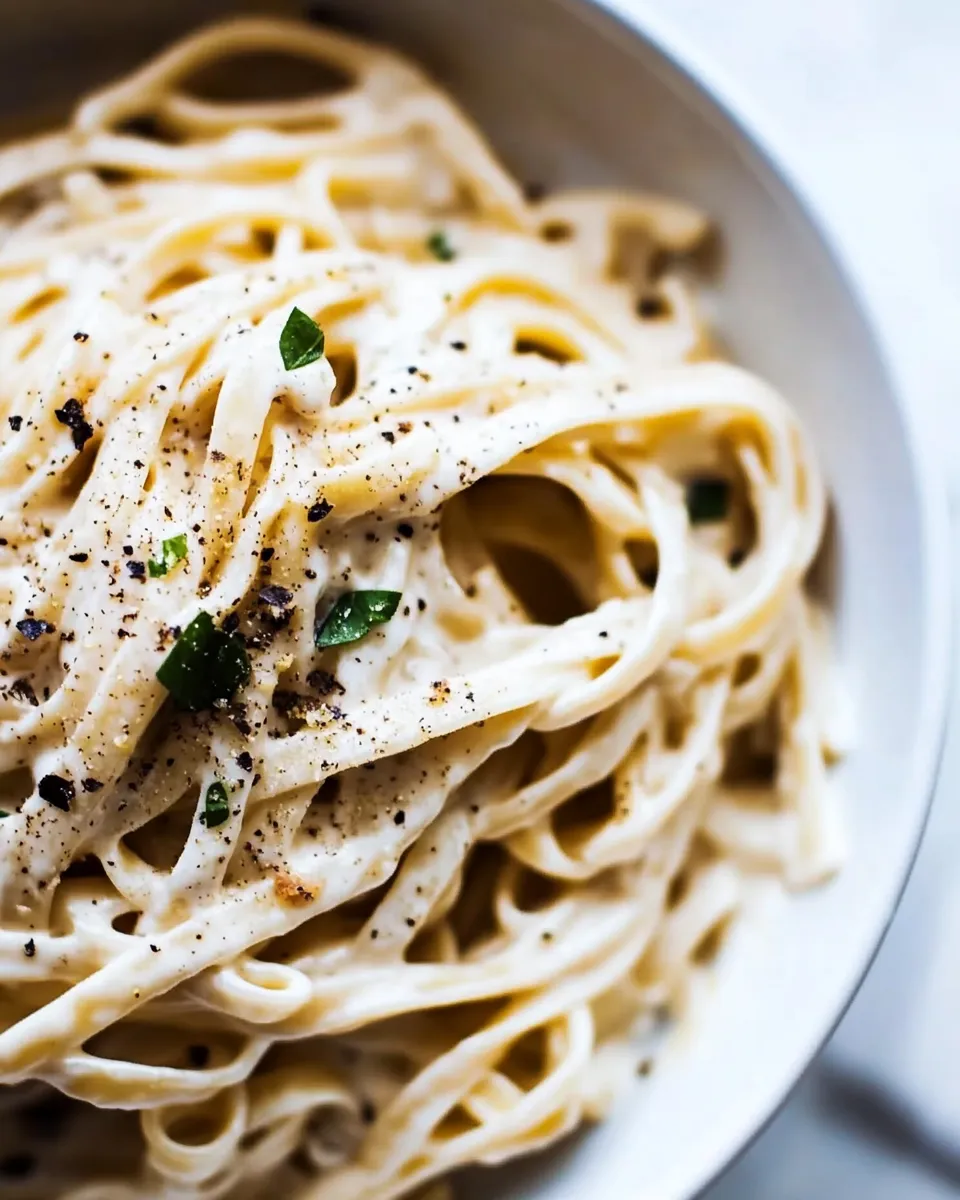
The Alfredo sauce should be silky smooth and cling to the pasta. If it gets stodgy, thick, or grainy, drizzle in some more pasta water and toss again. This should smooth it out nicely!
Storage
: Store leftovers in an airtight container in the fridge for up to 4 days. Reheat gently with a splash of milk to restore creaminess.
Note 1:
To emulsify the pasta with sauce and reserved pasta water, you’ll need a very large skillet or pot—otherwise tossing things can be tricky (and take longer to emulsify).
Note 2:
Be sure to
very
finely chop the onion so it sautés quickly and integrates into the dish well. If there are big pieces of onion, it will be overpowering (and crunchy). Not a fan of onion? Leave it out!
Note 3:
Parmesan makes the biggest difference to the overall flavor in this recipe. Do not use canned or pre-shredded/grated Parmesan—the sauce won’t work (cheese won’t melt smoothly and you’ll be left with a big clump). Instead, use a block of cheese to freshly and finely grate on the small side of a grater or
zester
. Or try
Parmigiano Reggiano
—it’s incredible in this dish.
Note 4:
The sauce should be thick enough to coat the back of a wooden spoon. Lift up the spoon and immediately trace a line across the back of the spoon with your fingertip. If the line retains a clear track, the sauce is thick enough. If not, the sauce needs to simmer a bit longer.
Note 5:
The Alfredo sauce should be silky smooth and cling to the pasta. If it gets stodgy, thick, or grainy, drizzle in some more pasta water and toss again. This should smooth it out nicely!
Storage
: Store leftovers in an airtight container in the fridge for up to 4 days. Reheat gently with a splash of milk to restore creaminess.