Ingredients
Equipment
Method
Instructions
- Preheat the oven to 350°F. Grease the bottom of a 9-inch springform pan with butter and line the bottom with a circle of parchment paper.
- In a medium bowl, combine 1 ¾ cups graham cracker crumbs and 2 tablespoons granulated sugar. Stir in 6 tablespoons melted unsalted butter until the crumbs are evenly moistened.
- Press the crumb mixture firmly and evenly into the bottom of the prepared springform pan and slightly up the sides to form a crust. Bake the crust on the center rack for 8 minutes. Remove from the oven and let the crust cool to room temperature on a wire rack.
- Increase the oven temperature to 450°F. Prepare a water bath: place two sheets of extra-wide heavy-duty foil on the counter, set the springform pan in the center, and wrap the foil up the sides of the pan, sealing carefully with no rips. Leave the rim of the pan mostly clear (fan the foil out at the top) so the cake can rise and to reduce splashing into the pan.
- In the bowl of a stand mixer fitted with the paddle attachment (or using an electric hand mixer), beat 2 lb cream cheese and 1 cup granulated sugar on medium-high speed for about 5 minutes, stopping to scrape down the bowl once or twice, until completely smooth and lump-free. (Use room-temperature cream cheese as listed.)
- Reduce the mixer speed to medium. Add the 5 large eggs one at a time, mixing until each egg is incorporated before adding the next. Scrape down the bowl as needed.
- Reduce mixer speed to low. Add 2 tablespoons sour cream, 1 tablespoon lemon zest, 2 tablespoons lemon juice, and ½ tablespoon vanilla extract. Mix just until the ingredients are incorporated and the batter is smooth. Do not overmix.
- Pour the cheesecake batter over the cooled crust in the foil-wrapped springform pan and smooth the top.
- Place the foil-wrapped springform pan in a deep roasting pan. Boil a kettle of water and pour the hot water into the roasting pan around the springform pan until the water reaches about 1 inch up the sides of the springform pan (taking care not to splash water into the cake). Use more hot water than you think you’ll need so you can fill the pan without reboiling.
- Carefully transfer the roasting pan with the cheesecake to the center oven rack. Bake at 450°F for 15 minutes. Without opening the oven door, reduce the oven temperature to 225°F and bake an additional 60–65 minutes, or until the center of the cheesecake still has a slight wobble when you gently jostle the pan.
- When baking is complete, remove the roasting pan from the oven and let the cheesecake sit in the water bath (still in the roasting pan) at room temperature for 45 minutes to cool gradually. After 45 minutes, remove the springform pan from the water bath, discard the foil, and place the springform pan on a wire rack to cool completely.
- Cover the cooled cheesecake (still in the springform pan) and chill in the refrigerator for at least 8 hours or overnight to fully set.
- After chilling, in a large mixing bowl beat 1 cup heavy whipping cream, 3 tablespoons powdered sugar, and ½ teaspoon vanilla extract on medium-high speed until stiff peaks form. Transfer the whipped cream to a piping bag fitted with your preferred tip, or keep it chilled in the refrigerator until ready to use.
- Run a thin knife or spatula around the inside edge of the springform pan to loosen the cheesecake. Release and remove the springform ring and transfer the cheesecake (and parchment, if still in place) to a serving platter. Remove the parchment paper if desired.
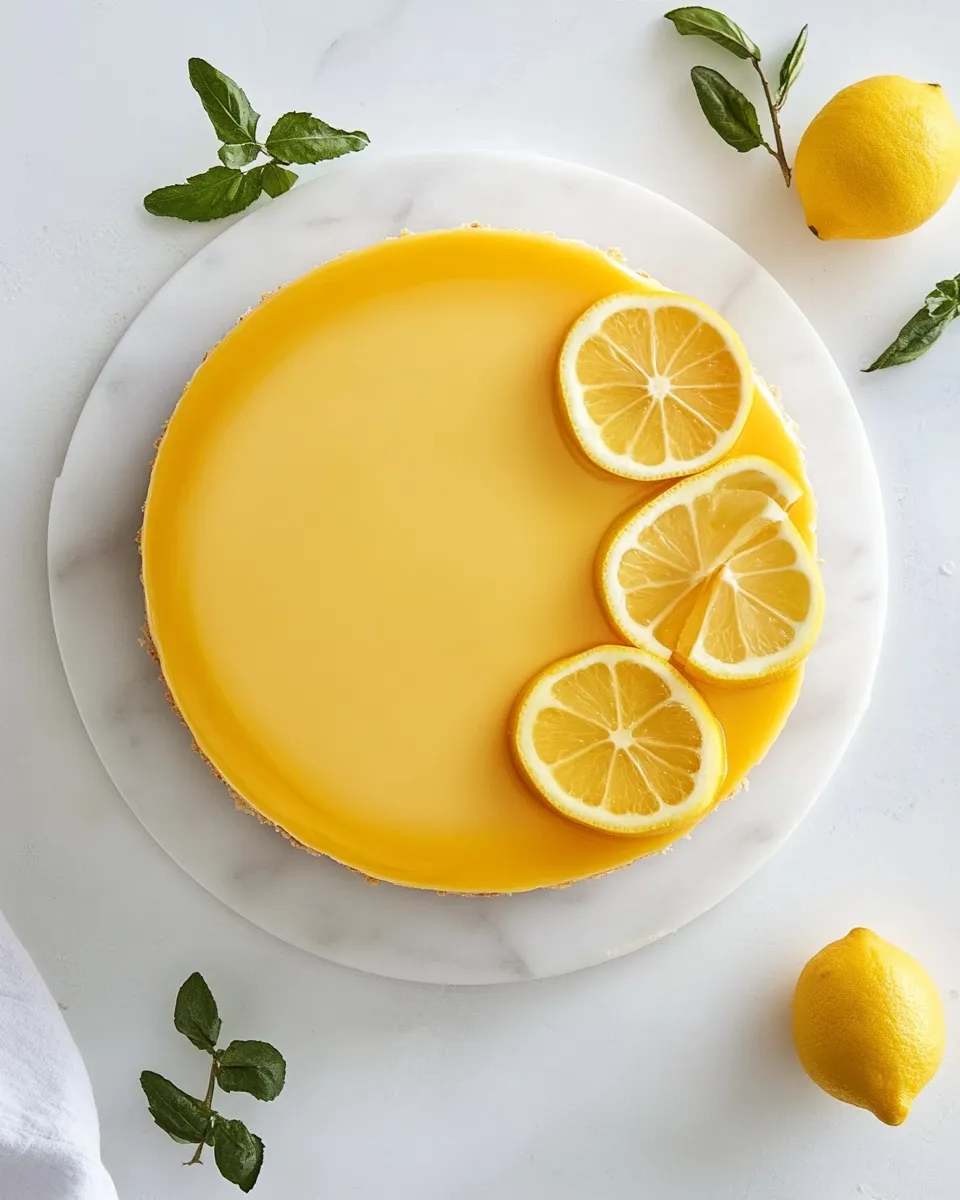
- Spread ½ cup lemon curd evenly over the top surface of the cheesecake. Pipe or dollop the whipped cream around the edge or decorate the top as you prefer.
- Refrigerate the assembled cheesecake until ready to serve. Keep refrigerated and consume within a few days.
Notes
Graham Crackers:You can crush these in a food processor or put them in a large zip bag and crush them with a rolling pin.
Roasting Pan:If your roasting pan is unstable or not designed to carry hot water safely, it’s best to pour the hot water into the pan after it’s placed on the oven rack. I recommend using a kettle for this step to avoid splashing hot water on yourself or the hot oven door.
Baking Times: For the best results, always fully preheat your oven and bake in a conventional oven (not convection). We highly recommend using anin-oven thermometerto ensure accurate temperature.
Roasting Pan:If your roasting pan is unstable or not designed to carry hot water safely, it’s best to pour the hot water into the pan after it’s placed on the oven rack. I recommend using a kettle for this step to avoid splashing hot water on yourself or the hot oven door.
Baking Times: For the best results, always fully preheat your oven and bake in a conventional oven (not convection). We highly recommend using anin-oven thermometerto ensure accurate temperature.