Ingredients
Equipment
Method
Instructions
- Preheat the oven to 325°F (160°C). Grease an 8-inch x 8-inch baking dish or line it with parchment paper.
- Separate 4 eggs, placing the yolks in a large mixing bowl and the whites in a clean, dry bowl.
- Add 3/4 cup sugar to the egg yolks. Beat the yolks and sugar until light and fluffy (about 2–3 minutes).
- Pour in 8 tablespoons melted butter and 1 teaspoon vanilla extract. Beat until fully incorporated.
- Add 3/4 cup all-purpose flour and mix until the batter is smooth and uniform.
- Slowly add 2 cups lukewarm milk in a few additions, mixing after each addition until the batter is smooth and combined.
- In the reserved bowl, beat the egg whites until stiff peaks form.
- Fold the beaten egg whites into the batter in 2–3 additions using a rubber spatula: gently cut down through the center, lift and turn the batter, and rotate the bowl. Stop folding when the mixture is mostly uniform with some small air pockets remaining—do not overmix.
- Pour the batter into the prepared baking dish and smooth the top.
- Bake in the preheated oven. Start checking at 40 minutes; continue baking as needed up to about 70 minutes until the top is lightly golden and a toothpick inserted into the center comes out with a few moist crumbs (not wet batter).
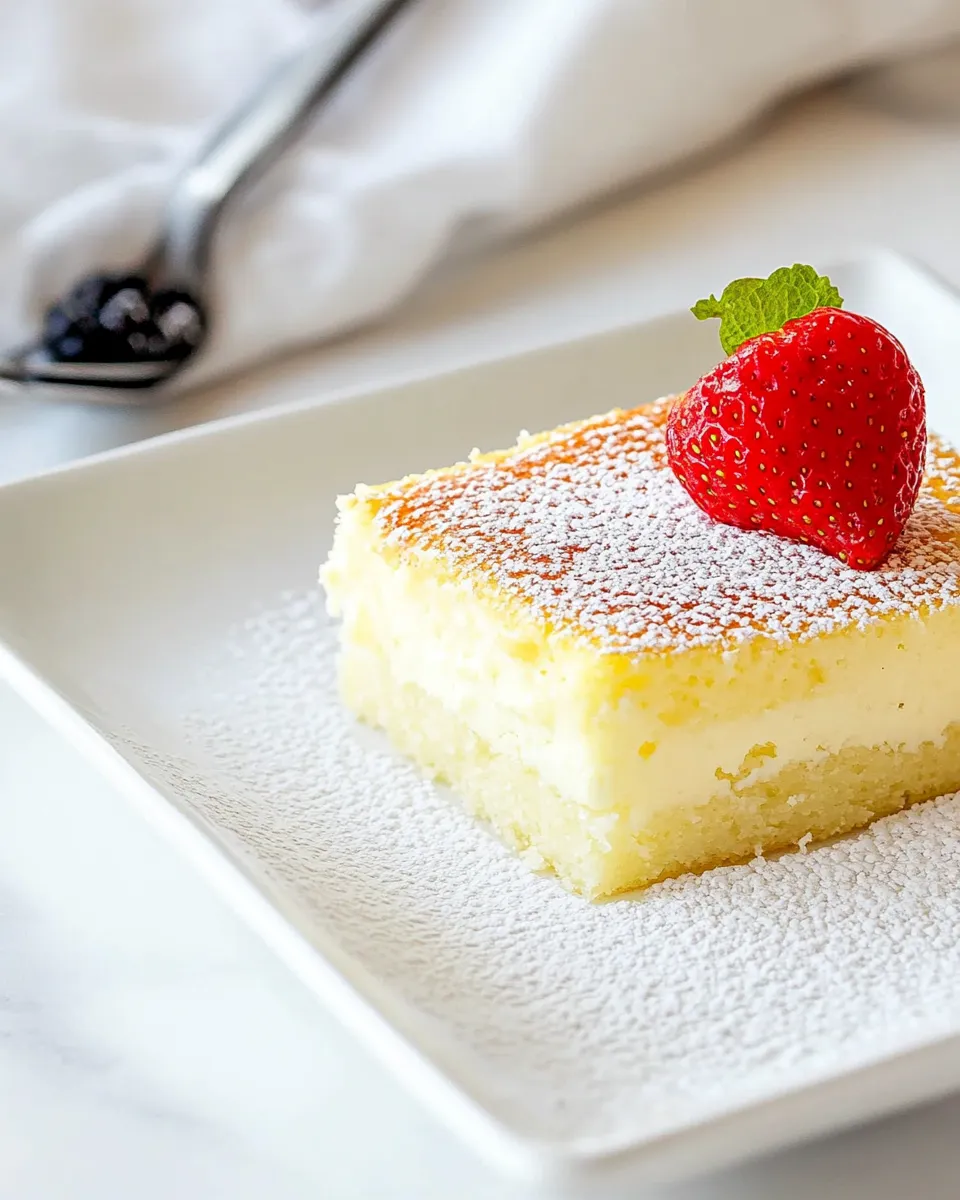
- Remove the cake from the oven and let it cool in the pan until warm or at room temperature. Dust with powdered sugar, cut into squares, and serve.
Notes
*Lukewarm milk refers to milk that is warmed to a temperature between 95°F and 105°F (35°C to 40°C).
The baking time can vary greatly for this cake. I’ve baked this cake in 3 different ovens and I’ve always needed different times which were from 40 to 70 minutes. The oven I have right now only requires about 45 minutes to get a nice golden color on the cake, whereas other ovens I’ve used required the full 70 minutes. Test if after 40 minutes to see what it looks like. The cake is done when it only jiggles slightly but feels firm to touch.
General guidelines for baking at high altitude (not all may apply to this recipe):If baking at altitudes of 5000 feet or higher, keep this in mind:Use a sturdy baking pan:The lower air pressure at high altitudes can cause cakes to rise and collapse more easily, so it’s important to use a sturdy baking pan that can support the weight of the batter. A heavier or thicker pan can help the cake bake more evenly and reduce the risk of collapse.Increase the liquid and leavening agents:At high altitudes, the air is drier and ingredients can evaporate more quickly, which can affect the texture and moisture of the cake. To compensate for this, you may need to increase the liquid in the recipe by a few tablespoons and add a bit more baking powder or baking soda to help the cake rise.Reduce the sugar.As a general rule decrease sugar by 1 tablespoon per cup.Adjust the baking time and temperature:At higher altitudes, the air pressure is lower and the boiling point of water is lower, which can affect the baking time and temperature of the cake. As a general rule, increase the oven temperature 15 to 25°F and decrease the time to 5 to 8 minutes less per 30 minutes of baking time.
Use a sturdy baking pan:The lower air pressure at high altitudes can cause cakes to rise and collapse more easily, so it’s important to use a sturdy baking pan that can support the weight of the batter. A heavier or thicker pan can help the cake bake more evenly and reduce the risk of collapse.
Increase the liquid and leavening agents:At high altitudes, the air is drier and ingredients can evaporate more quickly, which can affect the texture and moisture of the cake. To compensate for this, you may need to increase the liquid in the recipe by a few tablespoons and add a bit more baking powder or baking soda to help the cake rise.
Reduce the sugar.As a general rule decrease sugar by 1 tablespoon per cup.
Adjust the baking time and temperature:At higher altitudes, the air pressure is lower and the boiling point of water is lower, which can affect the baking time and temperature of the cake. As a general rule, increase the oven temperature 15 to 25°F and decrease the time to 5 to 8 minutes less per 30 minutes of baking time.
The baking time can vary greatly for this cake. I’ve baked this cake in 3 different ovens and I’ve always needed different times which were from 40 to 70 minutes. The oven I have right now only requires about 45 minutes to get a nice golden color on the cake, whereas other ovens I’ve used required the full 70 minutes. Test if after 40 minutes to see what it looks like. The cake is done when it only jiggles slightly but feels firm to touch.
General guidelines for baking at high altitude (not all may apply to this recipe):If baking at altitudes of 5000 feet or higher, keep this in mind:Use a sturdy baking pan:The lower air pressure at high altitudes can cause cakes to rise and collapse more easily, so it’s important to use a sturdy baking pan that can support the weight of the batter. A heavier or thicker pan can help the cake bake more evenly and reduce the risk of collapse.Increase the liquid and leavening agents:At high altitudes, the air is drier and ingredients can evaporate more quickly, which can affect the texture and moisture of the cake. To compensate for this, you may need to increase the liquid in the recipe by a few tablespoons and add a bit more baking powder or baking soda to help the cake rise.Reduce the sugar.As a general rule decrease sugar by 1 tablespoon per cup.Adjust the baking time and temperature:At higher altitudes, the air pressure is lower and the boiling point of water is lower, which can affect the baking time and temperature of the cake. As a general rule, increase the oven temperature 15 to 25°F and decrease the time to 5 to 8 minutes less per 30 minutes of baking time.
Use a sturdy baking pan:The lower air pressure at high altitudes can cause cakes to rise and collapse more easily, so it’s important to use a sturdy baking pan that can support the weight of the batter. A heavier or thicker pan can help the cake bake more evenly and reduce the risk of collapse.
Increase the liquid and leavening agents:At high altitudes, the air is drier and ingredients can evaporate more quickly, which can affect the texture and moisture of the cake. To compensate for this, you may need to increase the liquid in the recipe by a few tablespoons and add a bit more baking powder or baking soda to help the cake rise.
Reduce the sugar.As a general rule decrease sugar by 1 tablespoon per cup.
Adjust the baking time and temperature:At higher altitudes, the air pressure is lower and the boiling point of water is lower, which can affect the baking time and temperature of the cake. As a general rule, increase the oven temperature 15 to 25°F and decrease the time to 5 to 8 minutes less per 30 minutes of baking time.