Ingredients
Equipment
Method
Instructions
- In the bowl of a stand mixer fitted with the dough hook, pour 3/4 cup warm water, 2 1/4 teaspoons rapid-rise yeast, and 1 tablespoon of the 1/2 cup granulated sugar. Stir to combine and let proof 5 minutes, until bubbly and frothy.
- Add the remaining granulated sugar to the mixer and stir on low for 15–20 seconds.
- In a small bowl, whisk together 1/4 cup buttermilk (room temperature), 1 egg, and 1/3 cup canola (or vegetable) oil until combined. Pour this mixture into the mixer and stir on low another 20 seconds.
- Add 2 cups of the 4 1/2–5 cups all-purpose flour and 1 teaspoon salt to the mixer. Stir on low until incorporated.
- Add more flour in 1/4-cup increments, mixing after each addition, until the dough pulls away from the sides and bottom of the bowl. You may not need all of the flour — stop when the dough is tacky but no longer sticky to the touch. Once the dough reaches that stage, knead in the mixer for 5 minutes on medium speed.
- Remove the dough, lightly grease the mixing bowl, return the dough to the bowl, and cover with plastic wrap and a dish towel. Let rise in a warm, draft-free place 1–2 hours, or until doubled in size.
- While the dough rises, combine the filling: in a medium bowl stir together 1 1/4 cups packed light brown sugar, 2 1/2 tablespoons ground cinnamon, and 2 tablespoons cornstarch. Set aside.
- After the dough has doubled, punch it down and turn it out onto a well-floured work surface. Lightly flour the top of the dough.
- Roll the dough into a 20 x 30-inch rectangle (or as close as possible), turning and lifting it as you roll to prevent sticking. If edges are uneven, trim them to square the rectangle.
- Spread 1/2 cup softened butter evenly over the dough, leaving a 1-inch strip of dough along one long edge free of butter.
- Evenly spread the brown sugar–cinnamon mixture over the butter, keeping the 1-inch plain strip clear. If filling falls off the edges, use a bench scraper to push it back onto the dough. Lightly press the filling into the butter with a rolling pin or your hands.
- Starting at the long edge opposite the 1-inch strip, roll the dough tightly into a log, finishing with the plain 1-inch strip underneath to seal the seam. Trim the uneven ends to even the log.
- Score the log every 2 inches, then slice at the scores to make individual rolls (about 2-inch slices). Arrange the rolls in prepared pans (parchment-lined and butter-greased): place 12 rolls in a 9×13-inch pan and the remaining 3 in a loaf pan, or arrange rolls in an 8×8-inch pan leaving the small ends as needed.
- Cover the pans with plastic wrap and a dish towel. Let the rolls rise another 1–2 hours, or until they are touching and have nearly doubled. If you are not using rapid-rise yeast, added extra flour, or your kitchen is cool, this second rise may take 3–4 hours.
- Preheat the oven to 350°F. Bake the risen rolls 17–20 minutes, or until the tops begin to brown. Watch carefully so they do not overbake.
- While the rolls bake, make the frosting: beat 2 ounces room-temperature cream cheese and 1/4 cup softened butter together until smooth. Stir in 1 teaspoon vanilla extract, 1/2 tablespoon corn syrup, and 1 teaspoon fresh lemon juice, scraping the bowl as needed.
- Add 1 1/4 cups powdered sugar gradually and mix until incorporated. Then beat on high for about 5 minutes, until the frosting lightens in color and is fluffy. Scrape the sides and mix briefly again.
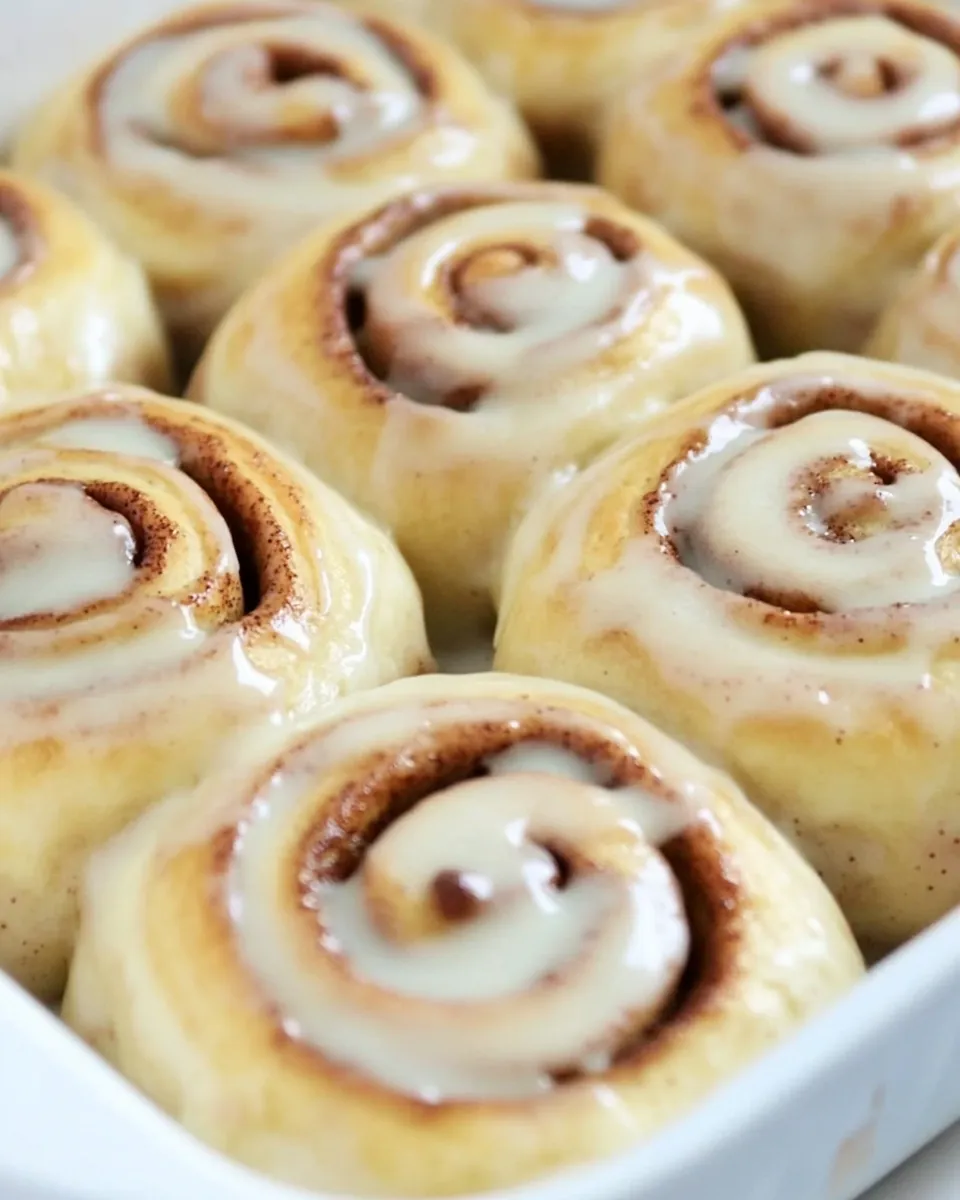
- When the rolls come out of the oven, spread half of the frosting over them so it melts into the warm rolls. After a few more minutes of cooling, spread the remaining frosting on top. Serve warm.
Notes
To Store:Cover leftovers tightly and keep at room temperature up to 2 days or in the refrigerator up to 4 days.
To Freeze:Freeze unbaked rolls after the second rise (before baking) or freeze baked rolls without frosting. Thaw overnight, bake or reheat, and frost as directed.
To Make Ahead:Prepare through the second rise, cover well, and refrigerate overnight. Bake fresh in the morning.
To Freeze:Freeze unbaked rolls after the second rise (before baking) or freeze baked rolls without frosting. Thaw overnight, bake or reheat, and frost as directed.
To Make Ahead:Prepare through the second rise, cover well, and refrigerate overnight. Bake fresh in the morning.