Crispy Salmon Bowls with Pesto Spaghetti Squash
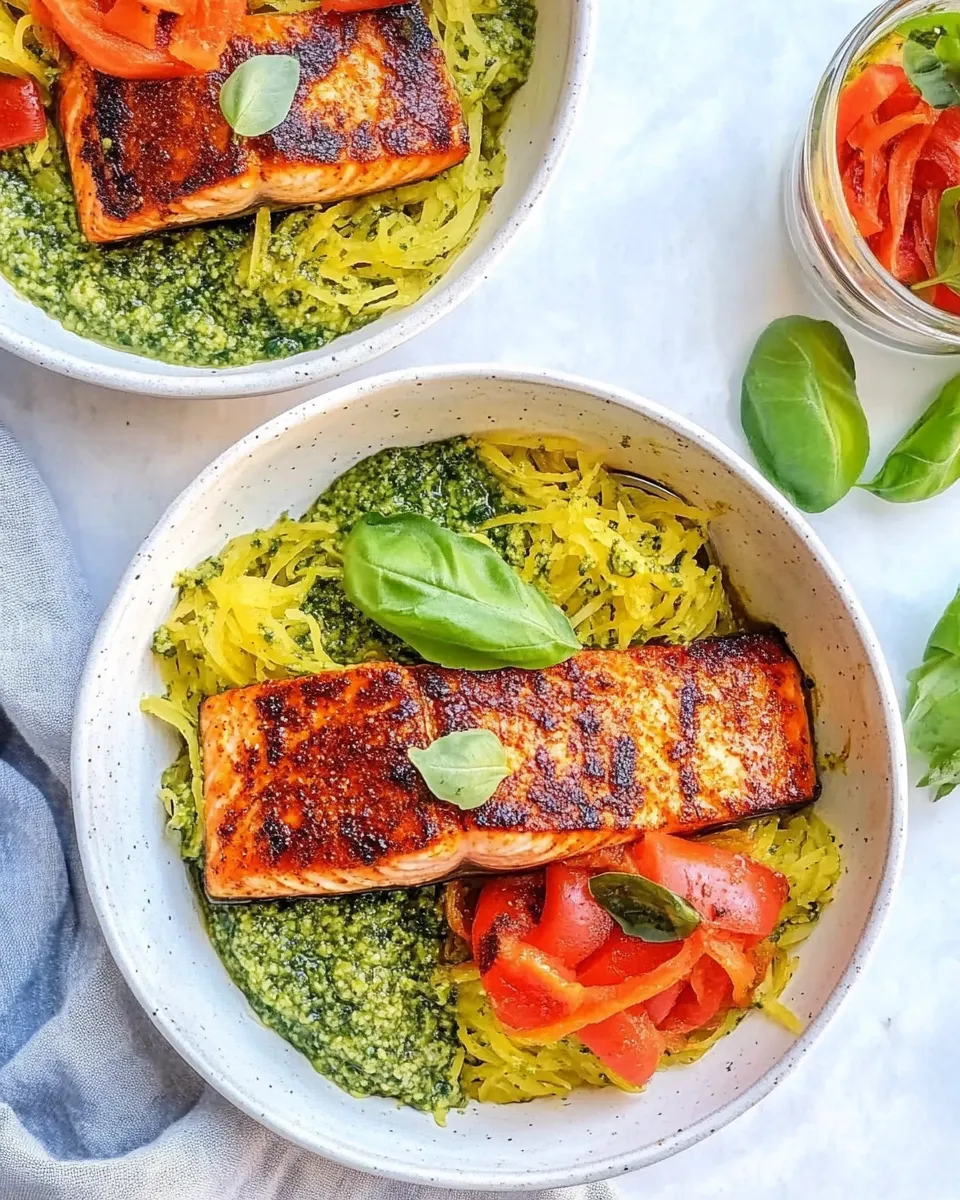
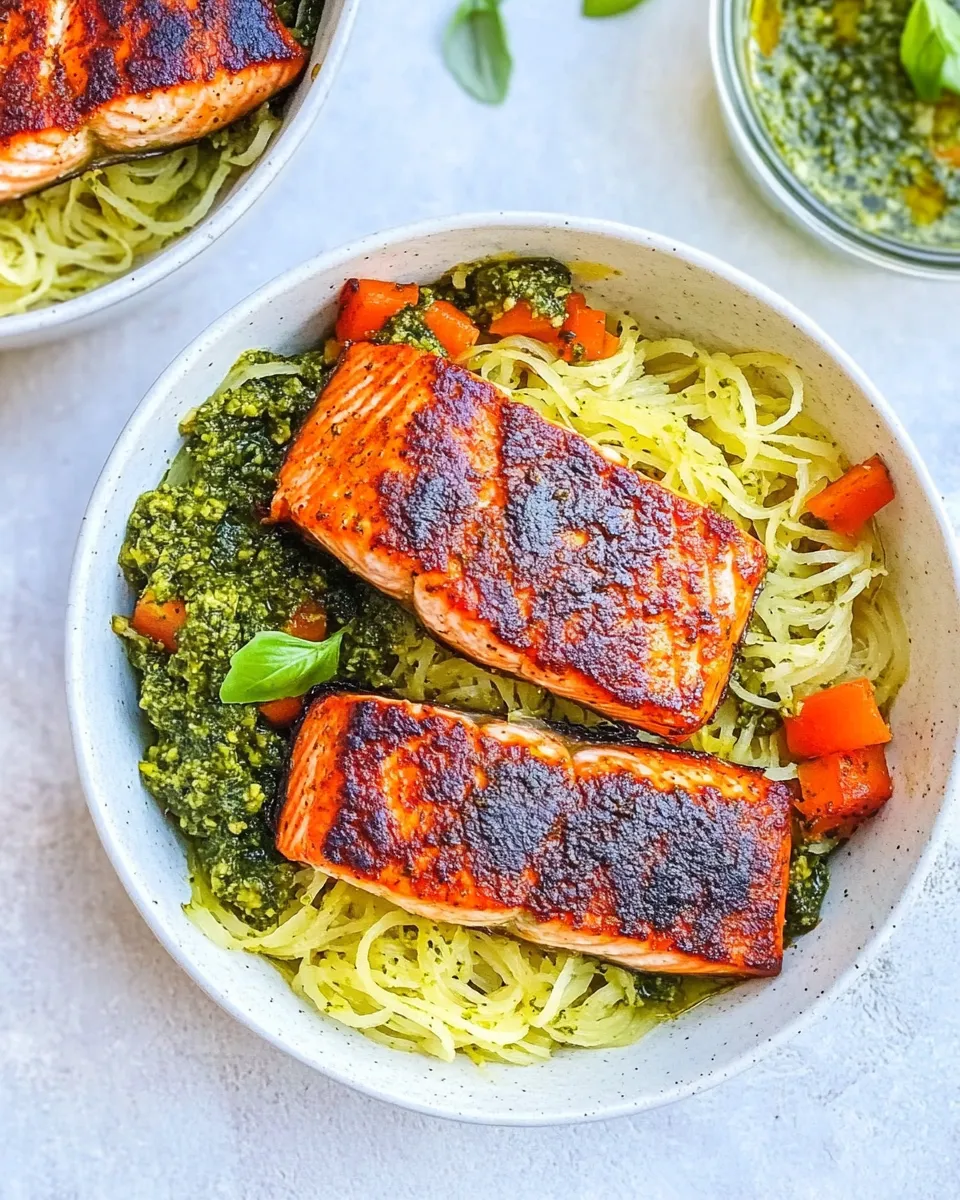
Colorful, crunchy, and vibrantly sauced, these Crispy Salmon Bowls with Pesto Spaghetti Squash are a weeknight hero and a perfect make-ahead option for lunches. Think golden-seared salmon fillets resting on a bed of roasted spaghetti squash that pulls into delicate, noodle-like strands, bright roasted broccoli and carrots for texture, and a simple green sauce that ties everything together. The flavors are balanced—smoky, earthy, and bright—with a texture contrast that keeps every bite interesting. The bowl is simple to assemble and uses pantry-friendly seasonings, so it’s approachable even on busy nights.
Why you’ll love this recipe
- Quick to assemble once your squash is roasted.
- Eat warm right away or pack for lunches—the veggies hold up well.
- Balanced nutrition: protein, veggies, and a low-carb spaghetti squash base.
- Bright pesto lifts the whole dish with fresh herbal notes.
Ingredients
- 1 large spaghetti squash, roasted
- 1 large crown broccoli, chopped into florets
- 2 large carrots, peeled and chopped
- 3 cups baby spinach
- 1/2 cup Low-FODMAP Pesto or pesto of choice
- 1/2 teaspoon sea salt, to taste
- 1 1-pound salmon fillet
- 2 tsp avocado oil or olive oil
- 2 tsp ground paprika
- 1 tsp ground ginger
- 1 pinch sea salt, to taste
Make-ahead and prep tips
Roast the spaghetti squash and the vegetables at the same time to save hands-on time. The spaghetti squash keeps well in the fridge for 3–4 days, and the salmon is best cooked the day you serve, but you can poach or bake it lightly ahead and re-sear for texture. Keep the pesto chilled and add it just before serving to preserve its fresh flavor. If your pesto is thick, stir in a little water or olive oil to loosen it for drizzling.
Kitchen tools you’ll need
- Baking sheet(s)
- Sharp knife and cutting board
- Large rimmed sheet pan or roasting pan
- Mixing bowl
- Nonstick or cast-iron skillet
- Fork for pulling squash strands
- Spatula and tongs
Step-by-step instructions
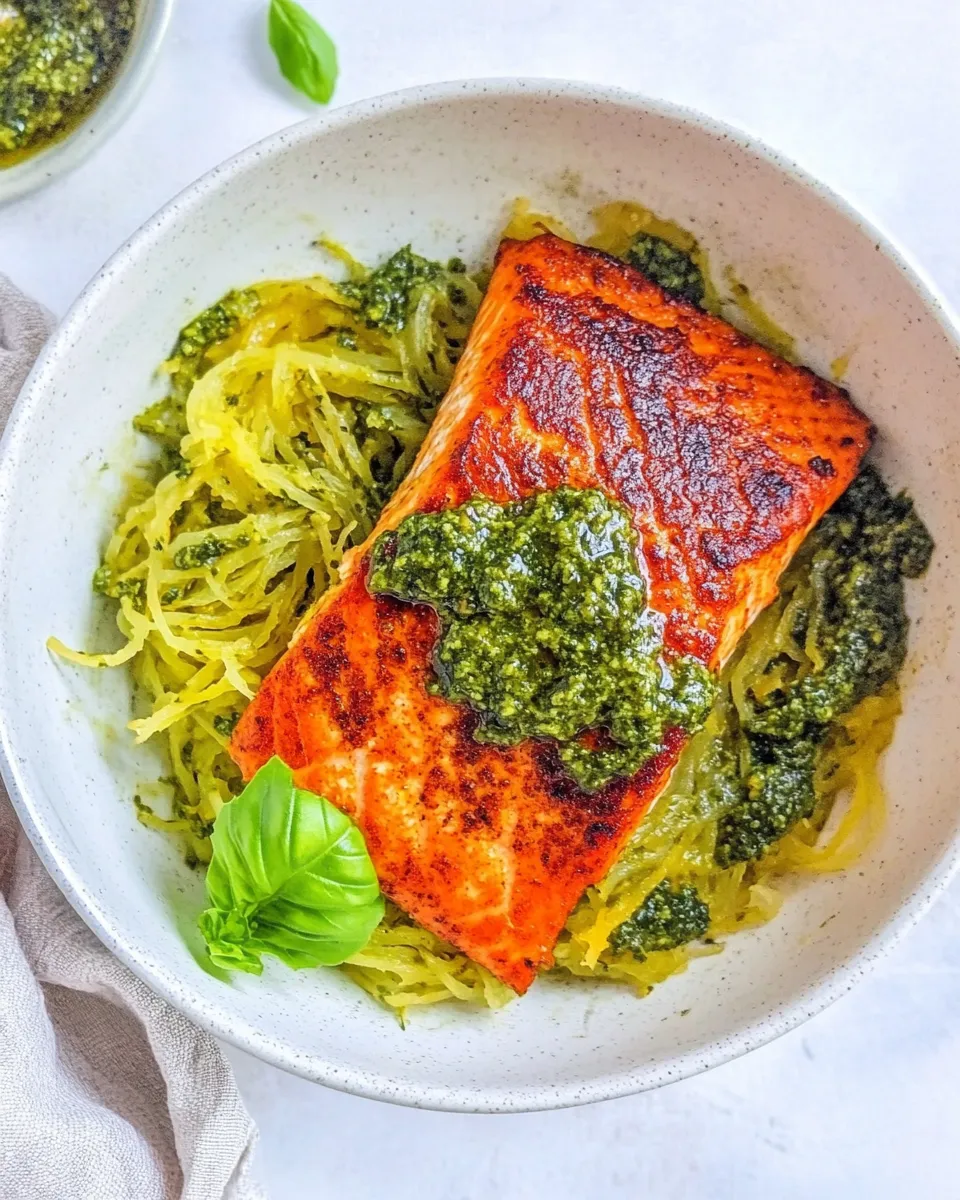
Below are clear, step-by-step directions that follow the ingredient list and keep the order logical for a smooth cooking experience. Quantities match the ingredient list exactly.
- Preheat your oven to 400°F (about 200°C). Position a rack in the center to allow even roasting for both the spaghetti squash and vegetables.
- Prepare the spaghetti squash: slice the 1 large spaghetti squash in half lengthwise and scoop out the seeds. Lightly brush the cut sides with a small amount of avocado oil or olive oil if desired, and sprinkle a pinch of the 1/2 teaspoon sea salt across the exposed flesh. Place the squash halves cut-side down on a rimmed baking sheet and roast for about 35–45 minutes, or until the flesh is tender and easily separates into strands with a fork.
- While the squash roasts, prepare the broccoli and carrots: toss the 1 large crown broccoli (chopped into florets) and the 2 large carrots (peeled and chopped) on a separate rimmed baking sheet with a drizzle of the remaining avocado oil or olive oil and a light pinch of the 1/2 teaspoon sea salt, if desired. Arrange the vegetables in a single layer for even roasting. Put them in the oven with the squash for the last 20–25 minutes of the squash’s roasting time, or until the broccoli edges are lightly browned and the carrots are tender when pierced with a fork.
- Season the salmon: pat the 1 1-pound salmon fillet dry with paper towels. In a small bowl, combine the 2 tsp ground paprika, 1 tsp ground ginger, and 1 pinch sea salt. Rub the spice mix evenly over the salmon. Let the fish sit at room temperature for 5–10 minutes while the vegetables finish roasting; this ensures more even cooking.
- Cook the salmon: place a nonstick or cast-iron skillet over medium-high heat and add the 2 tsp avocado oil or olive oil. When the oil shimmers, place the seasoned salmon fillet in the pan skin-side down if it has skin. Cook without moving it for about 4–5 minutes, depending on thickness, until the bottom is golden and crisp. Carefully flip the fillet and cook the other side for 3–4 minutes, or until the salmon is cooked through to your desired doneness. Remove the fish from the pan and let it rest for a couple of minutes, then flake or slice into portions.
- Pull the spaghetti squash strands: when the roasted squash is cool enough to handle, use a fork to scrape the flesh away from the skin. The strands will come away in noodle-like pieces. Transfer the squash strands to a mixing bowl and season with any remaining pinch of the 1/2 teaspoon sea salt to taste. Toss gently to combine and keep warm.
- Wilt the spinach: quickly sauté the 3 cups baby spinach in the same skillet used for the salmon or in a clean pan over medium heat for 1–2 minutes, just until it begins to wilt. You can add a small splash of water if needed to help it soften. Remove from heat.
- Warm the pesto: scoop 1/2 cup Low-FODMAP Pesto or pesto of choice into a small bowl. If the pesto is very thick, thin it with a teaspoon or two of water or olive oil until it reaches a loose, drizzle-able consistency.
- Assemble the bowls: divide the roasted spaghetti squash among serving bowls to form a base. Arrange the roasted broccoli and chopped carrots over the squash. Add a handful of wilted baby spinach. Place a portion of the sliced or flaked salmon fillet on top of each bowl.
- Finish and serve: spoon or drizzle the pesto over the salmon and vegetables. Taste and add more sea salt if desired. Serve immediately while the salmon is warm and the vegetables are crisp-tender.
Serving suggestions
These bowls shine on their own, but here are a few simple ways to customize the experience:
- Add a squeeze of fresh lemon for brightness right before eating.
- Top with toasted seeds—like sunflower or pumpkin—for extra crunch.
- Spoon on a little extra pesto or a vinaigrette for a saucier bowl.
- Swap baby spinach for arugula if you like peppery greens.
Notes on ingredients and swaps
If you’re using a store-bought pesto, pick one that aligns with your dietary preferences. You can also make a quick pesto at home with fresh basil, toasted pine nuts or walnuts, olive oil, lemon juice, and a pinch of salt. The recipe calls for avocado oil or olive oil—either works for searing the salmon and roasting the vegetables; avocado oil has a higher smoke point, which can help with a crisp sear.
The seasonings for the salmon are intentionally simple: ground paprika for a warm, smoky note and ground ginger for a bright, slightly peppery warmth. Together they create a delicate spice crust when the salmon is seared.
Meal prep and storage
Store leftover components separately when possible. Keep roasted spaghetti squash and vegetables in airtight containers in the refrigerator for up to 4 days. Store cooked salmon in an airtight container for up to 2 days—reheat gently in a skillet to preserve texture. Pesto keeps well in the fridge for about a week; press a layer of olive oil on top to help maintain its color and flavor.
Common questions
Can I bake the salmon instead of searing it? Yes. Bake at 400°F for about 10–12 minutes or until it reaches your preferred doneness. Searing gives a crisp exterior, but baking is hands-off and also delicious.
How do I tell when the squash is done? The flesh should be tender and easily pull away into noodle-like strands with a fork. If it’s still firm, roast another 5–10 minutes.
Can I use a different fish? Absolutely. Firm-fleshed fillets like cod, halibut, or trout can work, though cooking times will vary.
Final thoughts
These Crispy Salmon Bowls with Pesto Spaghetti Squash are all about satisfying textures and straightforward flavors. Roasted spaghetti squash replaces heavier grains, while the pesto brings an herbaceous pop that complements the smoky spice crust on the salmon. This bowl is a reliable weeknight winner: nourishing, colorful, and composed in under an hour when you multitask the roasting and pan-cooking. Serve with a simple salad or a wedge of lemon and enjoy a balanced, flavorful meal that’s easy to make and easy to love.
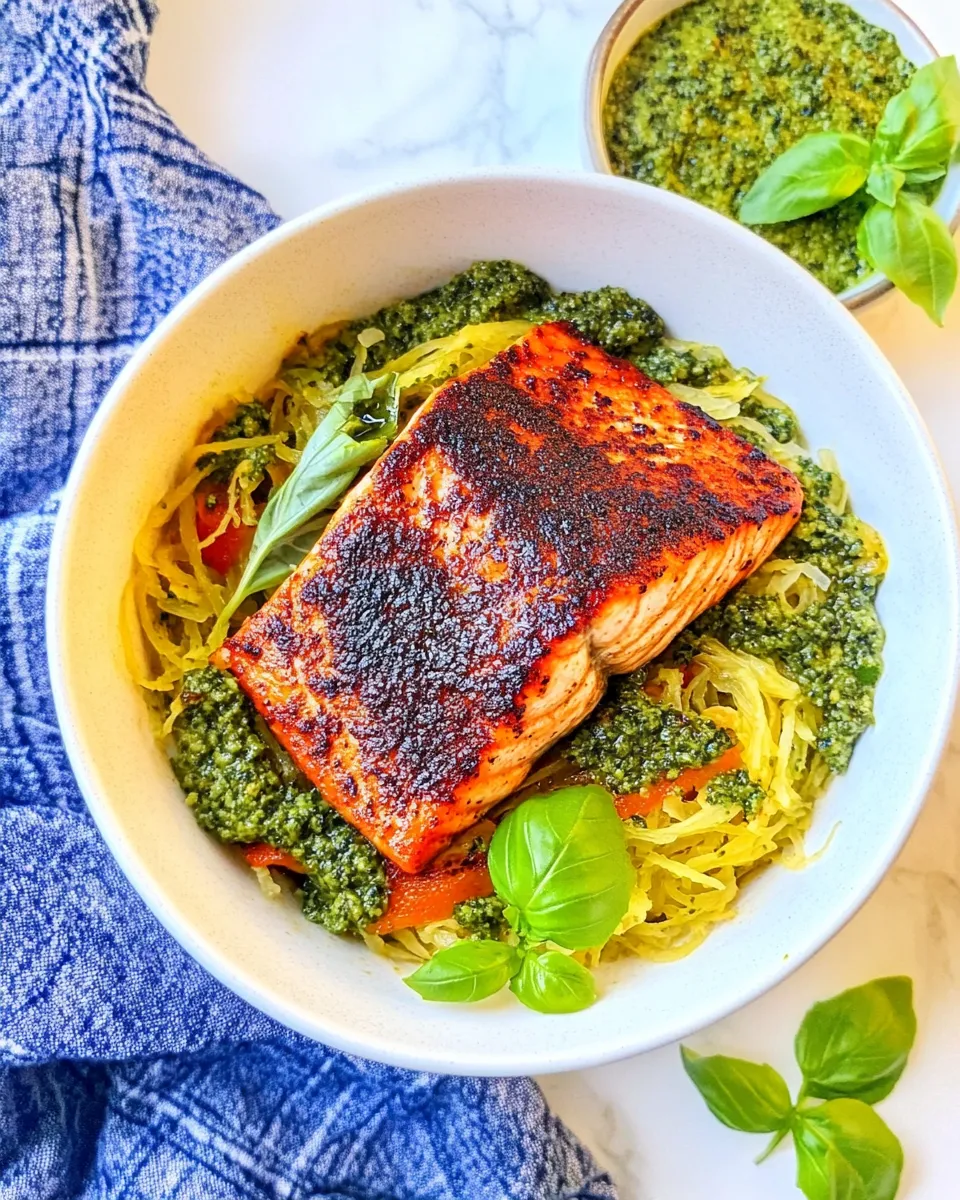
Crispy Salmon Bowls with Pesto Spaghetti Squash
Ingredients
Equipment
Method
- Preheat the oven and roast the spaghetti squash: halve the squash, remove seeds, and place cut-side down on a baking sheet. Roast until tender and the flesh separates into strands; follow your usual method (about 40–60 minutes depending on size). Prepare the pesto while the squash cooks.
- When the squash is about 10 minutes from done, heat 1 teaspoon avocado oil in a large skillet over medium heat.
- Add the chopped carrots and broccoli to the skillet, stir, then cover and cook, stirring occasionally, until vegetables are tender-crisp, about 5–8 minutes.
- Add the baby spinach, cover, and cook until wilted, about 2 minutes; remove from heat.
- When the roasted spaghetti squash is cool enough to handle, use a fork to scrape out the strands and add them to the skillet with the sautéed vegetables. Stir in the pesto and 1/2 teaspoon sea salt, taste, and adjust seasoning if needed.
- Prepare the salmon for broiling: place the fillet in a lightly oiled casserole dish or baking sheet. Drizzle with the remaining 1 teaspoon avocado oil and rub to coat. Sprinkle evenly with paprika, ground ginger, and a pinch of sea salt.
- Broil the salmon on the second-highest rack for 10–15 minutes, depending on thickness, until the top is golden and the fish flakes with a fork. Let the salmon rest 5 minutes, then cut into serving pieces.
- Divide the pesto spaghetti squash and vegetables between 2–3 bowls, top with the broiled salmon pieces, and serve immediately.
Notes
- Use store-bought pesto for convenience.
- Adjust broiling time to salmon thickness.
- Low-FODMAP pesto is suggested if needed.
- Taste and add more salt or pesto as desired.