Korean Salmon with Dipping Sauce
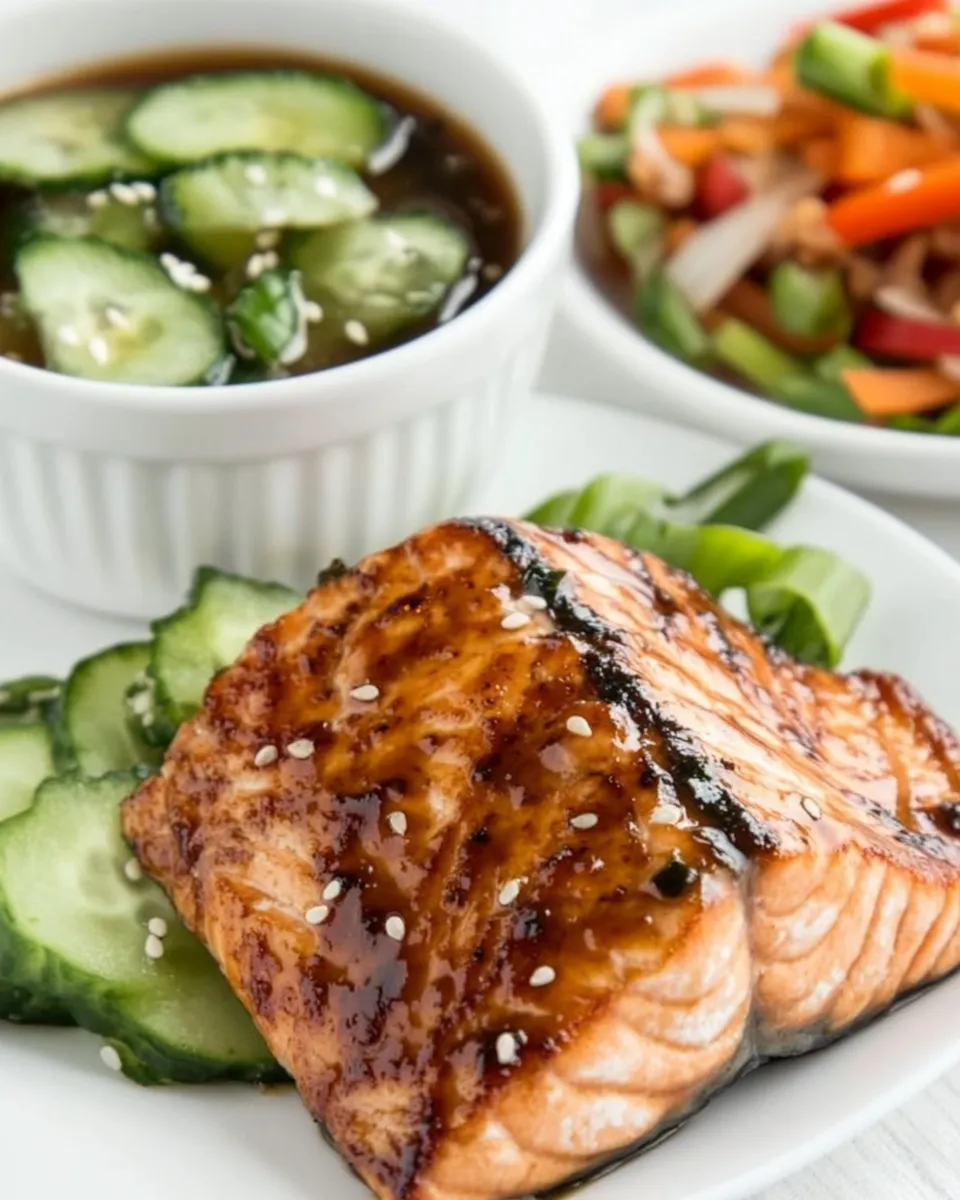
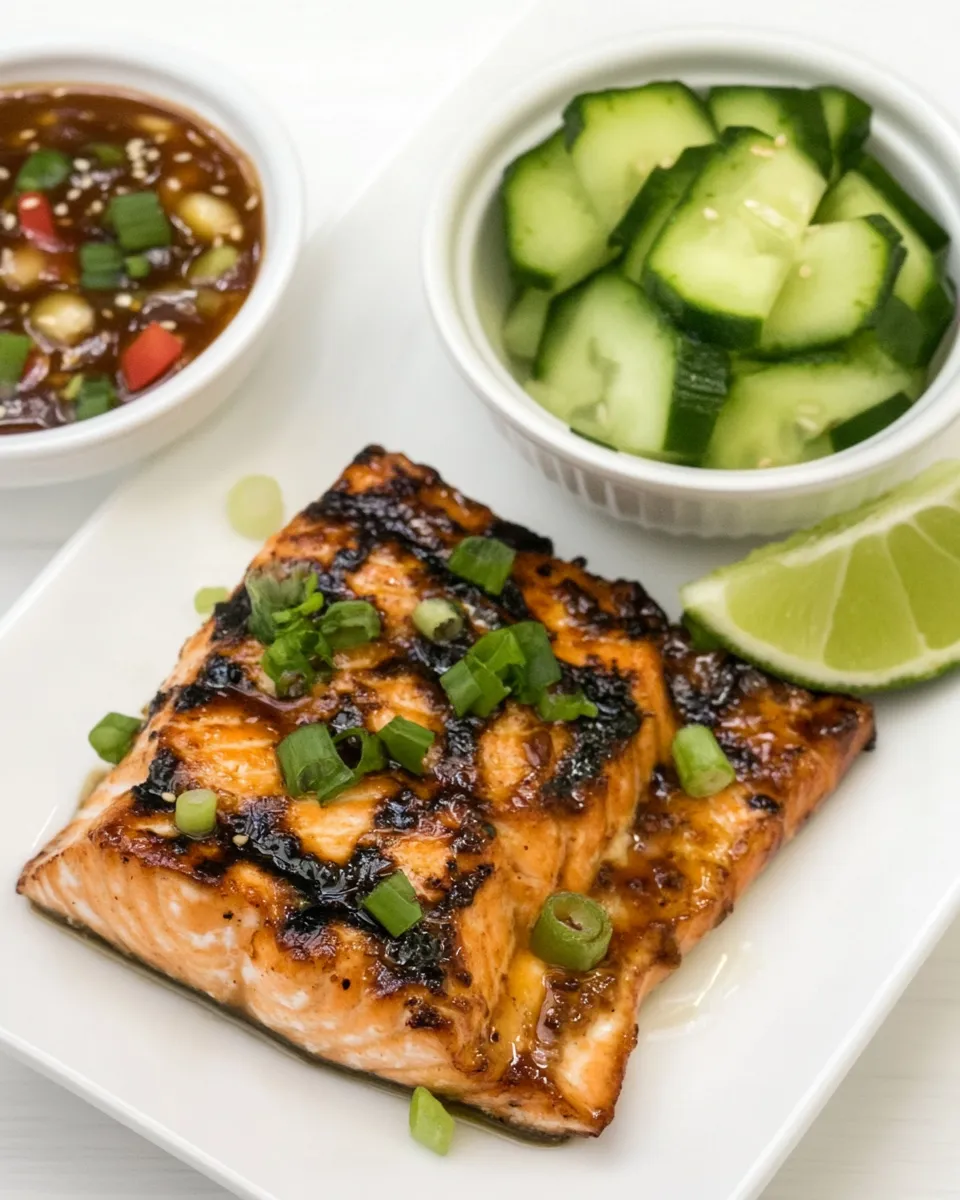
This Korean Salmon with Dipping Sauce is bright, simple, and big on flavor — perfect for busy weeknights or a relaxed weekend dinner. Four salmon fillets get a fast, savory-sweet treatment, and a tangy dipping sauce on the side turns every bite into something special. The technique is approachable: a quick pan-sear to build a caramelized crust, then a few minutes in the oven to finish. The dipping sauce is what pulls everything together, giving acid, spice, and umami in equal measure. Serve with steamed rice and a crisp salad or quick kimchi-style cucumber for a complete meal.
Why you’ll love this
- Quick: From start to finish in about 30 minutes.
- Flavorful: A balance of sweet, salty, and mildly spicy notes.
- Versatile: Works with rice, noodles, or a salad.
- Accessible ingredients that are easy to find year-round.
Ingredients (serves 4)
- 4 salmon fillets (about 6 ounces each), skin-on
- 1 tablespoon vegetable oil
- Salt, to taste
- Freshly ground black pepper, to taste
- 2 tablespoons soy sauce
- 1 tablespoon rice vinegar
- 2 teaspoons sesame oil
- 1 tablespoon honey
- 1 garlic clove, minced
- 1 teaspoon grated fresh ginger
- 1 small green onion, thinly sliced (for garnish)
- 1 teaspoon toasted sesame seeds (for garnish)
Dipping Sauce
This quick sauce is bright and balanced — just whisk and serve.
- 2 tablespoons soy sauce
- 1 tablespoon rice vinegar
- 1 teaspoon sesame oil
- 1 teaspoon honey
- 1 garlic clove, minced
- 1 teaspoon grated fresh ginger
- 1/2 teaspoon chili flakes (adjust to taste)
- 1 green onion, thinly sliced
Prep and cooking tools
- Large oven-safe skillet or nonstick pan
- Baking sheet (if your skillet is not oven-safe)
- Small bowl for the dipping sauce
- Whisk or fork
- Tongs or a fish spatula
Step-by-step directions
Follow these clear, sequential steps to make the Korean Salmon with Dipping Sauce. Ingredient names and quantities above are the source of truth; directions below use those exact ingredients and amounts.
- Preheat and prepare the salmon: Preheat your oven to 400°F (200°C). Pat the 4 salmon fillets dry with paper towels. Season both sides lightly with salt and freshly ground black pepper. Let the fillets sit at room temperature while you finish the sauce and heat the pan; this helps them cook evenly.
- Make the marinade-sauce for the salmon: In a small bowl, whisk together 2 tablespoons soy sauce, 1 tablespoon rice vinegar, 2 teaspoons sesame oil, 1 tablespoon honey, 1 minced garlic clove, and 1 teaspoon grated fresh ginger until the honey is fully incorporated. This mixture will be used both during cooking and to baste the fish.
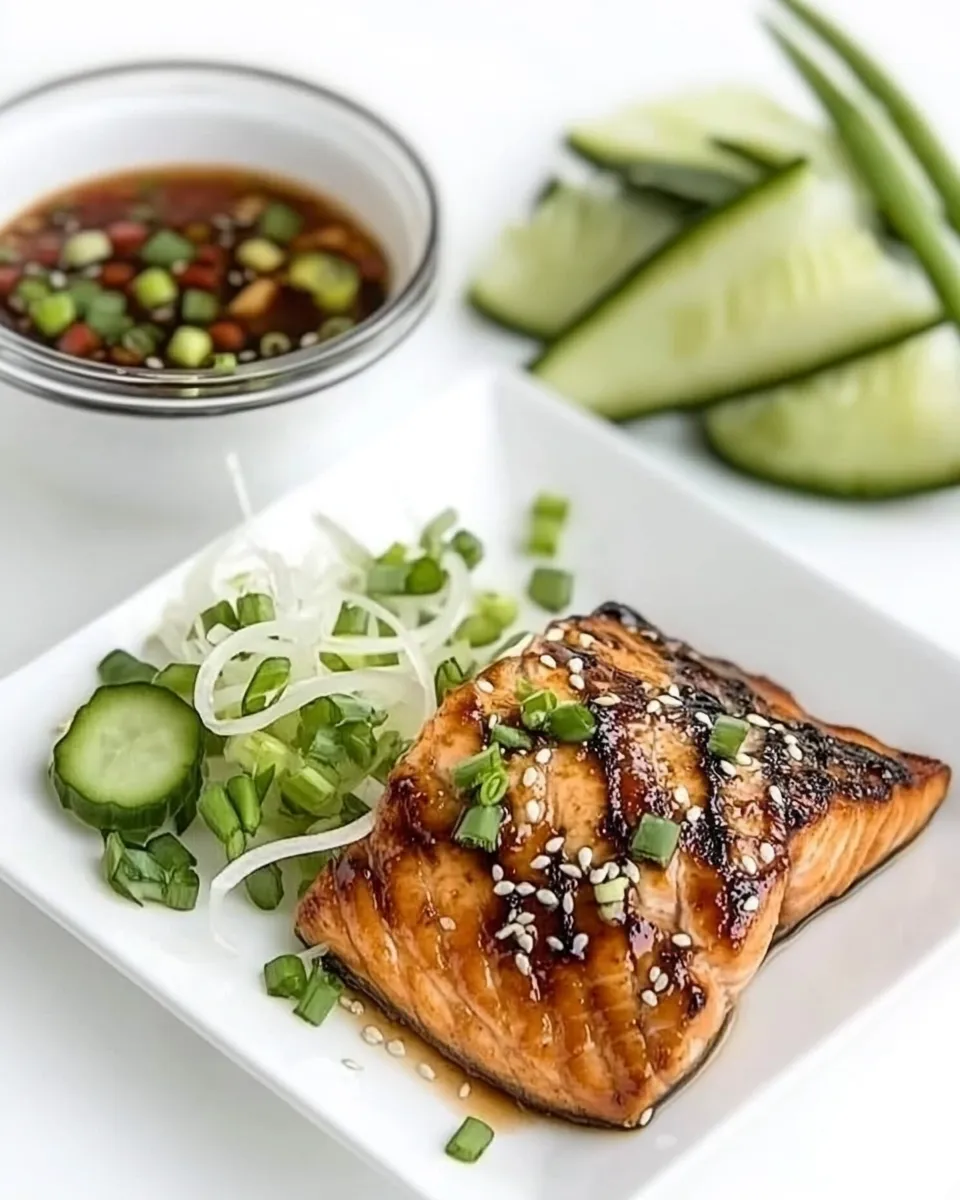
- Prepare the dipping sauce: In a separate small bowl, combine 2 tablespoons soy sauce, 1 tablespoon rice vinegar, 1 teaspoon sesame oil, 1 teaspoon honey, 1 minced garlic clove, 1 teaspoon grated fresh ginger, and 1/2 teaspoon chili flakes. Whisk until blended. Stir in the thinly sliced green onion. Taste and adjust the heat or sweetness to your preference. Set the dipping sauce aside at room temperature.
- Heat the pan: Place a large oven-safe skillet over medium-high heat and add 1 tablespoon vegetable oil. Allow the oil to heat until shimmering but not smoking; this usually takes 1 to 2 minutes. The hot oil is important for getting a good sear on the salmon skin.
- Sear the salmon skin-side down: Carefully place the 4 salmon fillets in the hot skillet, skin-side down. Press them gently with a spatula for 10 to 15 seconds to prevent curling. Cook without moving for 3 to 4 minutes, or until the skin is crisp and the sides of the fillets show opaque, cooked flesh about 1/3 up from the bottom.
- Baste with the sauce: Flip each fillet so the flesh side is down and pour half of the marinade-sauce (from step 2) over the tops of the fillets. Spoon the sauce over the fish for about 30 seconds to glaze the surfaces. Allow them to sear for 1 minute on this side to develop color.
- Finish in the oven: Transfer the oven-safe skillet directly to the preheated oven. If your skillet is not oven-safe, move the salmon to a baking sheet and pour any accumulated pan juices and remaining marinade over the fillets before placing in the oven. Roast for 5 to 7 minutes, depending on thickness, until the salmon reaches your preferred doneness. The internal temperature should read 125°F (52°C) for medium-rare or 140°F (60°C) for fully cooked; the fillets will continue to cook slightly after you remove them from the oven.
- Baste again and rest: Remove the skillet from the oven and immediately spoon the remaining marinade-sauce over the hot fillets to keep them glossy and flavorful. Let the salmon rest for 2 to 3 minutes so the juices redistribute.
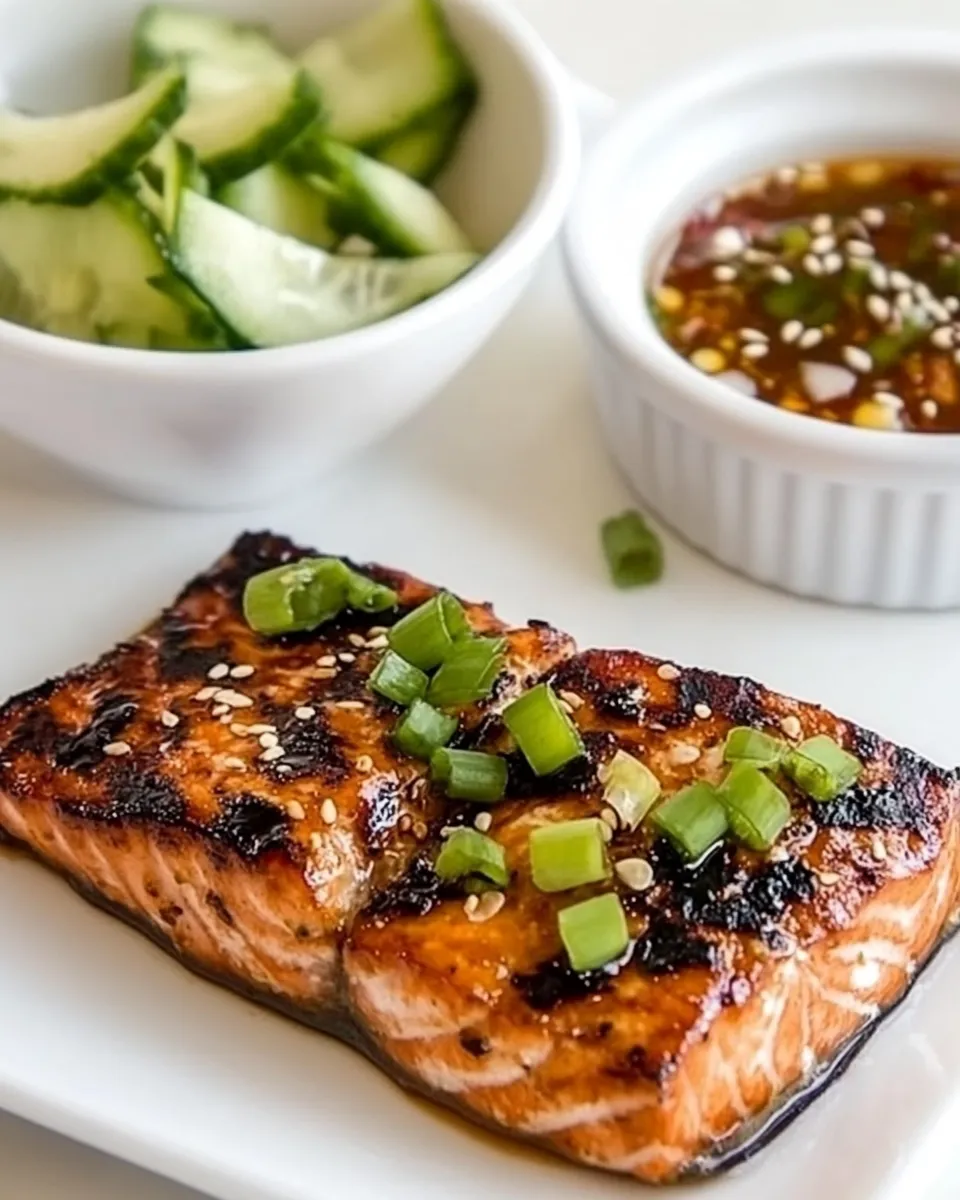
- Garnish and serve: Transfer the fillets to serving plates. Sprinkle each fillet with the thinly sliced green onion and 1 teaspoon toasted sesame seeds divided among the four portions. Serve the salmon alongside the dipping sauce so everyone can spoon it over their portion or dip each bite as desired.
Serving suggestions
For a full meal, serve the Korean Salmon with Dipping Sauce over steamed white or brown rice and add one of these sides:
- Quick cucumber salad: thinly sliced cucumber tossed with rice vinegar, a pinch of sugar, and a sprinkle of chili flakes.
- Steamed broccoli or bok choy with a drizzle of sesame oil and a squeeze of lemon.
- Warm soba or udon noodles tossed with a little sesame oil and sliced scallions.
Make-ahead and storage
You can whisk the dipping sauce up to 2 days ahead and store it refrigerated in an airtight container. The salmon is best served fresh but refrigerated leftovers will keep for up to 2 days. Reheat gently in a low oven (275–300°F / 135–150°C) for 8–10 minutes to avoid drying out the fish, or serve cold over a salad for a quick lunch.
Troubleshooting tips
- If the salmon sticks to the pan: make sure the pan and oil are fully heated before adding the fish, and avoid flipping too early. Let the crust form; the fillet should release easily once seared.
- If the sauce tastes too salty: add a touch more honey and a squeeze of rice vinegar to brighten and balance it.
- If the skin isn’t crisp: press the fillets gently right after placing them skin-side down and ensure the pan is hot; finish briefly under the broiler for 30–60 seconds if needed (watch carefully).
Notes on ingredients and swaps
- Soy sauce: Use a low-sodium version if you prefer less salt. Tamari is an excellent gluten-free alternative and works perfectly with the flavor profile.
- Honey: If you prefer a plant-based sweetener, use maple syrup in an equal amount. Either choice harmonizes with the soy and vinegar.
- Sesame oil: This is toasted sesame oil for a robust, nutty flavor. If you only have plain sesame oil, use a touch less as it is more neutral.
- Chili flakes: Omit or reduce if you want a milder sauce; add more for extra heat.
Final thoughts
This Korean Salmon with Dipping Sauce is a weeknight hero: fast to make, bold in flavor, and flexible enough to pair with many sides. The crisped skin, glossy glaze, and bright dipping sauce create layers of texture and taste that keep every bite interesting. Because the recipe uses everyday pantry staples, it’s easy to pull off any night of the week. Enjoy it with rice and quick pickled vegetables for a satisfying meal that feels special without fuss.
Keyword check: Korean Salmon with Dipping Sauce — this dish proves that simple techniques and a small, thoughtful sauce can elevate a humble fillet into an impressive, flavorful plate suitable for any dinner table.
Korean Salmon with Dipping Sauce
Ingredients
Equipment
Method
- If using frozen salmon, thaw in the refrigerator overnight and drain.
- In a mixing bowl combine soy sauce, rice vinegar, sesame oil, sweetener, garlic powder, Korean red pepper powder (gochugaru), and sliced green onion; mix well.
- Divide the mixture in half: one half for marinating the fish and the other half reserved as the dipping sauce.
- Pat the salmon fillets dry and place them into a Ziplock bag or airtight container; pour the marinade half over the fish, seal, and refrigerate for about 1 hour.
- When ready to cook, remove the salmon from the fridge, brush the top (skinless side if applicable) generously with olive oil, and let the fish come closer to room temperature while you preheat the grill.
- Preheat the grill (or grill pan) to medium-high heat and grease the grates with oil or non-stick spray to prevent sticking.
- Place each fillet on the grill with the top side down at an angle to the grates; grill 2–3 minutes until grill marks appear.
- Carefully lift and rotate each fillet to the opposite angle to create crosshatch marks and grill another 2–3 minutes.
- Brush the other side of the salmon with more olive oil, flip the fillets over, and grill about 3–4 minutes more, or until the fish is firm and reaches about 130°F (55°C) for medium; total grill time will be about 8–10 minutes depending on thickness.
- Remove salmon from the grill, let rest briefly, and serve hot with the reserved dipping sauce on the side.
Notes
- Marinate the salmon for at least 1 hour for best flavor.
- Reserve half of the sauce before marinating to use as a dipping sauce.
- Do not overcook salmon; remove near 130°F (55°C) for medium doneness.
- Use an instant-read thermometer for accurate doneness.