Matapa (Cassava Leaves & Shrimp Stew)
There’s a comfort in dishes that feel both grounded in tradition and startlingly simple to prepare. Matapa (Cassava Leaves & Shrimp Stew) is one of those dishes: rich, coconut-scented, and full of bright, earthy flavors. Originating from the coastal cuisine of Mozambique, this version uses young cassava leaves pounded fresh, crunchy raw peanuts, and plump shrimp to create a stew that’s lush, satisfying, and perfect served over steaming rice or with thick slices of bread.
This recipe follows a short, focused ingredient list and a straightforward method. It’s ideal for evenings when you want something homey but a little adventurous. The cassava leaves lend a distinct green, slightly nutty taste; the peanuts add body and depth; and the coconut milk ties everything together with creamy sweetness. Garlic and onions provide the aromatic backbone, while a touch of red pepper gives the whole dish a gentle heat.
Why you’ll love this Matapa (Cassava Leaves & Shrimp Stew)
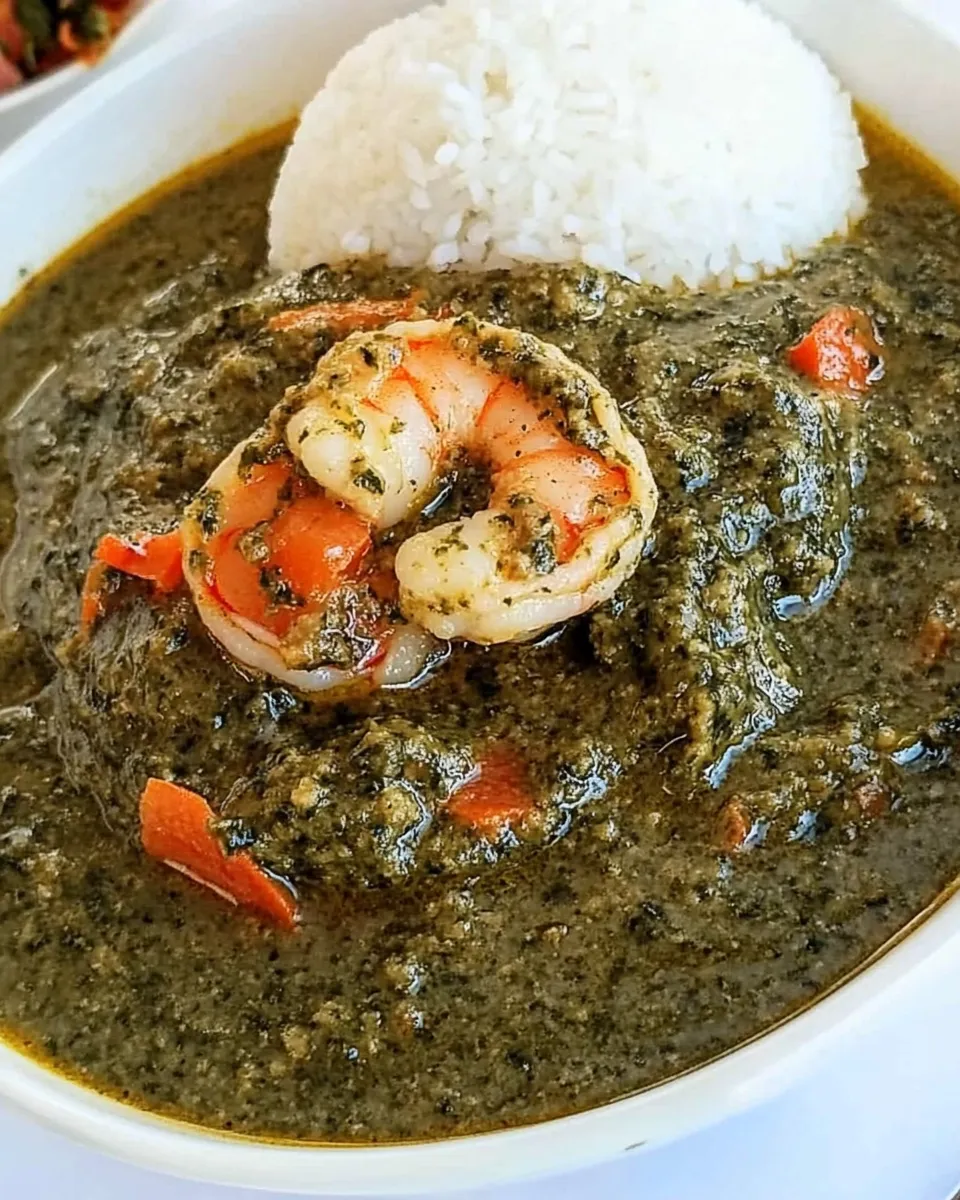
- Satisfying textures: tender cassava leaves, roasted-chewy peanuts, and succulent shrimp.
- Simple ingredients: pantry-friendly items with one special fresh element—cassava leaves.
- Quick to come together: after a short prep, the stew simmers to meld flavors in under 30 minutes.
- Versatile: serves beautifully over rice, with flatbread, or alongside a plate of steamed vegetables.
Ingredients
Use the ingredient list below exactly as written for the best results. Quantities are important to maintain the balance of flavors.
- ½ kg young cassava leaves fresh pounded
- 4 cloves garlic
- 150 g onions finely chopped
- 2 tbsp cooking oil
- 300 g shrimp
- 500 g raw peanuts
- 250 ml coconut milk
- salt to taste
- 1 tsp red pepper crushed (to taste)
Equipment
- Large skillet or shallow pot
- Mortar and pestle or heavy blender (for pounding the cassava leaves if not already pounded)
- Wooden spoon or spatula
- Knife and cutting board
- Measuring spoons and cups
Prep Notes
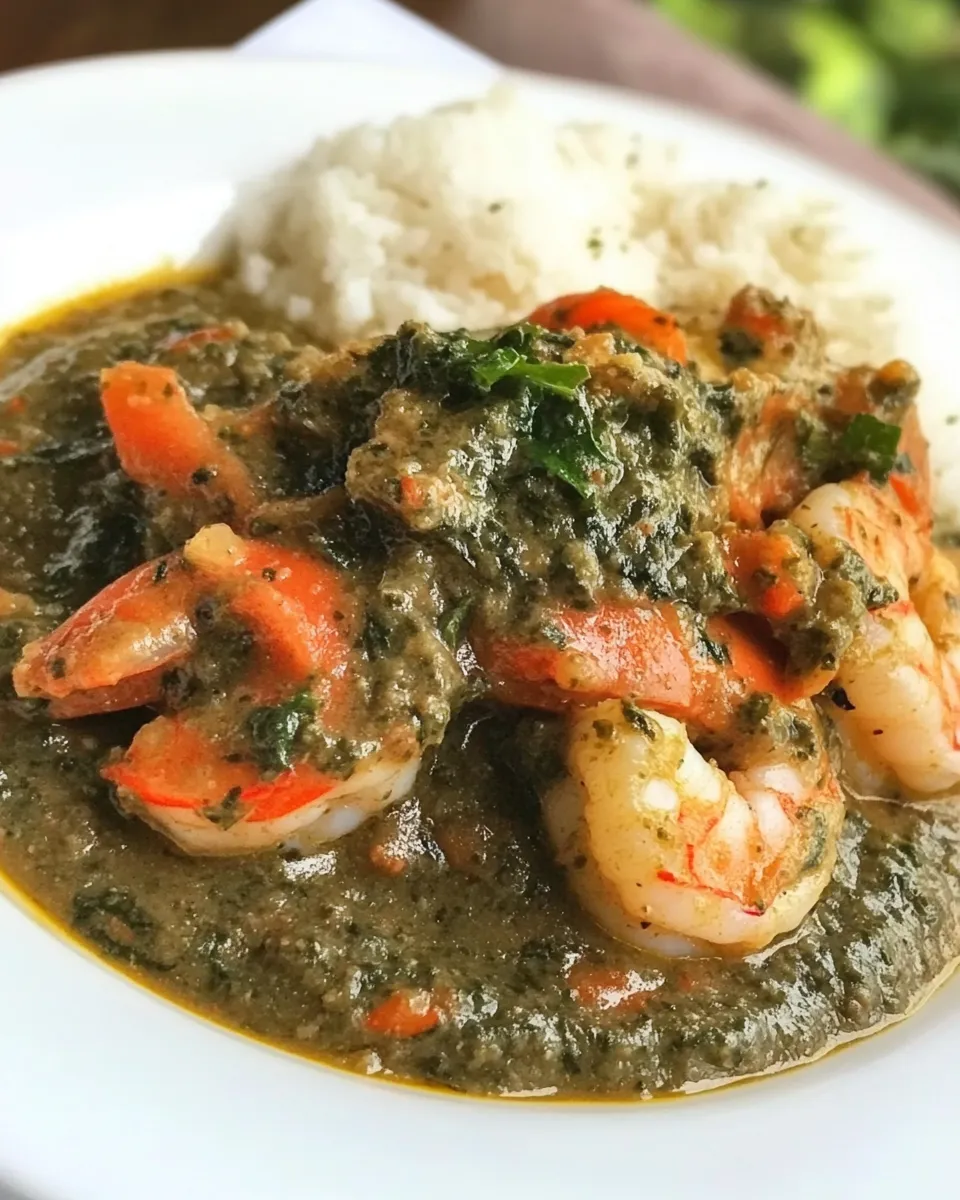
If you can’t find young cassava leaves ready-pounded, purchase fresh leaves and use a mortar and pestle to pound them until they’re soft and finely shredded. This releases their flavor and makes them cook evenly into the stew. For the peanuts, raw is perfect; you will cook them gently in the pot so they soften and release their oils, contributing body to the sauce.
Step-by-step Directions
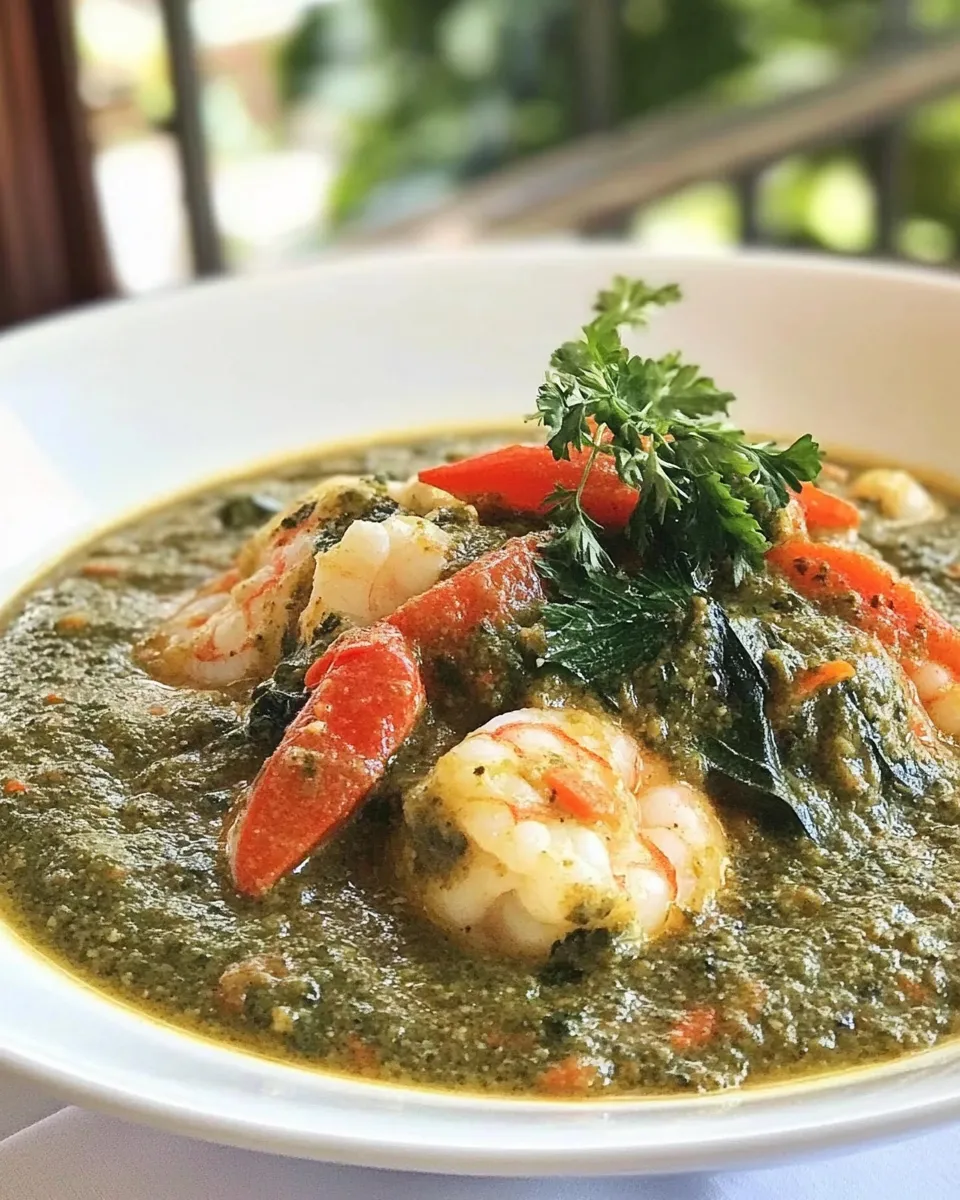
Follow these clarified steps, which keep the original order and quantities but present each action clearly and practically.
- Prepare the produce and seafood: peel and coarsely chop the onions so they measure 150 g when finely chopped. Peel and devein the shrimp if needed, then pat them dry with paper towels.
- Mince the 4 cloves garlic finely and set aside.
- If your cassava leaves are not already pounded, place the ½ kg young cassava leaves in a mortar and pestle and pound until they become soft and shredded. Alternatively, pulse briefly in a heavy-duty blender to achieve the same texture. Measure after pounding to confirm you still have the intended amount.
- Heat a large skillet or shallow pot over medium heat and add 2 tbsp cooking oil. Allow the oil to warm for 20–30 seconds but not smoke.
- Add the 150 g finely chopped onions to the hot oil. Sauté, stirring occasionally, until the onions become translucent and tender, about 4–5 minutes.
- Add the minced garlic to the onions and cook for another 30–60 seconds, stirring constantly, until the garlic is fragrant. Don’t let it brown.
- Toss in the 300 g shrimp and cook them with the aromatics for 2–3 minutes, stirring so they start to turn pink but are not fully cooked through. This allows the shrimp to absorb flavor from the onions and garlic.
- Add the 500 g raw peanuts to the skillet with the shrimp and aromatics. Stir to combine, allowing the peanuts to heat and begin to soften; this should take about 2–3 minutes.
- Stir in the ½ kg pounded cassava leaves, folding them into the mixture so the leaves are evenly distributed with the shrimp, peanuts, and aromatics.
- Pour in 250 ml coconut milk and stir gently to incorporate. Bring the mixture to a gentle simmer over medium-low heat. The coconut milk will loosen and create a rich, creamy base for the cassava leaves and peanuts to soften into.
- Season the stew with salt to taste and add 1 tsp red pepper crushed (adjust to your preferred heat level). Stir well to distribute the seasonings evenly.
- Reduce the heat to low, cover the skillet or pot, and let the Matapa cook for 10–12 minutes. During this time the cassava leaves will soften completely, the peanuts will cook through and thicken the sauce, and the shrimp will finish cooking until opaque and tender.
- Uncover and taste; adjust salt and red pepper if desired. If the sauce is too thick, add a splash of water and simmer briefly to reach your preferred consistency.
- Remove from heat and let the stew rest for two minutes before serving. This lets the flavors settle and keeps the shrimp juicy.
Serving Suggestions
Matapa (Cassava Leaves & Shrimp Stew) is traditionally served with plain white rice, which soaks up the creamy sauce perfectly. Try these pairing ideas:
- Steamed jasmine or basmati rice for a fragrant pairing.
- Thick slices of crusty bread to mop up every last drop.
- A simple cabbage slaw or lightly dressed cucumber salad to add a cooling contrast to the rich stew.
- For a heartier meal, serve alongside roasted sweet potatoes or fried plantains.
Storage and Reheating
Store any leftovers in an airtight container in the refrigerator for up to 2 days. Reheat gently on the stove over low heat, adding a tablespoon or two of water or coconut milk if the sauce has thickened; stir until warmed through. Avoid high heat, which can toughen the shrimp. You can also freeze the stew for up to one month; defrost overnight in the refrigerator before reheating gently.
Troubleshooting & Tips
- If the peanuts feel too hard after cooking, simmer a few minutes longer with the lid on and a small splash of water to help them soften.
- To deepen the flavor, lightly toast the raw peanuts in a dry pan for 2–3 minutes before adding them to the stew; watch closely so they don’t burn.
- If you prefer a smoother sauce, pulse half the peanuts in a blender before adding them to the pot, then stir in the remaining whole peanuts for texture.
- Adjust the red pepper crushed to control heat—start with less if you’re unsure, then add more at the end if needed.
Flavor Notes
The balance in this Matapa comes from the interplay of three main elements: the green, slightly astringent cassava leaves; the rich, fatty coconut milk; and the earthy crunch of peanuts. Shrimp brings a clean, briny lift that prevents the richness from feeling heavy. Garlic and onions provide aromatic depth, while the red pepper adds a bright, warming kick.
Ingredient Swaps and Variations
While this recipe uses the exact ingredients listed above, here are a few optional variations if you want to explore different textures or flavors while keeping the same structure and amounts:
- Vegetable addition: fold in a handful of chopped spinach (in addition to, not instead of, the cassava leaves) during the final few minutes for extra green volume.
- Peanut texture: process half the peanuts into a coarse paste for a creamier sauce while leaving the rest whole for crunch.
- Seafood swap: if you prefer a firmer shellfish, use the same amount of firm white fish chunks in place of shrimp, adjusting cooking time until the fish flakes easily.
Final Notes
Matapa (Cassava Leaves & Shrimp Stew) is a beautiful example of how a handful of humble ingredients can produce something deeply flavorful and memorable. Follow the step-by-step directions above for dependable results, and feel free to tweak the pepper level to match your spice tolerance. Whether it’s a weeknight supper or a dish to share with friends, this stew brings warmth, nourishment, and a taste of coastal tradition to your table.
Enjoy this Matapa immediately over rice or with bread, and savor how the creamy coconut and roasted peanuts frame the bright cassava leaves and tender shrimp in every spoonful.
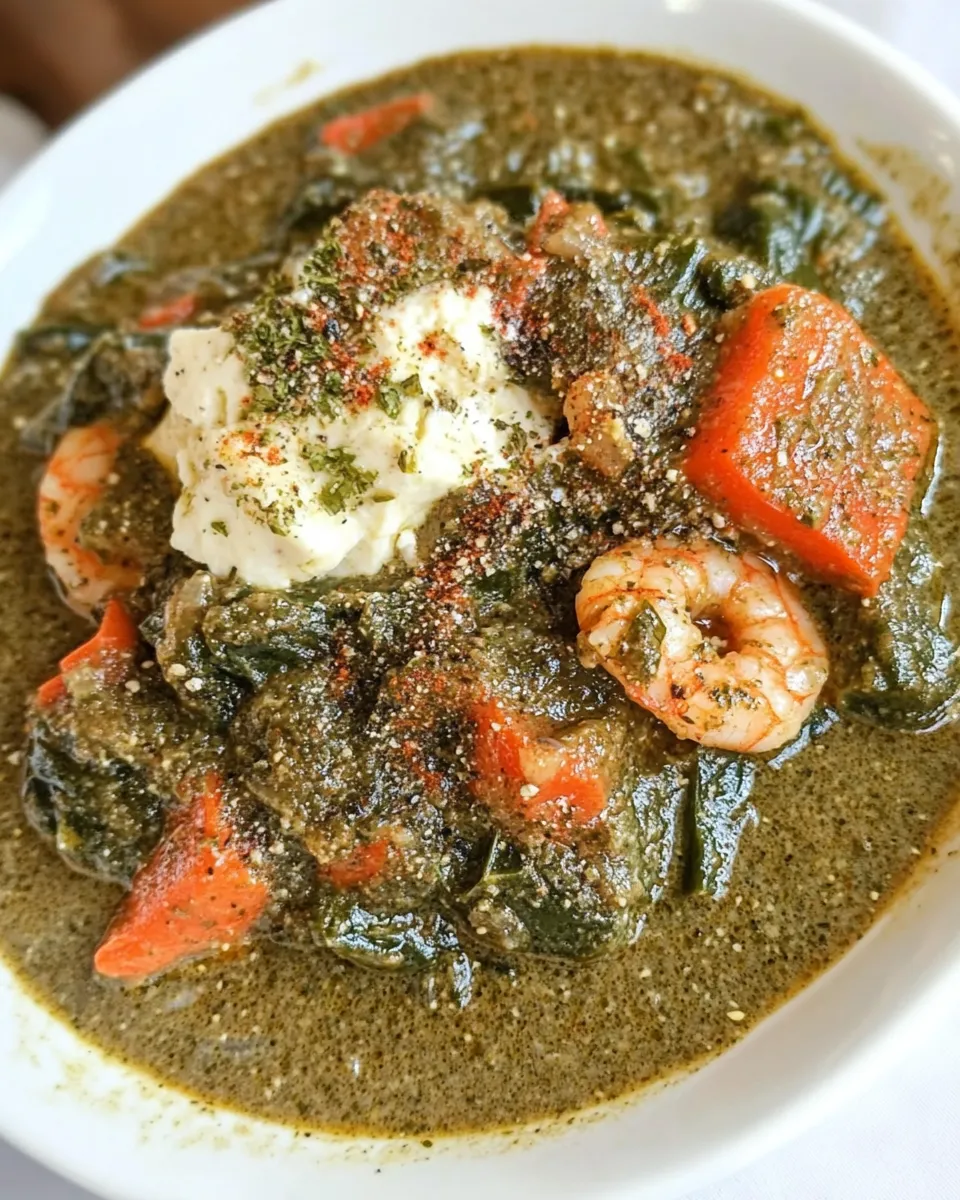
Matapa (Cassava Leaves & Shrimp Stew)
Ingredients
Equipment
Method
- Prepare the cassava leaves by washing well, removing tough stems and veins, then finely chopping or pulsing in a food processor; set aside.
- In a dry skillet, roast the peanuts over medium heat, stirring, until golden-brown and aromatic; let cool.
- Grind the cooled roasted peanuts in a food processor or mortar and pestle until they reach a thick, nearly peanut-butter consistency; reserve.
- Heat the cooking oil in a large skillet or pot over medium heat and sauté the chopped onion until softened, about 4–5 minutes.
- Add the shrimp to the pan and cook gently for 2–3 minutes until they start to turn opaque.
- Pour in the coconut milk, then add the minced garlic and crushed red pepper; bring to a gentle simmer for a few minutes to combine flavors.
- Stir in the ground peanut mixture until it dissolves into the sauce and begins to thicken.
- Add the chopped cassava leaves, mix thoroughly into the sauce, then reduce heat to low and simmer, uncovered, for 1 to 1½ hours, stirring often, until the leaves are fully cooked and the sauce has thickened.
- Taste and season with salt as needed, then remove from heat and serve hot with boiled rice or xima if desired.
Notes
- Use young cassava leaves for a tender texture.
- Roast peanuts until golden for best flavor.
- Pulse leaves in a food processor to speed prep.
- Simmer low and slow until sauce thickens and flavors meld.
- Adjust crushed red pepper to control heat.