Pesto Spaghetti Squash
Light, bright, and ready in under an hour, this Pesto Spaghetti Squash is the kind of weeknight dinner that tastes like you spent all afternoon in the kitchen, when really you spent ten minutes prepping and the oven did the rest. The squash strands are a perfect vehicle for vibrant basil pesto and a shower of coarsely grated Parmesan. It’s textured, flavorful, and endlessly adaptable — great for serving alongside a simple salad or as the centerpiece of a Mediterranean-inspired meal.
This recipe uses 1 large spaghetti squash, a little olive oil, an aromatic herb blend, and a few generous tablespoons of pesto and Parmesan. The result is a satisfying dish with a lovely contrast of tender squash strands and the nutty, salty bite of cheese. It’s naturally gluten-free and easy to make, with straightforward steps that keep everything moving. Read on for tips on choosing squash, making the most of store-bought pesto, and how to get perfectly separated spaghetti-like strands every time.
Why this works
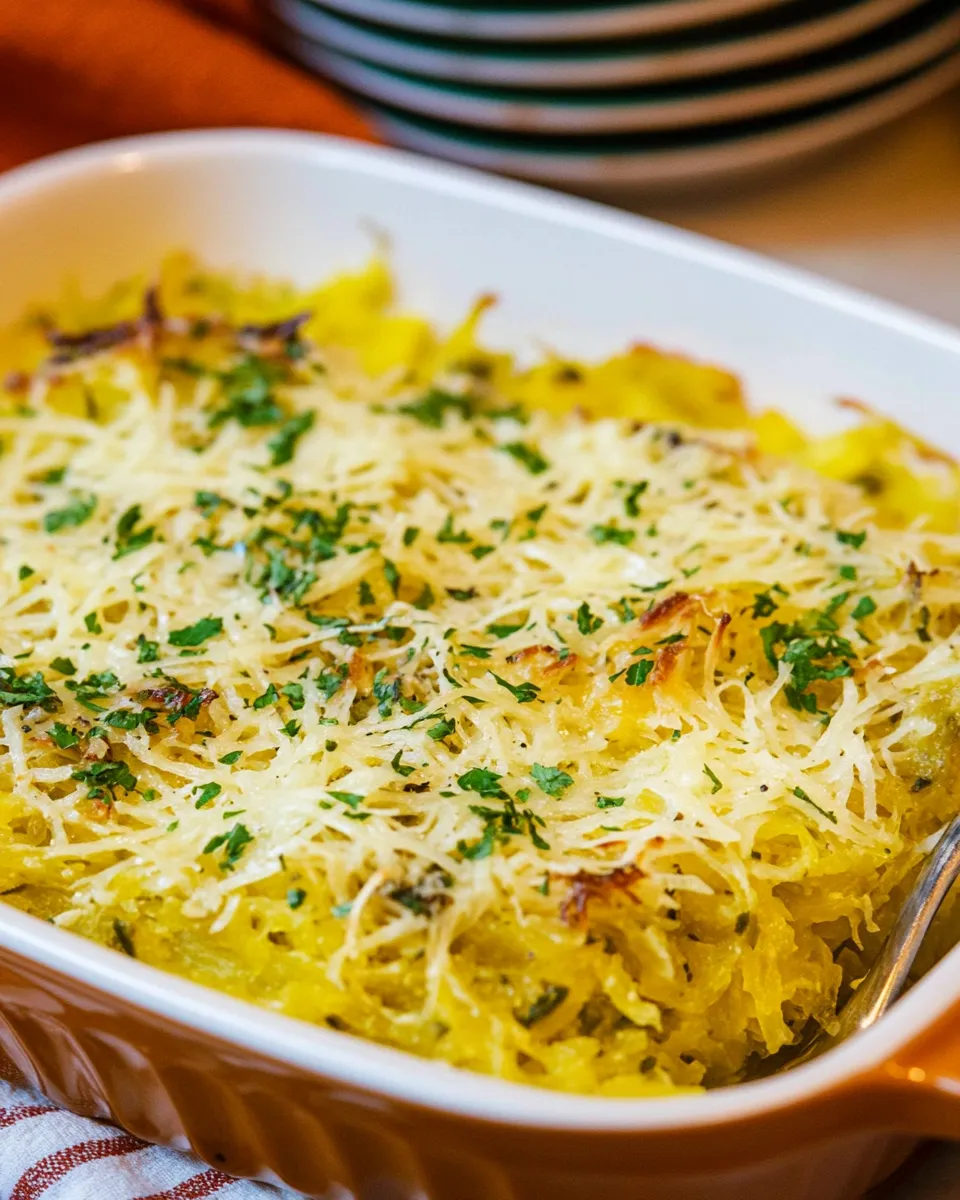
Spaghetti squash has a gentle, slightly sweet flavor that soaks up sauces beautifully. When roasted, the flesh breaks into delicate strands that mimic pasta without the heaviness. A little olive oil and Italian herb blend add depth before roasting, and the basil pesto brings brightness and a hint of garlic and nuttiness. Parmesan adds savory complexity and a creamy finish. The balance of textures and flavors makes this dish feel polished while staying incredibly simple to prepare.
Ingredients
- 1 large spaghetti squash (see notes)
- 2 T olive oil
- 2 tsp. Italian Herb Blend (or use other seasoning of your choice)
- 3 T basil pesto (more or less to taste)
- 1 1/4 cups coarsely grated Parmesan cheese
- salt and fresh ground black pepper to taste
Notes on ingredients and swaps
- Spaghetti squash: Pick one that feels heavy for its size with firm, unblemished skin. Larger squashes will give you a greater yield of strands — and they roast more evenly when not over-stuffed.
- Olive oil: Extra virgin gives the best flavor for finishing and roasting. If you prefer a milder oil for cooking, a light olive oil works fine.
- Italian Herb Blend: Use your favorite blend or swap in a teaspoon each of dried oregano and dried basil if you don’t have a pre-mixed blend. The herb blend seasons the squash while it roasts and adds aroma.
- Basil pesto: Store-bought pesto is a time-saver; choose a quality jar made with fresh basil, olive oil, and pine nuts or walnuts. If you’d like, add more or less pesto depending on how saucy you want the squash.
- Parmesan: Use a freshly coarsely grated Parmesan for the best texture and flavor. If you prefer a milder finish, use Romano or a blend, keeping the same quantity.
- Salt and pepper: Season to taste. A light sprinkle at the end keeps the flavors bright; add more if your pesto or Parmesan is mild.
How to pick and prepare your squash
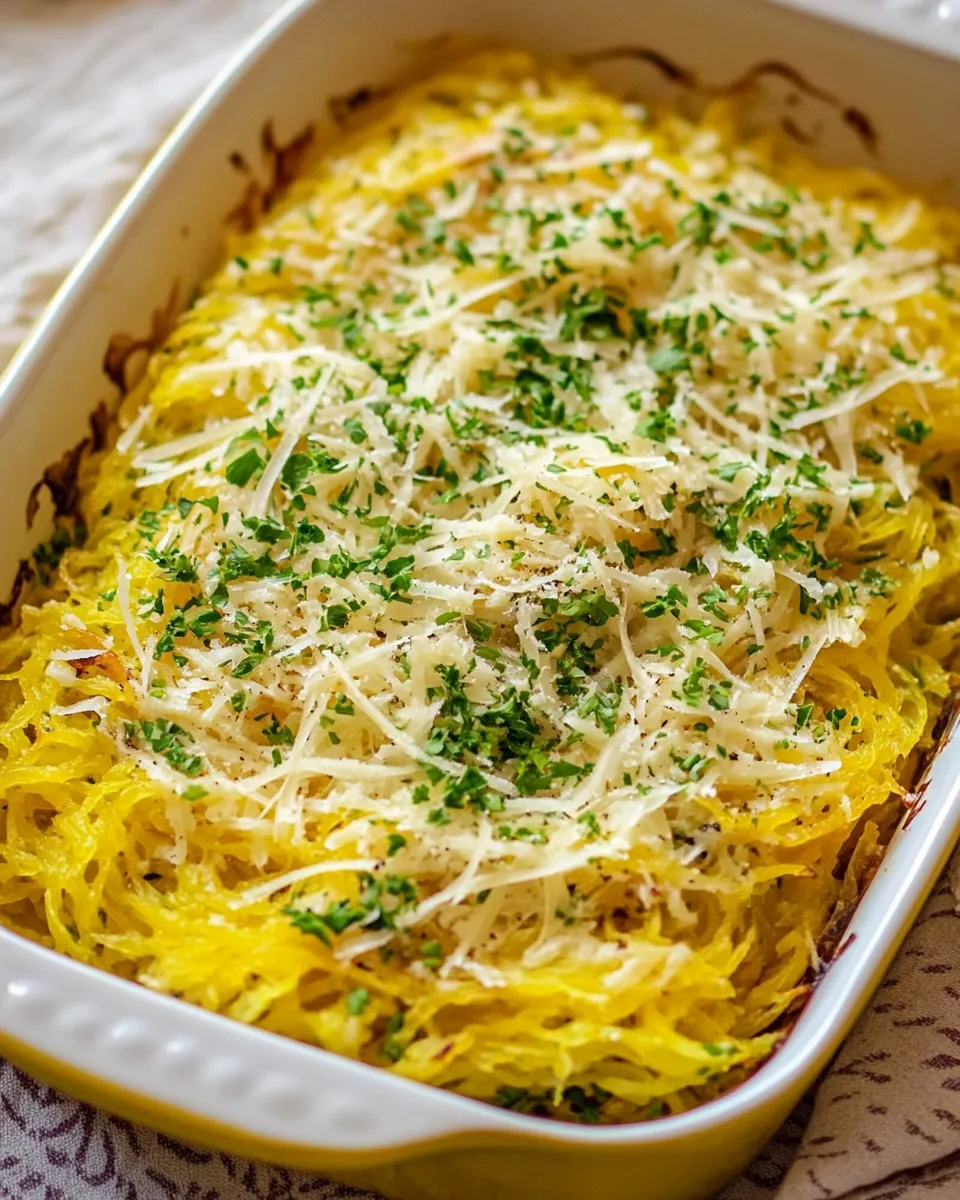
Choosing the right spaghetti squash sets you up for success. Look for one with hard, uncracked skin and a stem that’s intact. If you can, choose a squash that’s heavy for its size — that usually means more flesh and more strands. When you’re ready to cook, the first step is cutting it in half lengthwise and scooping out the seeds. From there, a short toss with olive oil and Italian herbs before roasting brings out the natural sweetness and creates slightly crisped edges that add texture.
Step-by-step instructions
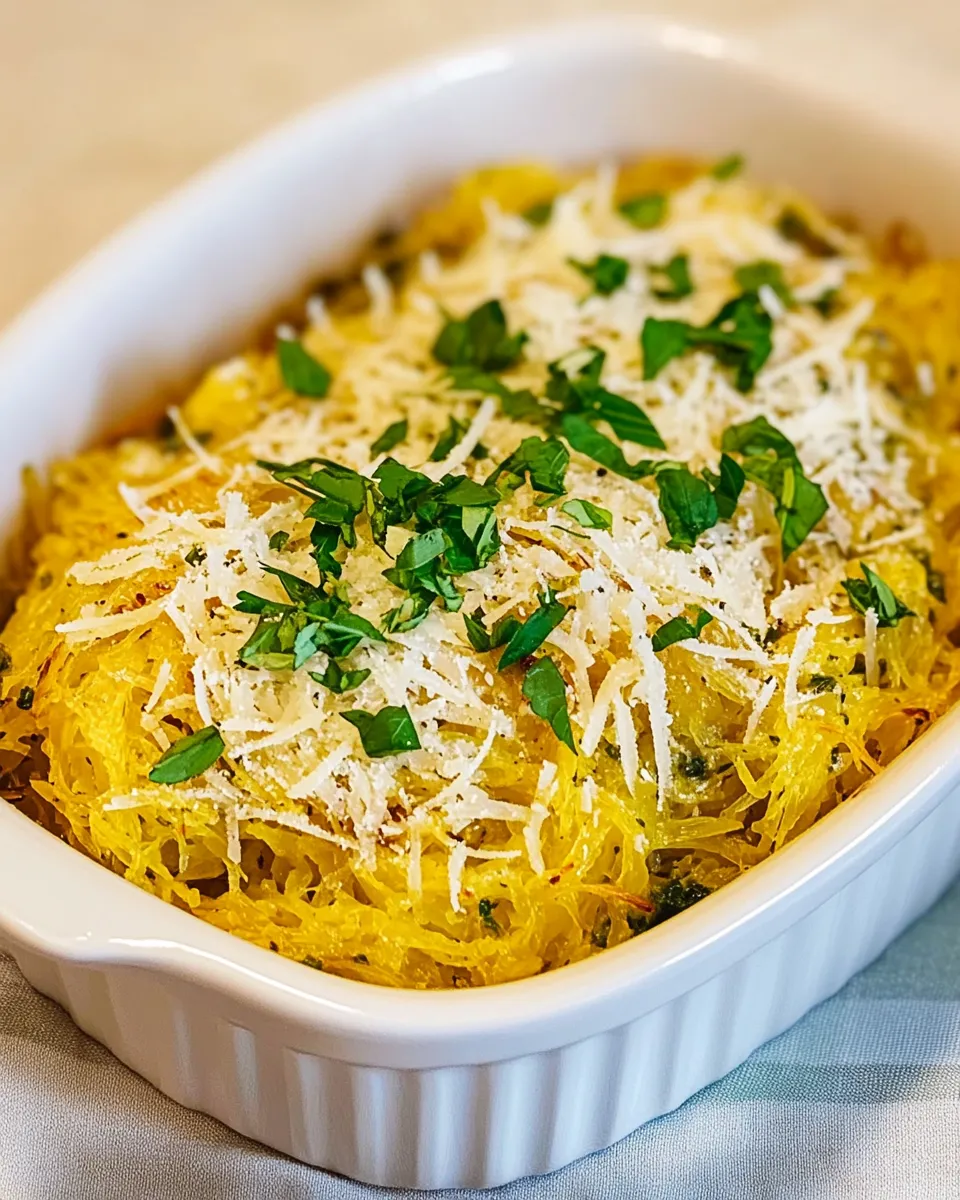
Follow these clear, sequential steps to make the recipe exactly as intended. Ingredient amounts above are the source of truth; directions have been rewritten for clarity while keeping the order and intended technique intact.
- Preheat your oven to 400°F (200°C). Position a rack in the middle of the oven so the squash will roast evenly.
- Carefully slice the large spaghetti squash in half lengthwise. Use a sturdy knife and work on a stable cutting board. If the squash is difficult to cut, microwave it whole for 2 to 3 minutes to soften the shell slightly, then continue slicing.
- Use a spoon to scoop out and discard the seeds and stringy bits from the center of each half. You can save the seeds like you would pumpkin seeds if you’d like to roast them separately.
- Brush or rub the cut sides of the squash with the 2 tablespoons of olive oil. Sprinkle each half evenly with the 2 teaspoons of Italian Herb Blend, making sure the herbs are distributed across the flesh.
- Place the squash halves cut-side down on a baking sheet lined with parchment paper or a silicone mat. Roasting cut-side down helps steam the interior and develop tender strands, while the skin will brown slightly where it touches the pan.
- Roast the squash in the preheated oven until the flesh is tender and can be scraped into strands with a fork, about 35 to 45 minutes depending on the size of the squash. Begin checking at 35 minutes; the cooking time will vary with size and oven.
- Remove the squash from the oven and let it cool for 5 minutes so it’s easier to handle. Use a fork to gently scrape the flesh of each half to release long, spaghetti-like strands. Transfer the strands to a large bowl or leave them in the shell for an attractive serving presentation.
- Add the 3 tablespoons of basil pesto to the warm squash strands. Toss gently so the pesto coats the strands evenly; add more pesto if you prefer a saucier finish. Taste and adjust seasoning with salt and fresh ground black pepper to your liking.
- Stir in or sprinkle 1 1/4 cups of coarsely grated Parmesan cheese over the sauced strands. Toss once more so some of the cheese melts into the warm squash while some remains as a textured topping.
- Serve immediately, garnished with an extra crack of black pepper or a small drizzle of olive oil if desired. If you saved the squash shells, you can spoon the mixture back into them for rustic presentation.
Serving ideas and variations
This Pesto Spaghetti Squash is delicious as-is, but here are a few simple ideas to make it your own:
- Add roasted cherry tomatoes for a sweet, acidic burst.
- Stir in some cooked, cubed chicken breast or white beans for extra protein.
- Toss with toasted pine nuts or slivered almonds for crunch.
- Mix in a squeeze of lemon juice for brightness, or a pinch of red pepper flakes for heat.
- Finish with fresh basil leaves or a sprinkle of finely chopped parsley to accentuate the pesto flavors.
Make-ahead and storage
You can roast the squash ahead of time and store the cooked strands in an airtight container in the refrigerator for 3–4 days. Keep the pesto and Parmesan separate until ready to serve if you prefer the freshest texture. To reheat, warm gently in a skillet over low heat with a splash of olive oil, then toss with pesto and Parmesan just before serving.
Tips for success
- Don’t over-oil the squash before roasting. A thin coating of the 2 tablespoons of olive oil is enough to help the herbs adhere and encourage caramelization.
- Check for doneness early. When the flesh scrapes into long strands easily with a fork, it’s ready. Overcooking can make the strands mushy.
- If you prefer a crispier edge, roast cut-side up for the last 5–10 minutes of cooking.
- Quality pesto makes a difference. If you buy store-bought, choose a jar that lists oil, basil, nuts, and cheese near the top of the ingredients for the best flavor.
Nutrition snapshot
This dish is naturally rich in vitamin A and fiber from the squash, healthy fats from the olive oil and pesto, and a satisfying hit of protein and calcium from the Parmesan. The combination makes a balanced plate that feels indulgent without being heavy.
Frequently asked questions
Can I microwave the spaghetti squash? Yes. If you’re short on time, prick the whole squash a few times with a fork and microwave on high for 8–12 minutes, turning once, until it’s softened. Cut open, scoop, and proceed with tossing with pesto and Parmesan. Roasting, however, develops more caramelized flavor.
How much does 1 large spaghetti squash yield? A large spaghetti squash typically yields about 6 to 8 cups of cooked strands, but yields vary with size. This recipe scales well — if your squash is exceptionally large and you want a saucier result, add an extra tablespoon of pesto and a little more Parmesan to taste.
Can I make this vegan? Yes. Replace the Parmesan with a plant-based Parmesan alternative or nutritional yeast, and choose a pesto made without cheese or swap in a nut/seed-based basil blend for a dairy-free finish.
Final thoughts
This Pesto Spaghetti Squash is a beautiful example of how simple ingredients can create something that feels special. It’s quick enough for a weeknight but elegant enough for guests. The roasted strands carry pesto and Parmesan effortlessly, making each bite bright, savory, and satisfying. Keep this recipe in your rotation for a low-carb, flavor-forward meal that’s easy to adapt and even easier to love.
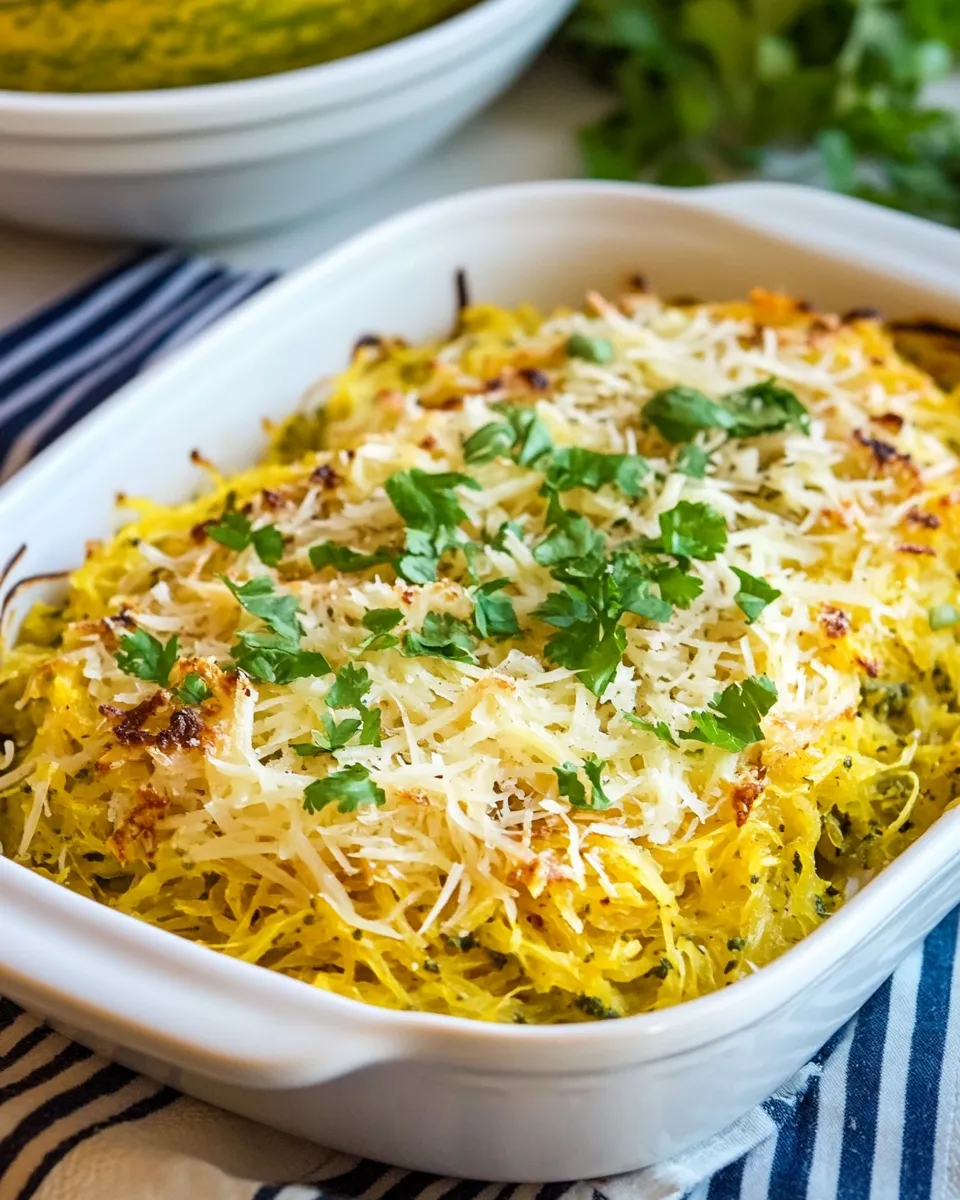
Pesto Spaghetti Squash
Ingredients
Equipment
Method
- Preheat the oven to 400°F (200°C).
- Wash the outside of the spaghetti squash, then cut it in half lengthwise. Trim the ends if desired.
- Use a spoon to remove the seeds and stringy bits from each half.
- Rub the cut interior of the squash with 2 tablespoons olive oil and sprinkle with 2 teaspoons Italian herb blend.
- Place the squash halves cut-side down on a baking sheet lightly coated with non-stick spray or oil.
- Roast for about 40–50 minutes, beginning to check at 40 minutes; the squash is done when the flesh is still slightly firm but pulls apart into strands easily.
- Let the squash cool a few minutes until manageable, then scrape the flesh with a fork to create spaghetti-like strands and transfer them to a mixing bowl; discard the skins.
- Gently stir in 3 tablespoons basil pesto and 1 cup of the coarsely grated Parmesan until evenly combined. Season with salt and freshly ground black pepper to taste.
- Pour the squash mixture into a gratin dish or baking pan, sprinkle the remaining 1/4 cup Parmesan evenly over the top, and bake for 20–30 minutes until bubbling and lightly browned.
- Remove from oven and serve hot.
Notes
- Use a sharp, sturdy knife and cut carefully.
- Roasting time varies with squash size; check for tender strands.
- Adjust pesto amount to taste.
- Grate Parmesan coarsely for texture.