Rigatoni Pomodoro
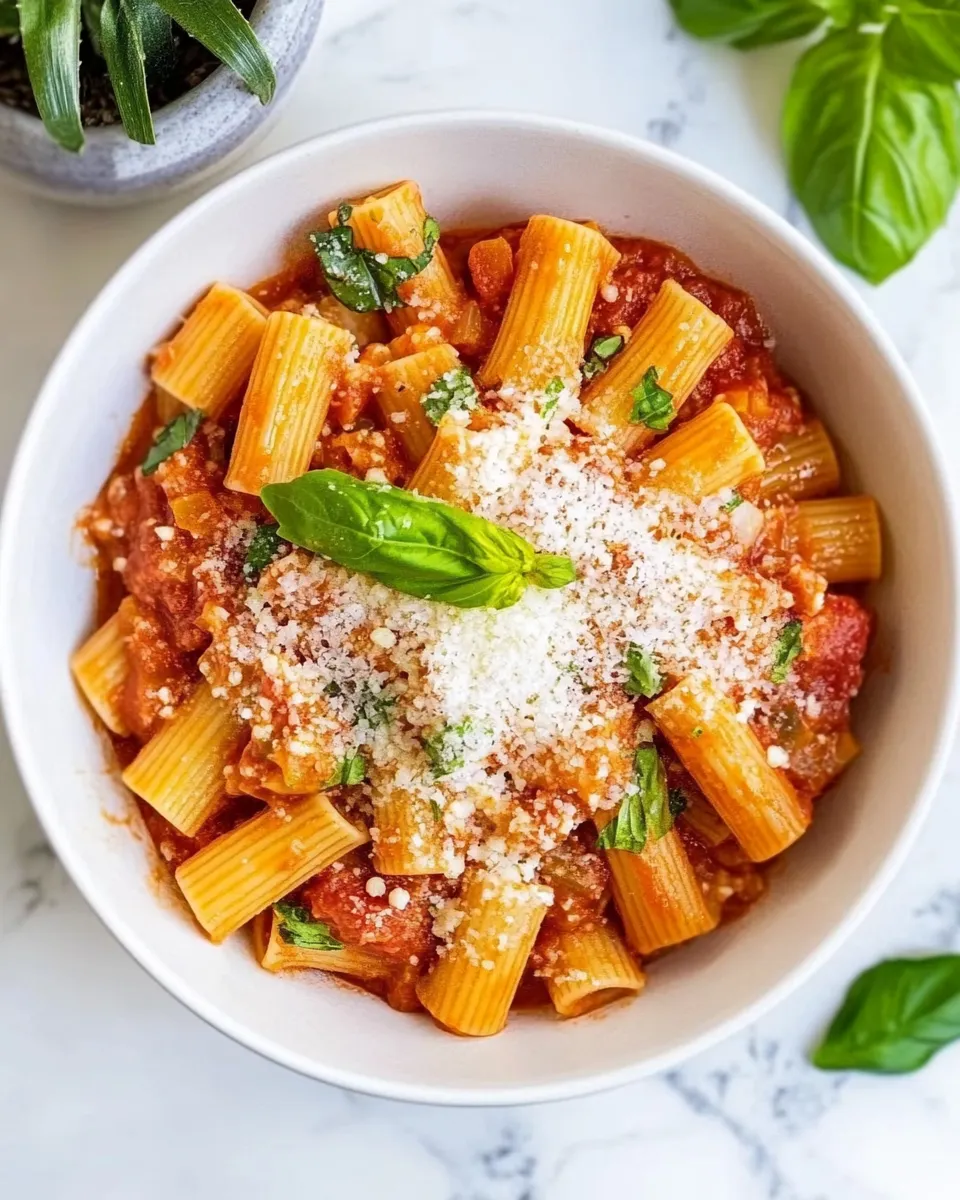
There’s a special kind of comfort that comes from a simple tomato sauce tossed with pasta. This Rigatoni Pomodoro recipe is exactly that: bright, silky, and honest food that sings of summer tomatoes, garlic, and basil. It’s the kind of dish you’ll make on a quiet weeknight when you want something unfussy but deeply satisfying, or when you want to impress guests without spending hours in the kitchen. The short, ridged rigatoni holds the sauce beautifully, delivering a perfect bite each time.
This recipe uses just a handful of pantry staples—canned whole peeled Italian tomatoes, garlic, olive oil, fresh basil, a pinch of sugar, and basic seasonings. The technique is straightforward: coax the tomatoes into a glossy sauce, let them simmer to deepen the flavor, and finish with torn basil and a generous grating of cheese. The result is classic, bright, and comfortable, with a sauce that clings to every groove and tunnel of the rigatoni.
Why this Rigatoni Pomodoro works
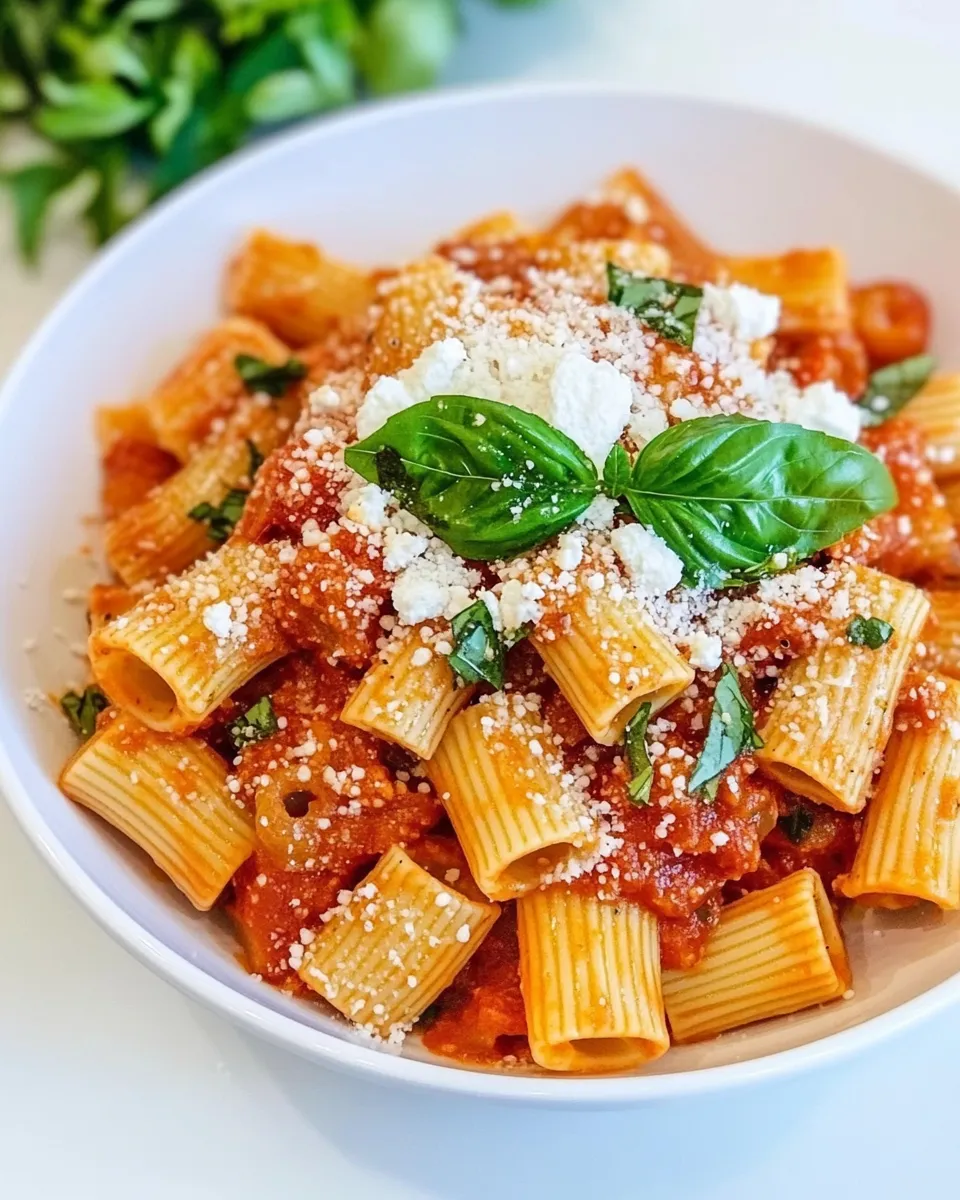
Pomodoro means “tomato” in Italian, and this preparation honors that simplicity. Using whole peeled tomatoes in a can preserves a concentrated tomato flavor that simmers into a rich sauce. Crushing the tomatoes by hand—rather than using a blender—gives texture and prevents over-processing. The garlic is cooked gently in olive oil to lift its aroma without browning, while a pinch of sugar balances the natural acidity. Fresh basil added near the end keeps its aromatic brightness. Serving with grated Parmesan and a drizzle of extra virgin olive oil elevates the dish with savory depth and silky texture.
Ingredients
- 6 cloves garlic, crushed/minced
- ¼ cup extra virgin olive oil
- 1 can whole peeled Italian tomatoes (28 oz / 800 g can)
- 8 fresh basil leaves
- salt and pepper
- sugar (Note 1)
- 1 tablespoon salt
- 10 oz rigatoni (Note 2)
- salt and pepper
- fresh basil for garnish
- grated parmesan for garnish
- extra virgin olive oil for garnish
Notes
- Note 1: A small amount of sugar softens tomato acidity and brings balance. Start with a pinch and adjust to taste as the sauce simmers.
- Note 2: Rigatoni is ideal for this sauce because its ridges and hollow center capture bits of sauce and basil. If you prefer another short pasta, use the same cook time indicated on the package.
Equipment
- Large deep skillet or sauté pan
- Large pot for cooking pasta
- Wooden spoon or silicone spatula
- Colander
- Grater for Parmesan
Prep ahead
You can crush the tomatoes ahead of time and store them in a bowl in the refrigerator for a day. Mince the garlic and pluck the basil leaves a few hours ahead. The sauce takes roughly 20–25 minutes from start to finish, so this is a great recipe when you want a fast, fresh dinner.
Step-by-step directions
The following directions follow the original order and ingredient amounts while clarifying each step for a smooth cooking flow.
- Bring water to a boil: Fill a large pot with water and bring it to a rolling boil. Add 1 tablespoon salt to the boiling water. This seasons the pasta from the inside out.
- Start the sauce: Place a large deep skillet or sauté pan over medium heat. Pour in ¼ cup extra virgin olive oil and let it warm for about 30 seconds—warm, not smoking.
- Sauté the garlic: Add the 6 cloves garlic, crushed/minced, to the warm oil. Stir continuously and cook for about 1–2 minutes, until the garlic is fragrant and just beginning to soften. Do not let it brown; lower the heat if it starts to color too quickly.
- Add the tomatoes: Open the 28 oz (800 g) can of whole peeled Italian tomatoes. Pour the whole tomatoes and their juices into the skillet with the garlic and oil. Use a spoon or a potato masher to gently crush the tomatoes in the pan so they break down but still retain some texture. Stir to combine with the garlic and oil.
- Season the sauce: Add a pinch of sugar to the tomatoes to balance acidity. Tear or roughly chop 8 fresh basil leaves and stir them into the sauce. Season lightly with salt and pepper—remember the pasta water is salted, and you’ll adjust seasoning at the end.
- Simmer to meld flavors: Reduce the heat to low and let the sauce simmer uncovered for about 15–20 minutes, stirring occasionally. The sauce should thicken slightly, the flavors will concentrate, and the oil may pool on top. Taste and add more salt, pepper, or a touch more sugar if needed.
- Cook the rigatoni: While the sauce simmers, add the 10 oz rigatoni to the boiling, salted water. Cook according to the package instructions for al dente—usually around 9–12 minutes depending on the brand. Stir occasionally so the pasta doesn’t stick together.
- Reserve pasta water: Before draining the rigatoni, scoop out about 1 cup of the starchy pasta cooking water and set it aside. Drain the pasta in a colander, but do not rinse; the residual starch helps the sauce cling to the rigatoni.
- Combine pasta and sauce: Add the drained rigatoni directly to the skillet with the pomodoro sauce. Toss gently to coat each piece of rigatoni. If the sauce seems too thick or the pasta is not coating evenly, add a few tablespoons of the reserved pasta water at a time until you reach a glossy, saucy consistency that clings to the ridges and inside of the pasta.
- Adjust final seasoning: Taste the combined pasta and sauce. Add salt and freshly cracked black pepper as needed. Tear a few additional fresh basil leaves and toss them in to add brightness right before serving.
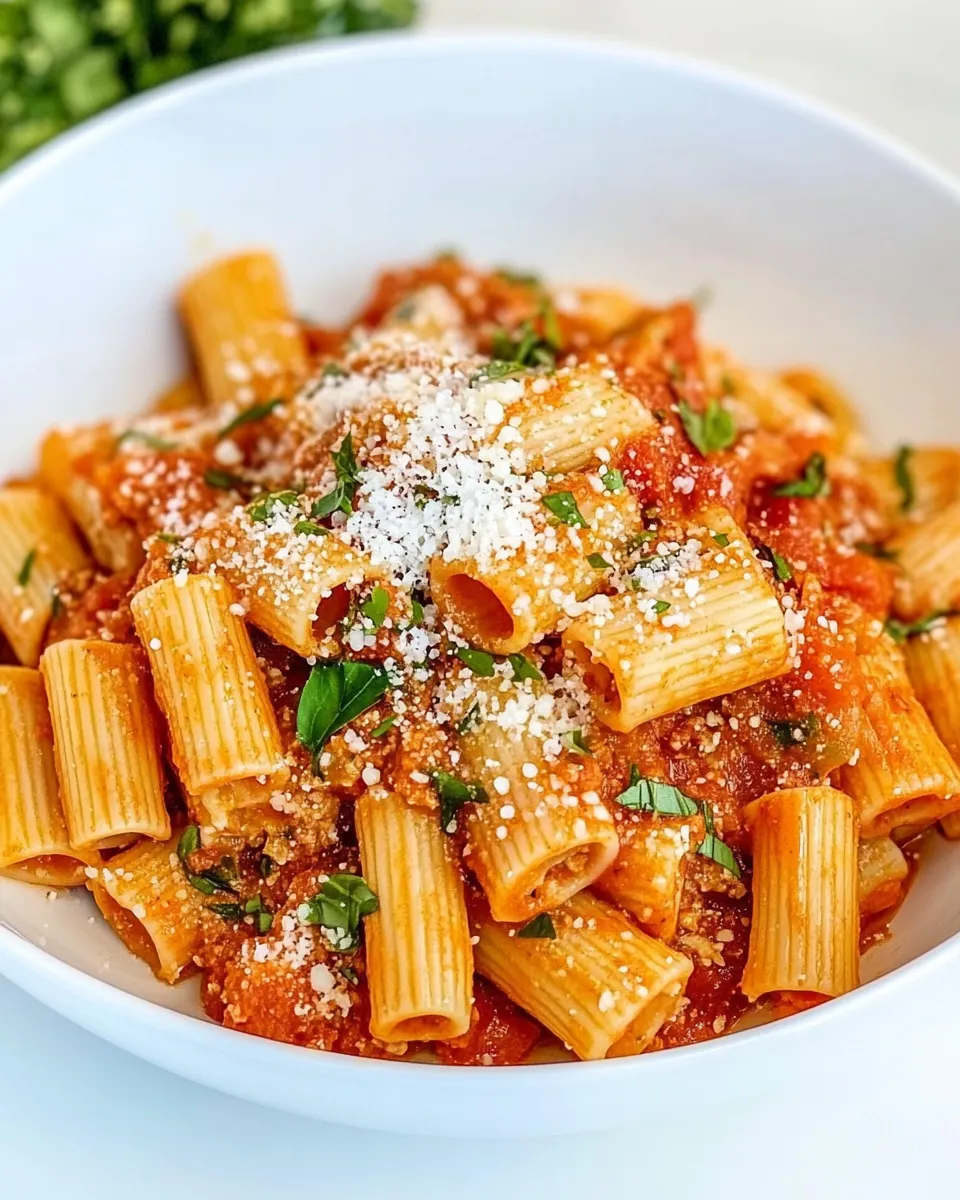
- Plate and garnish: Divide the rigatoni among warm bowls or plates. Grate Parmesan over each serving to taste. Finish with a drizzle of extra virgin olive oil and a few whole or torn basil leaves for color and aroma. Serve immediately while hot.
Troubleshooting and tips
- If your sauce tastes flat: A small pinch of sugar brightens canned tomatoes, and a splash of pasta water helps round out the texture. Also taste for salt—canned tomatoes can be bland without enough seasoning.
- If the garlic browns: Lower the heat and remove the pan from the burner briefly. Garlic cooks fast and burns easily; keep it golden, not brown, for the best flavor.
- If the sauce is too thin: Simmer a few minutes longer, stirring occasionally, until it reduces and coats the back of a spoon.
- If the sauce is too thick: Use reserved pasta water to loosen and emulsify the sauce; the starch in the water helps create a creamy finish without cream.
- Make it more herb-forward: Add extra torn basil at the end and finish with a scatter of microgreens or baby arugula for peppery contrast.
Serving suggestions
Rigatoni Pomodoro is lovely on its own with a simple green salad and crusty bread for mopping up sauce. For a heartier meal, serve alongside roasted vegetables, a lemony chickpea salad, or simple sautéed greens. A light red wine or a sparkling water with lemon pairs nicely with the bright tomato flavors.
Storage and reheating
Store any leftover Rigatoni Pomodoro in an airtight container in the refrigerator for up to 3 days. Reheat gently in a skillet over low heat with a splash of water or reserved pasta water to re-emulsify the sauce and prevent drying. You can also reheat in a microwave, covered, stirring halfway through, and adding a teaspoon or two of water if needed.
Recipe at a glance
- Prep time: 10 minutes
- Cook time: 20–25 minutes
- Serves: 3–4
Final thoughts
There’s beauty in restraint. Rigatoni Pomodoro relies on the quality of its few ingredients and a little patience at the stove. The result is a timeless pasta that’s both humble and elegant: tomato-forward, garlicky, and herb-scented with just the right amount of richness from olive oil and Parmesan. Make it for weeknights, for visitors, or whenever you want dinner that tastes like care without the fuss.
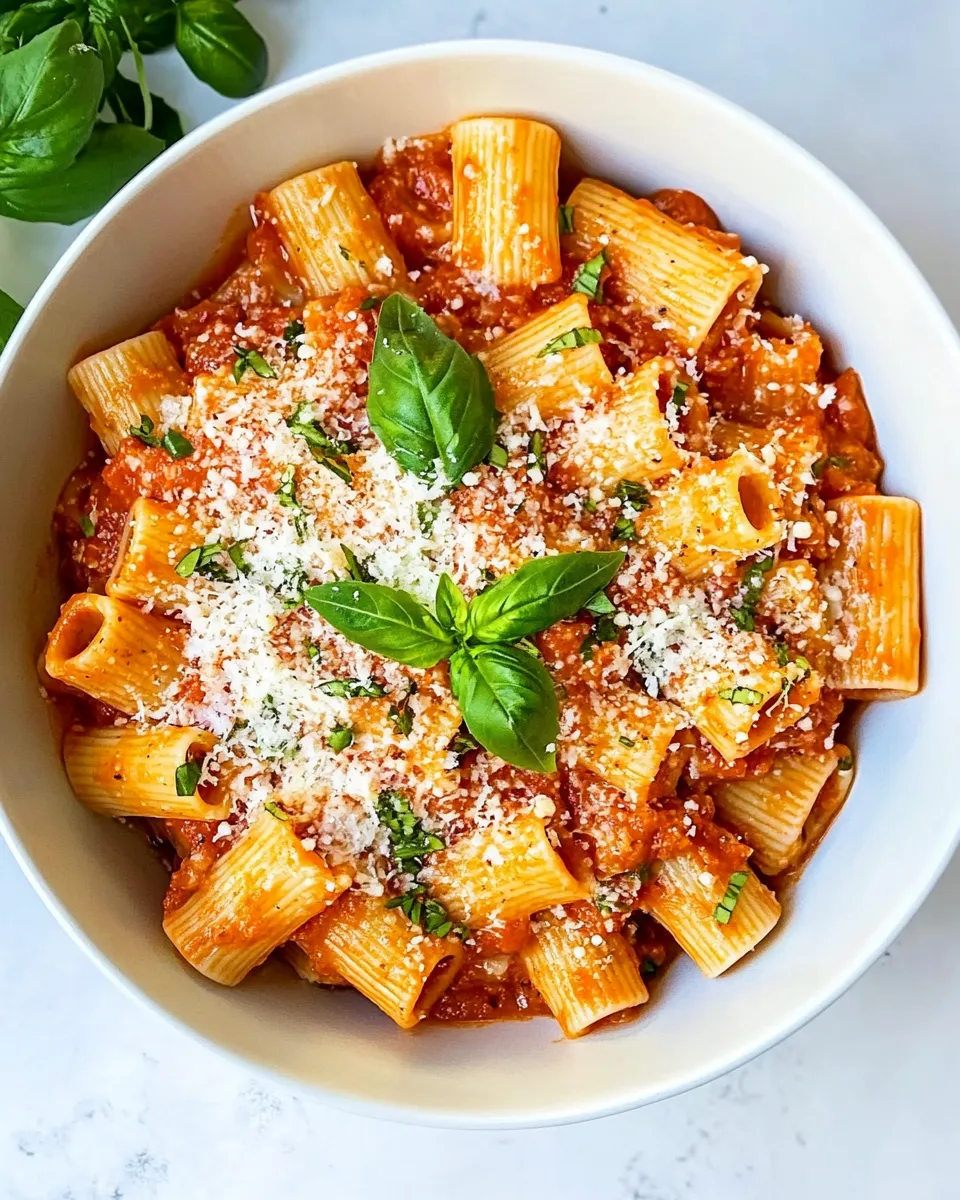
Enjoy this classic—tender rigatoni threaded with a glossy pomodoro sauce, fragrant basil, and a generous shower of grated cheese. Simple food, done very well.
Rigatoni Pomodoro
Ingredients
Equipment
Method
- Heat 1/4 cup extra virgin olive oil in a large pan over low heat. Add the crushed garlic and gently cook for 2–3 minutes until fragrant and soft, taking care not to brown it.
- Add the whole peeled tomatoes with their juices and the fresh basil leaves to the pan. Break the tomatoes up with the back of a spoon or spatula.
- Simmer the sauce on low for about 20 minutes, stirring occasionally, until the tomatoes have broken down.
- Blend the sauce until smooth using a blender or immersion blender, then return it to the pan and cook gently for 10 more minutes. Season with salt, pepper, and a pinch of sugar if needed.
- Meanwhile, bring a large pot of salted water to a boil (use about 1 tablespoon salt). Cook the rigatoni 1 minute less than the package instructions.
- Reserve 1 cup of the pasta cooking water, then drain the pasta.
- Add the drained rigatoni to the sauce and toss with tongs over low heat so the pasta is completely coated. Add reserved pasta water a little at a time if the sauce needs loosening, and cook 1 more minute to marry flavors.
- Adjust seasoning, then serve topped with extra fresh basil, grated Parmesan, and a drizzle of extra virgin olive oil.
Notes
- Add a pinch of sugar if tomatoes are too acidic.
- Use penne or spirals as an alternative to rigatoni.