Shrimp and Pea Rigatoni
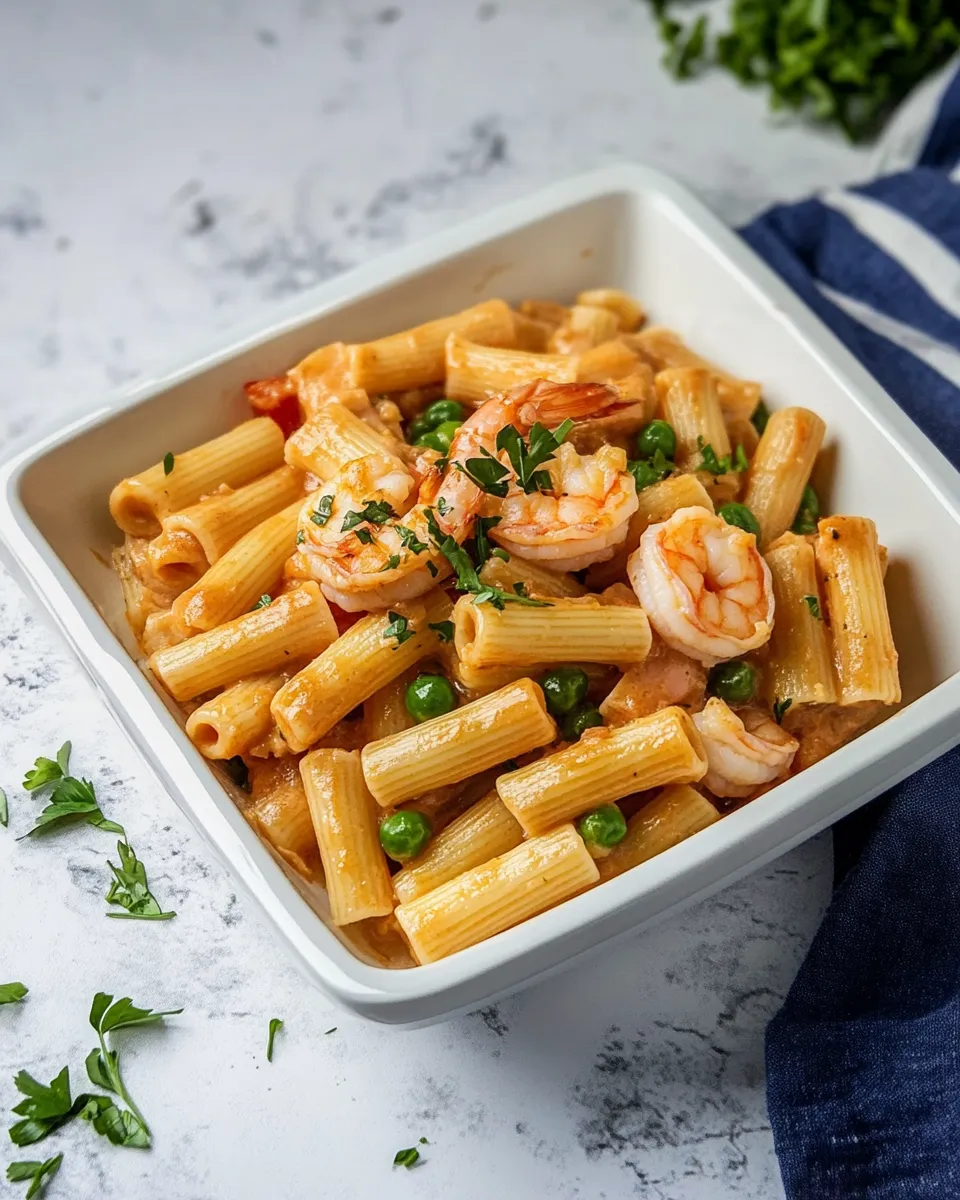
There are nights when you crave something comforting, quick, and a little special — a pasta dish that feels restaurant-worthy but takes less time than a complicated roast. This Shrimp and Pea Rigatoni fits that bill perfectly. It’s creamy, bright with tomato, and studded with tender shrimp and sweet peas. The sauce is silky from a touch of cream and milk, and plenty of garlic and olive oil build the foundation of flavor. It’s a weeknight hero and also lovely enough for low-key entertaining.
This recipe uses simple pantry staples and straightforward technique. You’ll cook the rigatoni until it’s al dente, build a tomato-and-garlic sauce, finish it with cream and milk for richness, and fold in shrimp and peas for a one-pan finish. The texture balance — slightly chewy pasta, succulent shrimp, and pop-in-your-mouth peas — makes every forkful satisfying.
Why you’ll love this Shrimp and Pea Rigatoni
- Ready in about 30 minutes from start to finish.
- Uses canned diced tomatoes for bright tomato flavor without fuss.
- Cream and milk create a luxurious, but not heavy, sauce.
- Shrimp cooks quickly and keeps the dish light and protein-focused.
- Sweet peas add color, texture, and a vegetable component that kids and grown-ups both like.
Ingredients
Use the exact measurements below for the best results:
- 350 g rigatoni
- 3 cloves garlic, finely chopped
- 400 g canned tomatoes, diced
- 100 ml heavy cream
- 100 ml whole milk
- 400 g shrimp, peeled
- 60 g peas
- ¼ tsp salt
- ½ tsp pepper
- 3 tbsp olive oil
Equipment
- Large pot for boiling pasta
- Large skillet or sauté pan with lid
- Colander
- Wooden spoon or silicone spatula
- Measuring spoons and cup
Prep notes
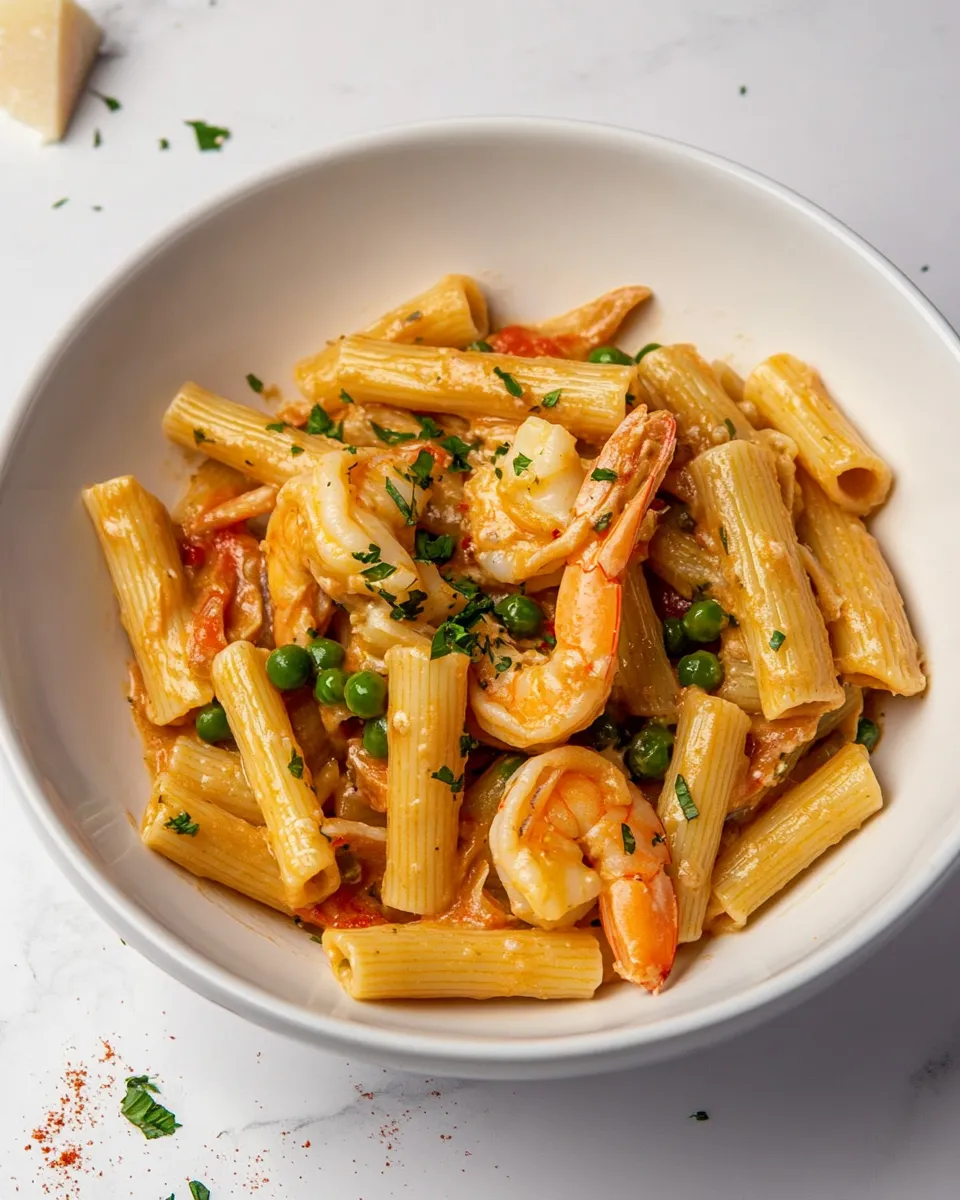
Before you begin, bring a large pot of salted water to a boil for the rigatoni. If your shrimp are frozen, thaw them under cold running water and pat dry. Finely chop the garlic so it releases the most flavor into the sauce. Having the cream and milk measured and ready makes the finish quick and seamless.
Step-by-step instructions
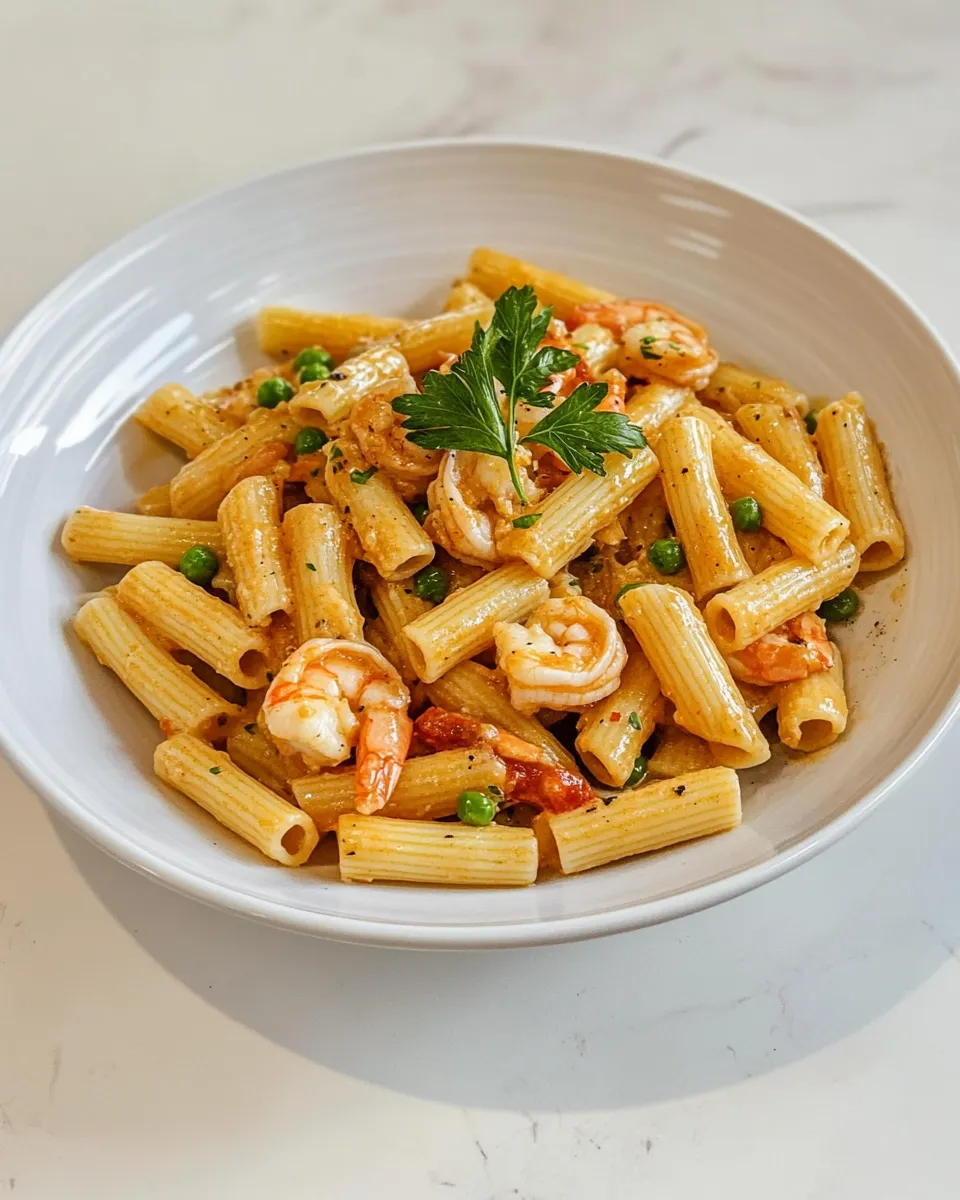
The directions below are laid out clearly and in order so you can move through the recipe with confidence. The ingredient list above is the source of truth for names and quantities, and the steps follow that sequence while expanding on technique for best results.
- Boil the rigatoni: Fill a large pot with water and bring it to a vigorous boil over high heat. Add a pinch of salt to the water and stir in 350 g rigatoni. Cook the pasta until al dente according to the package instructions, usually about 8–12 minutes depending on your brand. Reserve about 1 cup of the starchy pasta cooking water before draining.
- Heat the oil and cook garlic: While the pasta cooks, place a large skillet over medium heat and add 3 tbsp olive oil. Once the oil is shimmering but not smoking, add 3 cloves garlic, finely chopped. Sauté the garlic, stirring frequently, until it becomes fragrant and just begins to turn golden, about 30–60 seconds. Be careful not to brown it too much to avoid bitterness.
- Add the canned tomatoes: Pour 400 g canned tomatoes, diced, directly into the skillet with the garlic. Stir to combine and bring the mixture to a gentle simmer. Let it cook for 3–5 minutes to allow the tomatoes to break down slightly and the flavors to meld.
- Stir in cream and milk: Reduce the heat to low and pour in 100 ml heavy cream and 100 ml whole milk. Stir the sauce until it becomes slightly creamy and homogenous. Allow the mixture to warm through for 1–2 minutes; do not let it boil vigorously once the dairy is added to prevent separation.
- Add shrimp and peas: Increase the heat to medium-low and add 400 g shrimp, peeled, and 60 g peas to the skillet. Stir gently to coat the shrimp in the sauce. Cook the shrimp in the simmering sauce until they turn pink and opaque throughout, about 3–5 minutes depending on their size. The peas will heat through and retain a bright color.
- Season: Sprinkle ¼ tsp salt and ½ tsp pepper over the sauce, shrimp, and peas. Stir and taste; adjust the seasoning if you prefer it saltier or spicier. Remember that the pasta water you reserved can be used later to loosen the sauce and adjust seasoning subtly.
- Combine pasta and sauce: Drain the rigatoni well and add it directly into the skillet with the shrimp and sauce. Toss gently to combine so the rigatoni is thoroughly coated. If the sauce feels too thick, add a few tablespoons of the reserved pasta cooking water at a time until you reach a silky consistency that clings to the pasta.
- Finish and serve: Give everything a final toss, then remove the skillet from the heat. Serve the Shrimp and Pea Rigatoni immediately while hot. If you like, finish with a drizzle of olive oil or a light sprinkle of freshly cracked pepper for presentation.
Timing and tips
- Start the sauce while the pasta water is coming to a boil so the timing overlaps and dinner comes together quickly.
- Reserve pasta water to adjust sauce thickness — the starch helps emulsify the sauce and helps it cling to the rigatoni.
- Don’t overcook the shrimp. They should be pink and just opaque; overcooking makes them rubbery.
- If you prefer a chunkier tomato texture, reduce the time you simmer the canned tomatoes. For a smoother sauce, use an immersion blender briefly before adding the cream.
- For extra brightness, squeeze a little lemon over the finished dish or add a handful of chopped fresh herbs at the end (such as parsley or basil).
Variations and add-ins
Want to put your own stamp on this Shrimp and Pea Rigatoni? Here are a few easy variations:
- Add a pinch of red pepper flakes when cooking the garlic for a subtle heat.
- Stir in a handful of baby spinach at the end until just wilted for extra greens.
- Swap half the heavy cream for a lighter yogurt stirred in off the heat for tang and creaminess.
- Top with toasted breadcrumbs for crunch or grated cheese if you enjoy a sharper finish.
Make-ahead and storage
Store leftovers in an airtight container in the refrigerator for up to 2 days. The sauce will thicken in the fridge; gently reheat on the stovetop over low heat with a splash of milk or reserved pasta water to loosen it. Avoid reheating shrimp for too long; if reheating results are rubbery, consider removing the shrimp before long storage and adding freshly cooked shrimp when reheating the pasta and sauce.
Serving suggestions
Serve this Shrimp and Pea Rigatoni with a simple green salad and crusty bread to mop up any extra sauce. A crisp white wine or a sparkling water with lemon complements the creaminess and seafood notes beautifully. This dish also pairs nicely with roasted vegetables or a simple antipasto platter if you’re entertaining.
Nutritional notes
This Shrimp and Pea Rigatoni balances carbohydrates from the pasta with lean protein from the shrimp and vegetables from the peas and tomatoes. The cream and milk add richness and calories, so you can adjust those amounts slightly if you want a lighter version. Using the full-fat dairy called for here creates the smoothest, most satisfying sauce, while a partial swap with a lighter milk will reduce calories at the cost of some silkiness.
Final thoughts
Shrimp and Pea Rigatoni is one of those dishes that tastes like you put in more effort than you did. It’s quick, adaptable, and crowd-pleasing, providing comfort without being heavy. Follow the steps above, keep an eye on the shrimp, and use the reserved pasta water to perfect the sauce texture. The end result is a dish that feels homemade and thoughtfully composed — the kind you’ll find yourself making again and again.
Happy cooking, and enjoy every creamy, garlicky bite of Shrimp and Pea Rigatoni.
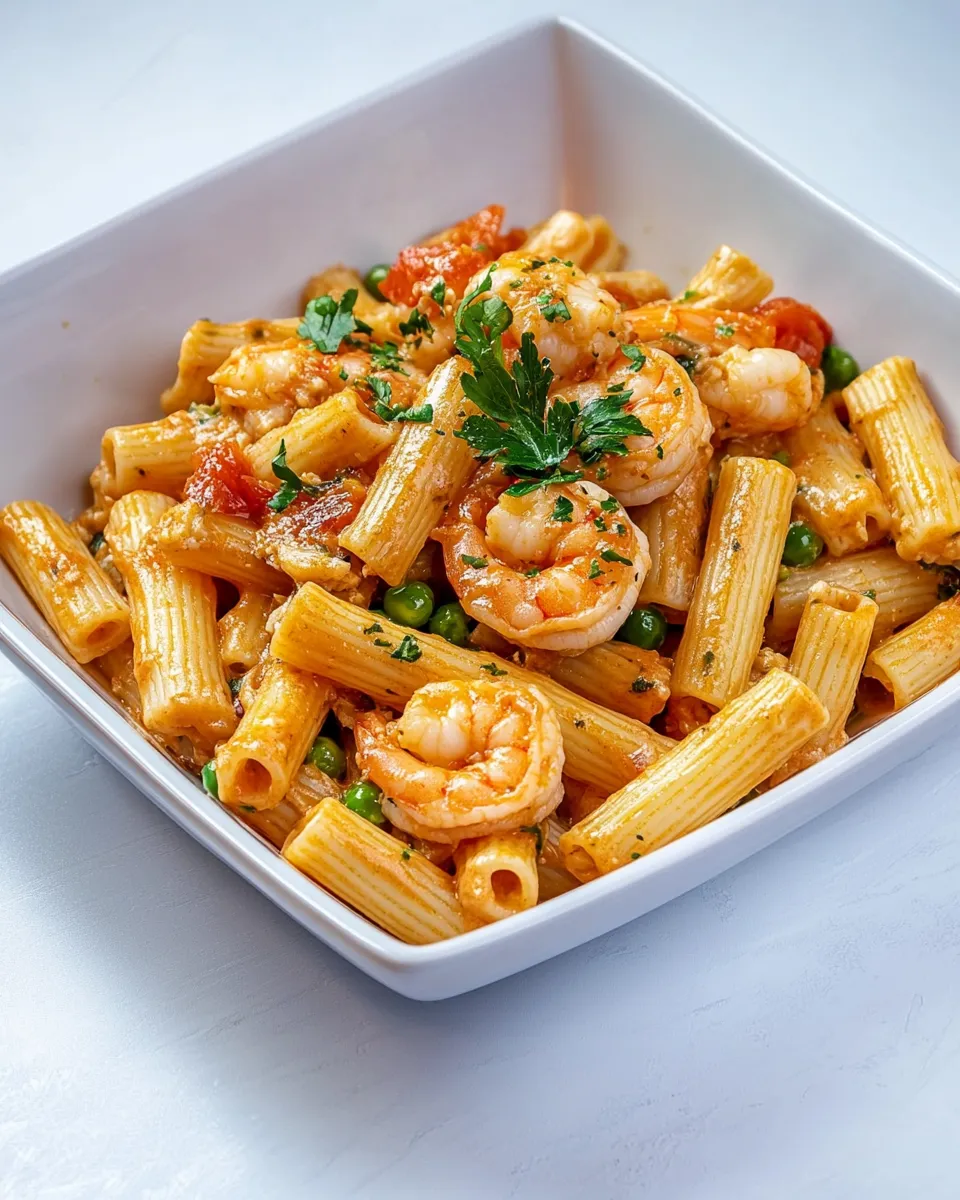
Shrimp and Pea Rigatoni
Ingredients
Equipment
Method
- Bring a large pot of salted water to a boil. Add the rigatoni and cook until 1 minute less than package instructions; reserve about 1/2 cup of pasta water, then drain the pasta.
- Heat a large skillet or saucepan over medium heat and add the olive oil. Add the finely chopped garlic and sauté until fragrant and lightly golden, about 1 minute.
- Pour in the diced canned tomatoes, heavy cream, and whole milk. Stir and simmer for 2–3 minutes until combined and slightly reduced.
- Add the peeled shrimp and peas to the sauce, season with the salt and pepper, stir, and cook until the shrimp are opaque and cooked through, about 8–10 minutes.
- Add the drained rigatoni to the sauce, toss to combine, and cook 1–2 minutes more so the pasta finishes cooking and the sauce thickens; add reserved pasta water a splash at a time if needed to loosen the sauce.
- Serve immediately.
Notes
- Avoid sautéing the shrimp for too long as they will continue to cook in the sauce.
- Reserve some pasta water to adjust sauce consistency.