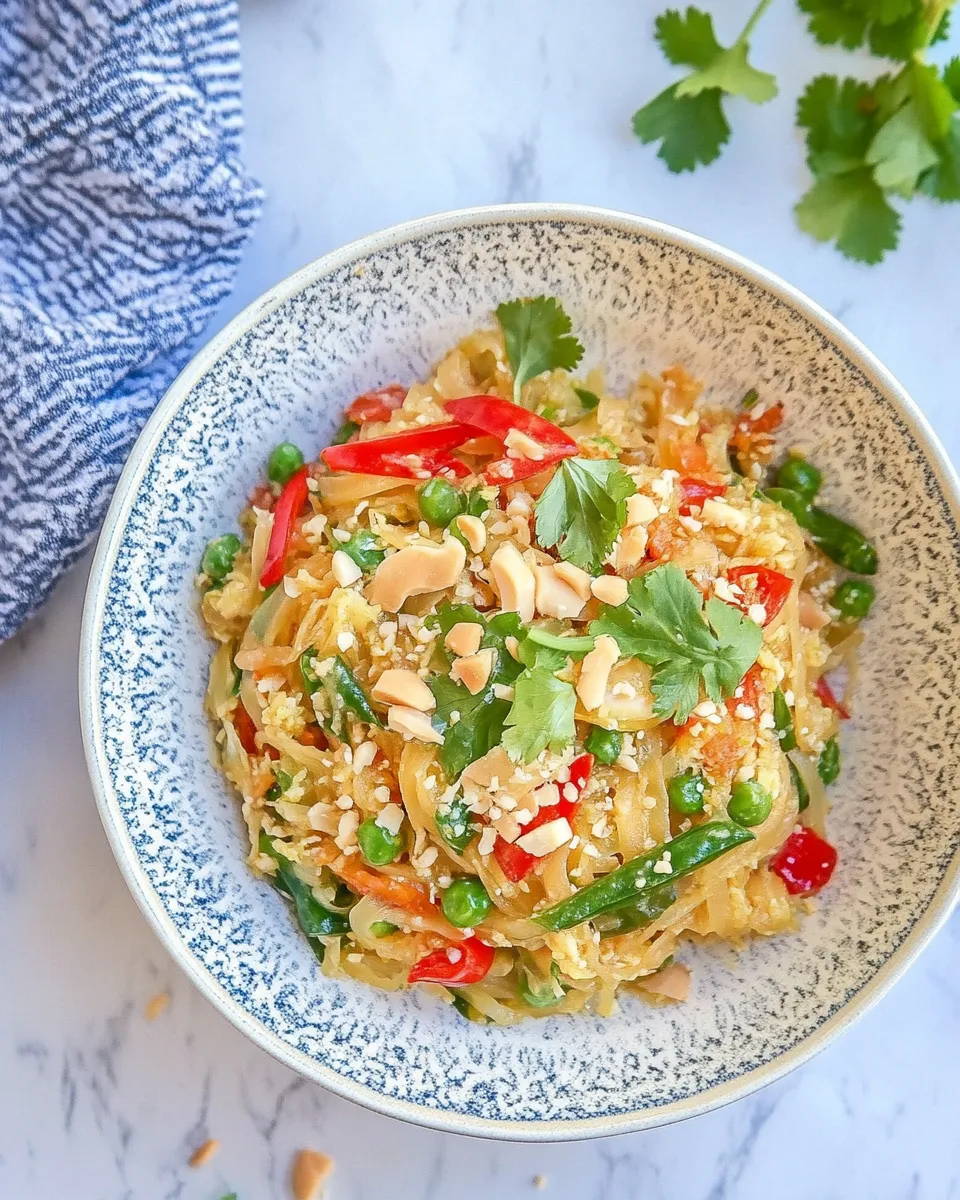
Spaghetti Squash Pad Thai
Bright, tangy, and loaded with texture, this Spaghetti Squash Pad Thai is my lighter twist on a beloved noodle stir-fry. Instead of rice noodles, strands of roasted spaghetti squash soak up a creamy, savory-sweet sauce that’s anchored by cashew butter, lime juice, and a little heat. Plump shrimp provide quick-cooking protein, while colorful vegetables and chopped cashews add crunch. The whole dish comes together fast and feels indulgent without weighing you down—perfect for a weeknight dinner that still tastes like a celebration.
This recipe keeps things simple but layered: you’ll roast a small spaghetti squash until fork-tender, then stir-fry pepper, jalapeño, carrot, garlic, ginger, and shrimp in coconut oil. A sauce made from cashew butter, lime, liquid aminos, maple syrup, and sriracha gets tossed with the warm squash strands and everything finishes with toasted cashews for a buttery crunch. Follow the clear step-by-step directions below for a flavorful, colorful plate that reheats beautifully.
Why this version works
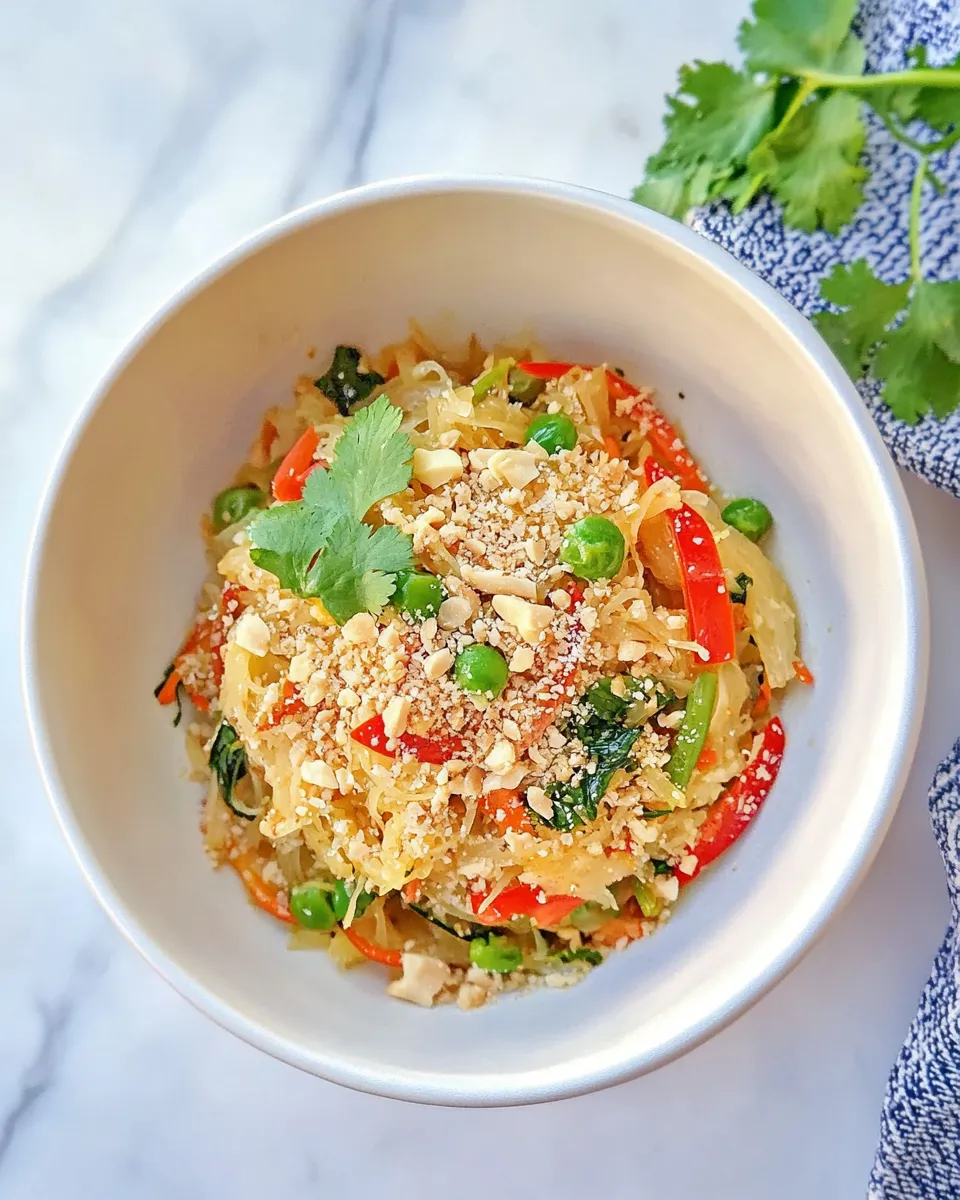
Spaghetti squash acts like the perfect vehicle for bold pad thai flavors while keeping the meal naturally lower in carbs and higher in vegetables. Using cashew butter creates a silky, nutty sauce that clings to every strand, and shrimp cooks in minutes so the whole skillet stays bright and fresh. Liquid aminos provide umami depth without overpowering the lime and maple balance, and a small amount of red chili sauce gives the kick you want in this classic dish.
Ingredients
- 4 tablespoons coconut oil, separated
- 1 small spaghetti squash, roasted
- 1 red bell pepper, cut into match sticks
- 1 jalapeno, seeded and chopped
- 1-1/2 cup grated carrot
- 3 cloves garlic, minced
- ½ pound shrimp, peeled and deveined
- 2 tablespoons raw cashews, chopped
- 2 tablespoons cashew butter
- 2 tablespoons lime juice
- 2 tablespoons liquid aminos or low-sodium soy sauce
- 1 tablespoon pure maple syrup (see note)
- 1 tablespoon red chili sauce such as sriracha
- 2 teaspoons fresh ginger, peeled and grated
Notes
Use a small spaghetti squash so the texture mimics a single-serving noodle portion. Pure maple syrup provides a clean sweetness, but you can adjust that tablespoon up or down to taste. Liquid aminos or low-sodium soy sauce both work; choose based on your preferred flavor profile.
Equipment
- Baking sheet
- Sharp knife and spoon
- Large skillet or wok
- Mixing bowl
- Tongs or two forks for shredding the squash
Prep at a glance
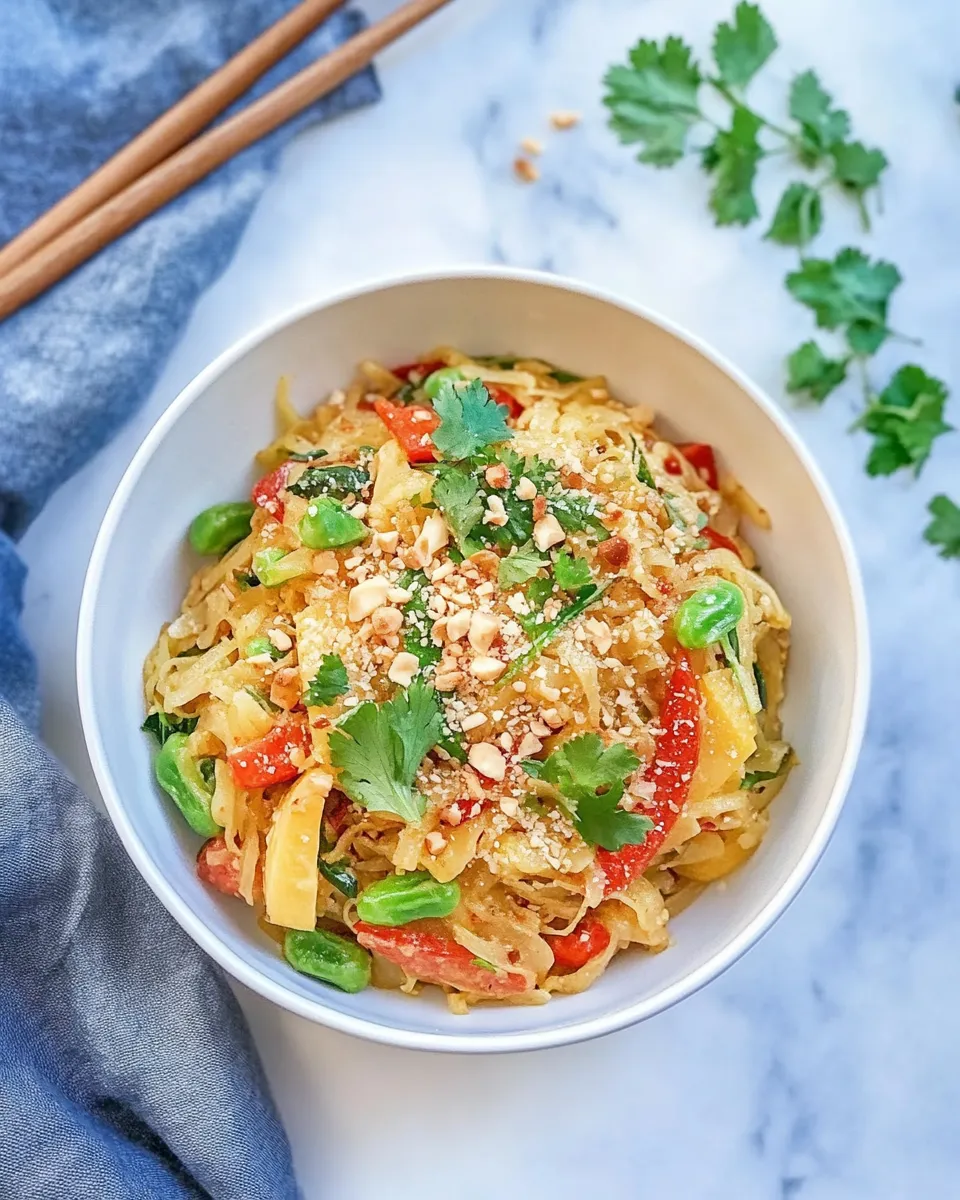
- Roast the spaghetti squash and scrape into strands.
- Grate the carrot, mince garlic, peel and grate ginger, slice the bell pepper and chop the jalapeño.
- Mince or chop cashews and measure sauce ingredients so everything is within arm’s reach for a quick stir-fry.
Step-by-step instructions
- Roast the spaghetti squash: Preheat the oven to 400°F (200°C). Slice the small spaghetti squash in half lengthwise and scoop out the seeds. Brush or rub 1 tablespoon of the coconut oil over the cut sides, place the halves cut-side down on a baking sheet, and roast until the flesh is tender and easily shredded with a fork, about 30–40 minutes depending on squash size. When cool enough to handle, use two forks to scrape the flesh into spaghetti-like strands and transfer them to a bowl. Keep warm.
- Prepare the sauce: In a small bowl, whisk together the cashew butter, lime juice, liquid aminos (or low-sodium soy sauce), pure maple syrup, red chili sauce, and grated fresh ginger. Taste and adjust—add a touch more maple syrup if you prefer sweeter, or a bit more lime for extra brightness. Set the sauce aside.
- Heat the skillet: Place a large skillet or wok over medium-high heat. Add 1 tablespoon of coconut oil and let it melt and warm until shimmering but not smoking.
- Sauté aromatics and vegetables: Add the minced garlic, chopped jalapeño, and grated carrot to the hot skillet. Stir continuously for about 1 minute so the garlic becomes fragrant but does not brown. Add the red bell pepper match sticks and continue to cook, stirring, for another 2–3 minutes until the pepper begins to soften but still retains some crunch.
- Cook the shrimp: Push the vegetables to the side of the skillet or create a clear space in the center. Add a second tablespoon of coconut oil into the cleared area and add the peeled and deveined shrimp in a single layer. Season lightly with a pinch of salt if desired. Cook the shrimp for about 1–2 minutes per side, flipping once, until they are opaque and just cooked through. Shrimp cook quickly, so watch closely to avoid overcooking.
- Combine squash and sauce: Move the cooked shrimp and vegetables slightly to make room and add the warm spaghetti squash strands back into the skillet. Add the prepared cashew sauce over the squash and toss everything together gently but thoroughly, using tongs or spatulas to distribute the sauce so the strands are coated evenly. If the pan seems dry, add the remaining 2 tablespoons of coconut oil (separated earlier) in small additions as needed to help the sauce coat the squash and to add richness.
- Finish and heat through: Continue to toss and cook for 1–2 minutes more, allowing the sauce to warm and cling to the vegetables, shrimp, and squash. Taste and adjust seasoning: add more liquid aminos/soy for saltiness, more lime for acidity, or a dash more chili sauce for heat.
- Garnish and serve: Remove the skillet from the heat. Sprinkle the chopped raw cashews across the top for crunch. Serve the Spaghetti Squash Pad Thai immediately, garnished with extra lime wedges if you like, and an optional scattering of fresh herbs such as cilantro or sliced green onions for color and brightness.
Troubleshooting & tips
- If your spaghetti squash has excess moisture after roasting, let the strands drain briefly in a colander so the sauce doesn’t become watery.
- To toast cashews for extra depth, place them in a dry skillet over medium heat and stir for 2–3 minutes until fragrant and lightly browned. Watch carefully—nuts burn quickly.
- Adjust spice level by using half a jalapeño initially, or increase red chili sauce to taste.
- If you prefer a nuttier sauce texture, blitz the cashew butter with a tablespoon of warm water to loosen it before whisking in the remaining sauce ingredients.
Make-ahead and storage
You can roast the spaghetti squash up to two days in advance and store the strands in an airtight container in the refrigerator. The sauce also keeps well in the fridge for a few days, which makes evening assembly faster. Reheat gently in a skillet over medium heat; add a splash of water or a teaspoon of coconut oil if the dish feels dry. Leftovers will keep for 2–3 days in the refrigerator.
Serving ideas
This Spaghetti Squash Pad Thai is satisfying on its own and also pairs well with a light green salad, steamed greens, or a side of pickled vegetables to cut through the richness. For a heartier bowl, serve with extra chopped cashews or a poached egg on top.
Flavor variations
- Vegetarian option: Replace the shrimp with firm tofu cubes—pan-fry until golden and toss into the finished dish.
- Double the veg: Add snow peas, bean sprouts, or thinly sliced cabbage for extra crunch and color.
- Nut swap: If you prefer almond butter over cashew butter, it will give a slightly different but still delicious nutty backdrop.
Final thoughts
This Spaghetti Squash Pad Thai balances tang, sweet, umami, and heat in a way that feels both comforting and fresh. The quick-cooking shrimp and the ease of roasted squash make this a realistic weeknight dinner that doesn’t skimp on personality. Keep the sauce components measured and handy, and you’ll have a vibrant skillet meal in under 45 minutes from start to finish.
Enjoy this twist on a classic—each forkful offers a mix of silky squash strands, crunchy cashews, and plump shrimp wrapped in a bright, creamy cashew-lime sauce. It’s a dish you’ll turn to when you want something special but simple to pull together.
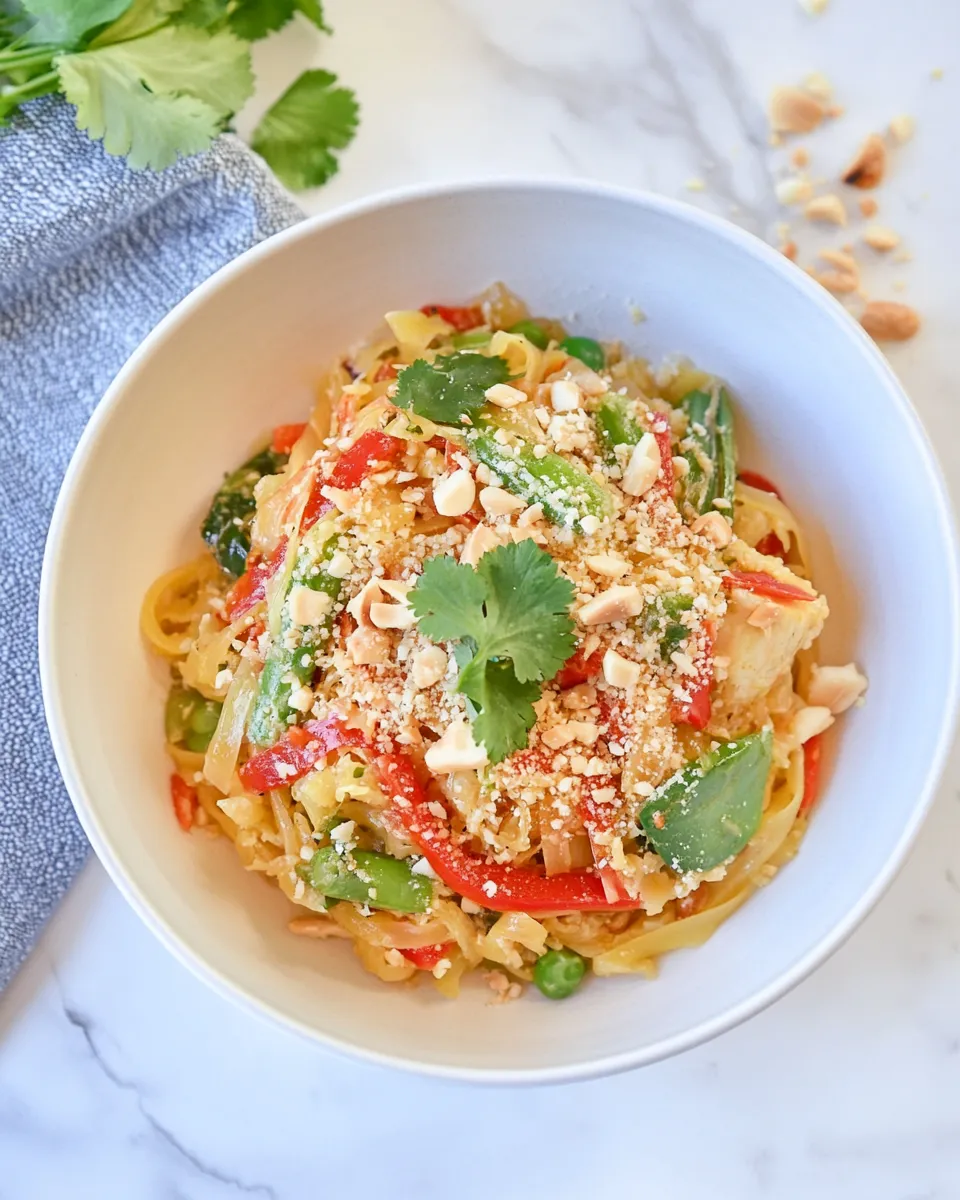
Spaghetti Squash Pad Thai
Ingredients
Equipment
Method
- Preheat the oven to 400°F (200°C). Trim the ends of the spaghetti squash, cut it in half lengthwise, and scoop out the seeds.
- Brush each cut half with 1 tablespoon of coconut oil and season with salt and pepper. Place cut-side down on a baking sheet and roast 45–55 minutes, until the flesh pulls into strands with a fork. Let cool slightly.
- Scrape the roasted squash flesh with a fork to create spaghetti-like strands; set aside in a bowl.
- Combine cashew butter, lime juice, liquid aminos (or soy sauce), maple syrup (if using), red chili sauce, grated ginger, and 2 tablespoons chopped cashews in a small blender or food processor and blend until smooth to make the sauce. Set aside.
- Heat the remaining 2 tablespoons coconut oil in a medium nonstick skillet over medium heat. Add the red bell pepper and jalapeño and sauté about 3 minutes, stirring occasionally.
- Add the grated carrot and minced garlic and continue to sauté 3–5 minutes, until the vegetables are softened but still have some bite.
- Push the vegetables to one side of the skillet and add the raw shrimp. Cook 1–2 minutes per side until shrimp are pink and cooked through.
- Pour the cashew-ginger sauce into the skillet and cook 2–3 minutes to warm and thicken slightly, stirring to combine with vegetables and shrimp.
- Add the spaghetti squash strands to the skillet and toss gently to coat everything evenly in the sauce and heat through, about 1–2 minutes.
- Serve immediately topped with remaining chopped cashews and fresh herbs if desired.
Notes
- Omit the maple syrup to make the recipe Whole30-compliant.
- Roast squash cut-side down for more even caramelization.
- Use liquid aminos as a gluten-free soy sauce alternative.
- Chop cashews coarsely for crunch.