Mongolian Chicken Noodles
There’s something irresistible about a bowl of warm noodles coated in glossy sauce, tender pieces of chicken, and crisp-tender vegetables. This Mongolian Chicken Noodles recipe delivers savory-sweet flavors with a satisfying texture contrast: silky rice noodles, crunchy broccoli, and tender chicken cubes. It’s weeknight-friendly, fridge-friendly, and quick enough for busy evenings. Below you’ll find an easy-to-follow recipe, tips for perfecting the sauce, and simple swaps to make the dish your own.
Why you’ll love this recipe
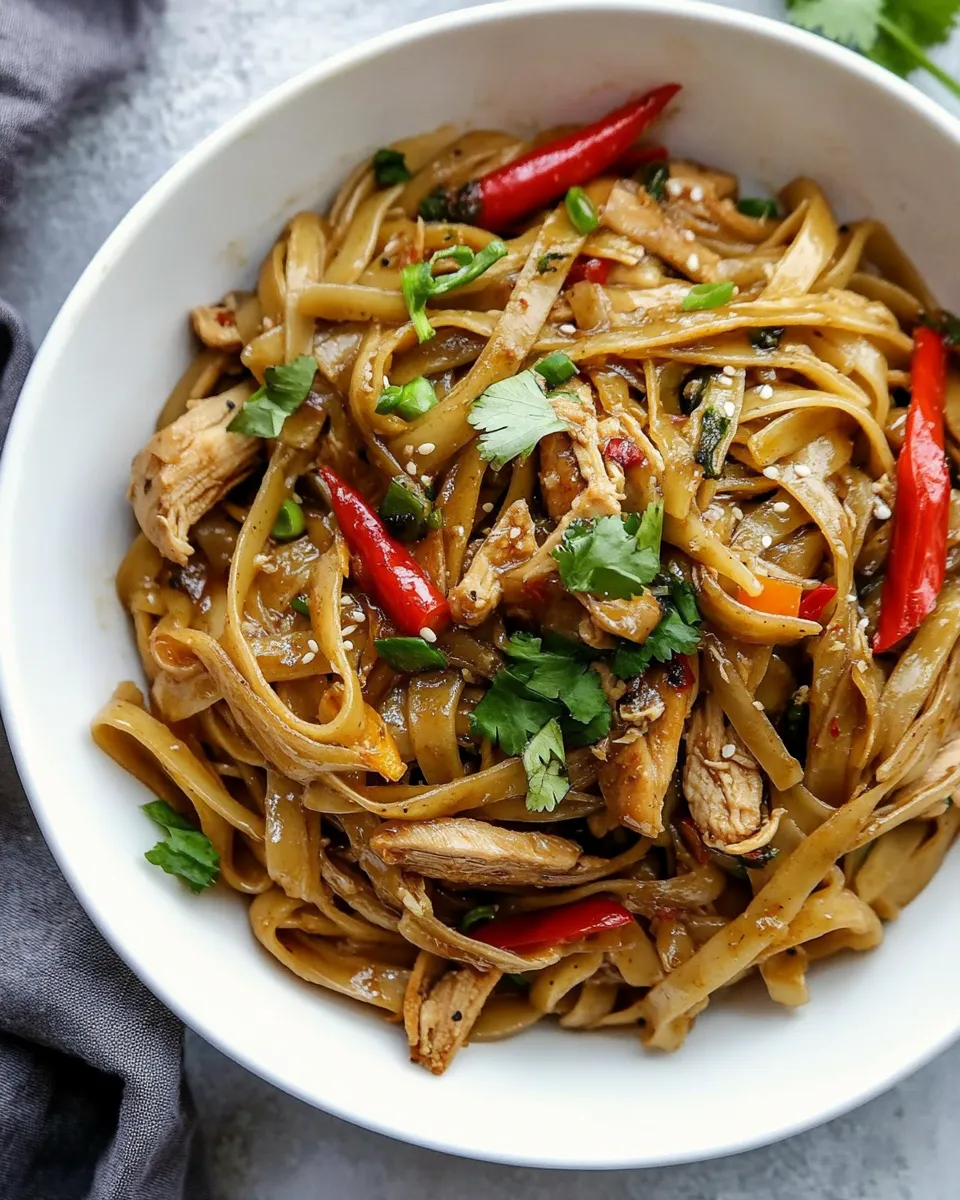
- Mongolian Chicken Noodles brings bright, balanced flavors—soy and ginger, a touch of sweetness, and a little chili heat.
- Uses everyday pantry staples and fresh produce for a wholesome meal in under an hour.
- Rice noodles make this dish naturally grain-free and delightfully slurpable.
- Easy to customize: add mushrooms, snap peas, or swap broccoli for bok choy.
Ingredients
Serves 3–4
- 1 pound cubed boneless skinless chicken breasts, cut into 1-inch cubes
- salt and pepper
- 1 teaspoon sesame oil
- 6 ounces uncooked 1/4″ inch thick gluten free dried rice noodles
- 3 tablespoons olive oil
- 3 cups broccoli florets
- 1/2 cup grated carrots
- 1/2 sliced bell pepper
- 3 cloves minced garlic
- 1/2 teaspoon minced fresh ginger
- 1/2 cup low sodium soy sauce
- 3 tablespoons packed light brown sugar
- 2 tablespoons Hoisin sauce
- 2 tablespoons cornstarch
- 1/2 cup water
- 1/2 teaspoon red chili flakes
- toasted sesame seeds for garnish
- thinly sliced green onions for garnish
Prep notes
Start by cutting chicken into 1-inch cubes so it cooks evenly. Mince garlic and finely mince the fresh ginger for the cleanest flavor. If you like your veggies extra tender, cut the broccoli into slightly smaller florets; if you prefer a bite, keep them a bit larger. The rice noodles specified are 1/4″ thick dried rice noodles—follow package directions for timing, but plan to prepare them early so they’re ready to toss with the sauce and vegetables.
Step-by-step instructions
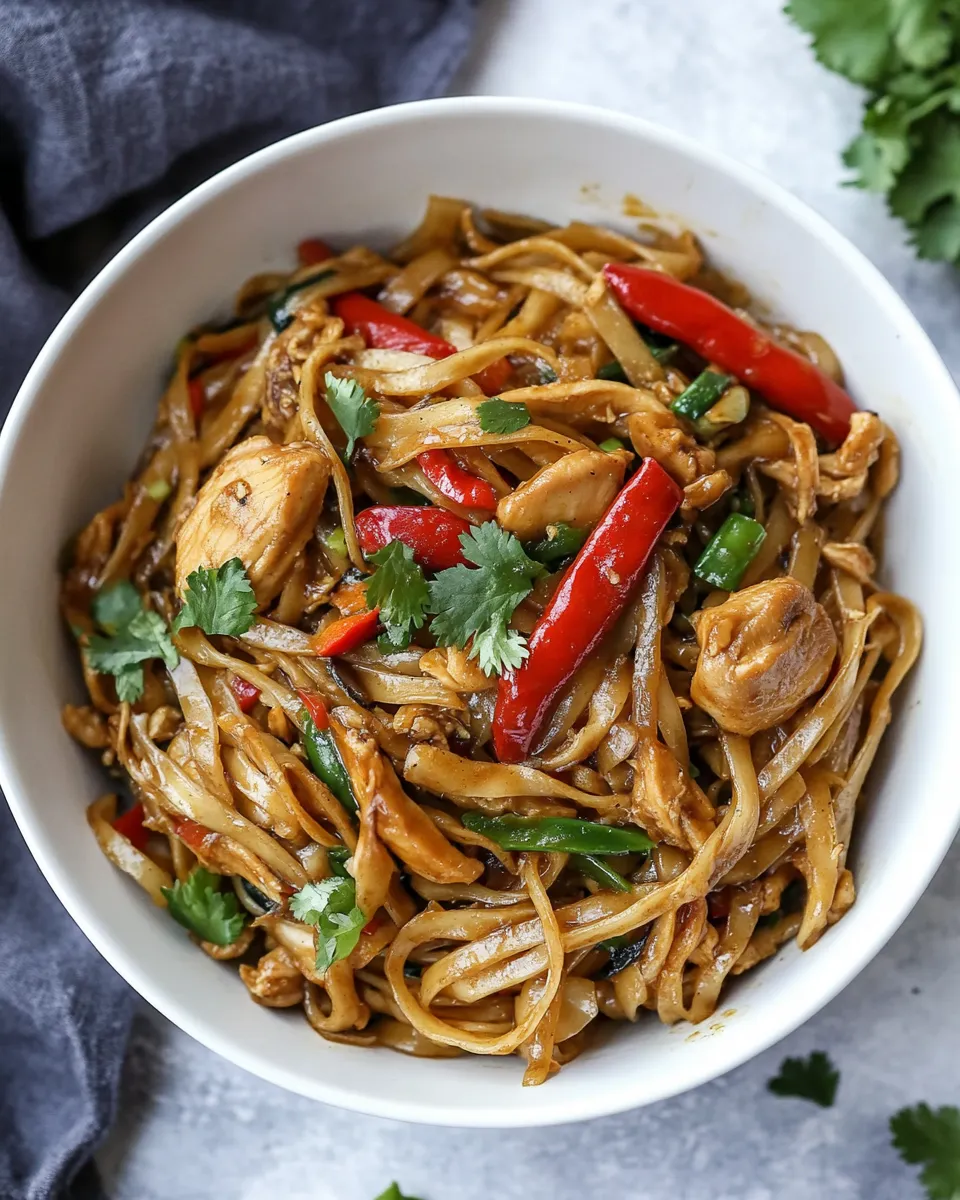
Follow these steps in order. The rewritten directions keep the original sequence but make each step clearer and easier to execute.
- Season and sear the chicken. Pat the 1 pound cubed boneless skinless chicken breasts dry with paper towels and season lightly with salt and pepper. In a large skillet or wok, heat 1 teaspoon sesame oil over medium-high heat until shimmering. Add the chicken cubes in a single layer, working in batches if needed so they don’t crowd. Cook the chicken, stirring occasionally, until browned on the outside and cooked through, about 5–7 minutes depending on size. Transfer the cooked chicken to a plate and set aside.
- Cook the rice noodles. While the chicken cooks, bring a pot of water to a boil. Add the 6 ounces uncooked 1/4″ inch thick gluten free dried rice noodles and cook according to package instructions until just tender. Drain the noodles well and rinse briefly with warm water to prevent sticking. Toss the drained noodles lightly with a drop of olive oil if needed, and set aside.
- Sauté vegetables. In the same large skillet or wok, heat 3 tablespoons olive oil over medium-high heat. Add 3 cups broccoli florets, 1/2 cup grated carrots, and 1/2 sliced bell pepper. Stir-fry the vegetables for about 3–5 minutes until they are crisp-tender. Keep them moving in the pan so they cook evenly and maintain some crunch.
- Add aromatics. Push the vegetables to the side of the pan and add the minced aromatics: 3 cloves minced garlic and 1/2 teaspoon minced fresh ginger. Stir quickly for 20–30 seconds until fragrant, being careful not to burn the garlic.
- Combine the sauce ingredients. In a small bowl, whisk together 1/2 cup low sodium soy sauce, 3 tablespoons packed light brown sugar, 2 tablespoons Hoisin sauce, 2 tablespoons cornstarch, and 1/2 cup water until smooth and the cornstarch is fully dissolved. Stir in 1/2 teaspoon red chili flakes. This mixture will thicken into a glossy sauce once added to the hot pan.
- Return chicken and pour in the sauce. Add the seared chicken back into the skillet with the vegetables. Pour the sauce mixture over the chicken and vegetables, stirring briefly to distribute everything evenly. Increase the heat to medium-high so the sauce comes to a simmer.
- Thicken the sauce and finish the noodles. As the sauce heats, it will thicken thanks to the cornstarch. Stir constantly for 1–2 minutes until the sauce is glossy and coats the chicken and vegetables. Add the cooked rice noodles to the skillet, gently tossing or using tongs to combine the noodles with the saucy chicken and vegetables until everything is well coated and heated through.
- Taste and adjust. Taste a small bite and adjust seasoning with a pinch of salt, pepper, or an extra pinch of red chili flakes if you want more heat. If the sauce is too thick, add a tablespoon or two of warm water and toss again to reach your desired consistency.
- Garnish and serve. Transfer the Mongolian Chicken Noodles to serving plates or a large bowl. Sprinkle toasted sesame seeds and thinly sliced green onions over the top for crunch and a fresh finish. Serve immediately while hot.
Timing and make-ahead tips
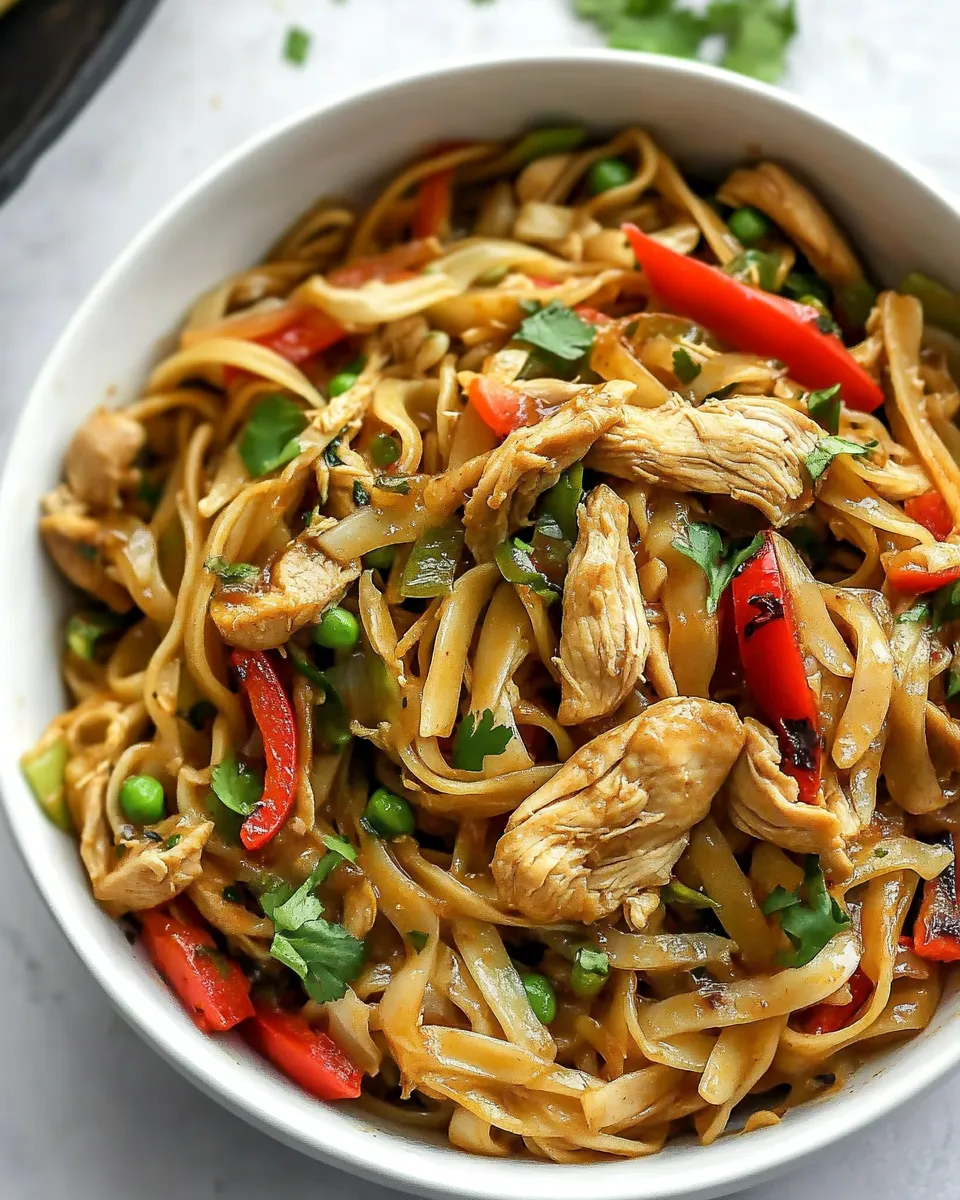
- Prep the chicken and vegetables up to 24 hours ahead: keep them refrigerated separately to maintain texture.
- The sauce can be mixed ahead and stored in the fridge for up to 3 days—stir well before using since cornstarch can settle.
- If you’re short on time, use pre-cut stir-fry vegetables and pre-shredded carrots to speed things up.
Serving suggestions
This dish is lovely on its own, but you can round it out with a few easy sides: a light cucumber salad, steamed edamame, or a simple bowl of miso soup. For a heartier meal, serve alongside a small plate of pan-fried tofu or add toasted nuts for extra texture.
Flavor variations
- To add more depth, stir in a tablespoon of rice vinegar or lime juice right before serving to brighten the sauce.
- For a nuttier profile, swap half the olive oil for toasted sesame oil when you sauté the vegetables.
- Want more umami? Add a teaspoon of oyster sauce (or mushroom stir-fry sauce) to the sauce mixture.
- Make it saucier by reducing the cornstarch to 1 tablespoon and adding 2–4 tablespoons extra water; this yields a looser sauce that still coats the noodles.
Storage and reheating
Store leftovers in an airtight container in the refrigerator for up to 3 days. Reheat gently in a skillet over medium heat with a splash of water to loosen the sauce, or microwave in short bursts, stirring between intervals. If the noodles soak up too much sauce in the fridge, add a tablespoon of water or broth when reheating to revive the texture.
Ingredient notes and swaps
- If you can’t find the specified 1/4″ thick rice noodles, similar-width rice stick noodles will work fine—just adjust cook time according to package directions.
- Low sodium soy sauce keeps the dish from becoming too salty; if you prefer a stronger soy flavor, use regular soy sauce but reduce added salt in cooking.
- Hoisin sauce lends sweetness and depth; for a slightly lighter taste, use 1 tablespoon and bump the brown sugar to 4 tablespoons.
Final thoughts
Mongolian Chicken Noodles is a dependable crowd-pleaser: saucy, slightly sweet, and savory with fresh aromatics and crisp vegetables. It’s a wonderful way to transform simple chicken and pantry staples into a vibrant, comforting meal. Whether you’re cooking for family or meal-prepping for the week, this bowl delivers big flavor with straightforward steps. Enjoy!
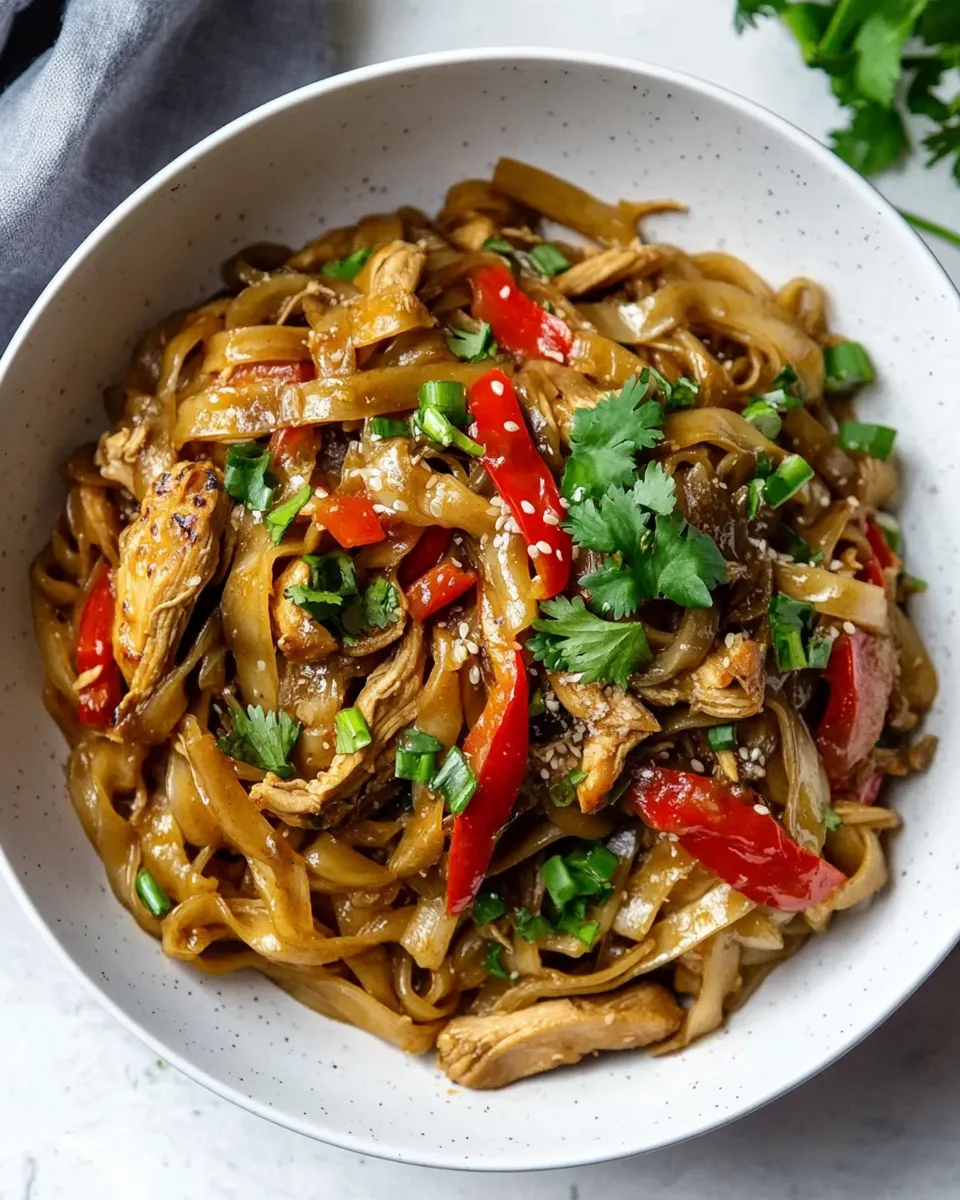
Mongolian Chicken Noodles
Ingredients
Equipment
Method
- Season the cubed chicken with salt and pepper, drizzle with 1 teaspoon sesame oil, and set aside.
- Cook the rice noodles according to the package instructions, drain, and set aside.
- Heat a large wok or skillet over medium-high heat and add 1 1/2 tablespoons of the olive oil.
- Add the chicken and sauté until cooked through, about 4–5 minutes, then transfer to a plate.
- Return the pan to the heat and add the remaining 1 1/2 tablespoons olive oil.
- Add broccoli, grated carrots, sliced bell pepper, minced garlic, and minced ginger; cook, stirring, until vegetables are crisp-tender, about 2–3 minutes.
- In a small bowl, whisk together soy sauce, brown sugar, hoisin sauce, cornstarch, and water until smooth.
- Pour the sauce into the pan with the vegetables, return the cooked chicken, and add the prepared noodles.
- Cook, stirring frequently, until the sauce bubbles and thickens and everything is well coated, about 1–2 minutes; stir in red chili flakes if using and adjust seasoning with salt and pepper to taste.
- Serve hot topped with toasted sesame seeds and thinly sliced green onions.
Notes
- Use gluten-free soy sauce if needed to keep the dish gluten-free.
- Prepare noodles just before adding to keep them from sticking.
- Adjust brown sugar for desired sweetness.
- Add chili flakes to taste for heat.