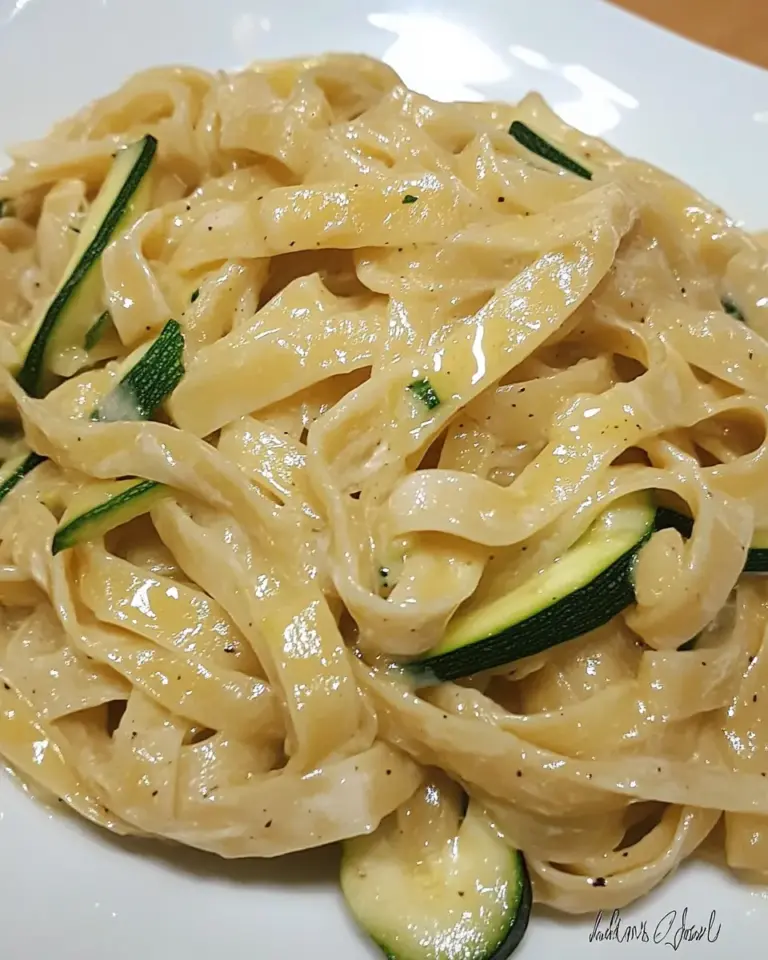
Parmesan Herb Orzo.
I love recipes that feel like a warm kitchen hug—simple, forgiving, and impossibly comforting. This Parmesan Herb Orzo is one of those weeknight winners that looks and tastes like you fussed, but it’s actually effortless. Tiny, rice-shaped orzo cooks in rich stock, finishes with creamy butter and freshly grated Parmesan, and gets brightened by a generous handful of fresh herbs. It’s cozy, elegant, and endlessly adaptable.
Below you’ll find everything you need to know to make this dish exactly right: why the technique matters, a short list of tools, and a step-by-step recipe that keeps the flavors balanced and the texture tender. The flavor profile is classic—nutty cheese, fragrant green herbs, and a silky finish—so it pairs beautifully with roasted vegetables, a simple pan-seared protein, or a green salad.
Why this version works
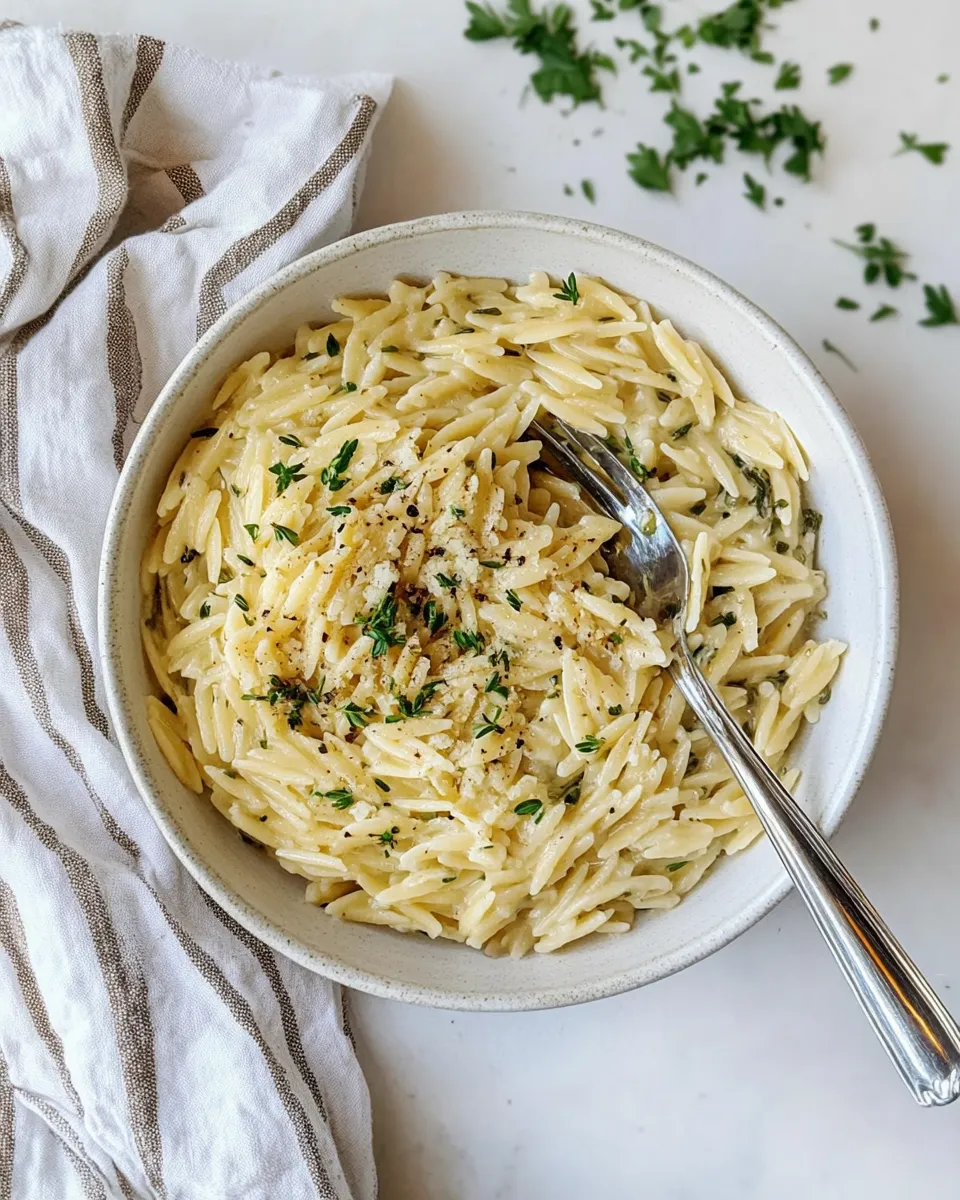
Orzo is a compact canvas: when cooked in stock it soaks up savory flavor, and its small shape holds a creamy sauce beautifully. Using unsalted butter keeps the final salt level controllable, while chicken or vegetable stock gives the orzo body from the inside out. Freshly grated Parmesan melts into the hot orzo and creates a glossy finish that clings to each little grain. Finally, the herbs—fresh or dried—add lift. The balance of butter, cheese, and herbs is key: too much of one throws off the texture.
Tools you’ll want
- Large, heavy-bottomed saucepan or medium pot with a lid
- Wooden spoon or heatproof spatula
- Measuring cups and spoons
- Box grater for the Parmesan
- Cutting board and knife for chopping herbs
- Fine mesh strainer (optional, if you want to rinse herbs or drain any excess liquid)
Ingredients
- 3 tablespoons unsalted butter
- 16 ounces orzo
- 32 ounces chicken or vegetable stock
- Kosher salt and pepper
- ½ cup freshly grated Parmesan cheese
- ¼ cup fresh chopped herbs, or 1 tablespoon mixed dried herbs (basil, parsley, rosemary, thyme, oregano)
Taste and texture notes
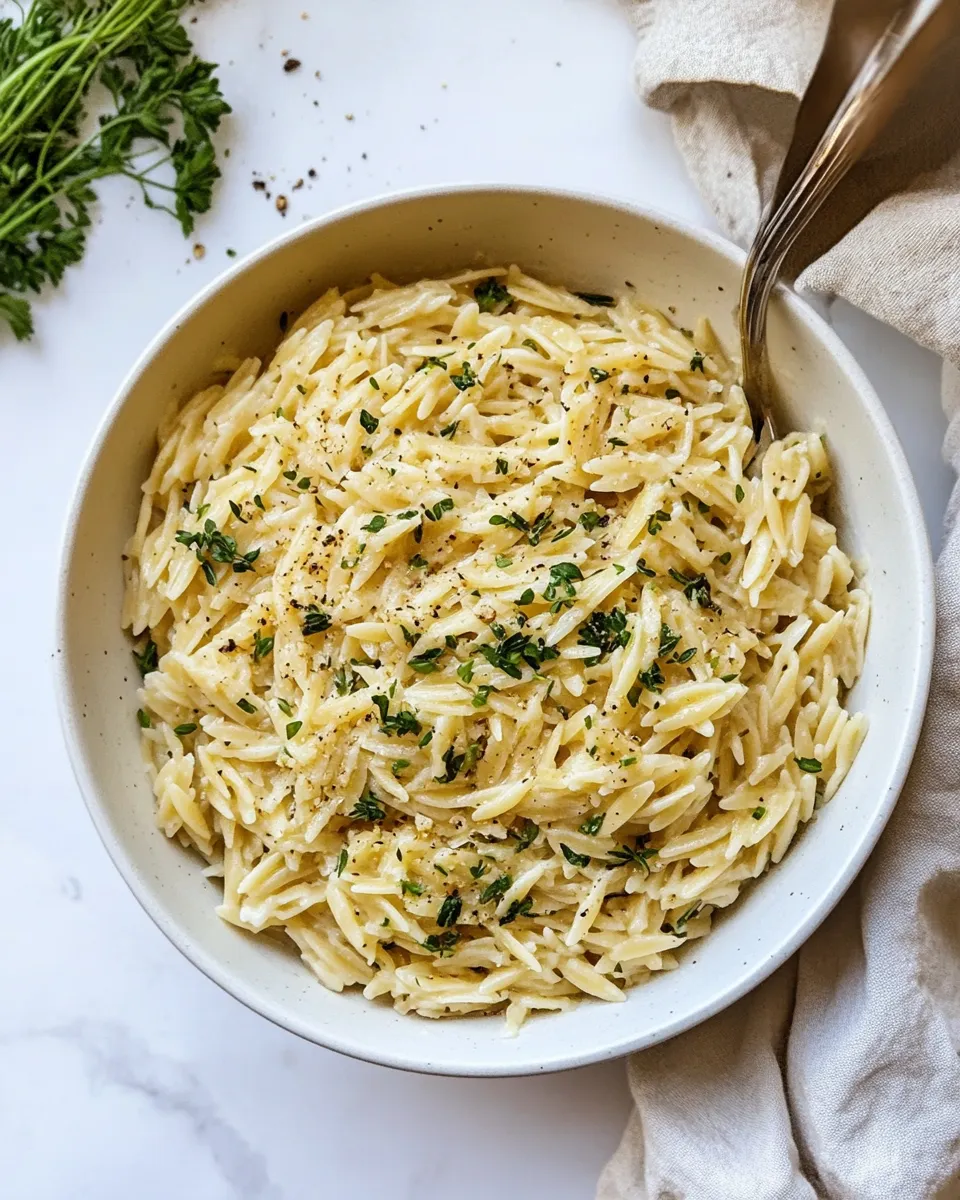
Your goal is orzo that’s tender but still holds its shape, with a glossy, slightly saucy finish. If you prefer something looser, add another splash of warm stock or a pat of butter at the end. If it seems too wet, cook it a minute or two longer uncovered. Adjust salt and pepper at the end—Parmesan brings saltiness, so taste before adding more.
Step-by-step instructions
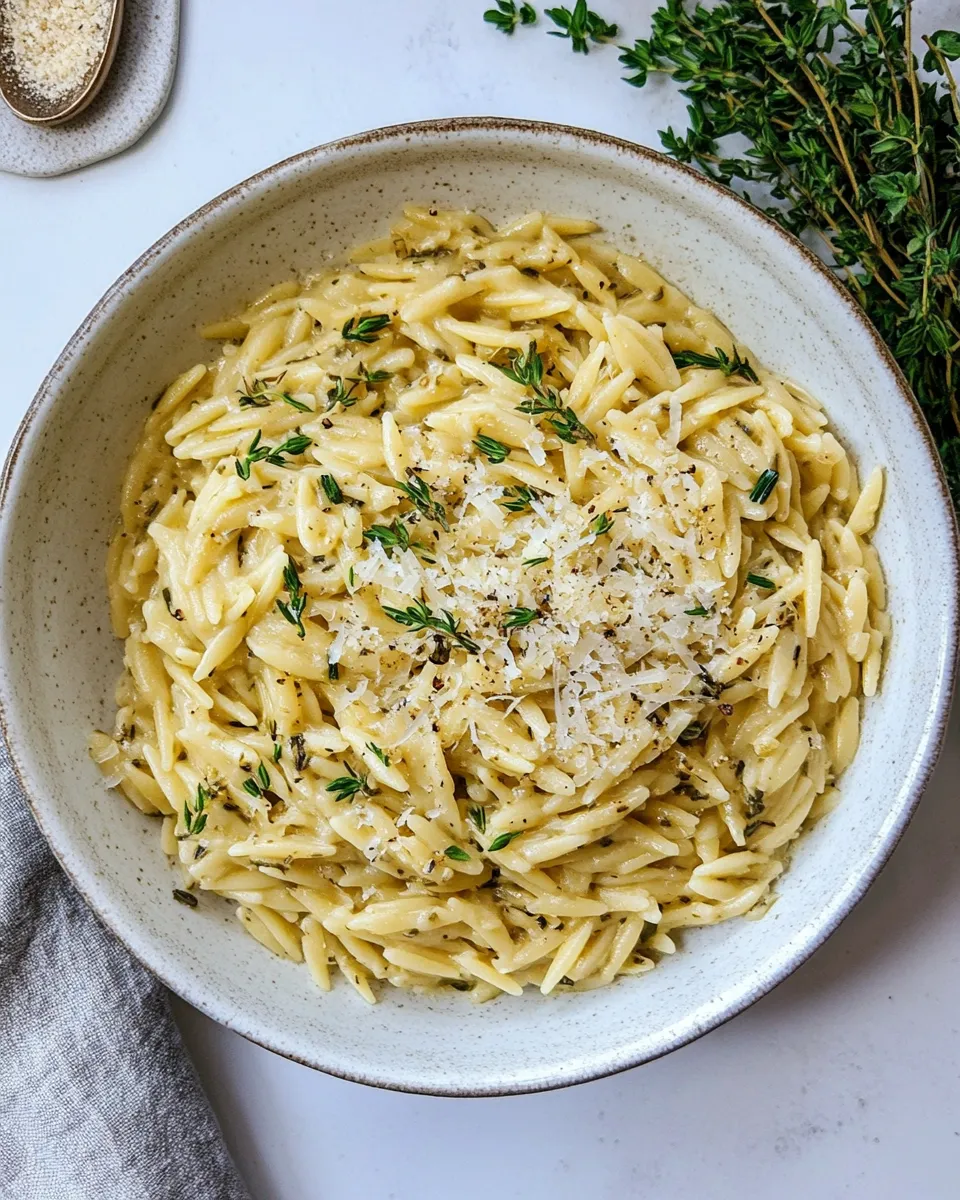
Follow these clear, ordered steps to make the best possible Parmesan Herb Orzo. The directions mirror the ingredient order and maintain the original proportions.
- Prep the ingredients. Grate ½ cup of Parmesan if you haven’t done so already. If you’re using fresh herbs, wash, dry, and finely chop enough to equal ¼ cup. Measure out 16 ounces of orzo, 32 ounces of stock, and 3 tablespoons unsalted butter so everything is ready to go.
- Bring the stock to a simmer. Pour the 32 ounces chicken or vegetable stock into a large, heavy-bottomed saucepan. Place the saucepan over medium-high heat and bring the stock to a gentle simmer. Watch it carefully so it doesn’t boil over.
- Toast the orzo briefly. Reduce the heat to medium. Add the 16 ounces of orzo to the simmering stock and stir to combine. Toasting the orzo for 30 to 60 seconds in the hot liquid helps develop a subtle nutty flavor—stir constantly so the orzo doesn’t stick.
- Cook the orzo in the simmering stock. Allow the orzo to cook in the gently simmering stock, stirring occasionally, until it is tender but still has a slight bite. This usually takes about 8 to 10 minutes, but start checking at 7 minutes because stovetops and orzo brands vary. If needed, reduce the heat to maintain a gentle simmer so the liquid doesn’t evaporate too quickly.
- Check the liquid level. As the orzo nears your preferred doneness, make sure there is still some liquid in the pot. You want the orzo to finish with a creamy, slightly saucy texture. If the stock has largely absorbed and the pasta is done, proceed; if the liquid has evaporated but the orzo needs more cook time, add a few tablespoons of hot water or stock and continue cooking briefly.
- Add butter, Parmesan, and herbs. Once the orzo is cooked through and the liquid level is right, remove the pot from the heat. Immediately stir in 3 tablespoons unsalted butter until melted and incorporated. Add ½ cup freshly grated Parmesan cheese and ¼ cup fresh chopped herbs (or 1 tablespoon mixed dried herbs if that’s what you’re using). Stir thoroughly so the cheese melts into the warm orzo and the herbs distribute evenly.
- Season to taste. Taste the orzo and add kosher salt and freshly ground black pepper as needed. Parmesan adds a fair bit of salt, so season cautiously—start with a small pinch of salt and build up if necessary. Stir again to combine.
- Let it rest briefly. Allow the finished orzo to sit for one to two minutes off the heat so flavors mellow and textures settle. This gives the Parmesan a chance to create a glossy finish without overcooking the herbs.
- Serve and garnish. Spoon the orzo into bowls or onto a serving dish. If you like, finish with an extra sprinkle of freshly grated Parmesan and a few reserved herb leaves for color. Serve warm.
Serving suggestions
This Parmesan Herb Orzo works as a main or a side. Try it with:
- Roasted or grilled vegetables for a meatless meal
- A simple pan-seared fish or chicken breast (seasoned with lemon and pepper)
- A leafy green salad dressed with lemon vinaigrette to cut through the richness
- Warm, crusty bread to soak up any remaining sauce
Make-ahead and storage
You can prepare this dish up to one day in advance. Store cooled orzo in an airtight container in the refrigerator for up to 3 days. To reheat, warm gently on the stove with a splash of hot stock or water and a small pat of butter to restore creaminess. Stir often to prevent sticking. If the herbs have lost brightness, add a small handful of fresh chopped herbs before serving.
Ingredient swaps and additions
Want to tweak this recipe? Here are a few reliable ideas that won’t break the balance:
- Cheese: Swap part of the Parmesan for Pecorino Romano if you like a sharper, saltier finish—reduce added salt accordingly.
- Herbs: Fresh basil and parsley give a bright, tender finish; rosemary and thyme are more assertive—use sparingly. If you only have dried herbs, use 1 tablespoon mixed dried herbs in place of the ¼ cup fresh.
- Butter: For a dairy-free version, substitute unsalted butter with a plant-based butter alternative. Finish with a nutritional yeast sprinkle in place of some Parmesan for that umami touch.
- Texture: Stir in a splash of cream or a dollop of crème fraîche at the end for an ultra-rich version.
Troubleshooting
- Too dry or clumpy: Add warm stock or water a tablespoon at a time and stir to loosen the orzo. A small extra pat of butter helps create shine and silkiness.
- Too thin or soupy: Cook the orzo a minute or two longer uncovered to reduce liquid. Alternatively, stir in a tablespoon of finely grated Parmesan to thicken slightly.
- Too salty: Add a small peeled and cooked potato to the pot while the orzo cooks; remove it before serving. Or bulk up the orzo with a few extra tablespoons of cooked plain orzo or a handful of steamed vegetables.
Final thoughts
There’s something reassuring about a simple bowl of warm pasta that tastes luxurious without being complicated. This Parmesan Herb Orzo checks those boxes: short ingredient list, straightforward technique, and a result that feels special. It’s a great template to personalize—add roasted mushrooms, a spoonful of pesto, or wilted spinach to make it your own.
Keep this recipe in your weeknight arsenal for a dish that’s quick enough for busy evenings and pretty enough for company. The method is forgiving, the flavors are classic, and you’ll find yourself making it again and again.
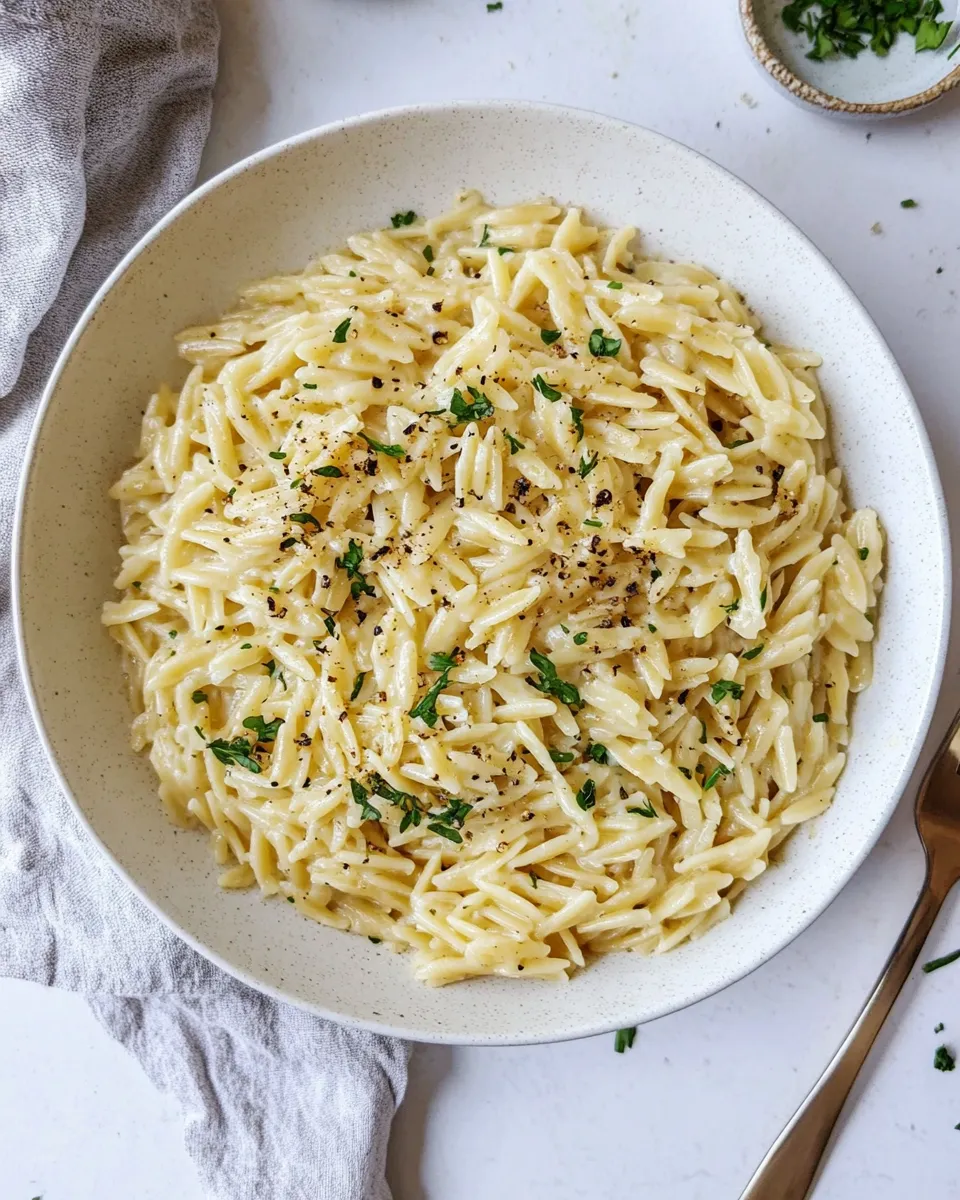
Parmesan Herb Orzo.
Ingredients
Equipment
Method
- Melt the butter in a medium saucepan over medium heat.
- Add the orzo and cook, stirring frequently, for 2–3 minutes until the orzo is lightly toasted.
- Pour in the stock and add a pinch of kosher salt and some freshly ground black pepper.
- Bring to a boil, then reduce the heat to low, cover, and simmer for 12–15 minutes, stirring once or twice so the orzo doesn't stick, until the liquid is absorbed and the orzo is tender.
- Remove from heat and stir in the grated Parmesan and chopped fresh herbs (or the dried herb equivalent) until combined and creamy.
- Taste and adjust seasoning with salt and pepper, then serve warm.
Notes
- Use fresh Parmesan for the best flavor.
- Stir occasionally while simmering to prevent sticking.
- Substitute vegetable stock to make it vegetarian.
- If using dried herbs, add them with the cheese so they rehydrate.