Spaghetti Aglio E Olio
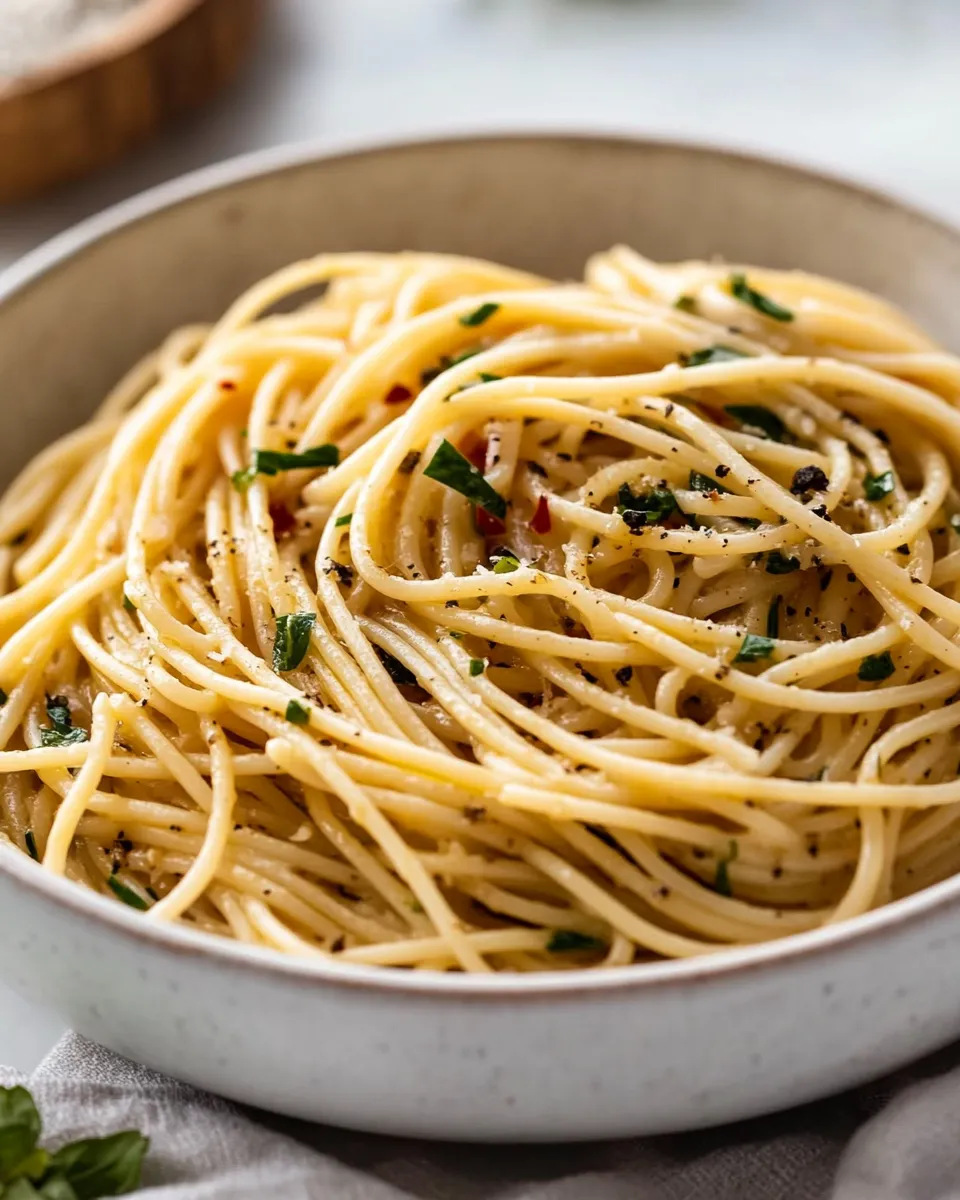
If you love simple, bold flavors and a dinner that comes together faster than you can decide what to order, this Spaghetti Aglio E Olio recipe is for you. Think tender strands of pasta, fragrant garlic gently toasted in good-quality extra virgin olive oil, a kiss of red pepper flakes for warmth, bright parsley for freshness, and a shower of grated Parmesan for a silky finish. This is comfort food that feels elegant and requires very little fuss—perfect for weeknights, last-minute guests, or any time you want truly satisfying pasta without complicated steps.
Why This Version Works
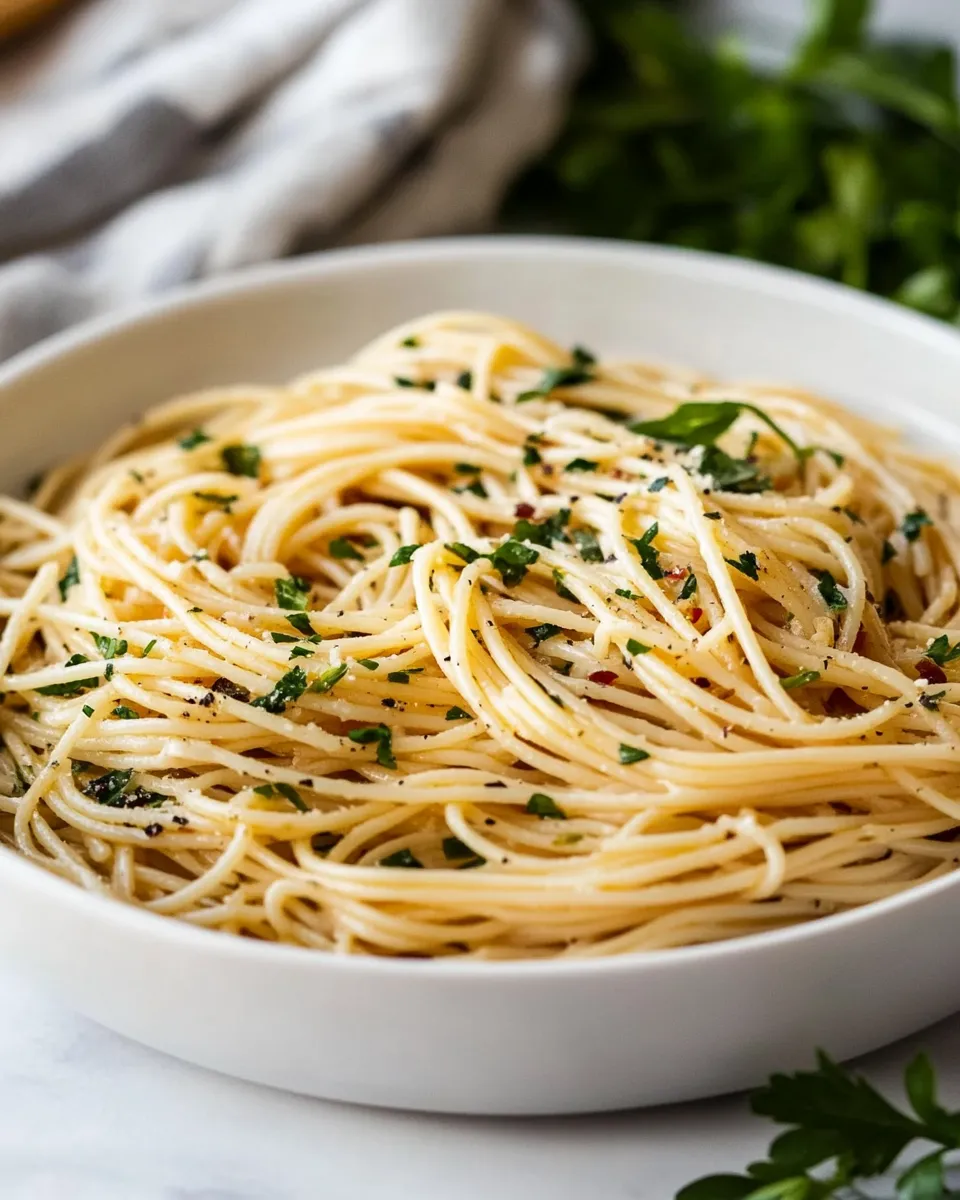
Some pantry-staple pasta dishes try to do too much. This Spaghetti Aglio E Olio keeps the focus on technique: properly cooked spaghetti, garlic that is soft and slightly golden rather than burned, and olive oil that carries all the aromatics. When you use quality ingredients—good olive oil and freshly grated hard cheese—the results feel restaurant-worthy, even though the method is uncomplicated. The garlic and red pepper flakes provide the backbone of flavor while parsley and Parmesan add brightness and depth.
Ingredients
- ▢1poundspaghetti, uncooked
- ▢6cloves garlic, thinly sliced
- ▢⅓cupextra virgin olive oil
- ▢¼teaspoonred pepper flakes
- ▢¼cupchopped parsley, optional
- ▢1cupgrated Parmesan, optional
Make-Ahead and Substitutions
Feel free to prepare elements in advance. Garlic can be thinly sliced and stored in the fridge for a day. Parsley can be chopped up to a day ahead and kept in a sealed container with a paper towel to absorb moisture. Grated Parmesan keeps well in the refrigerator for several days if stored in an airtight container.
If you prefer a dairy-free finish, swap the Parmesan for a sprinkle of toasted breadcrumbs mixed with a little nutritional yeast for a nutty, savory note. If you prefer a milder heat, reduce the red pepper flakes to 1/8 teaspoon or omit them entirely.
Tools You’ll Need
- Large pot for boiling pasta
- Large skillet or frying pan with enough room for the spaghetti when combined with the sauce
- Wooden spoon or tongs
- Colander or spider strainer
- Measuring cup and spoon
- Chef’s knife and cutting board
Flavor Tips
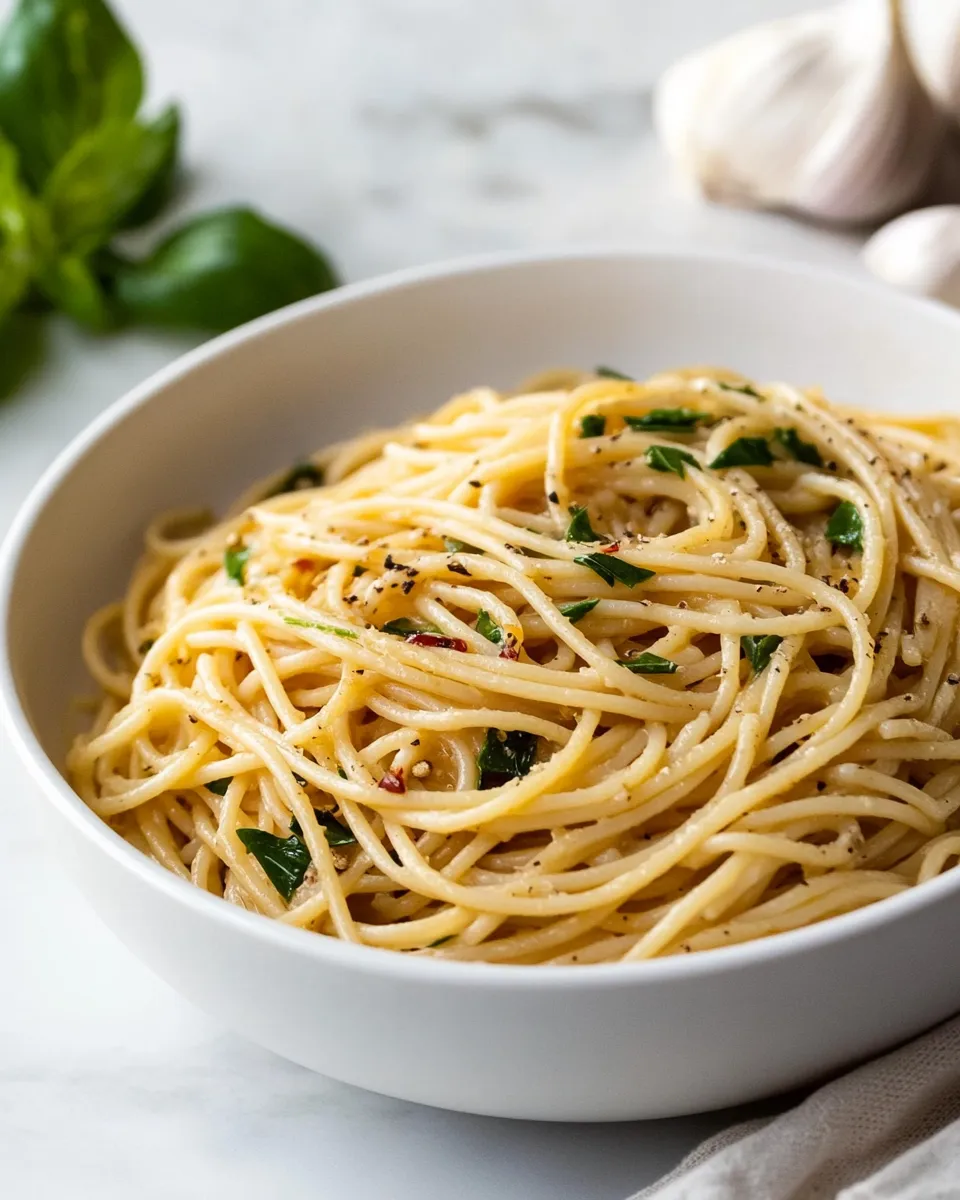
Use a sturdy, high-quality extra virgin olive oil because it’s the primary sauce. Slice the garlic thinly rather than mincing; thin slices soften and infuse the oil without disappearing entirely. Keep an eye on the garlic as it cooks—once it starts to turn golden brown, remove the pan from the heat briefly to avoid bitter, burnt notes. Reserve a cup of the starchy pasta water to adjust sauce consistency; it helps the olive oil cling beautifully to each strand.
Step-by-step Instructions
The directions below follow the same order as the ingredient list and source directions, rewritten for clarity and broken down into clear steps. Quantities are unchanged from the ingredient list.
- Bring a large pot of salted water to a rolling boil. Add ▢1poundspaghetti, uncooked to the boiling water and cook according to package instructions until the pasta is just shy of al dente, usually about 8–10 minutes depending on the brand. Stir occasionally so the strands do not stick together.
- While the pasta cooks, measure ▢⅓cupextra virgin olive oil into a large skillet. Place the skillet over medium heat to warm the oil gently; it should be hot enough that a thin slice of garlic sizzles when added, but not so hot that the garlic browns instantly.
- Add ▢6cloves garlic, thinly sliced to the warmed oil in a single layer. Keep the heat at medium to medium-low so the garlic softens and releases its aroma without burning. Stir the garlic occasionally and watch for a pale golden color at the edges. This step should take about 2–4 minutes. If the garlic begins to brown too quickly, remove the pan from the heat for 30 seconds, then return it to the stove at a lower setting.
- Stir in ▢¼teaspoonred pepper flakes with the garlic and oil. Allow the flakes to bloom in the oil for about 30 seconds to one minute, which will release their heat and flavor into the oil. Taste a tiny bit of the oil carefully if you want to judge the heat; adjust in future batches if needed.
- When the spaghetti is about 1 minute shy of the package’s indicated al dente time, reserve about one cup of the hot pasta cooking water. To do this, use a heatproof measuring cup or ladle and scoop out one cup of the starchy water from the pot; set it aside. Then drain the pasta using a colander, but do not rinse. You want the pasta to retain starch so the oil will cling better.
- Add the drained pasta directly into the skillet with the garlic, oil, and red pepper flakes. If your skillet isn’t large enough, transfer everything into the pasta pot or a large bowl, then return to the skillet for tossing. Toss the pasta vigorously with tongs or a wooden spoon so each strand is coated in the garlicky oil. If the mixture seems dry or the oil does not coat the pasta evenly, add a few tablespoons of the reserved pasta water at a time until you reach a silky, glossy consistency that clings to the noodles.
- If you are using ▢¼cupchopped parsley, optional add it now and toss to distribute the fresh, herbaceous flavor evenly through the pasta. The parsley brightens the dish and provides a pleasant contrast to the warm garlic and oil.
- If you are using ▢1cupgrated Parmesan, optional sprinkle the cheese over the pasta and toss thoroughly so the grated cheese melts into the warm pasta and creates a slightly creamy texture. Add more reserved pasta water if needed to help the grated cheese incorporate smoothly and create a cohesive sauce.
- Taste and adjust seasoning. Although the recipe uses olive oil and aromatics for most of its flavor, you may want to add a pinch of salt if the pasta, oil, or Parmesan need it. Serve the Spaghetti Aglio E Olio immediately while hot for the best texture and flavor. Offer extra grated Parmesan and red pepper flakes at the table for individual preference.
Plating and Serving Ideas
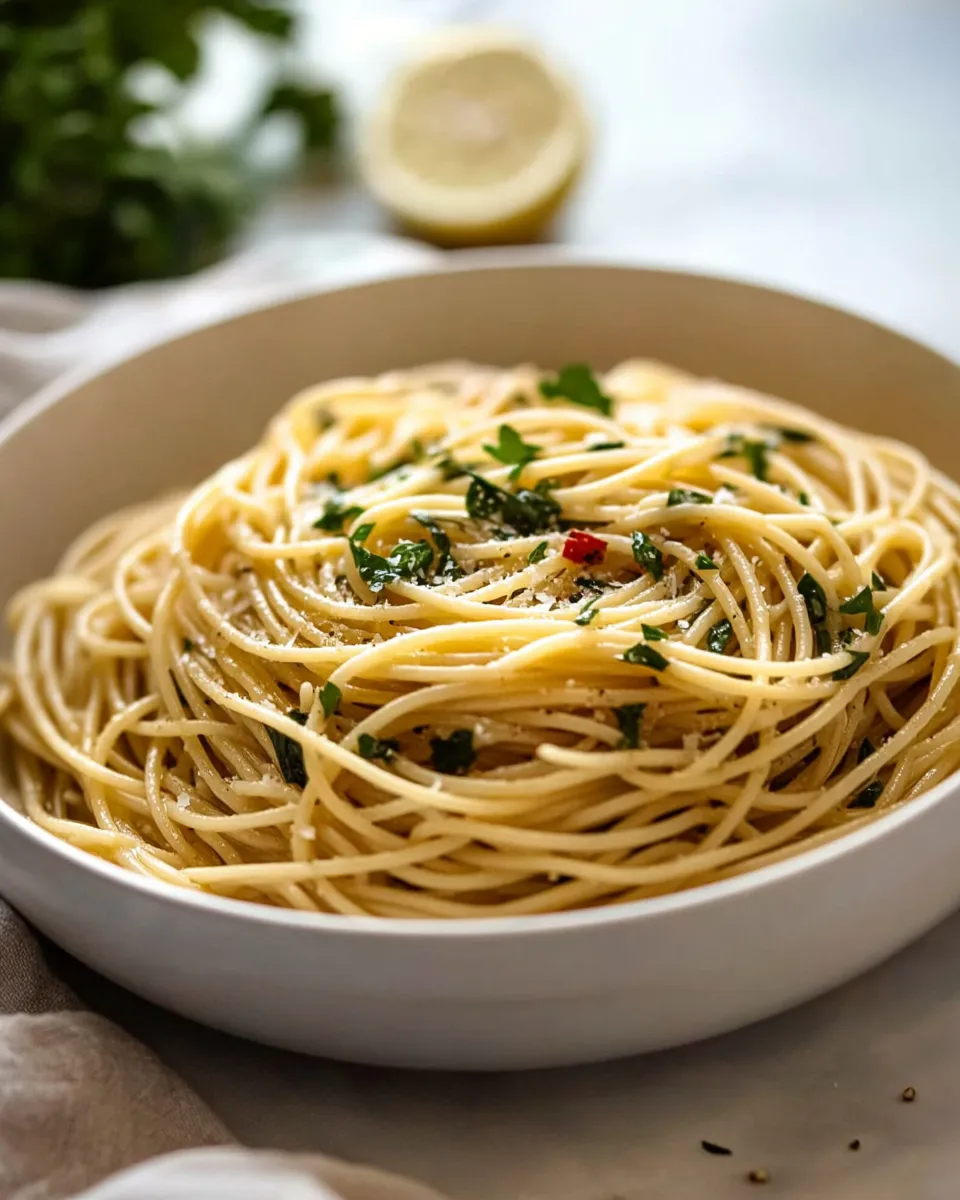
To present this Spaghetti Aglio E Olio like a pro, twirl about a half cup of pasta around a ladle or large fork and transfer the neat nest to warm plates. Garnish with a scattering of the chopped parsley and a little extra grated Parmesan. A drizzle of extra virgin olive oil just before serving adds shine and aroma. Pair the dish with a simple green salad or roasted vegetables for a balanced meal.
Make It a Meal
For a heartier version, serve alongside lemon-browned chicken or pan-seared shrimp. You can also toss in cooked chickpeas or white beans for added plant-based protein while maintaining the easy prep. A splash of lemon juice can be added at the end for a brighter finish if you enjoy a citrus note.
Storage and Reheating
Leftovers keep well for up to 2 days in the refrigerator in an airtight container. Reheat gently in a skillet over low heat with a teaspoon or two of olive oil and a splash of water or reserved pasta water to loosen the sauce. Avoid overheating; you want to warm the pasta, not dry it out. For best texture, reheat only what you plan to eat immediately.
Common Pitfalls and How to Avoid Them
- Burning the garlic: Keep the heat controlled and watch the garlic closely. It should be a pale golden color, not dark brown. If it starts to brown, lower the heat or briefly remove the pan from the burner.
- Dry pasta: Always reserve some pasta water. The starchy water is magic for making the oil cling to the noodles and creating a silky sauce.
- Under-seasoning: Taste and adjust seasoning at the end. Parmesan contributes salt, so add any table salt sparingly after tasting if you’ve added cheese.
Why the Ingredients Matter
Each ingredient plays a simple but crucial role. The spaghetti provides the textural canvas. Thinly sliced garlic infuses the oil with flavor and provides gentle bursts of garlic taste. Extra virgin olive oil is both the cooking medium and the main flavor carrier, so choose a fruity, balanced bottle. Red pepper flakes add warmth without overwhelming the dish. Parsley brings herbaceous brightness and color, while grated Parmesan offers savory depth and a slightly creamy finish.
Final Thoughts
Spaghetti Aglio E Olio is a stellar example of how a few quality ingredients and careful technique can yield something greater than the sum of its parts. It’s fast, reliable, and endlessly adaptable—perfect for those nights when you want a satisfying meal with minimal effort. With these clear, step-by-step instructions, you’ll be able to make a plate of Spaghetti Aglio E Olio that’s balanced, flavorful, and comforting every time.
Quick Reference Recipe
Ingredients: ▢1poundspaghetti, uncooked; ▢6cloves garlic, thinly sliced; ▢⅓cupextra virgin olive oil; ▢¼teaspoonred pepper flakes; ▢¼cupchopped parsley, optional; ▢1cupgrated Parmesan, optional.
Method: 1) Boil salted water and cook pasta until nearly al dente. 2) Warm oil in a skillet, add garlic and cook until pale golden. 3) Add red pepper flakes to bloom. 4) Reserve 1 cup pasta water, drain pasta, add pasta to skillet and toss with oil. 5) Add reserved pasta water as needed to create a glossy sauce. 6) Stir in parsley and/or Parmesan if using. 7) Taste, adjust seasoning, and serve immediately.
Enjoy a bowl of simple, satisfying Spaghetti Aglio E Olio—soothing, fragrant, and ready in a flash.
Spaghetti Aglio E Olio
Ingredients
Equipment
Method
- Bring a large pot of water to a rolling boil and generously salt it, then add the spaghetti and cook until al dente according to package directions.
- While the pasta cooks, heat the extra virgin olive oil in a large skillet over medium to medium-low heat.
- Add the thinly sliced garlic to the oil and stir constantly until the garlic is just golden and fragrant, taking care not to burn it.
- Stir in the red pepper flakes, then remove the skillet from the heat.
- When the pasta is done, reserve at least 1/2 cup of the cooking water and drain the pasta in a colander.
- Transfer the drained pasta to the skillet, add at least 1/2 cup of the reserved pasta water, and toss thoroughly to combine and coat the spaghetti with the garlic oil.
- If using, add the chopped parsley and grated Parmesan and toss lightly to distribute evenly.
- Serve immediately while hot.
Notes
- Nutrition is calculated using the parsley and Parmesan cheese.